




“Aging in place” is by now a familiar concept to most practicing designers. Within the home, interventions such as grab bars, accessible bathrooms, and elevators have become standard tools for enabling people to continue living independently as they age. But even the most senior friendly home can become a kind of island if the sidewalk outside is hazardous, there is nowhere to sit or rest on the way to the grocery store, the subway is inaccessible, public restrooms are scarce, or opportunities for social connection are out of reach.
In many respects, New York should be an ideal place to grow old: its density puts shops, services, transit, and cultural and social life close at hand, without requiring residents to drive. Yet those advantages diminish as mobility changes—and before any of them matter, older New Yorkers must be able to afford to remain in their homes and neighborhoods. Aging in place, in other words, cannot stop at the front door. It requires thinking of the home as one part of a larger, interconnected environment and applying the principles of universal and equitable design to the city beyond it. New York State’s first Master Plan for Aging, released in 2025, outlines a cross-sector approach to supporting healthy, independent aging, recognizing that the ability to age in place depends not only on housing but on the communities and infrastructure surrounding it.
Within the dwelling, aging in place increasingly means anticipating changing needs rather than retrofitting a home only after a resident’s mobility or abilities decline. Chia-Yi Huang and Kamila Altman, co-chairs of AIA New York’s Design for Aging Committee, point to relatively straightforward measures—level floors and thresholds, clear wayfinding, good and consistent lighting, and walls reinforced to accommodate future grab bars—that can make a home easier to adapt over time. Another example of such a feature is removable kitchen cabinetry to accommodate wheelchair users. Just as important, Altman says, is looking beyond the individual unit to the ways residents, and potentially caretakers, move through and inhabit a building: legible circulation, places to pause and rest, and shared spaces positioned along everyday routes can encourage both movement and informal social interaction. The point, Huang emphasizes, is not simply to meet accessibility requirements or design for “the elderly” but to create environments that can continue to work as people’s needs and abilities change.
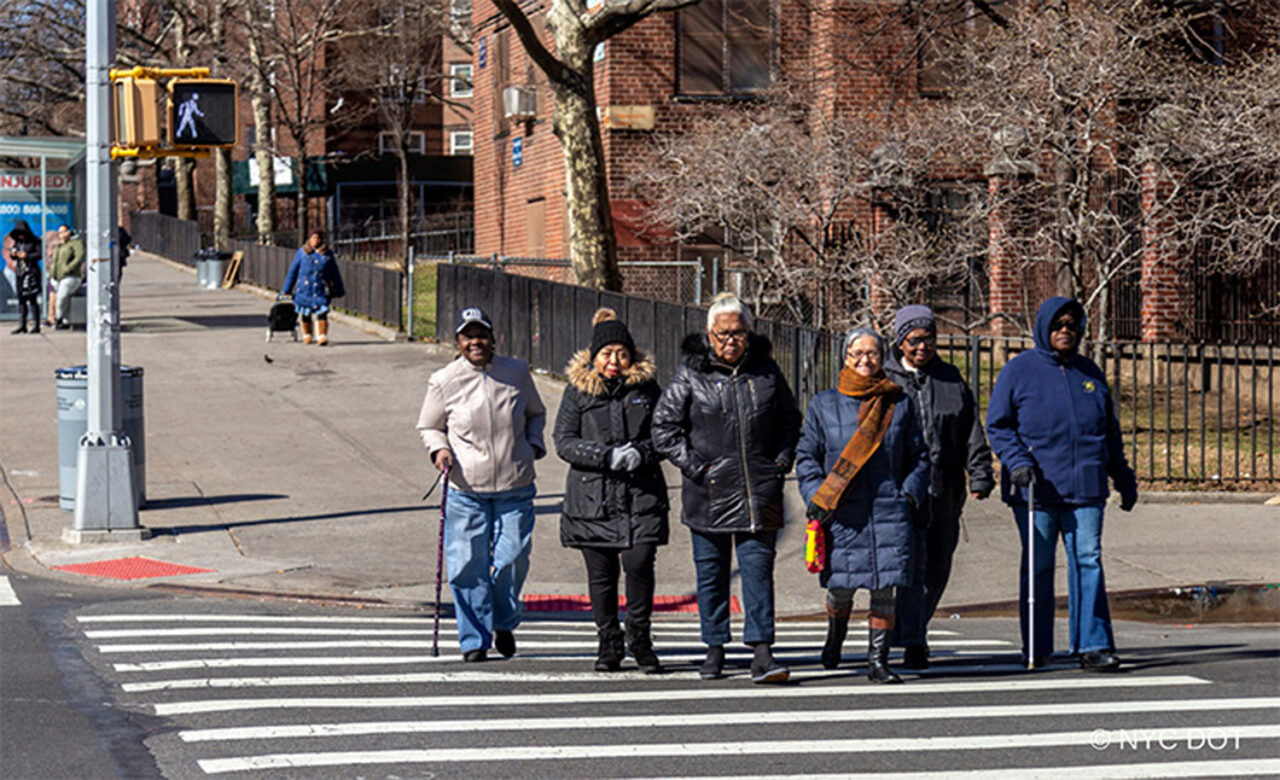
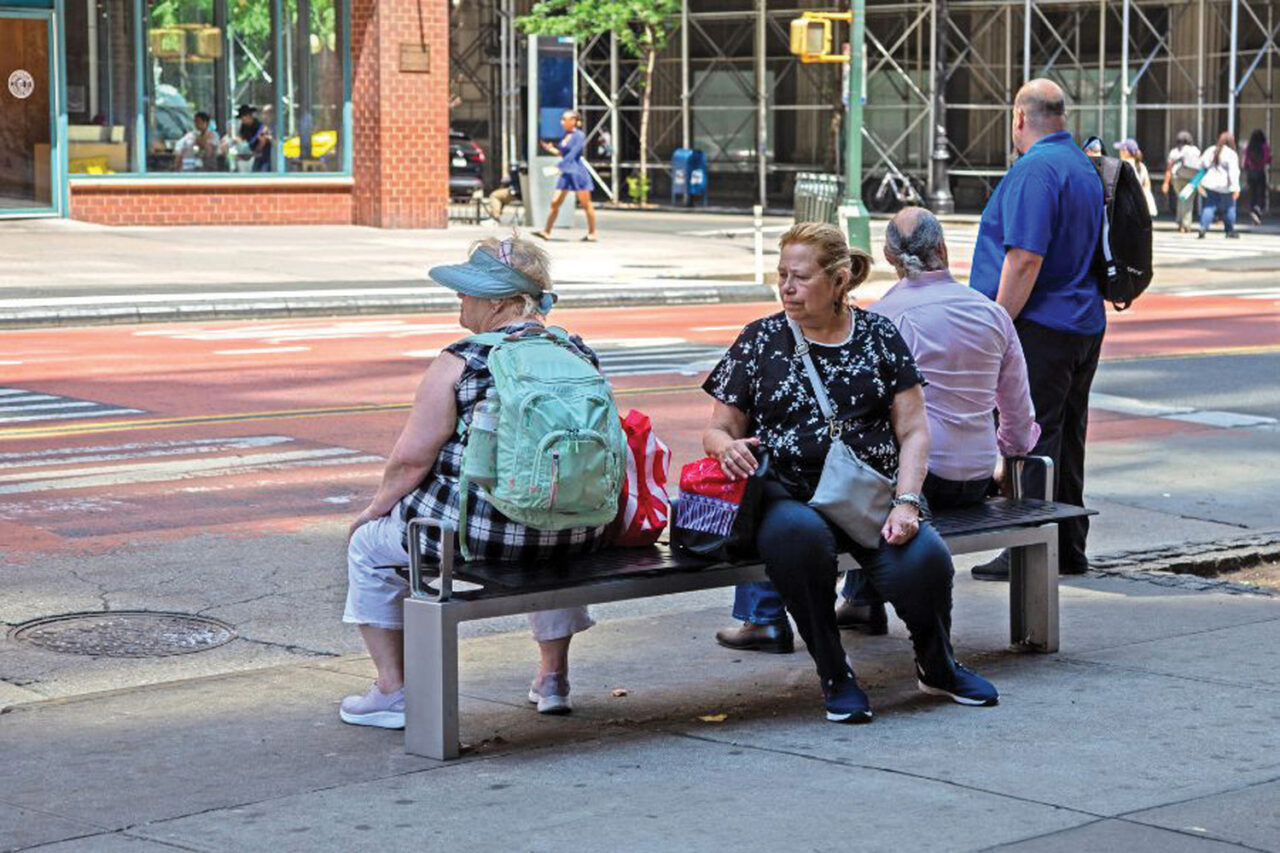
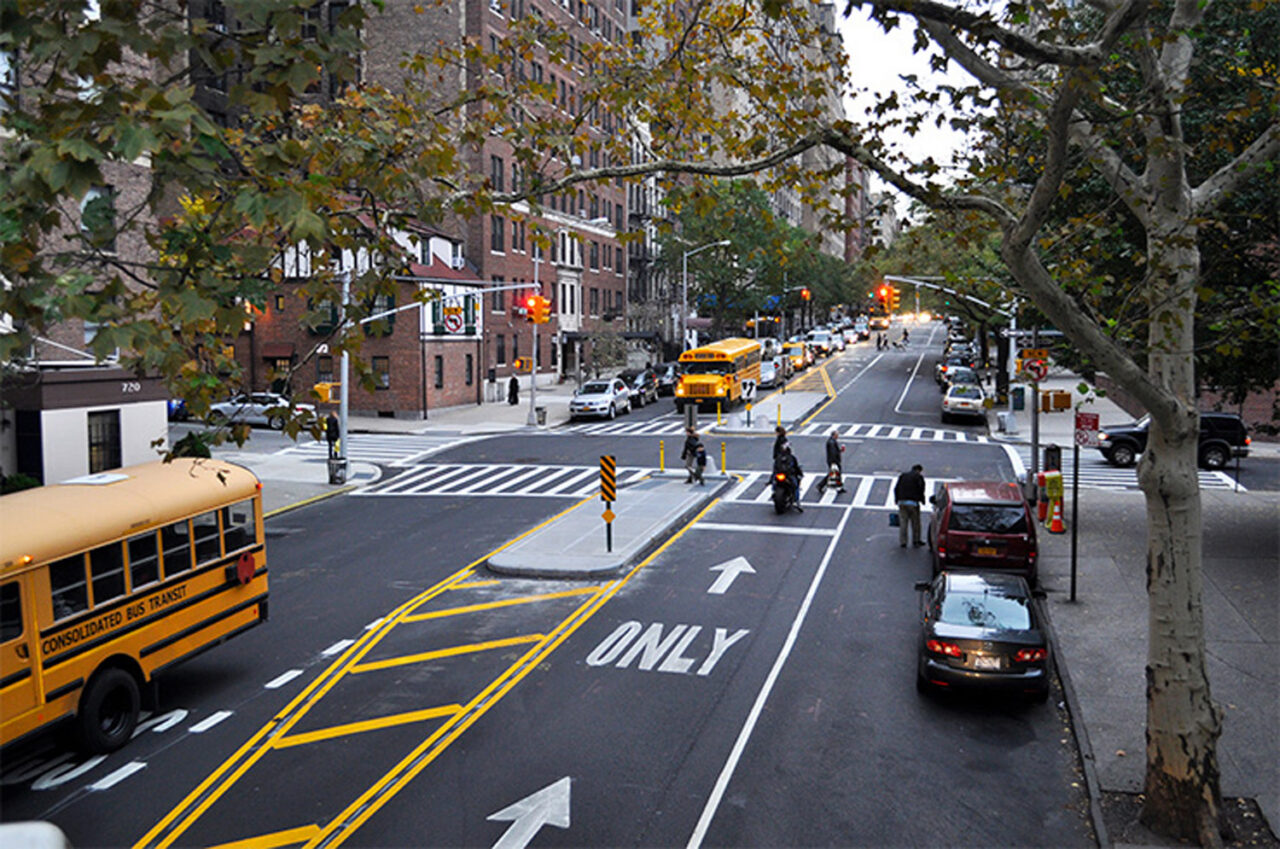
Outside the building, the elements that support aging independently are no more exotic, but they become harder to control, and gaps in the chain can quickly shrink a person’s world. A smooth sidewalk, a safe street crossing, somewhere to sit, subway stations and service counters that are accessible, and clear signage and wayfinding can determine whether an older New Yorker can comfortably go to a grocery store, doctor’s appointment, park, or library. Altman and Huang emphasize that the solutions are often remarkably ordinary. Benches, for example, need to be frequent enough to make longer walks manageable, and they should be designed with backs and arms that help people sit down and stand up. Altman points to something even simpler: incorporating railings or other supports along walking routes. “Every so often on a path, having something that you can hold onto is super important,” she says.
In support of the Master Plan’s goals, the Department of State has issued age-friendly planning and project guidance for accessible public infrastructure, calling for many of the same measures, from wide, flat walkways and accessible restrooms to inclusive parks. The Master Plan also points to “Smart Growth”— an approach emphasizing walkability, mobility, and green space—as a means of supporting community integration as people age. “The way we plan and design the built environment has a tremendous impact on the health and quality of life of older New Yorkers,” says Paul Beyer, State Director of Smart Growth Planning at the NYS Department of State. None of these strategies is radical; the challenge is making them a consistent part of the everyday public realm. The state is beginning to do that through program funding; prioritizing accessible design in DOS initiatives supporting downtown revitalization, waterfront development, and community planning; and awarding additional points to some grant applications that incorporate age friendly features.
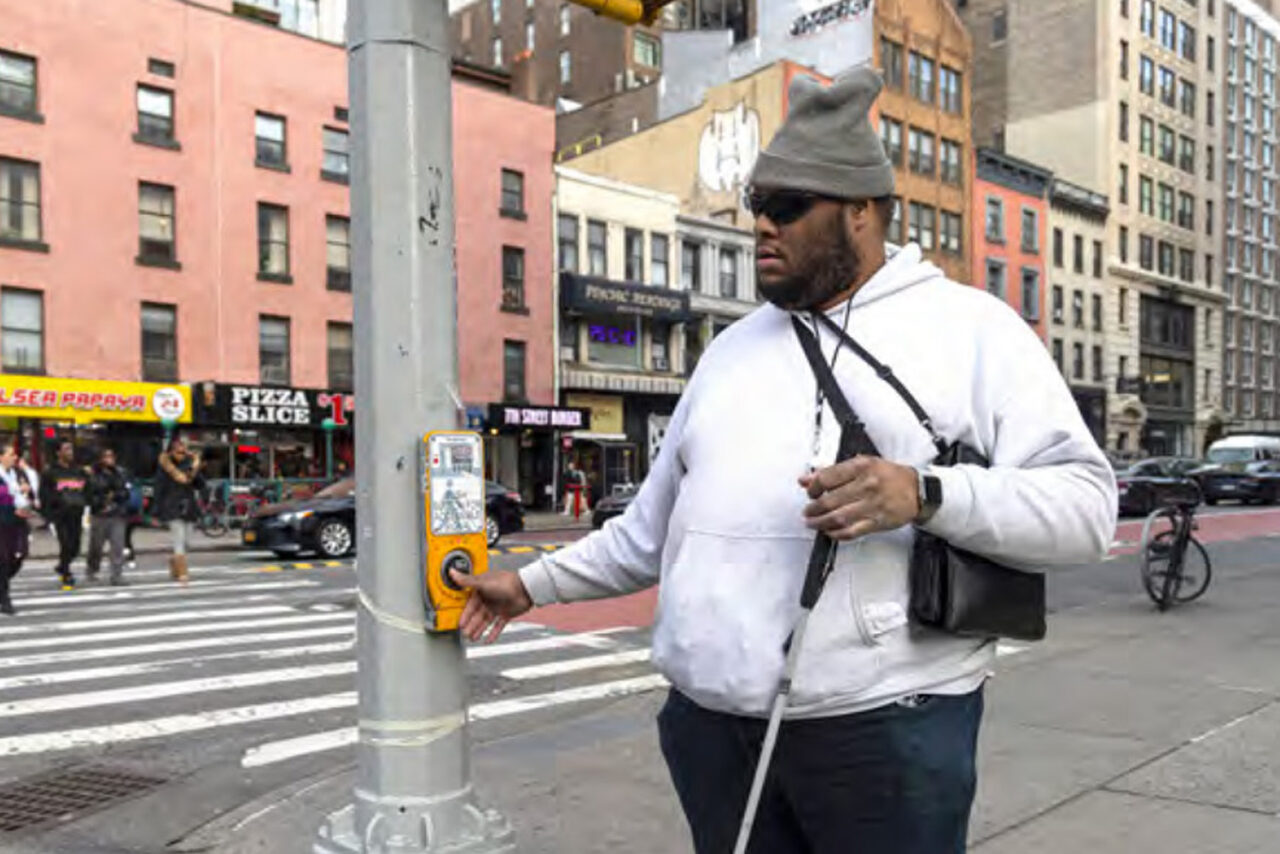
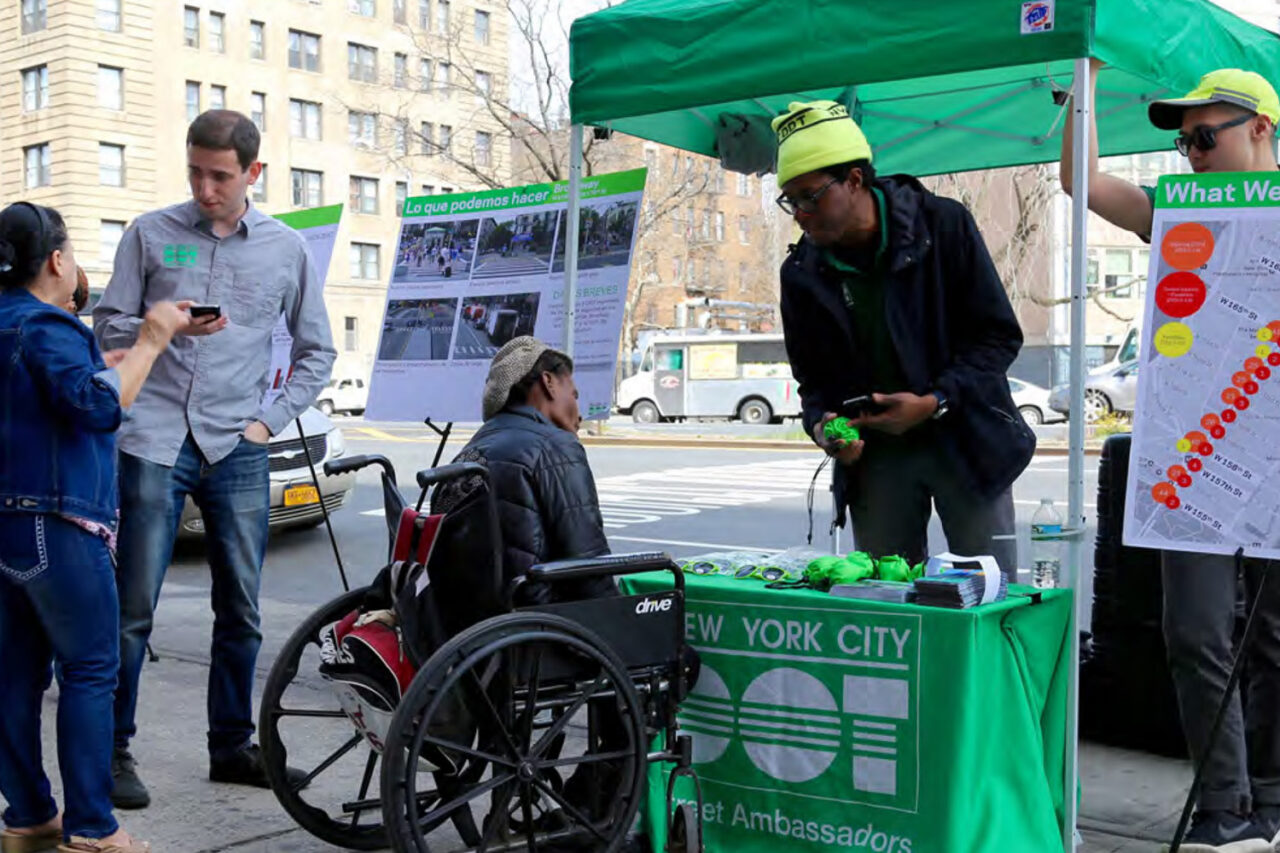
But accessibility is not necessarily the same as usability. Codes establish essential minimum standards, yet a space that satisfies them may still be difficult to navigate, understand, or use independently. Beyer says the state is encouraging communities to design public spaces and mobility systems for people of all ages and abilities, “ideally extending beyond base ADA compliance.” Altman makes the point more bluntly: “It isn’t enough to have a turning radius in a bathroom.” She notes efforts by the Port Authority and New York City Economic Development Corporation to develop universal-design guidelines that go beyond code requirements to consider such factors as wayfinding, visual contrast, acoustics, and seating. Huang recalls an example shared with the committee by NYC Economic Development Corporation accessibility and equity director Seema Malik: a blind intern could use the elevator in the agency’s new offices but had difficulty orienting himself when he emerged. The necessary accessible route existed; the experience of navigating it independently was another matter. The same principle applies to the city’s growing digital infrastructure, from wayfinding to transit information, which must be usable by people with a range of sensory, cognitive, and technological abilities. Designing a truly hospitable city means considering not simply whether people can technically enter and move through a space but how readily people with a wide range of physical and sensory abilities can understand and use it.
There is another threshold to aging in place in New York, one of the country’s most expensive places to live: affordability. Altman and Huang point to approaches that expand the ways older New Yorkers might stay put. The New York Foundation for Senior Citizens’ long-standing Home Sharing Program finds houseguests for adults who are age 60 or older and have spare private spaces, addressing both the cost of living and social isolation. The city’s new “ADU for You” program, meanwhile, enables eligible homeowners to create accessory dwelling units that can provide rental income or allow generations of a family to live near one another. Neither solves New York’s larger affordability crisis, but both broaden the options for remaining at home and connected to community.
In the end, a city that is good to grow old in is simply a city that is good to grow in—one designed to accommodate all of us as our needs change across time. The same supports that enable an older person to remain independent also serve parents with strollers and people with temporary or permanent mobility challenges. “Designing with wider walkways, fewer steps, and more railings,” says Altman, “ultimately benefits everyone.”
BETH BROOME (“Aging in the City”) is a New York-based design writer and editor who most recently served as longtime managing editor of Architectural Record. A contributor to Out There: New Architecture Across America (Merrell), she also works with architects and design organizations on books and other editorial projects.