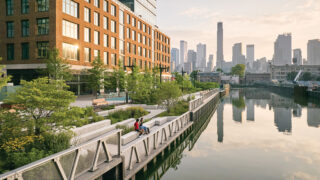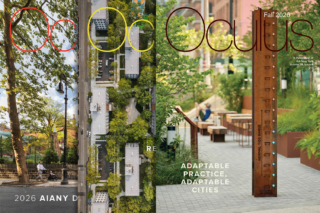



This fall’s Oculus theme, “Adaptable Practice, Adaptable Cities,” lands at an opportune time. This season heralds a new year for students and educators, new city policies are being implemented, and the signs of autumn remind us that cycles continue. But we also acknowledge that the pace of these last few years has had a breakneck quality. Two words that have entered our vocabulary—hyperpolitics and polycrisis— begin to capture what many of us feel as we navigate rapidly changing social, climatic, technological, and business conditions.
Architectural practice has always demanded adaptation: adopting new technologies, developing expertise in climate resilience, learning and leveraging new delivery methods, embracing interdisciplinary collaboration, and constantly keeping up with changing regulations. How that agility connects to adaptation at an urban scale, though, is another question. Cities do not change because architectural practice changes alone. Rather, they change because the institutions that connect, educate, and advocate evolve alongside them.
We know that today’s architect has evolved to be much more than a building designer, increasingly bringing value as collaborator, facilitator, policymaker, advocate, educator, convener, and communicator. Many dimensions of the architect’s role are expressed not just through practice but through institutions. And those institutions are under as much pressure to adapt as the practice itself.
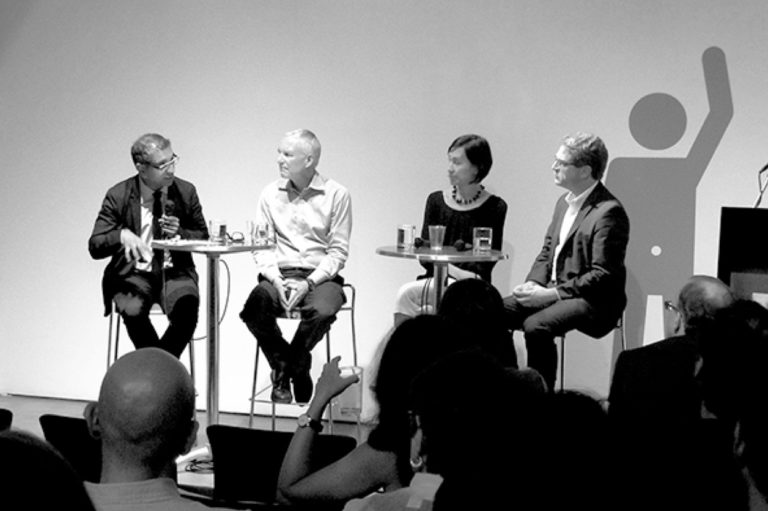
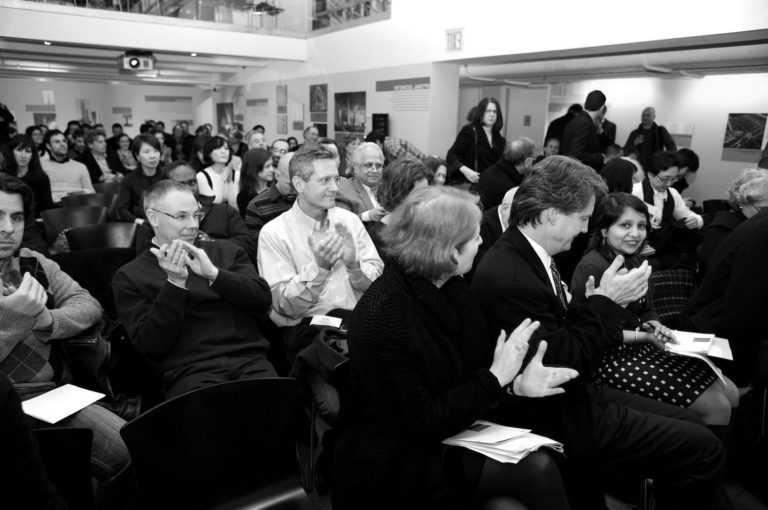
The institutions in the city that serve architects—and through which architects help shape the city—are part of our civic infrastructure. AIA New York and the Center for Architecture, along with other universities, nonprofits, professional and community organizations, and public agencies, create the conditions under which good design becomes possible. They bring people and ideas together, cultivating new leadership and providing places where we can collectively wrestle with challenges too large for any individual practitioner or firm to address alone.
But institutions cannot perform this role simply by doing more of what they have always done. Adaptability requires them to reconsider whom they serve, whom they bring to the table, and how they define their responsibilities. It requires investing in new knowledge before it becomes standard practice, building relationships across disciplines and communities, and creating room for experimentation. Perhaps most importantly, it requires institutions to be places where we can confront uncertainty together, not necessarily with ready answers but with the capacity to ask better questions.
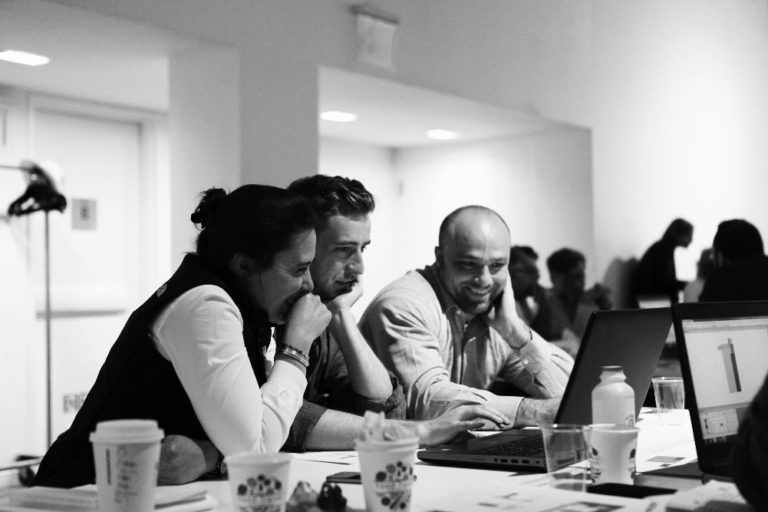
This is an important part of what we aspire to at AIA New York and the Center for Architecture. Our value is not simply in representing the profession as it exists today but in helping architects anticipate what will be asked of them tomorrow. That means remaining open to new voices, new partners, new technologies, and new ways of understanding the needs of our city. In the last few years, we have seen a shift in how we do our work, with greater focus on connecting with people and organizations who have not always been in the middle of architectural discourse. We have found our members’ experience richer, and our Chapter’s reach broader, as a result.
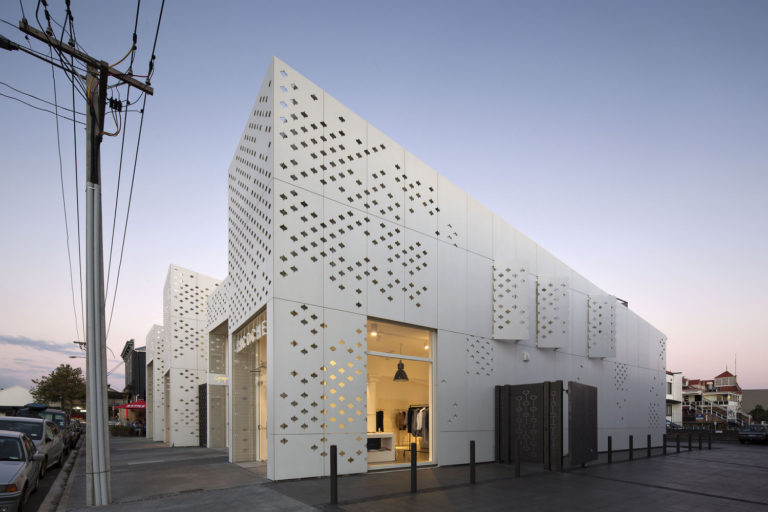
We often measure adaptability in built environment terms: how buildings and physical infrastructure perform, endure, and change over time. But an adaptable city also depends on the less visible infrastructure that allows people and ideas to move between disciplines and communities. As architects respond to a city in constant transformation, the institutions we build and sustain must transform with it. Our task is not simply to keep pace with change but to create the collective capacity to shape what comes next.