


In the course of researching this issue, I spoke with Jim Wright, AIA, the director of advocacy for the AIA New York Transportation and Infrastructure Committee, about a topic a lot of New Yorkers might not have heard of: the New York and New Jersey Harbor and Tributaries Study (NY/NJ HATS). The plan, led by the U.S. Army Corps of Engineers, will shape how the city confronts flooding and sea-level rise for decades. Yet the conversations about the area of the study affecting Harlem’s waterfront have been surprisingly quiet.
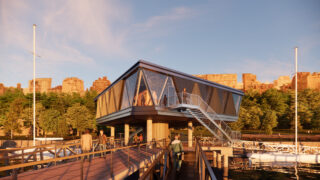
Wright’s concern, as he outlines in his op-ed on page 54 of this issue, is not the protection the corps is proposing, but how it will be executed. The project has narrowed from its early idea of a giant floodgate across Sandy Hook and the New York/New Jersey Harbor to more localized floodwalls, including a proposal for the low-lying areas of East Harlem along the East and Harlem rivers. But even in this smaller scope, the plan risks being too single-minded. A concrete wall built just off the shoreline, for example, would ignore the city’s ongoing work to complete the Harlem River Greenway, and could trap contaminated stormwater overflow in the narrow strip of water it creates.
The problem is bigger than one site. Infrastructure projects cannot be planned in isolation. They must connect with other efforts—repairing bulkheads, building greenways, improving drainage—and they must incorporate the voices of the communities they affect. When they don’t, the results are walls that cut communities off from waterfronts and piecemeal protections that leave vulnerable neighborhoods exposed.
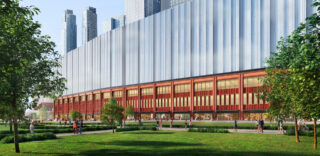
We have examples of what better planning can look like. Along the East River, projects from Battery Park City to 23rd Street have integrated flood protection with bikeways, public access, and neighborhood connections. These are not perfect, but they are urban infrastructure in the best sense: they make resilience part of daily life. The challenge—and the advocacy agenda—is to ensure that these kinds of investments are extended equitably across the city, and that the voices of New Yorkers are part of the process.
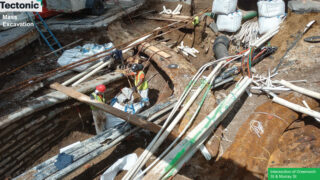
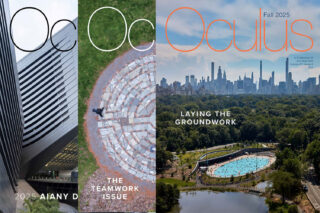
That focus runs throughout this issue of Oculus, which looks at infrastructure in all its forms. Transportation projects, subsurface utilities, food networks, and public space initiatives are just some of the systems that underpin civic life. These are not always glamorous projects, but they are vital. And they remind us that infrastructure is never just about moving water, utilities, or people—it’s about the quality of life and equity we
want for our city.
While this marks the final Oculus of 2025, we look forward to addressing the pressing topics of advocacy, repair, and growth in our upcoming 2026 issues. As always, it is a privilege to write about this city and its progress. In that spirit, I want to congratulate the magazine’s former editor-in-chief, and a friend, mentor, and valued colleague to many in our world, Molly Heintz, on the publication of her book with Steven Heller, The Education of a Design Writer.
I hope to see many of you as we put our city’s infrastructure to work during the busy days of Archtober. Whether you are an architect, planner, or journalist, you have a role to play in keeping our city running and our conversations open, pushing projects to be more holistic, and ensuring that no community is left behind.