



In April, Mayor Zohran Mamdani announced La Marqueta as the site of the city’s first municipal grocery store program. Located inside East Harlem’s La Marqueta—opened in 1936 by Mayor Fiorello LaGuardia as the Park Avenue Retail Market—the 9,000-square-foot store will be constructed from the ground up and is expected to open by 2029. (Editor’s note: The first city-owned grocery store is expected to open in late 2027. The Mamdani administration plans to open one store in each borough by the end of the mayor’s first term.)
The mayor’s project has remarkable overlap with work that Cornell University colleagues and I undertook in the fall of 2023. There, I was a part of the option studio Affirmative Architectures. Our design methodology began with historic heritage research of the Puerto Rican community in East Harlem and the importance of La Marqueta, which underwent significant redevelopment and improvements in collaboration with NYCEDC and local community stakeholders in the 1990s.
As Russell Leigh Sharman explains in Tenants of East Harlem (University of California Press, 2006), his striking history of the neighborhood, “The story of East Harlem is written in the sidewalks and storefronts, the abandoned buildings and corner bodegas, the public school yards and project courtyards as much as it is written in the lives of Puerto Ricans and African Americans, Italians and Mexicans, new immigrants and old.” East Harlem currently has a predominantly Puerto Rican population and has a history of diversity around the site of La Marqueta; it is also described as a food swamp and a food desert by the USDA.
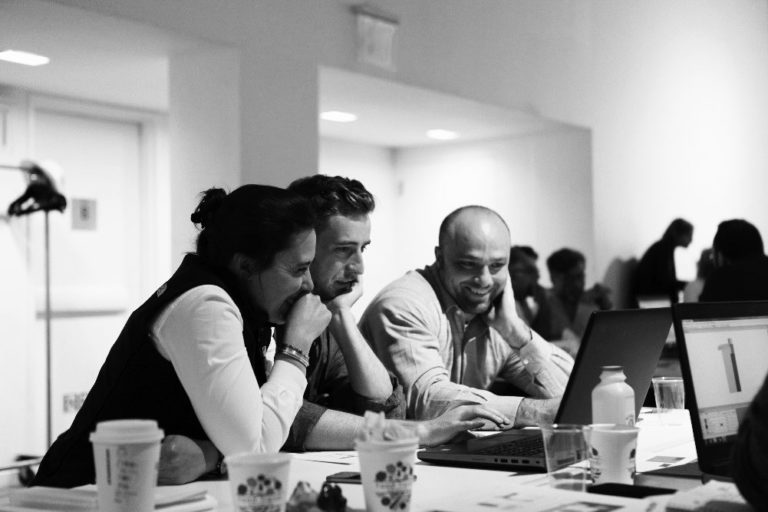
In the Cornell studio, our instructor, Lindsay Harkema, led us to designs that supported an environment of care, equity, and advocacy for the community of East Harlem. Each of us explored a need in the community and responded in kind. We also collaborated with our studiomates to create a cohesive approach to our neighborhood interventions. I worked with Friends of La Marqueta, Union Settlement, and the local community board as well as the studio members to redesign the market based on community needs. This was a process of interviewing neighborhood residents, users of La Marqueta, and vendors. Ultimately, my design responded to the lack of EBT-eligible grocery stores and bodegas and elevated the cultural significance of the bodega.
Grassroots organizations and public institutions that support the East Harlem community, such as Friends of La Marqueta, GrowNYC, Union Settlement, NYCEDC, and community boards, amplify and affirm the community’s needs and ambitions. Architecture, pulling information from these institutions, has a unique opportunity to both create spaces that foster solutions for these needs and create spaces to support each community member in surpassing these needs and imagining and exploring new futures for themselves and their community.
Mamdani’s proposed city-owned grocery store in La Marqueta is a perfect example of design and policy collaboration. It is no coincidence that the first site is La Marqueta, which has served the East Harlem community for decades in various iterations*. The community’s need for fresh produce and accessible food options has been explored by numerous feasibility studies and research. This comes at a time where the cost of living in New York is higher than ever and the need for affordable groceries is at an all-time high. The Mamdani administration’s project affirms the community’s needs, and the collaborative process of listening and designing with the community my colleagues and I undertook at Cornell. It also affirms that with the right approach of empathy, politicians can see the needs of communities and respond quickly and with care. As the grocery store is set to open in late 2027, design processes as well as collaboration with the highly involved community organizations is crucial.
Architecture plays a vital role in building and advocating for spaces of belonging, yet in few cases does it include the communities for which these spaces are created. Each city has networks of social relationships, infrastructures, and political heritage through its urban memory. Affirming those through architecture supports an understanding of these infrastructures in each city and the identities that form the communities architects design for. In the words of AIA New York Chapter President Mark Gardner, “We must advocate for the spaces which bring us together—and which allow us to convene, protest, celebrate, and participate in an open society.”
*Located in the heart of East Harlem, La Marqueta is one of six public markets operated by NYCEDC. The site supports more than 20 small businesses and 120 workers, including restaurants, art vendors, and community organizations. Opened in 1936 by Mayor Fiorello LaGuardia as the Park Avenue Retail Market, La Marqueta was created to bring East Harlem’s pushcart vendors—predominantly Jewish and Italian—under one roof and expand affordable access to fresh food for working-class New Yorkers. As waves of Puerto Rican, Dominican, Cuban, and Mexican immigrants transformed the neighborhood into Spanish Harlem in the decades that followed, the market evolved, becoming “La Marqueta.”