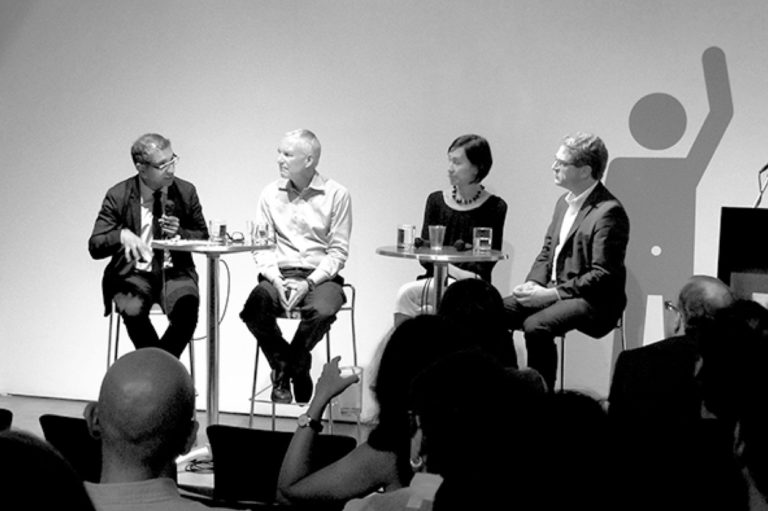
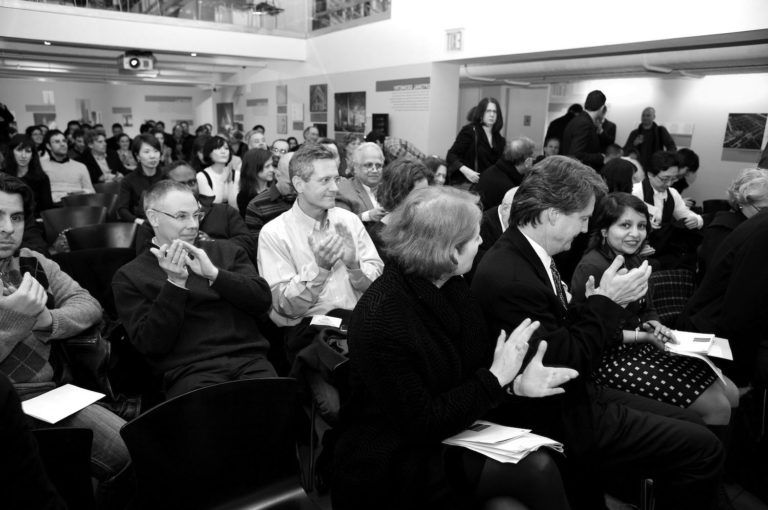


Deferred maintenance is a form of slow violence that disproportionately impacts marginalized and vulnerable communities. In a moment defined by fractured civic trust and emerging urban challenges, the act of repair becomes both metaphor and mission. “Repair—Democracy and Urban Spaces,” my presidential theme for 2026, asks: What actions guide us toward a future where design rejuvenates not only our buildings, streets, and parks but also our collective sense of belonging? At the 2026 AIA Conference on Design and Architecture, in San Diego, one of the keynote speakers, Sameh Wahba, the World Bank’s Regional Director for Sustainable Development in Europe and Central Asia, offered a global perspective to let the architects gathered know that we work in a world facing the pressures of rapid urbanization, social inequity, environmental degradation, and the growing impact of climate change.
There is much work to do, and our skills and voices are needed. At the conference, Illya Azaroff, FAIA, the 2026 Disaster Risk Reduction and Resilience Commitment, noting that “architects are uniquely positioned to help communities anticipate, adapt, and thrive.” The AIA signed a memorandum of understanding to broadly support and advance the commitment. You can learn more about the commitment at AIA.org/newsroom.
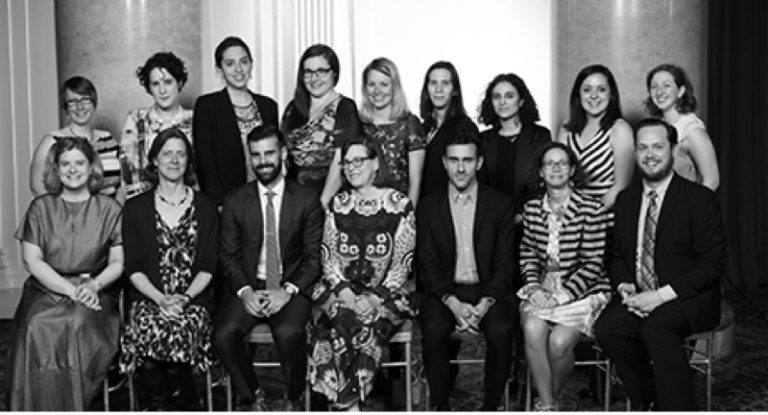
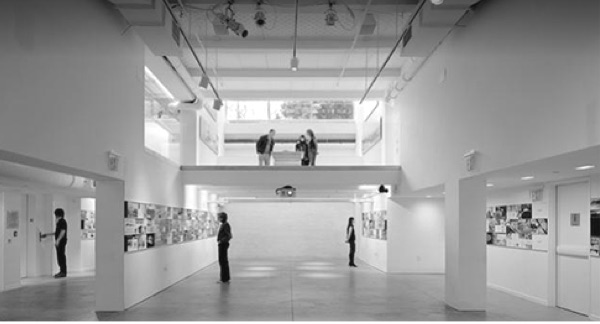
In conjunction with the theme of repair, I am focused on elevating underrepresented voices to think more holistically about “the American experiment.” With our nation’s past and future in mind, I am excited to support the 2026 Center for Architecture Lab (CFALab) program, a multidisciplinary residency that empowers emerging voices in architecture and design with full creative authorship across the Center for Architecture’s exhibition spaces and digital platforms. This spring, Lab residents have met the challenge and addressed the urgent need to repair not only the physical infrastructure of our LETTER FROM THE PRESIDENT environments but also the political and social inequities embedded within them. The CFALab exhibition, named after my presidential theme, “Repair—Democracy and Urban Spaces,” is a call to action for architects and allied professionals to serve as design citizens, advocates, connectors, and environmentalists. In architecture and public space, repair means more than fixing what is broken: It is an act of care, restoration, and renewal. The sociologist Richard Sennett described the act of repair in these terms: “The urbanist has particular things to learn from the craftsman about how to make a repair. In approaching a broken vase, a craftsman can follow three strategies: restoration, remediation, or reconfiguration.” Repair involves addressing social, ecological, and spatial inequities through design that heals communities, restores ecological balance, and strengthens the civic fabric. Repair recognizes the remediation of the built environment as both a physical and moral project—one that requires listening, stewardship, and collaboration to mend the fractures of our cities and our democracy. The work we do for our clients, the public, and our ecology is how we build a standard for a sustainable, resilient, and inclusive future.
I draw inspiration from the poet and essayist Walt Whitman, whose reflections in his 1871 Democratic Vistas reminds us that democracy is not a fixed structure but a living, evolving condition shaped by the multiplicity of voices and experiences that constitute the public realm. As Whitman writes, “The People are ungrammatical, untidy, and their sins are great…but they are the measureless reservoirs of possibility.” The CFALab exhibition situates architecture and urban space as active participants in that reservoir, as the sites where democracy is both expressed and contested. Through speculative proposals realized in drawing and video installations, the exhibition reimagines the shared spaces that bind us. At a moment when democratic institutions and urban systems alike feel strained, the CFALab projects offer a platform for design as a form of cultural and political care—an act not of perfection but of ongoing renewal of “the measureless reservoirs of possibility.”
Recent years have exposed deep rifts in governance, in our neighborhoods, and in the solutions at the intersection of affordability and government efficiency. A polarized electorate, declining voter turnout, and fragmented infrastructures aren’t separate casualties; they’re symptoms of an unraveling. Yet as architectural professionals and New Yorkers, we know that repair isn’t a passive act or simply restoration. Whatever we touch, we change. Whatever we add or subtract is a new chapter to be read by future generations. Architecture and any creative practice lives in a space of hopeful optimism about the future. Our present asks of us to answer future questions about material resource management, energy, urban ecologies, and environmental resilience. The Harlem Renaissance poet Langston Hughes wrote in Freedom’s Plow about the builders of community: “Thus, the dream becomes not one man’s dream alone, but a community dream. Not my dream alone, but our dream. Not my world alone, but your world and my world, Belonging to all the hands who build.” We should practice repair as an act of care, belonging and resistance.