





by: Linda G. Miller
The Met Unveils New Costume Art Galleries, Spring Exhibition
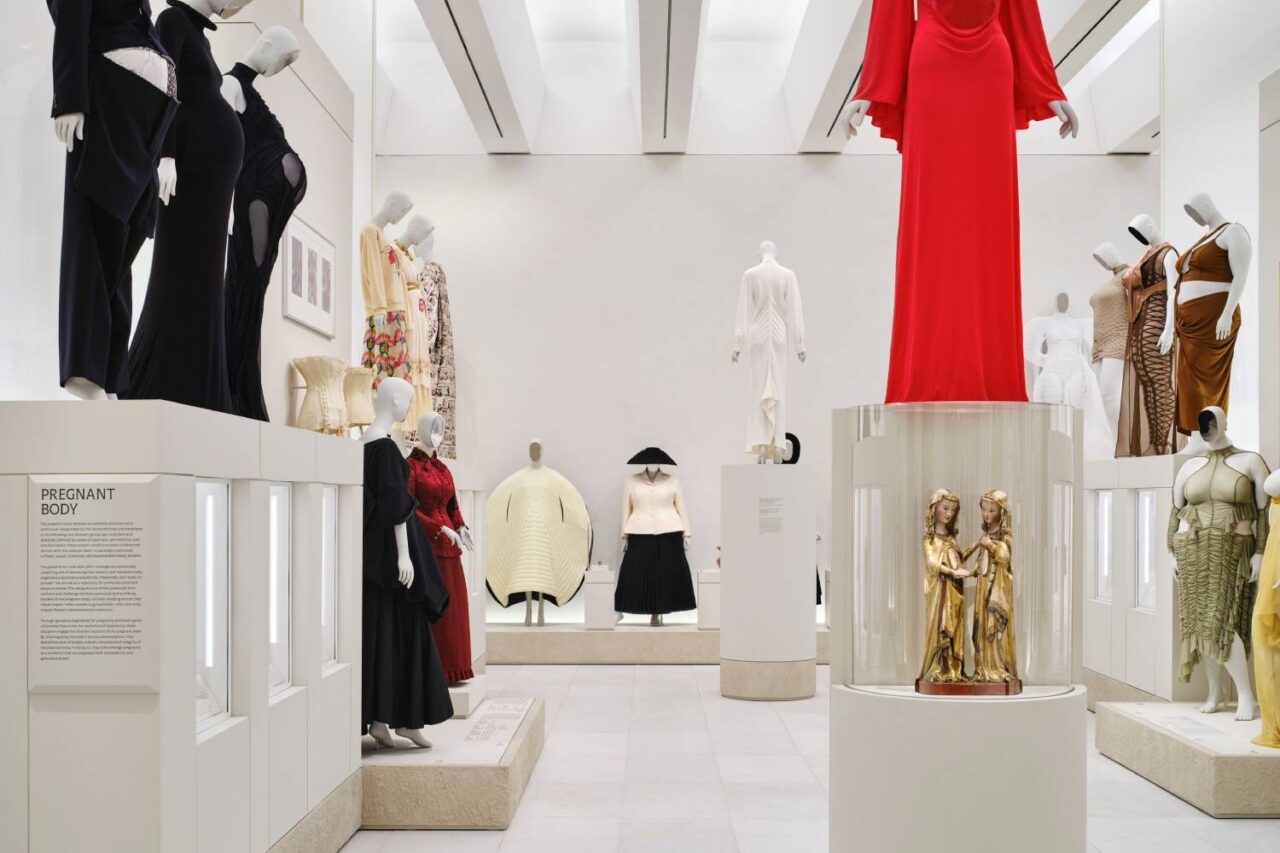
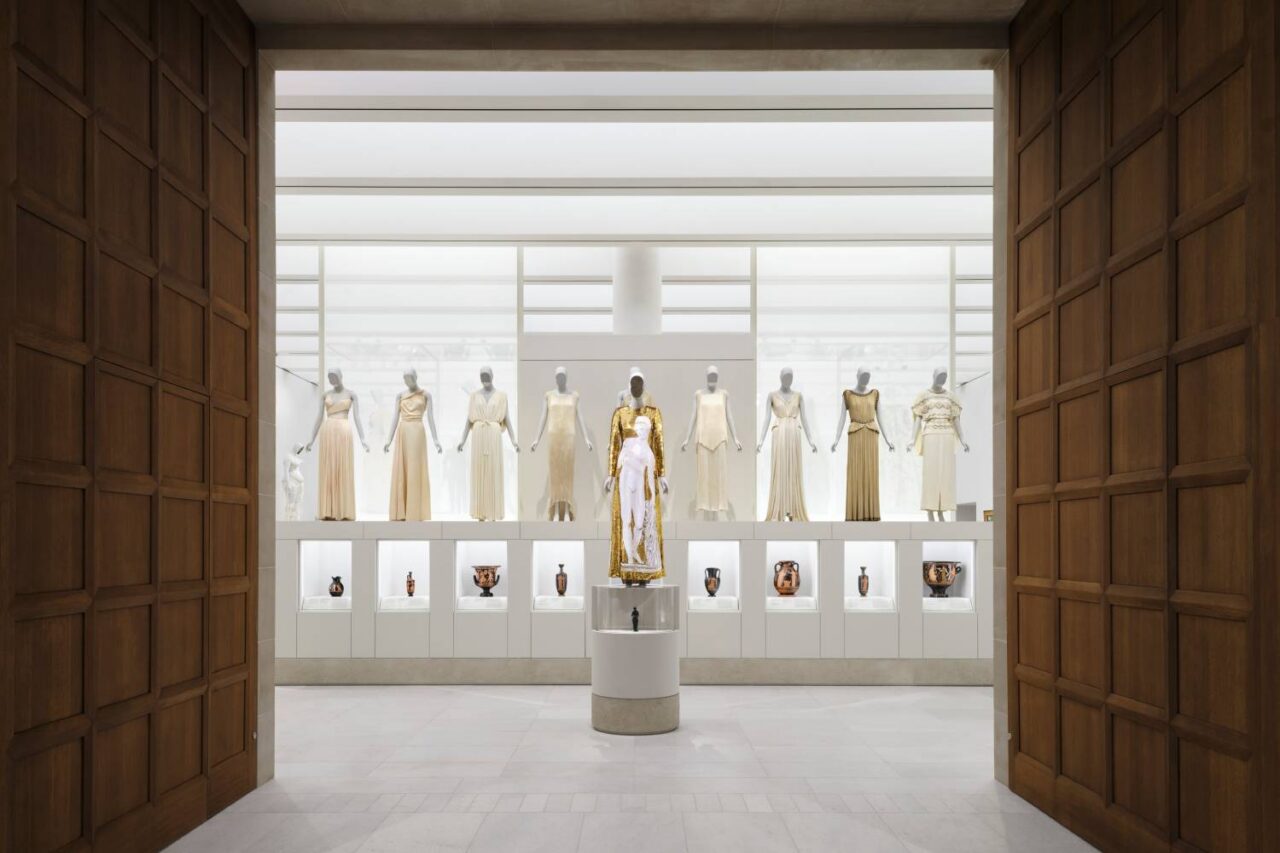
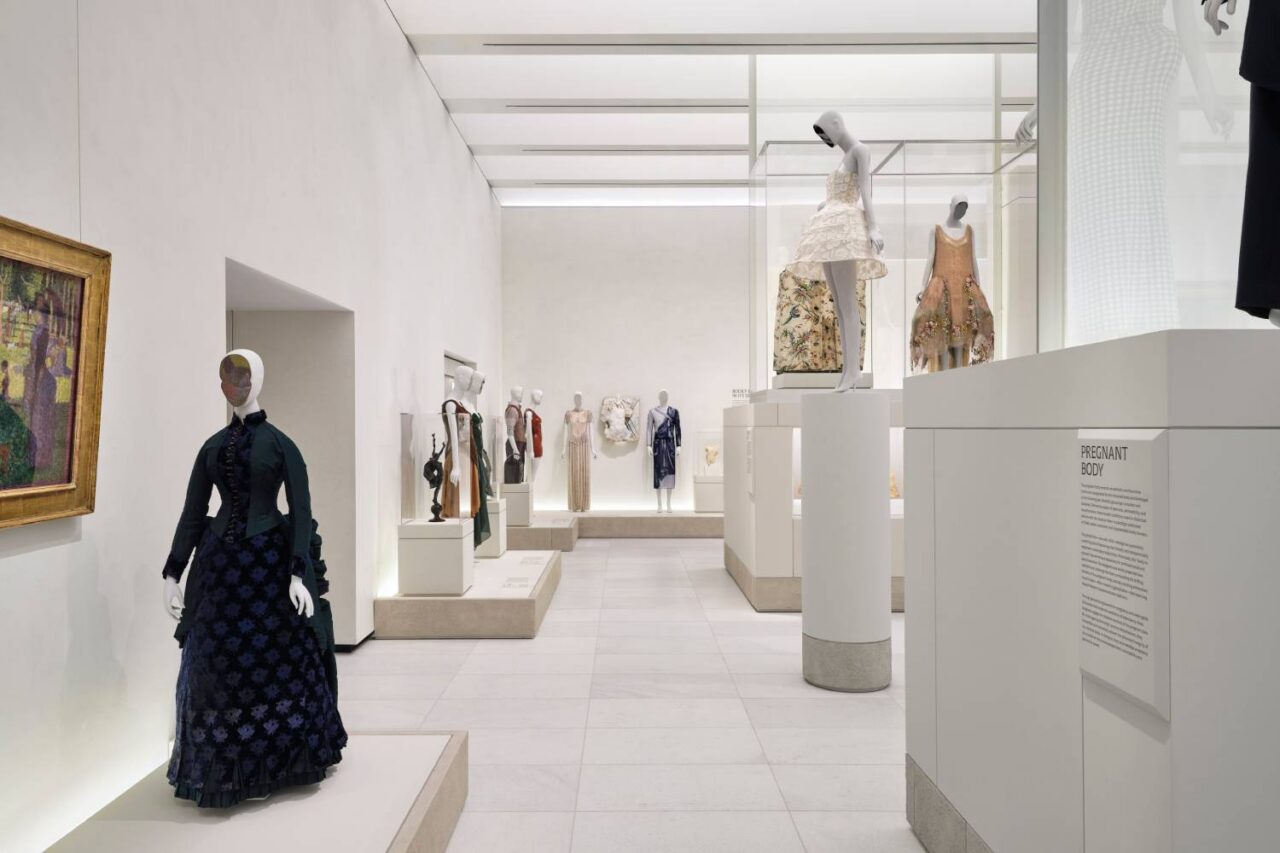
The Metropolitan Museum of Art’s Costume Institute has moved from the basement to a prominent position on the Museum’s main floor. Designed by Peterson Rich Office, the new Condé M. Nast Galleries occupy nearly 12,000 square feet across five sequential rooms within a former exterior courtyard immediately adjacent to the Great Hall, a designated interior landmark. The enclosing walls of the galleries conceal what were previously the exterior façades of historic Met buildings from the 1880s and 1890s. This condition created an opportunity to deliberately expose layers of the Museum’s architectural history while establishing a distinctly contemporary gallery environment. The galleries are designed to accommodate diverse rotating exhibitions, in particular, the Costume Institute’s annual spring show. This year’s spring show “Costume Art,” also designed by PRO, explores the significance of the dressed human form in fashion and fine art. The exhibit features nearly 400 objects from The Met collection, spanning centuries of artistic expression. Clothes are juxtaposed with works of art from across time to create connections ranging from the formal to the conceptual, the individual to the universal, and the playful to the profound. The exhibition is organized into a series of thematic body types that are pervasive in works across the Museum. Underscoring the exhibition’s focus on the embodied experience of fashion, the mannequins, designed by artist Samar Hejazi, feature heads with polished steel surfaces, that invite visitors to see themselves reflected in the body types and garments. The opening of the exhibit was celebrated at the Met Gala and starting May 10, “Costume Art” will be open to the public and on view through January 10, 2027. PRO partners Miriam Peterson, AIA, and Nathan Rich, AIA, will deliver the annual Gil Oberfield Memorial Lecture on May 19 at the Center for Architecture.
Green-Wood Cemetery Gets a New Front Door
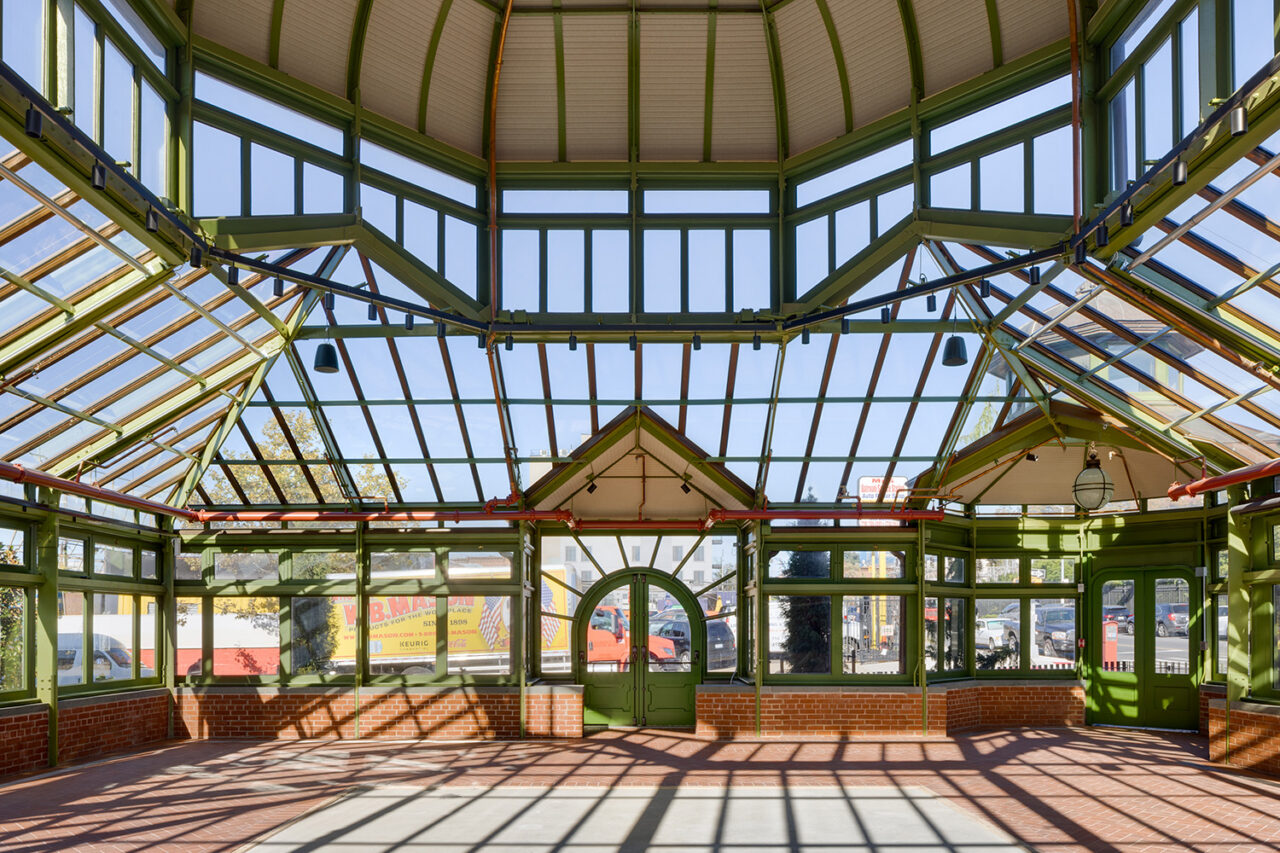
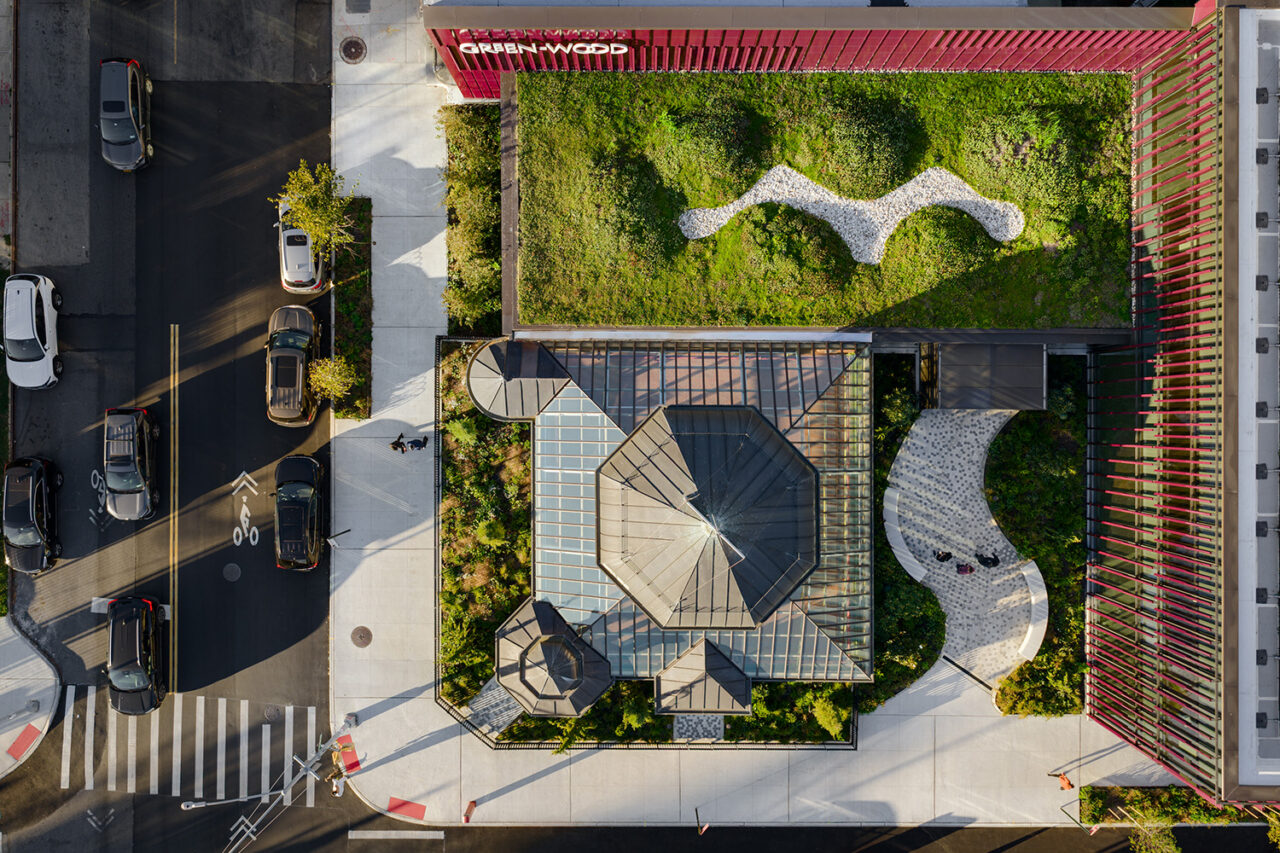
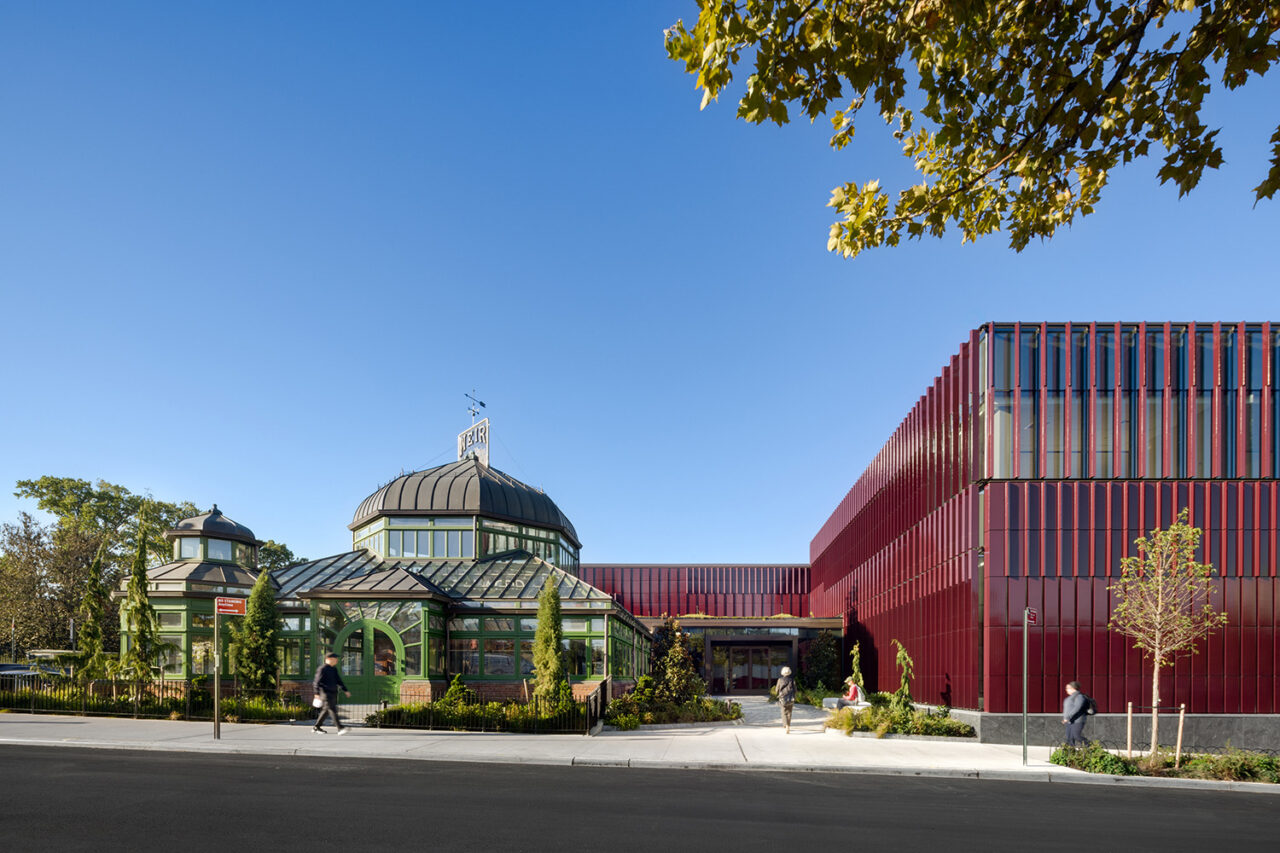
The Green-House at Green-Wood designed by Architecture Research Office (ARO) is the cemetery’s new front door. Located across the street from Green-Wood’s double-arched Civil War-era main entrance gate designed by Richard Upjohn at 25th Street and Fifth Avenue in Brooklyn, the new education and welcome center invites the public to learn about Green-Wood before entering the 478-acre landscape itself. Home to the Cemetery’s offices and archives, the building also serves as a community anchor. Two ground-floor galleries display collections as well as traveling exhibitions, and a classroom supports Green-Wood’s public programming. The new archive for staff and visitors will further encourage research into Green-Wood’s burial records. Clad in custom glazed burgundy terra cotta the new 17,000-square-foot L-shaped building consists of a one-wing that faces Fifth Avenue and a two-story wing that faces 25th Street. The building wraps around the restored Weir Greenhouse, built in 1895. The one-story wing connects to the greenhouse and includes the lobby and classroom space and is topped with a landscaped green roof. A new entry behind the greenhouse designed by Michael van Valkenburgh and Associates (MVVA) echoes the winding paths found in the cemetery. The all-electric building is certified LEED Gold. Founded in 1838 as a rural cemetery, it has been an inspiration for New York City’s public parks. It was listed on the National Register of Historic Places in 1997 and was made a National Historic Landmark in 2006. At various times, the Weir Greenhouse, the Green-Wood Cemetery Chapel, and the Fort Hamilton Parkway Gate and 25th Street gates, were separately designated as New York City landmarks.
Jersey City’s Landmarked Loews Theater Undergoes Renovation
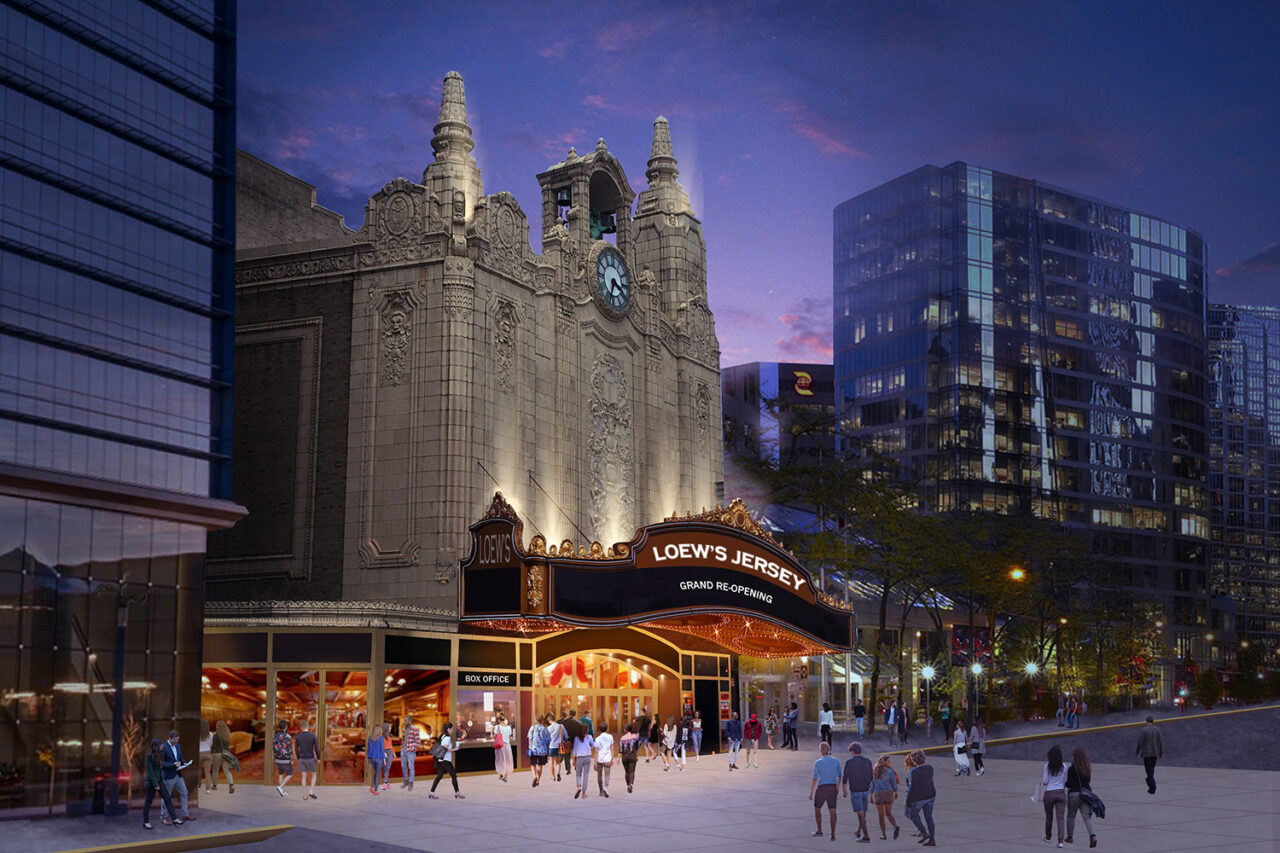
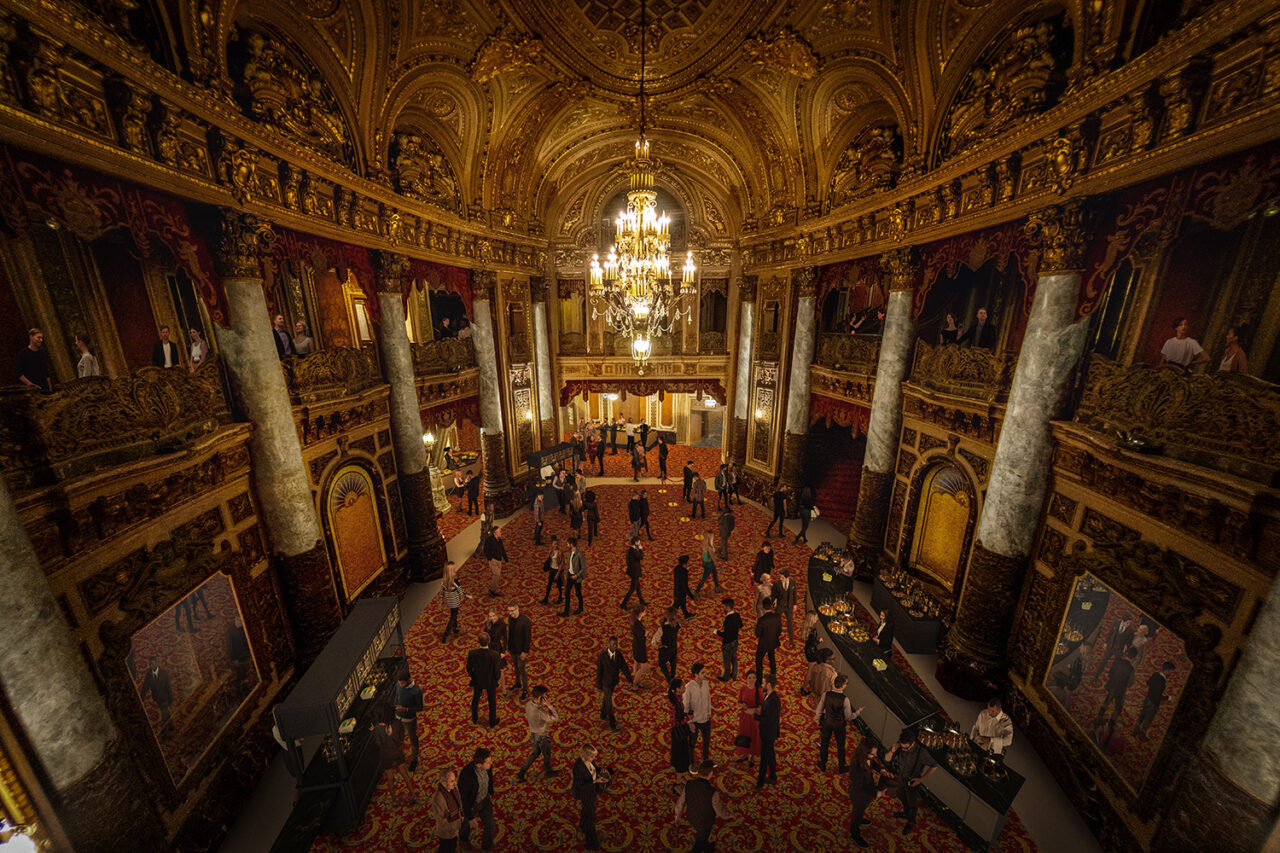
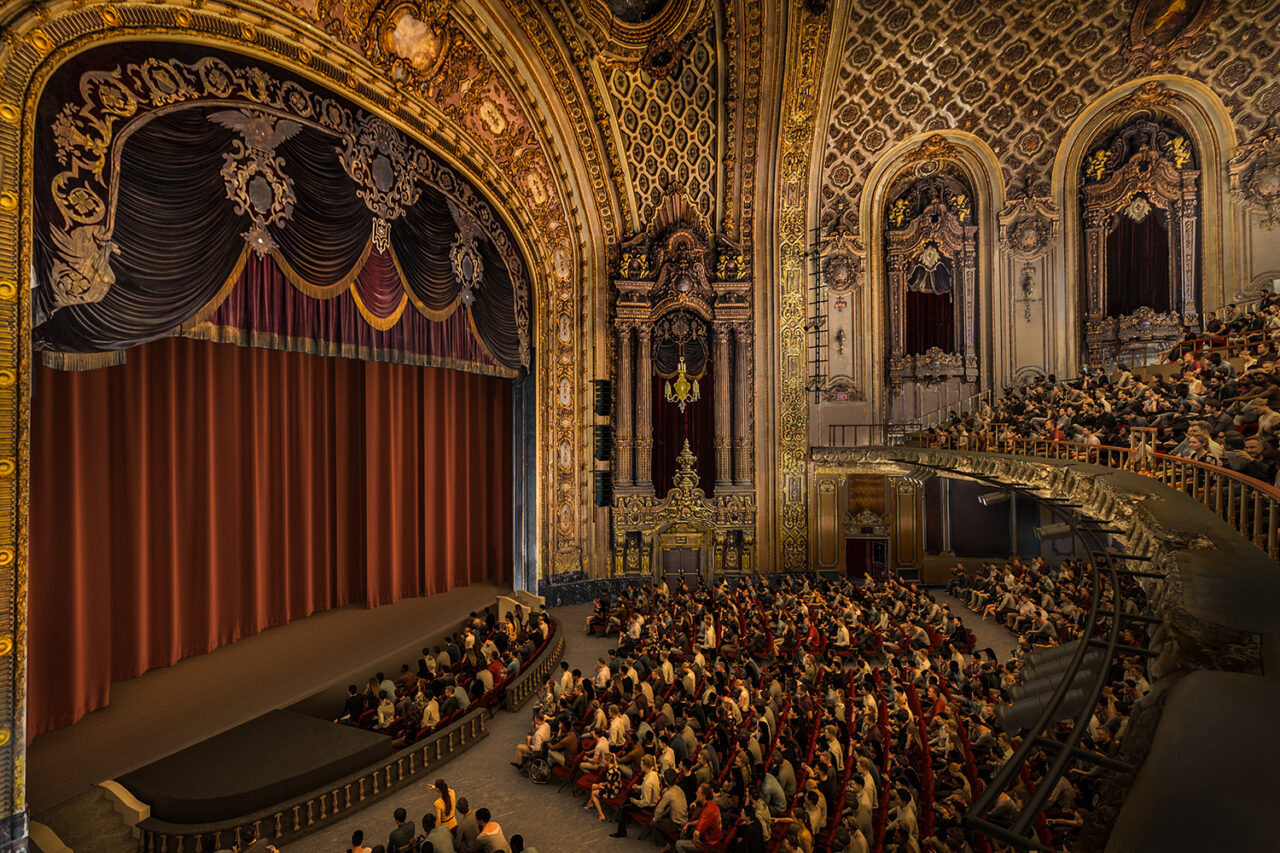
Curtain up! The Loew’s Jersey Theatre, one of the five original Loew’s Wonder Theatres, will reopen this fall after a comprehensive rehabilitation led by OTJ Architects. The approximately 100,000-square-foot theatre will be transformed into a 21st century multi-purpose cultural destination for live music, comedy, touring performances, sporting and special events as well as community events and educational programming while preserving its original character. Designed by prolific theater architects Rapp and Rapp, the 3,000-seat movie palace opened in 1929 operated as such until 1986. Ever since, the theater experienced limited use while the non-profit Friends of Loews worked to preserve it. Located in Journal Square, a burgeoning section of Jersey City, the project is a collaborative partnership between the Jersey City Redevelopment Agency (JCRA), the State of New Jersey/NJEDA, and Harris Blitzer Sports & Entertainment (HBSE). The venue’s work, which is being reviewed by the Jersey City Historic Preservation Commission, the New Jersey Historic Preservation Office, and the National Park Service, and will adhere to the Secretary of the Interior’s Standards for the Rehabilitation of Historic Structures, encompasses the building’s terra-cotta exterior including the original marquee, all public areas, stage and support spaces, as well as comprehensive upgrades to MEP systems. The orchestra level of the theater will return to being one large space with a standing room-only floor and flexible tiers that will allow the theatre to accommodate 2,600 to 4,000 patrons in the orchestra and the balcony. Significant interior and exterior finishes have been restored or replicated where original elements are beyond repair. Extensive materials analysis and detailed mock-ups have been conducted and are ongoing to ensure historical accuracy and quality craftsmanship. The restoration is overseen by Phelps Construction Group and additional consultants include structural and building envelope engineering services by Thornton Thomesetti, historic preservation consultant HMR Architects, Evergreene Architectural Arts, and Off the Record Collective (OTR) is the interior designer for the artist and backstage environments.
Affordable Housing Development Breaks Ground in Cypress Hills, Brooklyn
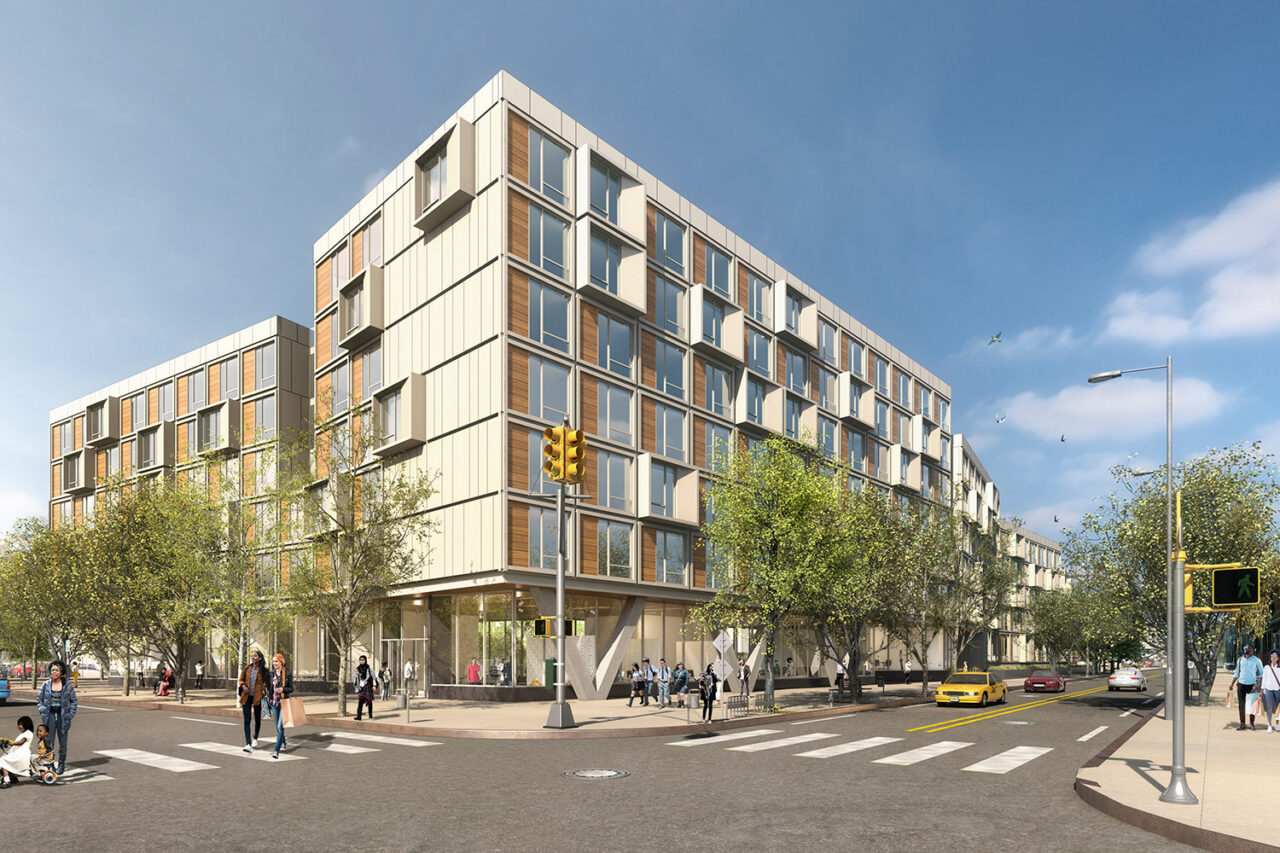
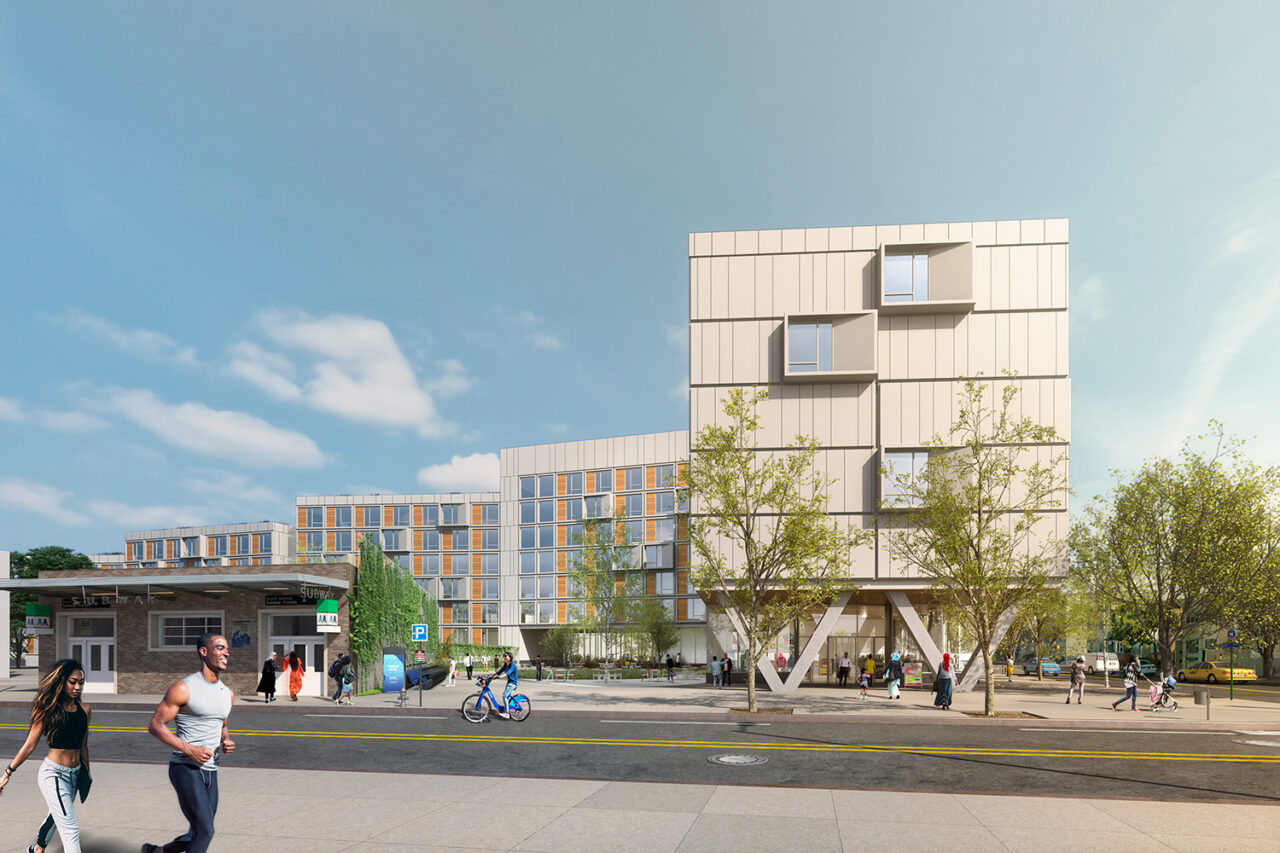
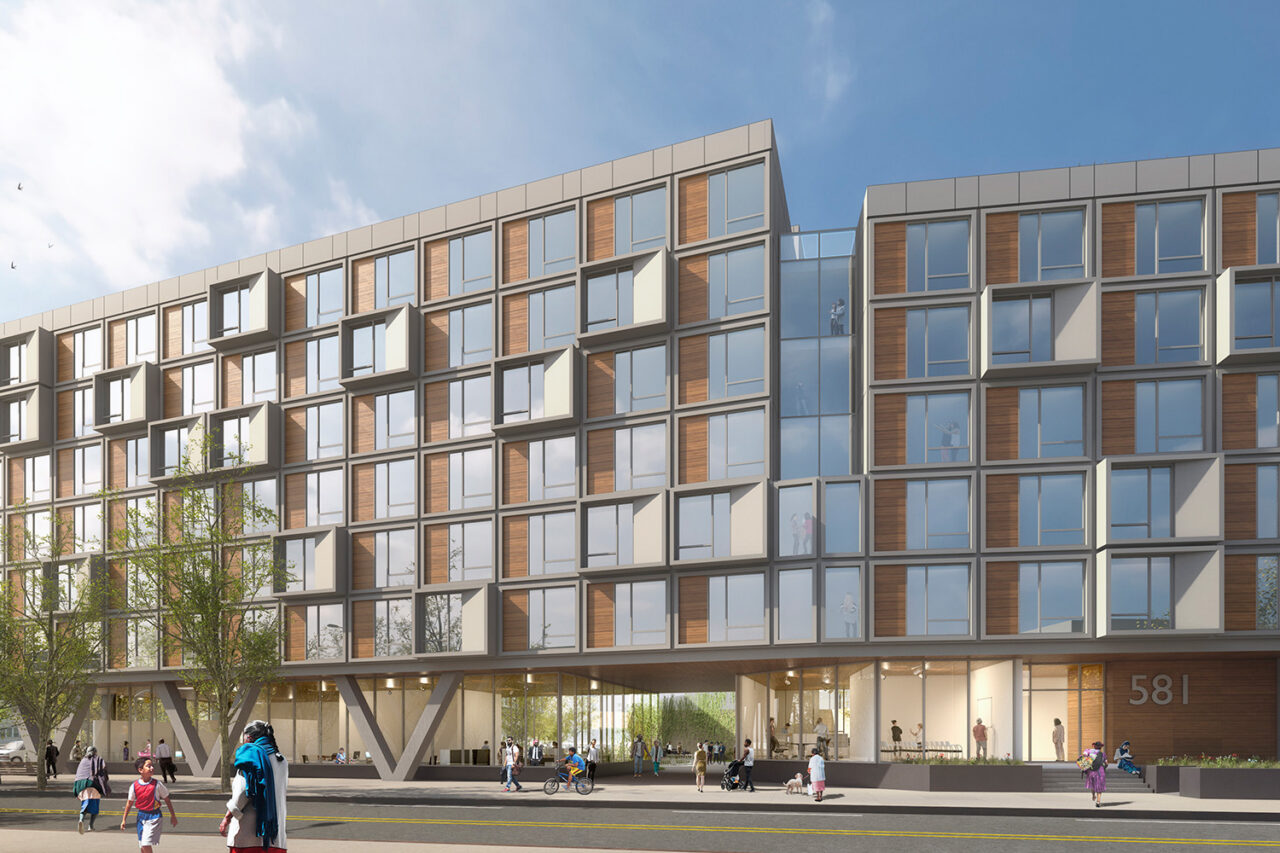
Construction has started on a new 196,000-square-foot affordable housing development at 570 Eldert Lane in Cypress Hills, Brooklyn. Designed by Think! Architecture and Design for a joint venture of Slate Property Group, Thorobird Companies LLC, and Bangladeshi American Community Development & Youth Services (BACDYS), the project transforms a long-underutilized parking lot adjacent to the Grant Avenue subway station into housing and 10,000-square-feet of community space. The units range from studios to four-bedroom apartments of which 66 units will be set aside for formerly homeless residents, with the remaining homes serving low-income families. The ground-floor community space will be anchored by BACDYS for local programming and will also include an indoor fitness room, a landscaped rooftop, and a rear courtyard. The building is conceived as five interconnected masses, joined by angled cores that open to double-height lounge spaces. These shared areas interrupt the corridors and draw natural light into the interior. Two of the roofs accommodate mechanical and photovoltaic systems, while the remaining three cascade from levels eight to six and are designed as linked, occupiable outdoor spaces for residents. Subway commuters will be able to walk through the ground-level landscape, passing under the building and past two integrated community facility spaces. A raised residential ground floor establishes a clear delineation between public and private space, with an additional rear garden reserved for residents. Initially, the building was conceived as a modular project, but due to a range of factors, the design was adapted to traditional concrete construction. Because of the network of subway tunnels located just a few feet below grade, the building’s foundation is designed to isolate the structure from train vibration through a system of acoustical pads. To reduce the load imposed on the tunnels, the structural shell is formed of post-tensioned concrete. To retain elements of the original modular approach, the façade is unitized and is being fabricated in Europe.
University of Virginia’s McIntire School of Commerce Expansion Complete
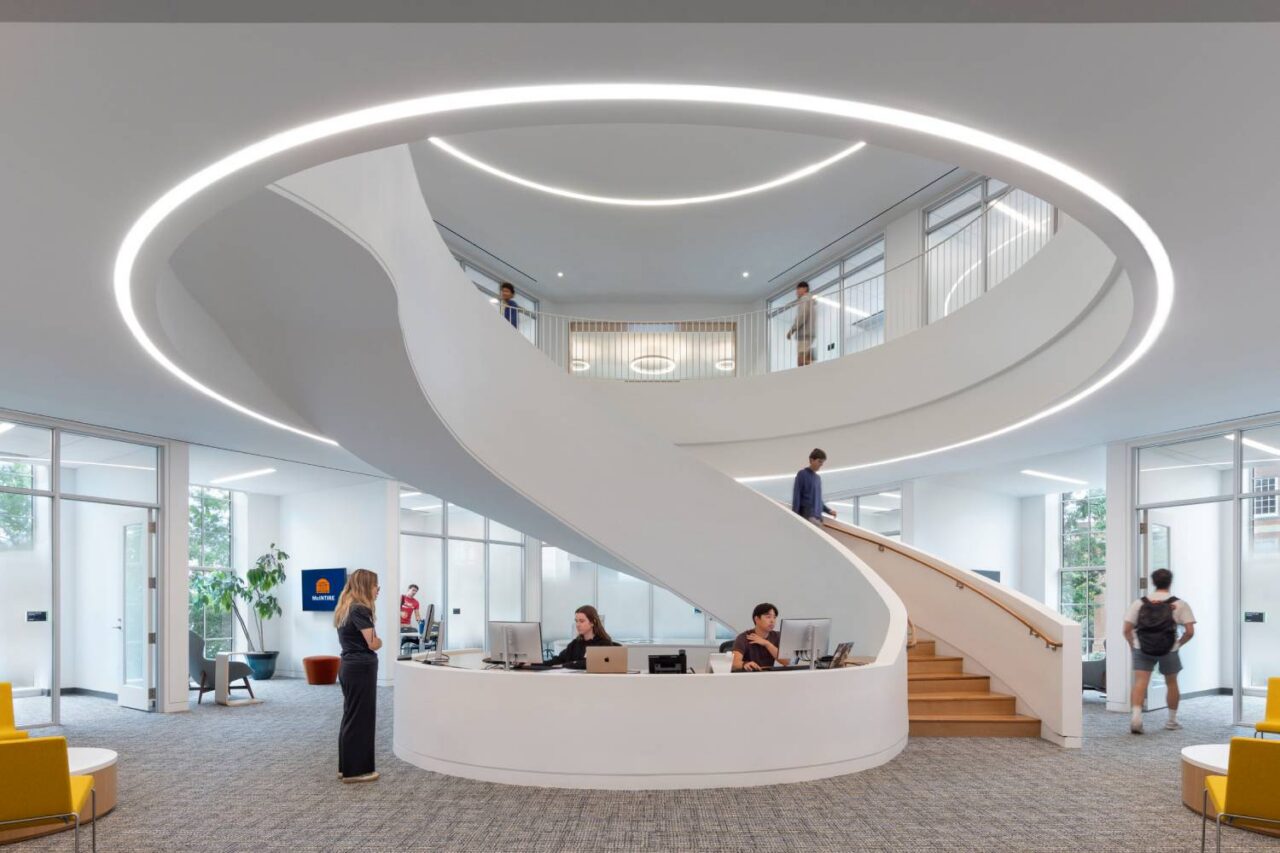
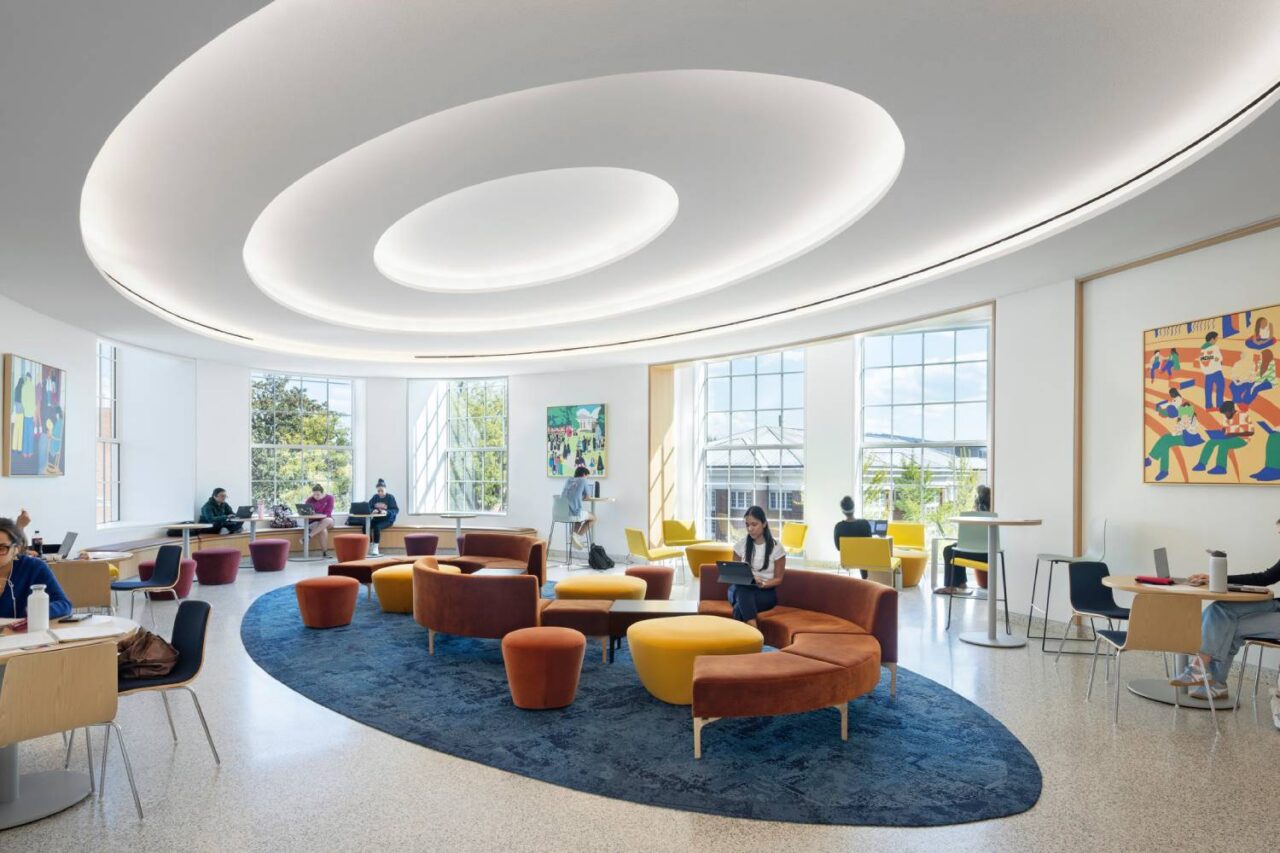
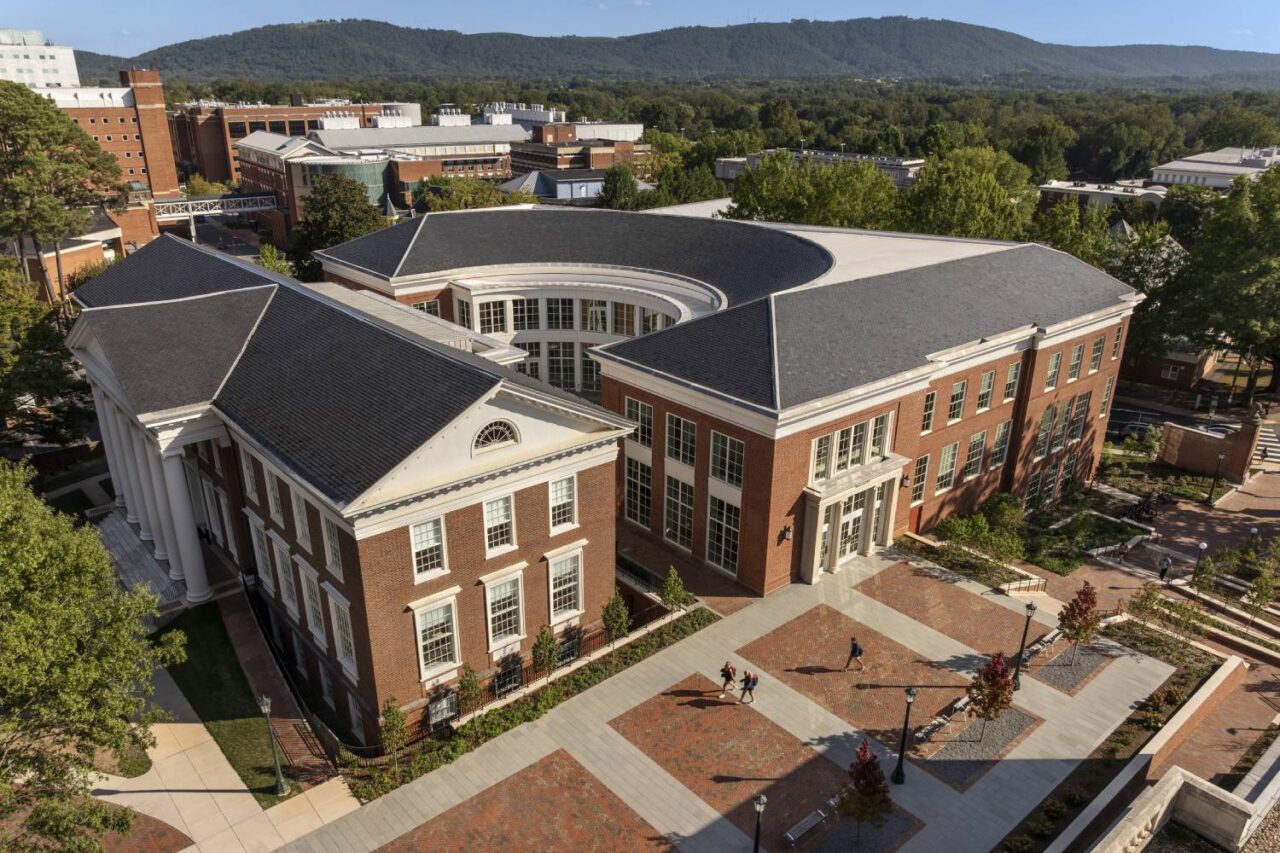
RAMSA (Robert A.M. Stern Architects) has completed the expansion and modernization of the McIntire School of Commerce on the historic grounds of the University of Virginia in Charlottesville. The new school combines the revitalization of Cobb Hall with the addition of Shumway Hall, establishing a precinct that includes Rouss and Robertson Halls. In collaboration with Glavé & Holmes Architecture, Cobb Hall, a 23,000-square-foot brick building constructed in 1917, was retrofitted, preserving or duplicating original details wherever possible. Crowning Cobb Hall is a double-height solarium, created after a historic skylight was uncovered above a closed-off attic space. The attic was removed and a laylight replicating the original skylight was integrated into the ceiling. Cobb Hall’s historic frontage was rehabilitated, while a portion of the building’s rear exterior was removed to accommodate Shumway Hall and establish a framed outdoor courtyard. Below grade, a connection to Shumway Hall is made on Cobb Hall’s second level, where a hallway connects students into the new building, where they emerge onto a balcony overlooking the new McIntire School atrium. Clad in Jeffersonian russet brick, the five-story, 86,200-square-foot Shumway Hall, the school’s latest addition, integrates with the scale and materiality of the existing campus. A crescent-shaped courtyard, made possible by the underground connection between Shumway and Cobb Halls, preserves the surface between the two buildings for outdoor gatherings. Shumway Hall is anchored by an atrium that serves as both a community lounge and an events venue that accommodates nearly 300 people. A curved stairway connects the two levels of the Student Success Center. “A Life Worth Living” by Ato Ribeiro in the second floor Commons includes salvaged wood from Cobb Hall.
In Case You Missed It…
FXCollaborative and developer L+M Development Partners have broken ground on Arverne East Building D, a 10-story, 360,000-square-foot, 320-unit, mixed-use, affordable housing project on an oceanfront site in the Rockaways. Built to achieve Passive House certification, the building’s carefully considered angles and stepped massing are responsive to the resilient site topography and maximize terraces and ocean views. The design team drew inspiration from the early Rockaway seaside communities, echoing the materiality and tectonics of the beachfront bungalow structures, the tactility of the boardwalk, and the undulation of the dune-scape habitat. The project is a winner in the fourth round of NYSERDA’s Building of Excellence funding pipeline for sustainable housing across the state.
WXY has created The Urban Forest Plan that outlines the City’s plan of action to support the urban canopy. The document contains a total of 43 individual actions for public agencies, private partners, and community stakeholders to consider. The Plan sets a 30 percent canopy target by 2040 and builds the framework to reach it by preserving tree canopy, planting more trees, and cultivating stewards of the urban forest.
Mayor Zohran Mamdani and the NYC DOT have unveiled potential redesigns by Starr Whitehouse that seek to revitalize and beautify Park Avenue between East 46th and East 57th Streets while improving safety for the community. The Park Avenue redesign project comes as the MTA works to rehabilitate the Grand Central Terminal train shed, which sits below this section of Park Avenue.
Through a juried mapping project, Built by Women, produced by the Beverly Willis Foundation, recognizes the significant work of women architects, landscape architects, urban designers, engineers, contractors, and developers in New York City. Once-Future Office designed the 2026 map.