





by: Linda G. Miller
A Domed Mushroom Pavilion Opens in Mexico
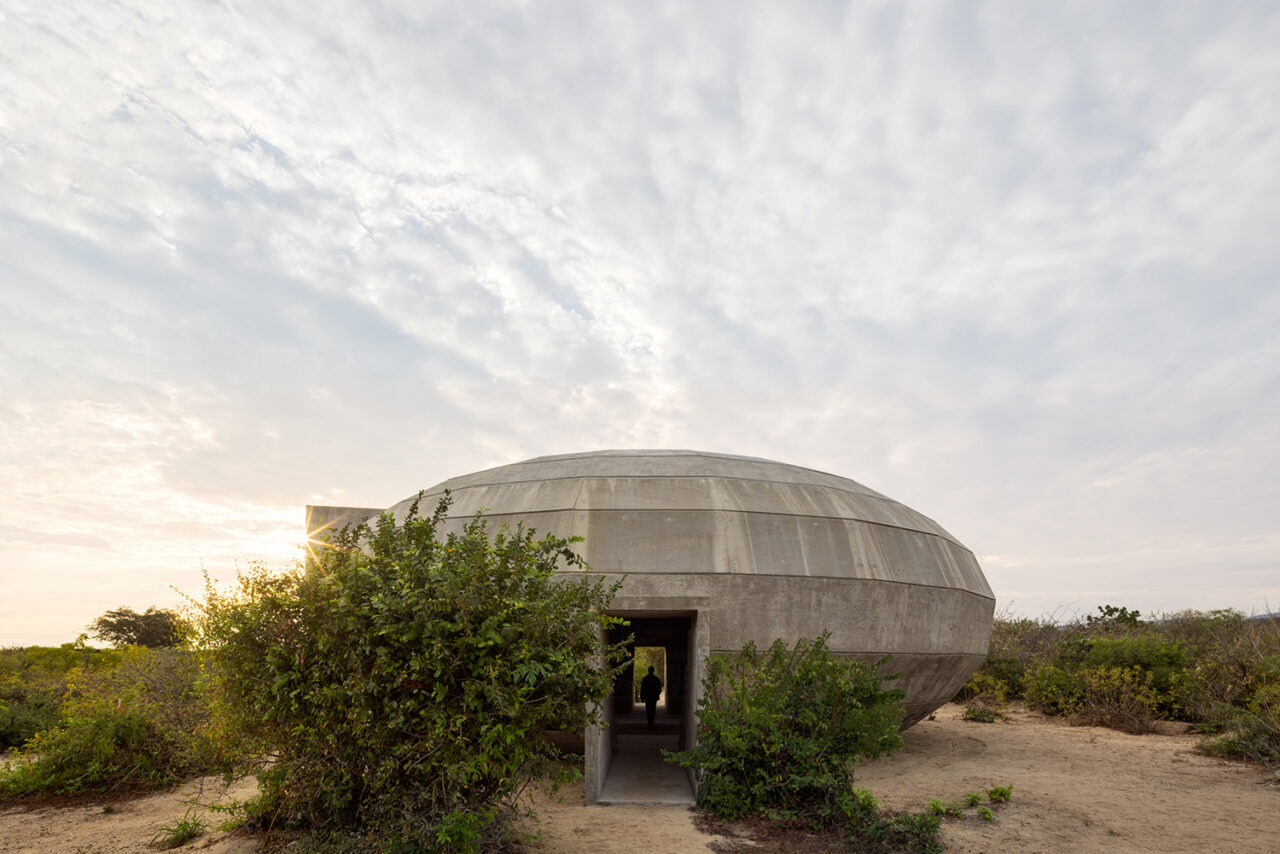
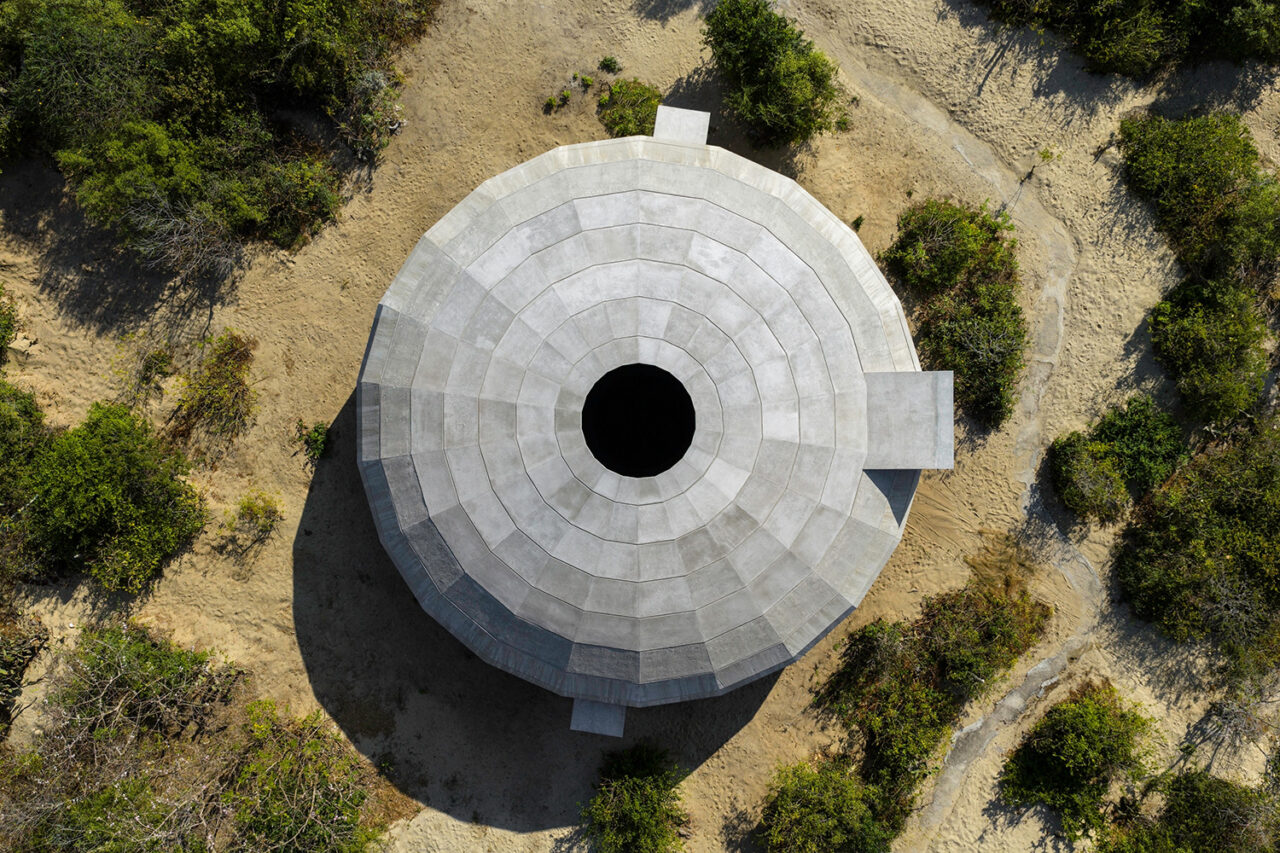
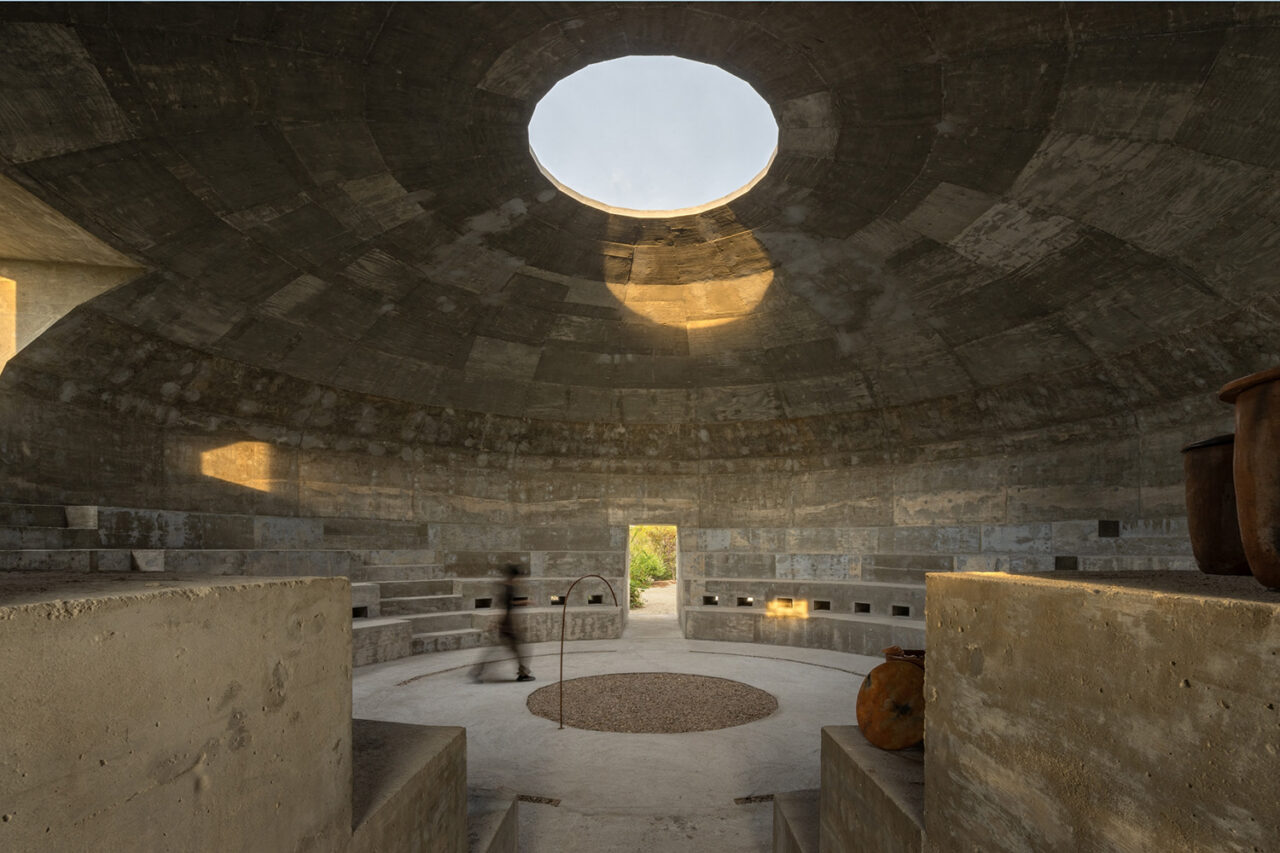
The Mushroom Pavilion designed by OMA / Shohei Shigematsu has opened on the Fundación Casa Wabi‘s 65-acre campus in Puerto Escondido on Mexico’s Pacific Coast. The 2,153-square-foot pavilion is a basic, ellipsoidal form created to optimize interior organization for growing mushrooms. Within, the domed interior can be divided into three chambers—the fruiting room, incubation room, and storage—encircling a community gathering space at its center. The lower half of the bowl is stepped, like an amphitheater in the round, to make shelves for handmade terra cotta mushroom pots crafted by local artisans. The stepping and elliptical form create a panopticon viewing experience, rendering the mushroom growing process visible in its entirety. An oculus opens the central space to the sky and fills its cave-like interior with light, while additional openings around the lower perimeter enable natural ventilation. A platform and portal at the top of the steps offer views above and beyond the natural brush to the ocean. The three-dimensional volume curves inward at its base to minimize the pavilion’s contact on the ground, preserving the natural landscape as much as possible and allowing the native guayacan to thrive. The pavilion’s concrete shell is composed of troweled and poured-in-place concrete, burlap-stamped on the outside to retain the site’s high iron content water. Over time, natural elements will cause the pavilion to rust and change in appearance.
The project marks OMA’s first built work in Mexico. Founded by Mexican artist Bosco Sodi, the Casa Wabi’s mission is to forge social development through the arts. Its name originates from the Japanese philosophy of wabi-sabi, which seeks beauty and harmony in the simple, the imperfect, and the unconventional. The campus features more artist/architect-designed structures including the Tadao Ando Architect Associates-designed Wabi House, which includes six private bedrooms, two shared studies, a multipurpose room, a screening room, an exhibition gallery, a sculpture garden, and multiple recreational areas.
Sotheby’s Breuer Building Welcomes Marcel Restaurant
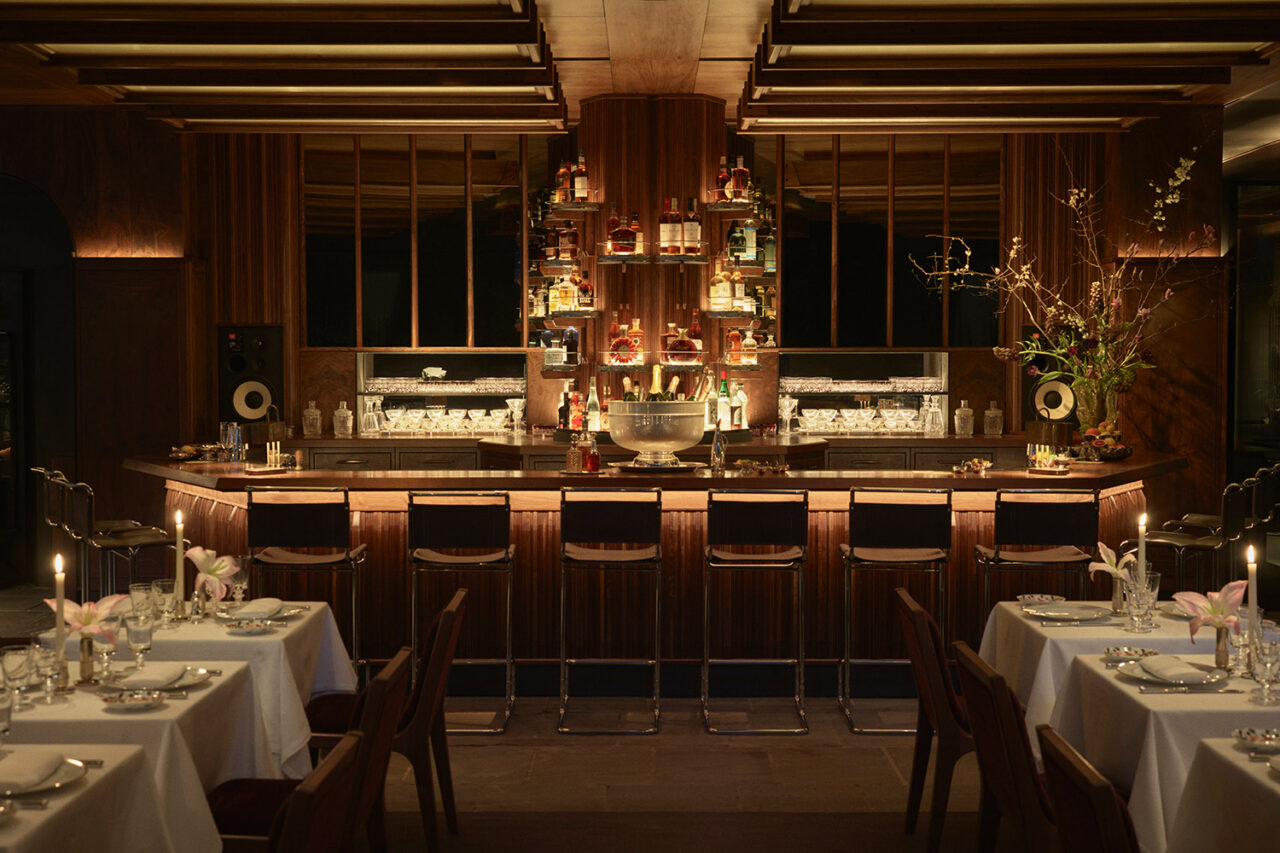
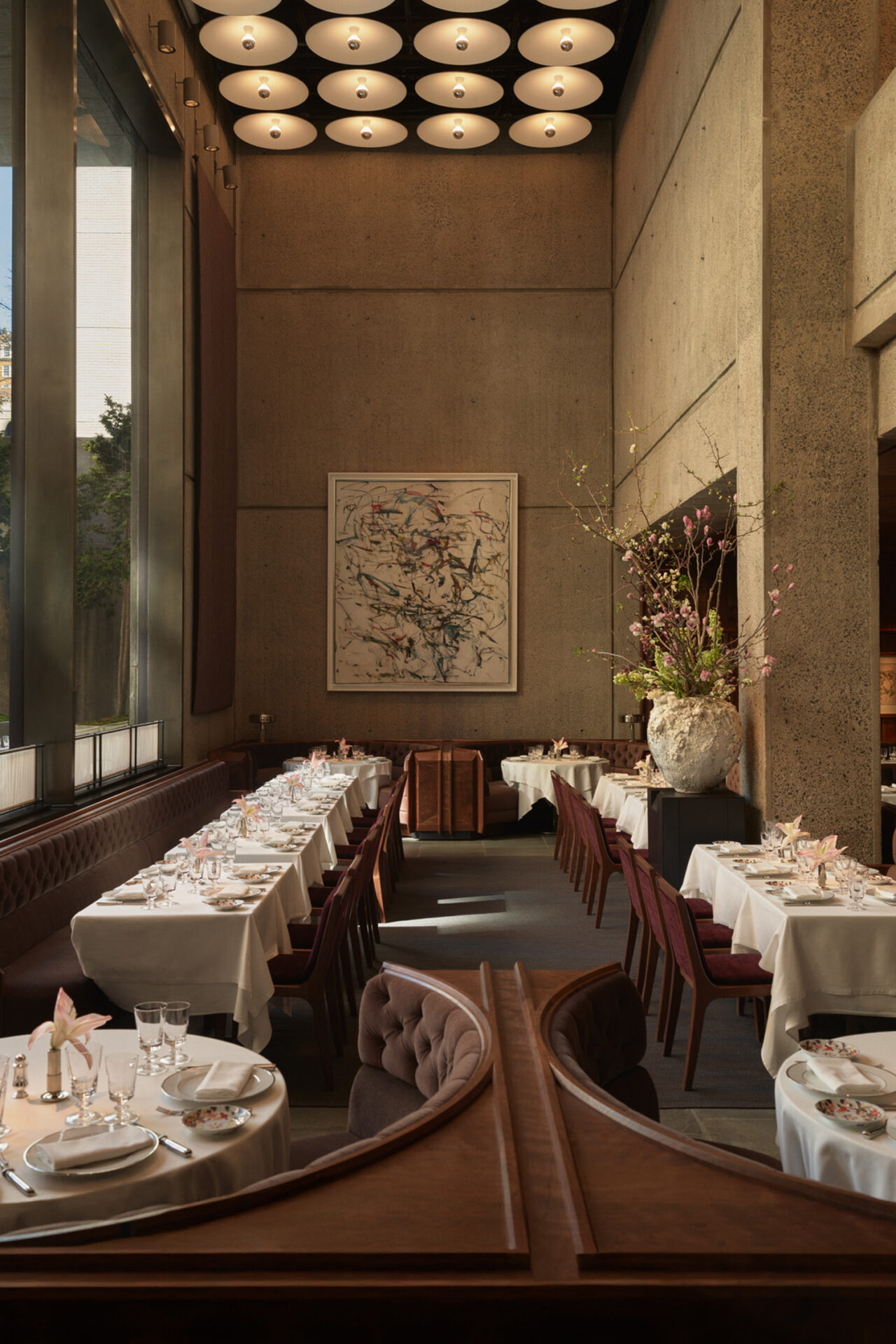
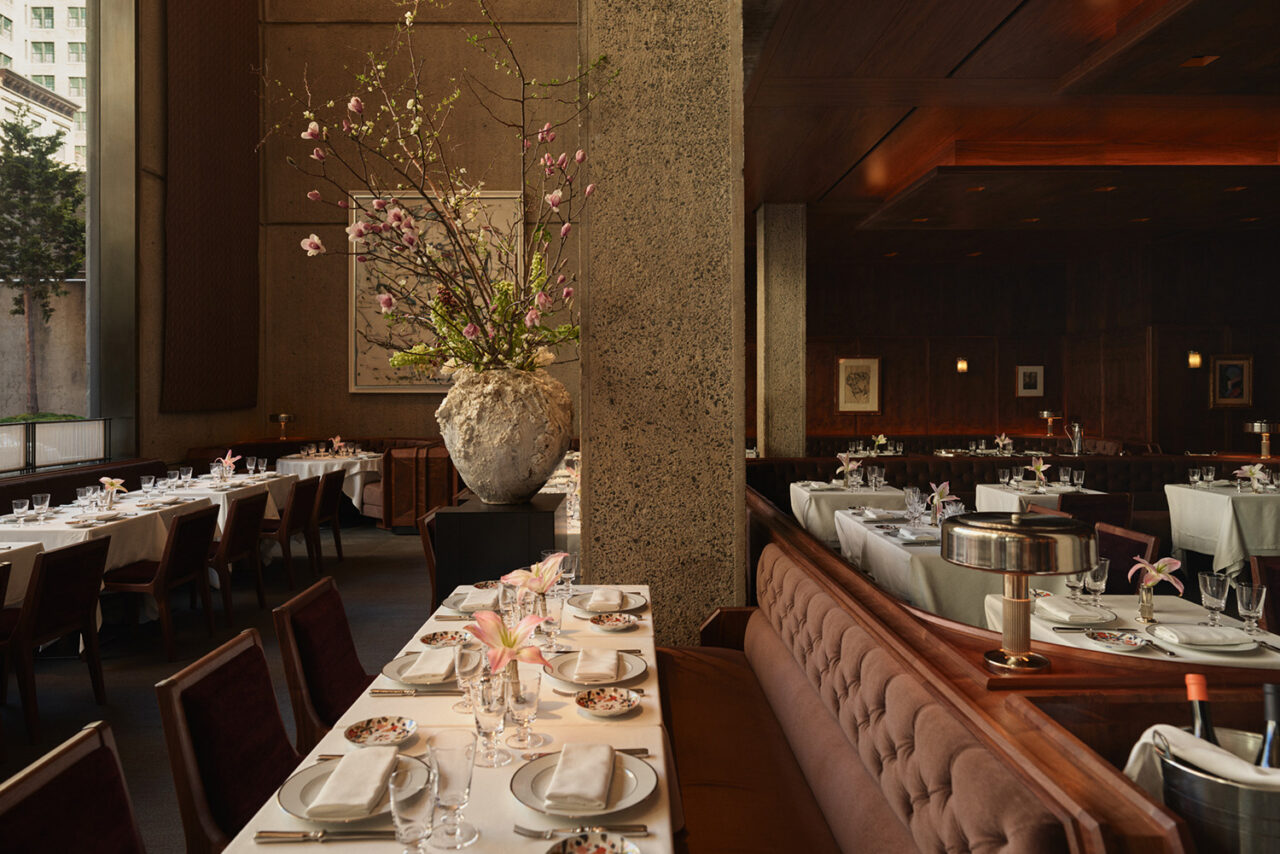
Named for Marcel Breuer, the building’s architect, Marcel, a new 104-seat restaurant and patisserie designed by Roman and Williams has opened in the lower level of the Breuer Building. Located at 945 Madison Avenue at 75th Street, the Breuer, after a renovation by Herzog & de Meuron in partnership with PBDW Architects became the New York headquarters of Sotheby’s. Operated by the auction house in partnership with Roman and Williams, the Marcel combines the experience of dining on fine French Continental cuisine with the opportunity to engage in the purchase of art and other high-end collectibles. Diners are surrounded by a rotating selection of masterworks on the walls alongside vitrines showcasing design, luxury, and natural history curiosities some of which are from upcoming auctions, private sales or are on special loan.
As patrons descend to the dining room, the reimagined sculpture garden comes into view. This landscaped extension of the restaurant seats 70 additional patrons who can dine en plein air all day. The dining room features walnut-paneled walls, warm candlelight, and an open kitchen. Breuer’s bush-hammered concrete columns, with original lighting details have been preserved. A mirrored bar highlights vintage steel and leather Bauhaus stools paired with original Breuer lamps. Custom Roman and Williams Guild lighting fixtures in cast bronze and cast glass complement Breuer’s vintage lighting. Dusty cocoa-hued mohair banquettes are a nod to the refinement of the Upper East Side circa 1966, the year Breuer’s building for the Whitney Museum opened. The restaurant is filled with furnishings from the Roman and Williams 56-piece collection that includes lighting, tabletop, and case goods, which can be purchased through the Sotheby’s catalogue.
Tennessee Performing Arts Center to Break Ground in Nashville
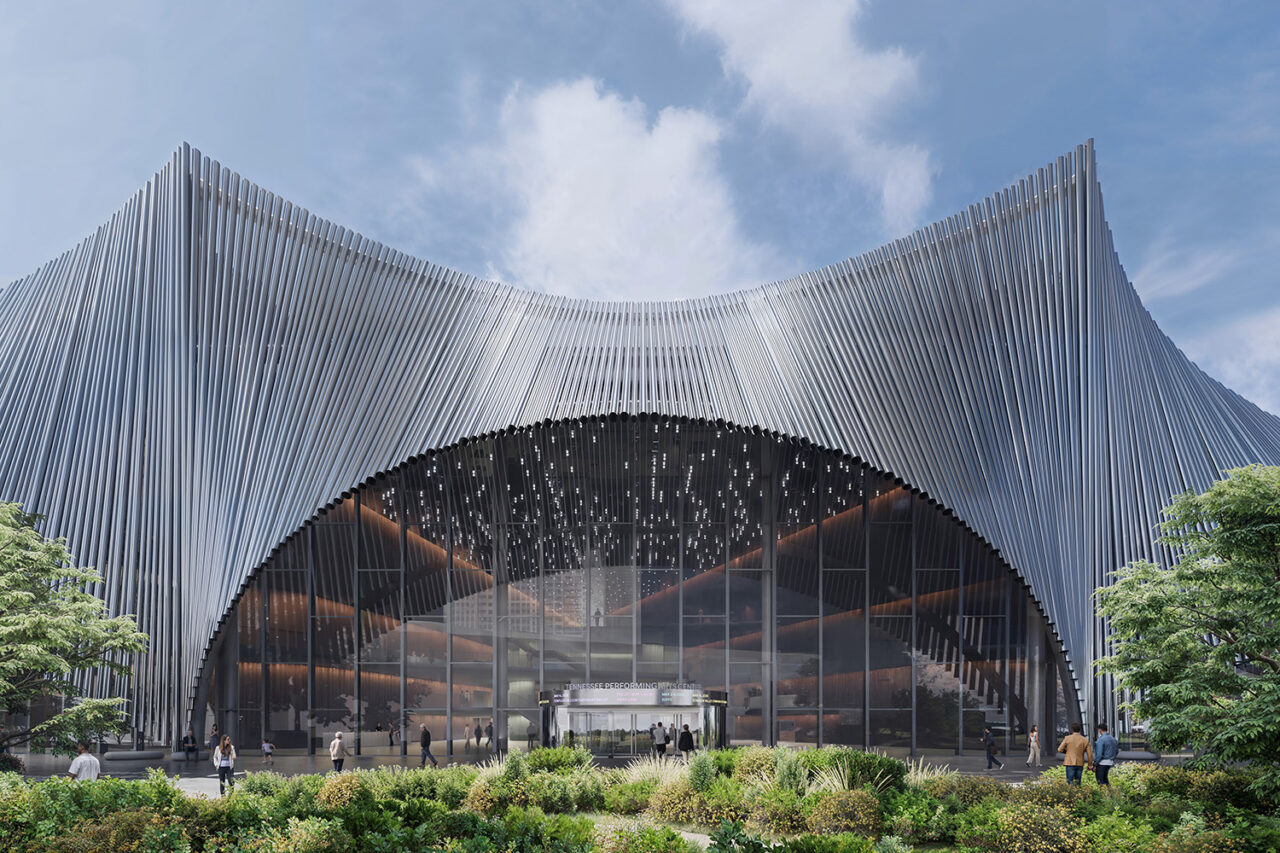
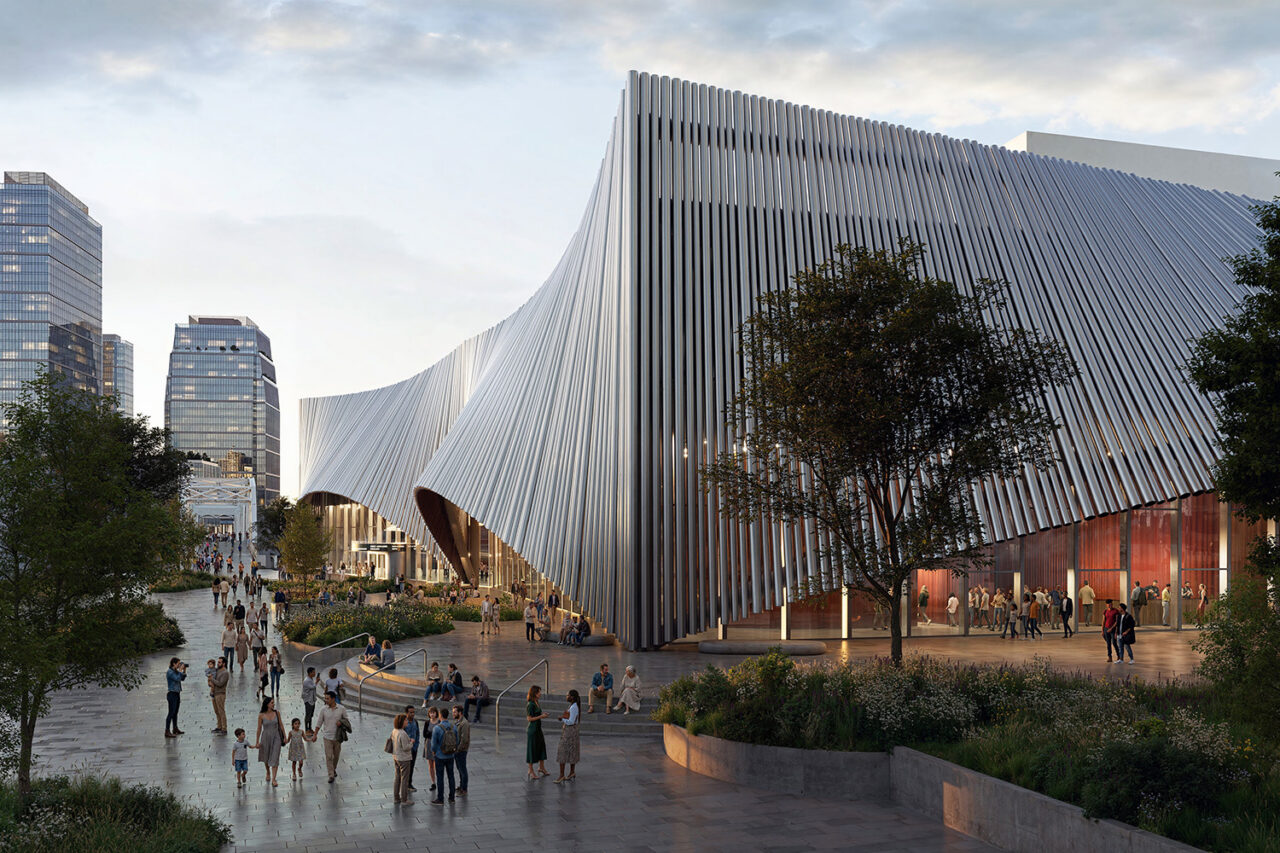
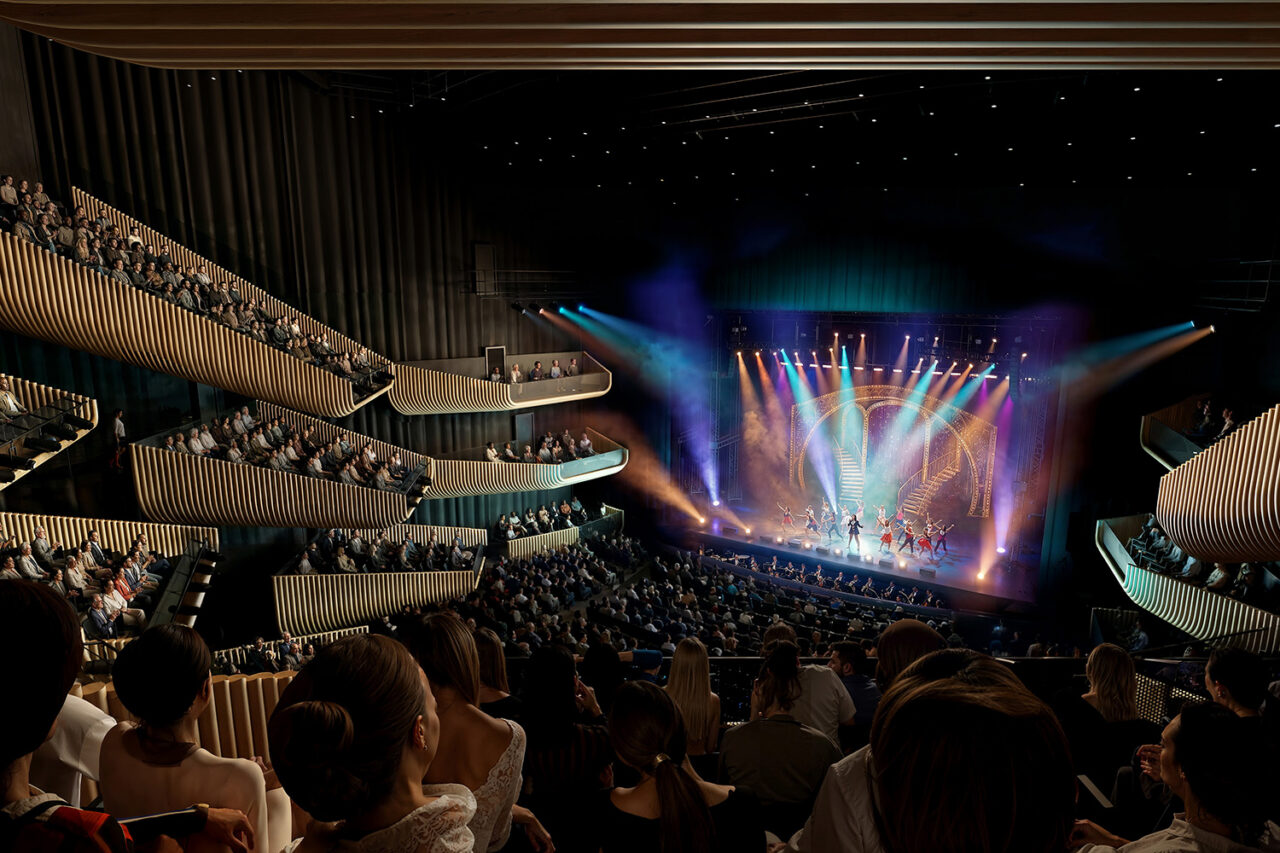
Designed by BIG-Bjarke Ingels Group and William Rawn Associates (WRA) with HASTINGS Architecture, Nashville’s new 307,000-square-foot Tennessee Performing Arts Center (TPAC) is expected to begin construction in 2027, with a projected opening in 2030. Located on the East Bank of the Cumberland River with the Tennessee Titan’s Nissan Stadium as its neighbor, outdoor staircases connect TPAC to the river, integrating the center into Nashville’s new East Bank district. The new TPAC contains four distinct performance spaces including the multi-function Grand Broadway theater, a dance and opera hall, a flexible black box theater, and a cabaret space. The building will serve as the new home of the Nashville Ballet, Nashville Opera, and Nashville Repertory Theatre while creating venues for traveling Broadway shows, dance performances, and community events. TPAC’s reflective metal facade, composed of an array of aluminum tubes, creates a dynamic, sculptural volume that appears to look different from various vantages points. Taking cues from an undulating theater curtain, the arches on the exterior lift to reveal the activity within. Guests are welcomed into a light-filled atrium. Two lobbies connect the performance spaces. At street level, the main lobby has views of the river and the proposed waterfront park, and the elevated lobby fronts the John Seigenthaler Pedestrian Bridge. A grand staircase, central lounge, and cascading concrete slabs provide spaces where patrons can congregate.
Within the Broadway Theater, floating wood-clad ‘trays’ organize the seating into intimate clusters, each staggered in height for optimized sightlines. The opera and dance hall is designed to enhance the views of the dancers’ feet. The Black Box Theater places the audience directly in the performance, eliminating the proscenium ‘picture frame’ that traditionally outlines the stage and allowing for different seating configurations tailored to each production. The Cabaret features a stage that extends into the audience and banquet-style seating. Apeiro Design serves as the theatre planning and theatrical systems design consultant on the project. A transparent rehearsal space offers visitors a glimpse behind the scenes, while a sensory room offers a calming environment during performances, and the roof terrace provides views panoramic views. Landscape design by OLIN surrounds the building with diverse plant life and pockets for public outdoor performances, gathering spaces, and play groves.
One Times Square Introduces New Observation Deck
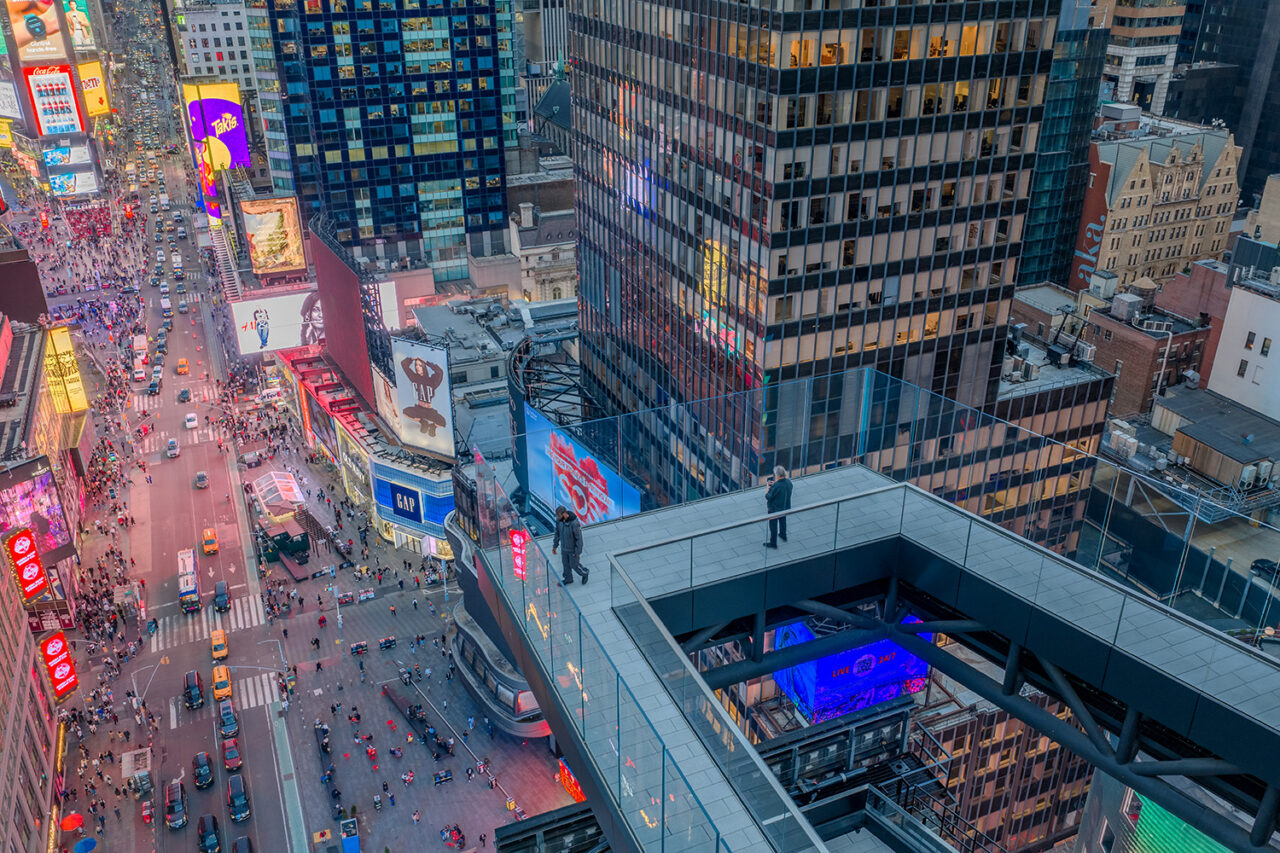
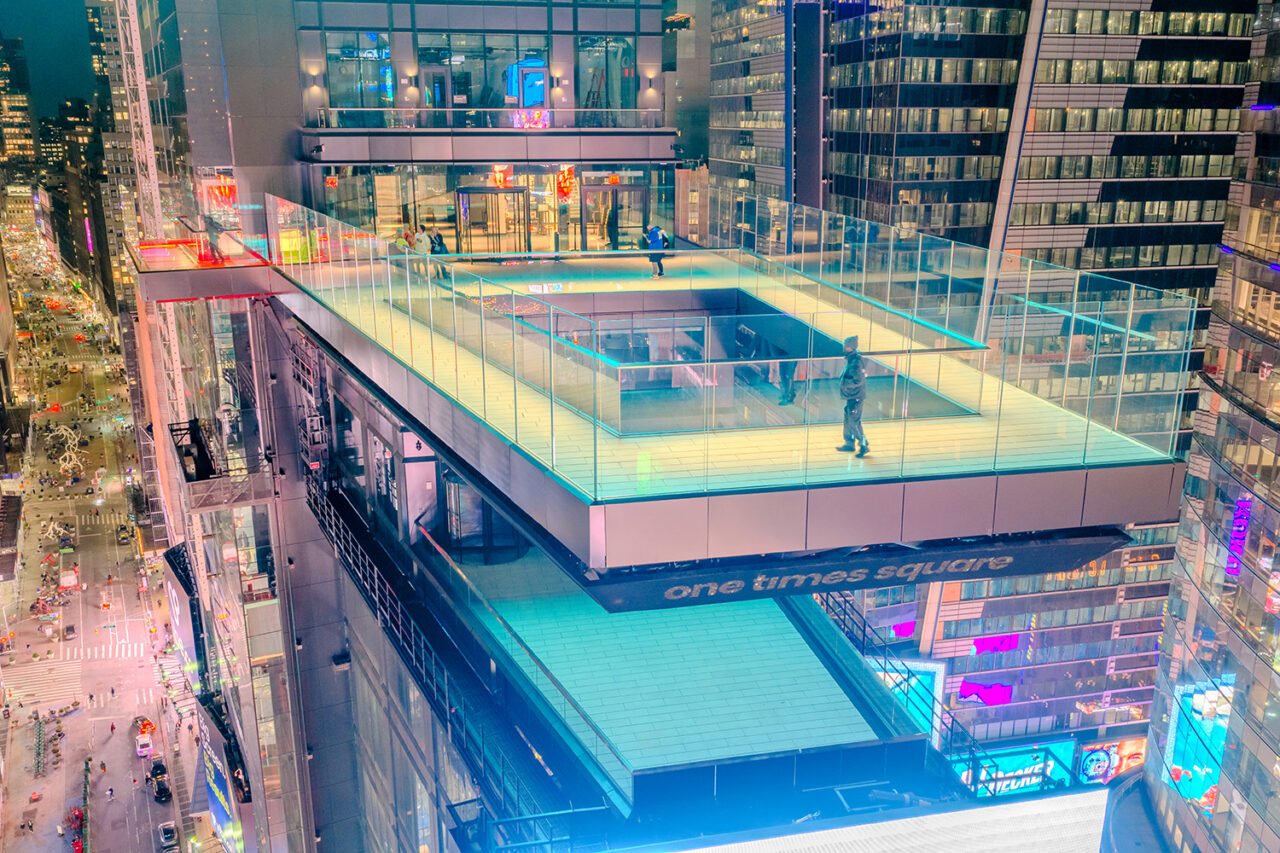
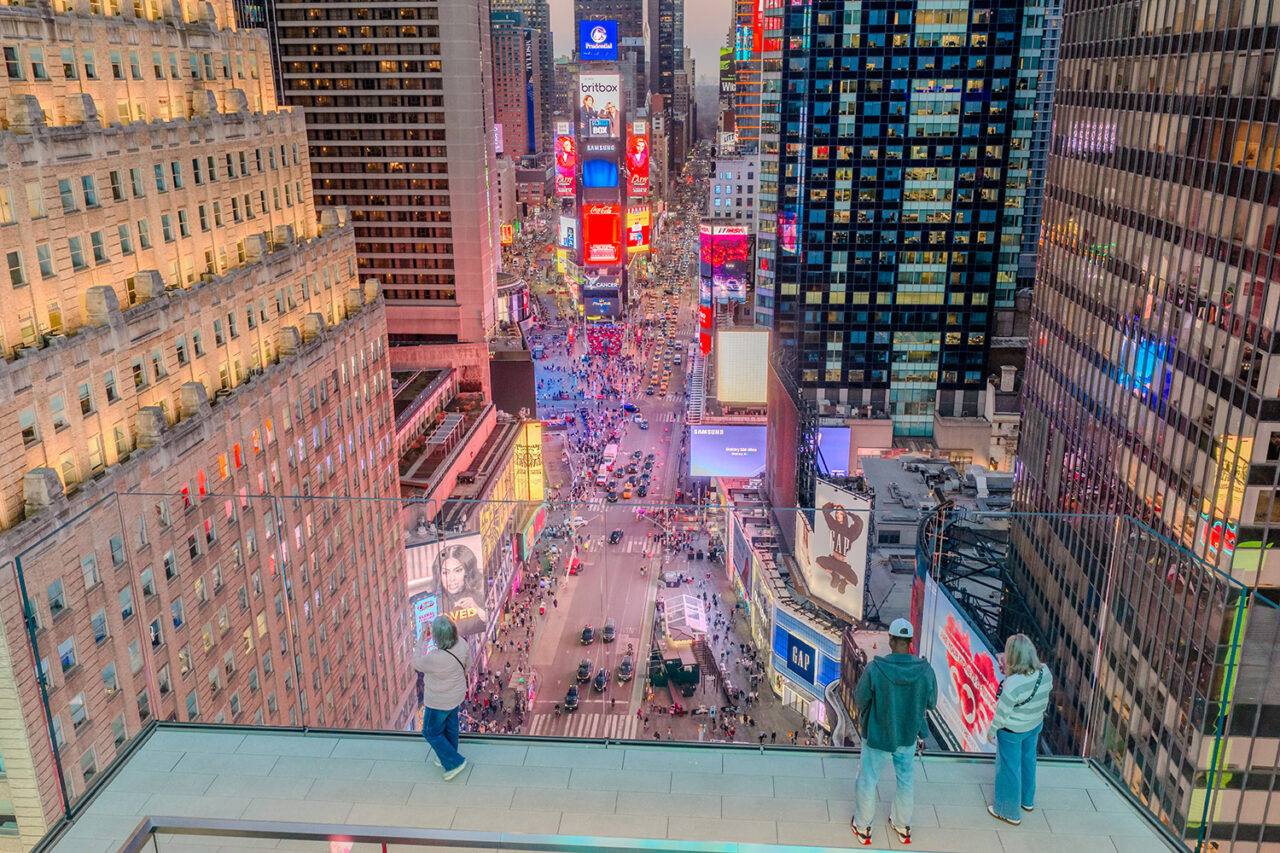
As part of S9 Architecture’s design for the redevelopment of the One Times Square at 1475 Broadway, an observation deck called the One Times Square skywalk cantilevers from the structure and faces the Red Steps on 47th Street, giving visitors a new way to view Times Square. Built in 1904 and prominently sited on a trapezoidal site between West 42nd and 43rd Streets, the 26-story commercial tower, a cultural symbol since it hosts the New Year’s Eve ball drop, remained largely unoccupied for decades until it was redeveloped by Jamestown beginning in 2022. The building underwent a gut renovation and recladding. The 3,570-square-foot open air deck extends 55 feet to the north, six feet to the east and west, and 10 feet to the south, wrapping around glass elevators. The structure is finished with an intumescent coating that matches the project’s overall metal finish while ensuring fire protection. The deck surface is composed of pedestal set concrete pavers. An eight-foot-tall clear glass windscreen spans along the entire perimeter. The observation deck, exterior elevators, and entry canopy are visually unified through a continuous LED “ribbon” that travels up the building establishing a nighttime presence. Interior spaces have been transformed into a museum which tells the history of Times Square, a wedding venue, and a “technology enabled brand activations.” SLCE served as the project’s executive architect.
New York City’s Symphony Space Undergoes Renovation
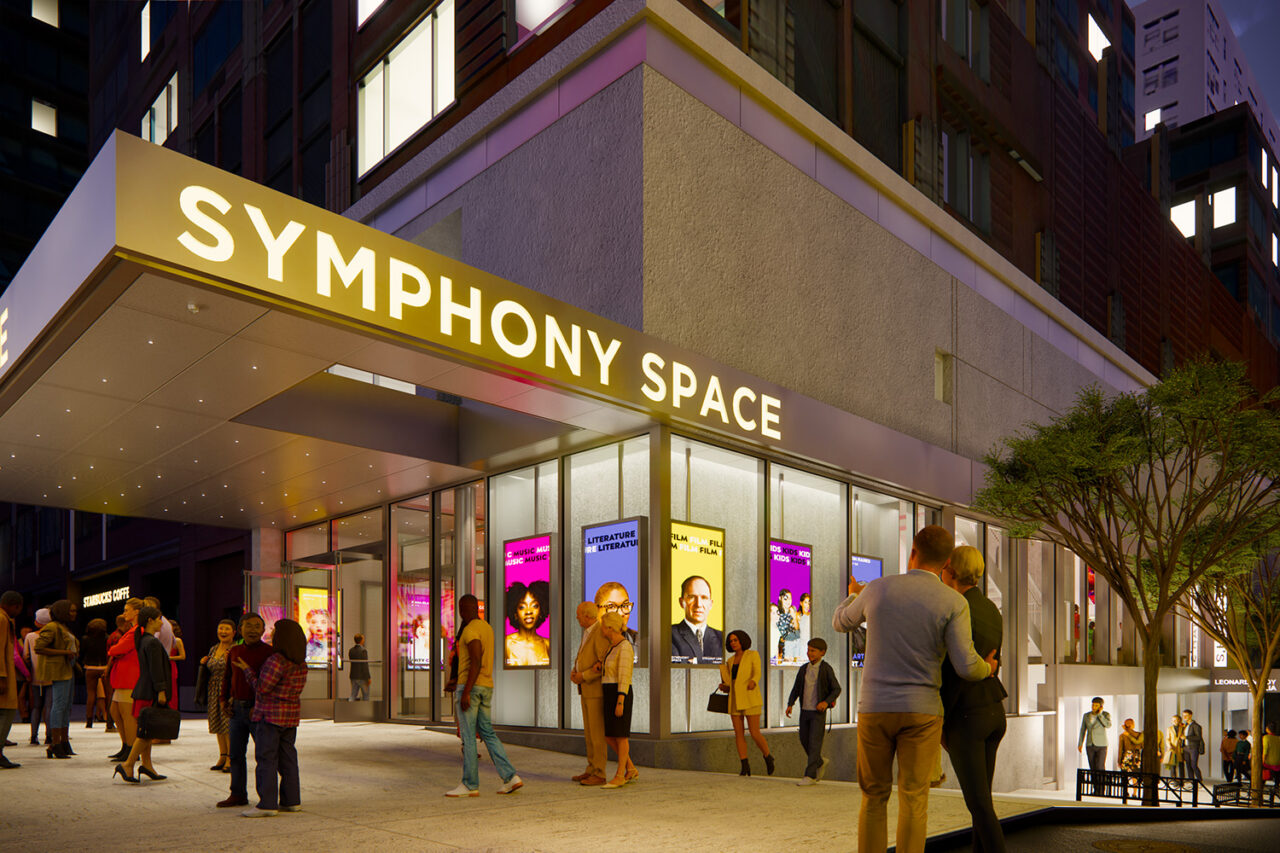
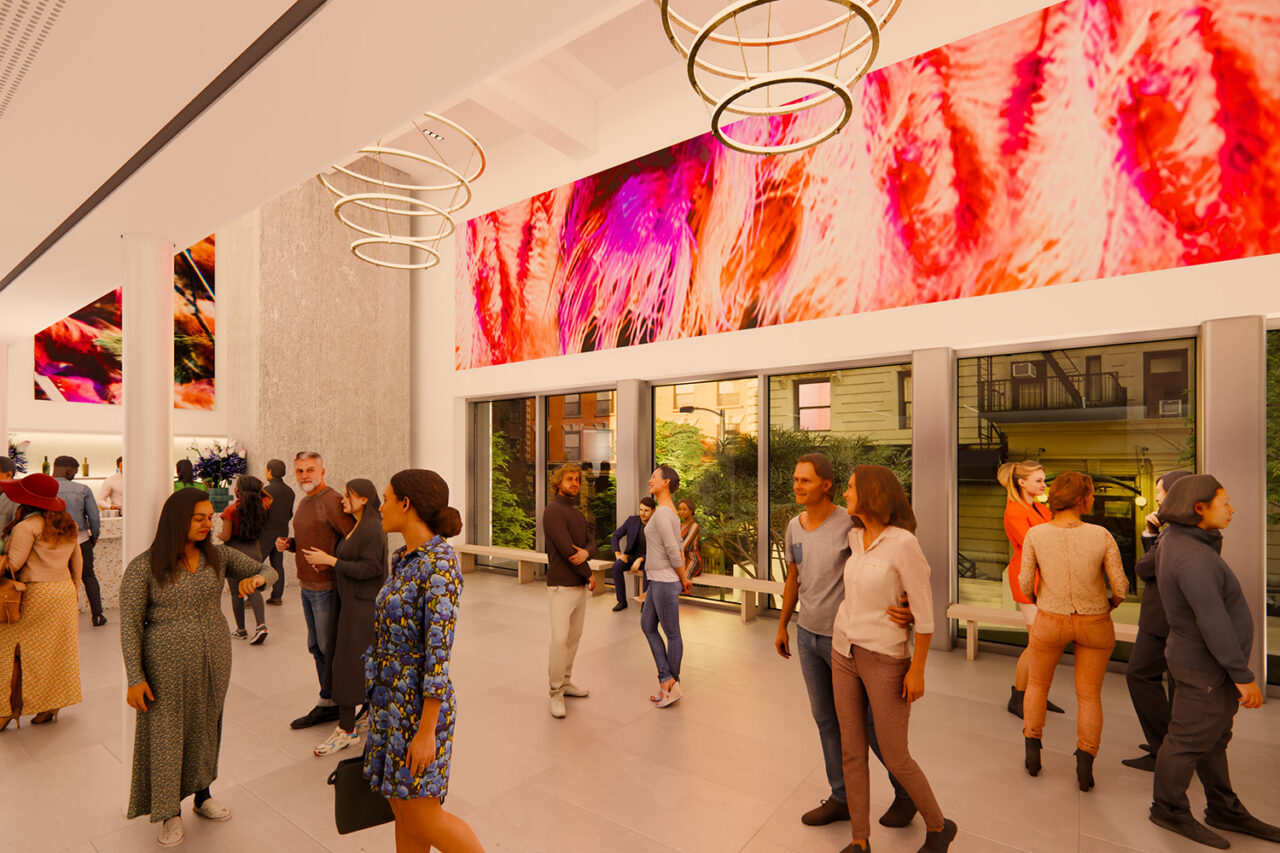
Symphony Space, the Upper West Side’s beloved, albeit time worn multi-disciplinary performing arts venue, widely known for its ground breaking programming including the annual Bloomsday celebration of James Joyce’s “Ulysses,” is undergoing a renovation designed by Architecture Outfit (AO). When the venue reopens 2028 in time for its 50th anniversary celebration, the transformed Symphony Space will finally be the cultural town square its founders had intended it to be. The century-old building located on the corner of Broadway and 95th Street has gone through various incarnations since its beginnings as a food hall. Home to theater groups, it was leased by Symphony Space in 1978. The construction of a residential tower above it resulted in a building renovation in 2000. AO’s plans call for replacing portions of opaque façades with glazing to expose passersby to the activity inside. A large concrete super column that supports the tower will be visible behind the new glass storefront and will also serve as the backdrop to new display screens; the marquee will be highlighted with new metal cladding and illuminated signage. The extensive renovation spans 25,000-square-feet of interior space on the facility’s three floors.
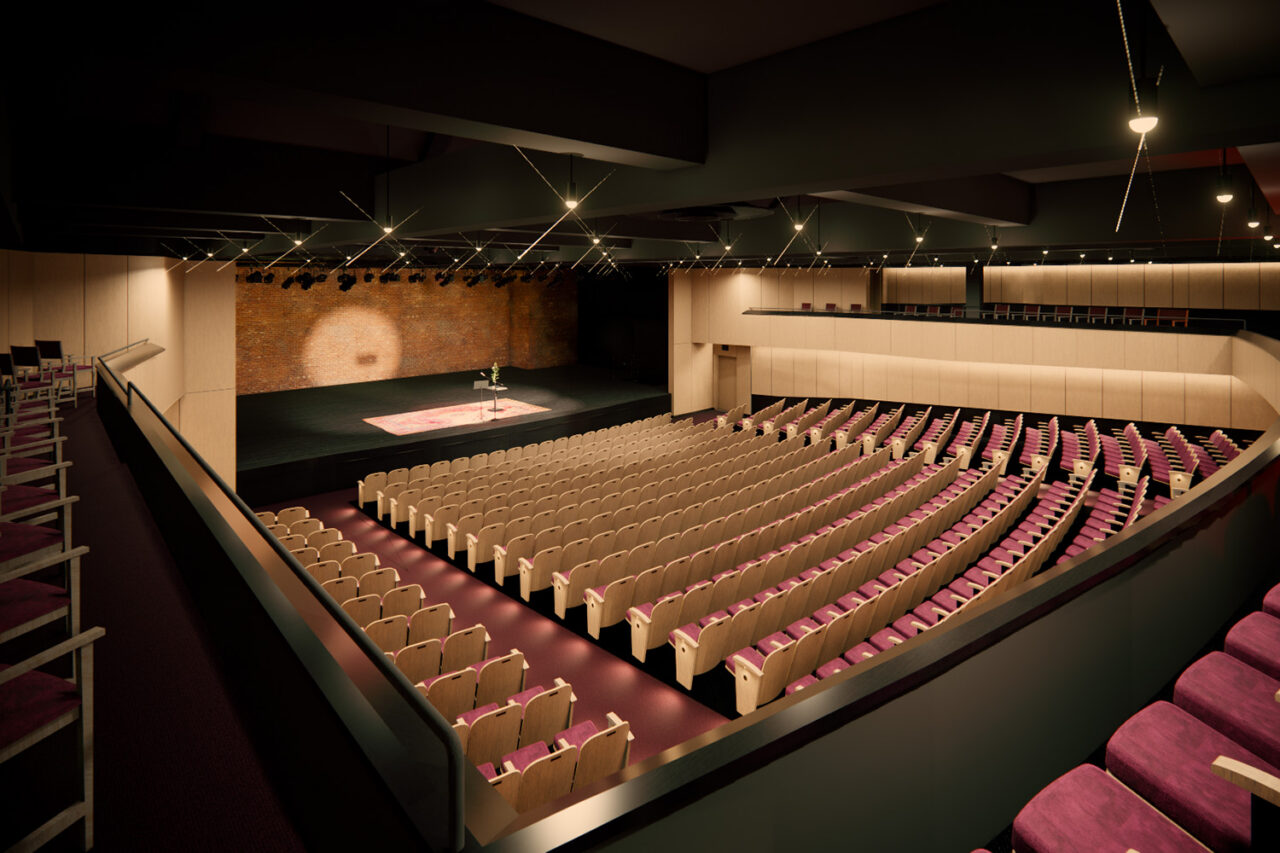
Working in collaboration with Theatre Projects, the existing 720-seat Sharp Theater and the 50-seat Thalia Theater on the lower level will be upgraded with new seating, stages, and theatrical equipment. By separating the Sharp Theater from a large, underused space at its rear and reshaping its orchestra and balcony, a more intimate performance space with improved acoustics and sightlines will be created. This also allows for a new double-height atrium that will open to the lobby. A new balcony gallery overlooking the atrium space will provide an accessible pathway to remote areas of the building while new open stairs will link open areas on all levels. Interior spaces will be revived with new finish materials, millwork, lighting, digital screens, and graphics features. Denham Wolf Real Estate Services is project manager and owner’s representative.
In Case You Missed It…
Designed by Architecture Research Office (ARO), the Green-House, the newly opened Visitor Center at Green-Wood Cemetery, includes the restored Weir Greenhouse as well as the new terra cotta-clad L-shaped building that wraps around the landmarked structure. The new building orients visitors before they chart their own paths through the main entrance to the cemetery across the street and includes room for education programs, exhibitions, staff offices, and archival storage which were previously housed in disparate cemetery buildings. Michael van Valkenburgh and Associates (MVVA) designed a new plaza behind the arboretum.
Deliverista Hub, created by street furniture designer FANTASTICA and billed as the first worker-designed rest and e-bike charging hub, was installed at City Hall Park on a site formerly occupied by a newsstand. In the works since 2024, the indoor area of the hub is staffed by staffed by Los Deliveristas Unidos to help the city’s delivery workers access services.
Happy Earth Day! The Mamdani Administration has released a plan to expand the tree canopy to cover 30 percent of the city by 2040 starting with the most heat vulnerable neighborhoods.