




by: Linda G. Miller






New Ontario Science Centre Design Inspired by the Night Sky
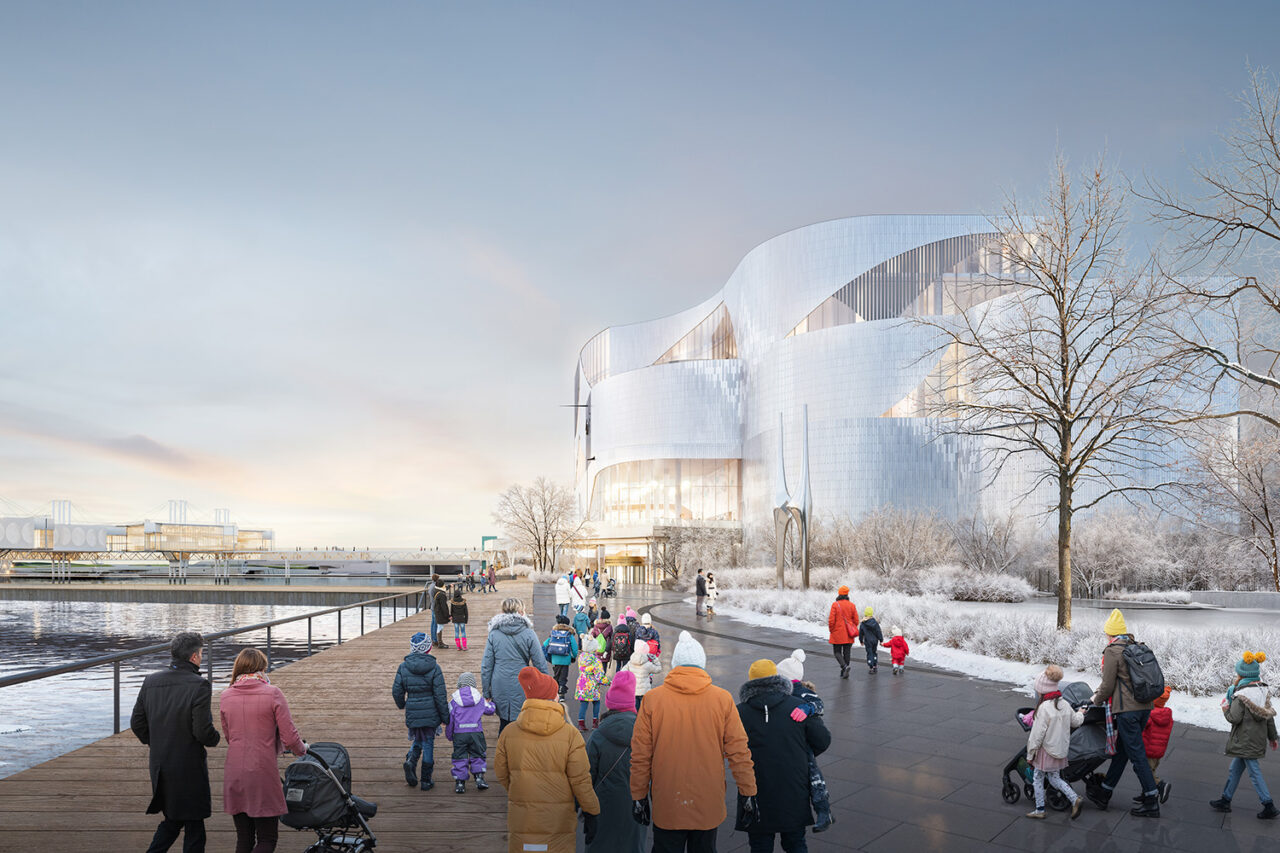
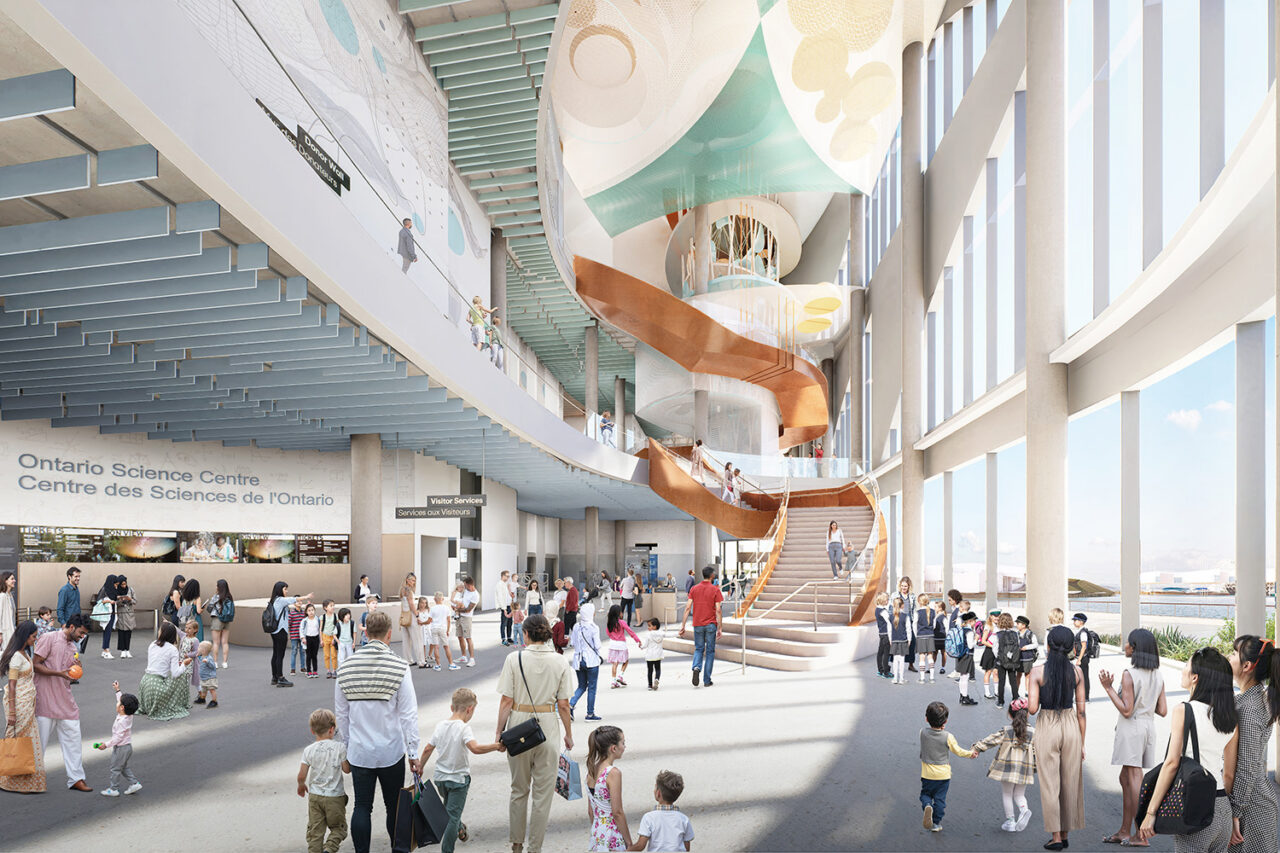
Hariri Pontarini Architects (HPA) and Snøhetta have been selected by the Infrastructure Ontario (IO) and the Ministry of Tourism, Culture and Gaming to design the new Ontario Science Centre in Toronto. The institution will be located at Ontario Place, an events venue and park made up of three artificial landscaped islands just off-shore of Lake Ontario. The 400,000-square-foot destination will include a new signature 220,000-square-foot building. Draped with sail-like forms of curvilinear cut-outs, the five-story, wedge-shaped building will contain 120,000-square-feet of exhibition space and an upper floor featuring an outdoor play terrace. The project also includes the rejuvenation and integration of the Pod complex and historic IMAX Cinesphere that is perched over the water at Ontario Place. Designed by Eberhard Zeidler, this public facility opened in 1971 and closed for redevelopment in 2012. A pedestrian bridge connects the mainland building to the Cinesphere and Pods, and the pods will be used as exhibition space. The constellations of the night sky became a metaphor for connecting all the elements of the new Science Centre, including the existing five Pods and the Cinesphere. The program is expressed as a series of connected molecules or modules attracted to each other to create meaningful experiences inside and out. On the exterior of the new building, a tracery of scalloped and arced silhouettes organizes to form this constellation inside. Construction is expected to begin this spring and is expected to open in 2029.
Greenpoint’s Italianate Building Opens as The Lighthouse
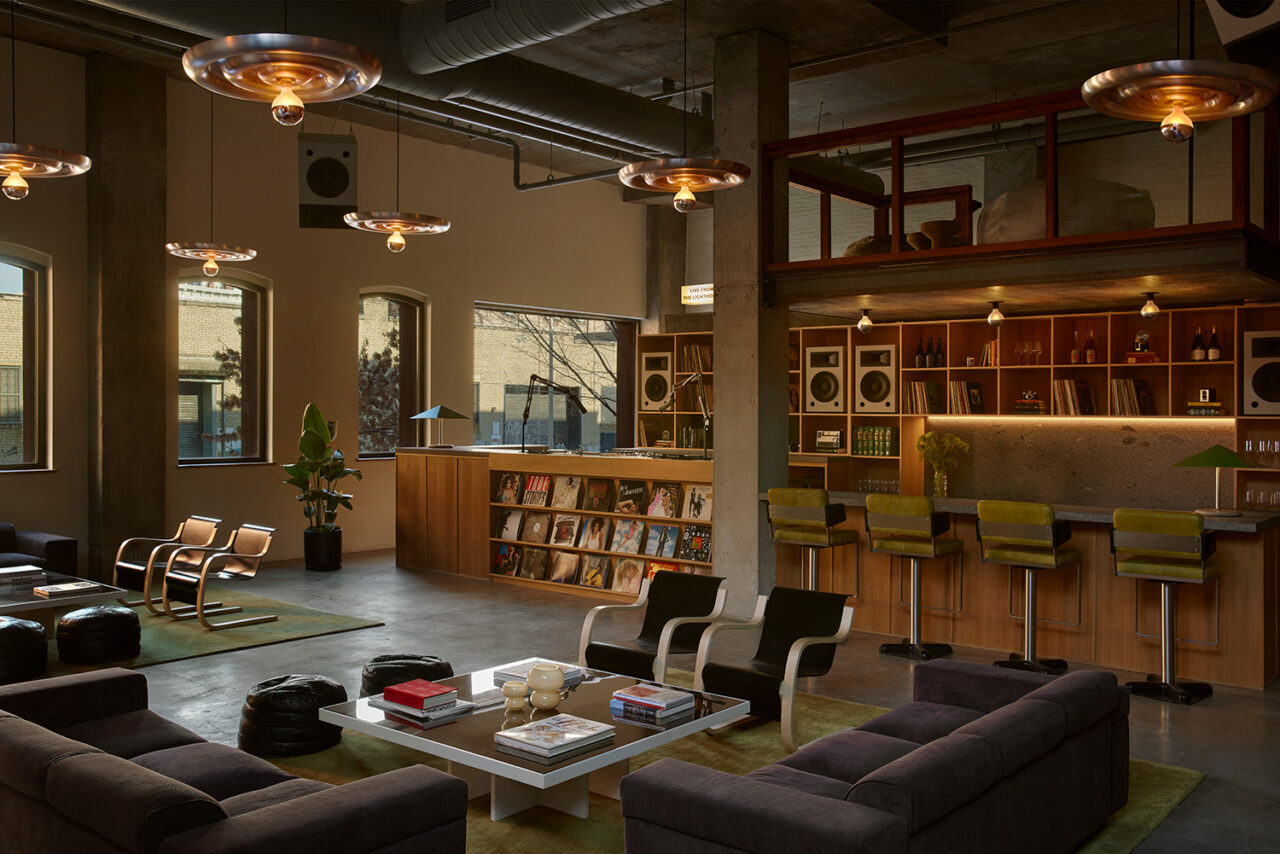
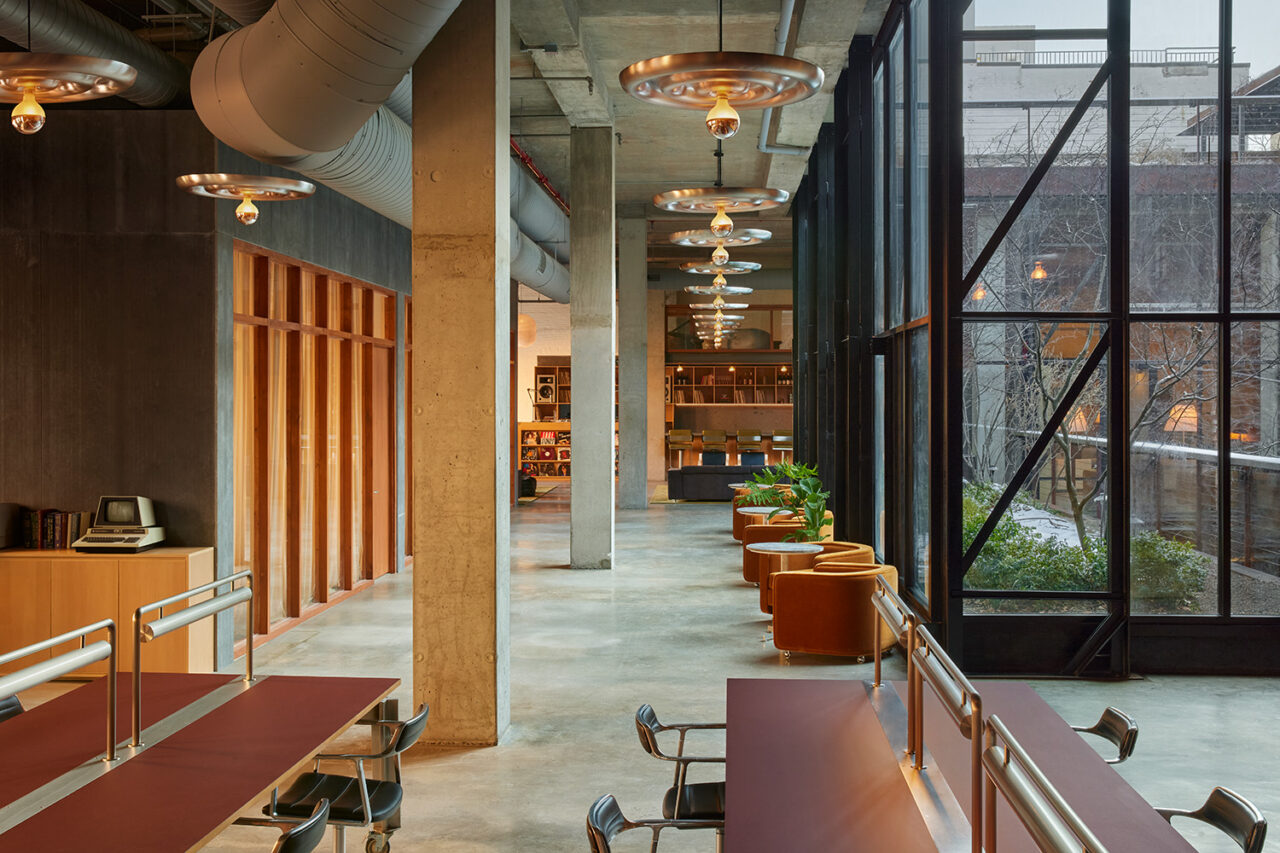
The Italianate building, known as the Pencil Factory, located at 58 Kent in the Greenpoint section of Brooklyn, has begun a new chapter in its life as The Lighthouse. Billed as a creative campus for the creator economy, the building, vacant since 2020, was updated by the interior designers at Warkentin Associates in collaboration with Bench Architecture. The three-story building, originally designed by Philomon Tillion in 1860, is part of the Eberhard Faber Pencil Factory Historic District. In 2014, Ole Sondresen performed a comprehensive renovation and adaptively reused the building, converting it from a factory into an office for Kickstarter. In its current incarnation, the interiors of 30,000-square-foot building features a material palette of concrete, steel, glass, and wood. The Lighthouse caters to the creative community, offering a place where members can meet, co-work, and collaborate onsite and contains a selection of private offices and meeting rooms, including a 2,500-square-foot library, a 74-seat theater, photography and podcast studios, coffee and cocktail bars, a DJ booth, a 6,000-square-foot East River facing garden penthouse with an enclosed gallery and test kitchen. An addition to the lobby waiting area was created, as well as mezzanine levels that previously didn’t exist in the library, library bar area, and above the meeting rooms/phone booths, taking advantage of ceiling heights to provide more usable space within the building. An existing plant-filled central atrium brings light down to the subterranean level where the café, theater, and ancillary production facilities are located. The Lighthouse Brooklyn is the flagship East Coast Creator campus of the Whalar Group, whose first venue, built in 2025, is located in Venice, CA.
NYC Mayor Mamdani Launches “ADU for You” Website to Help Homeowners
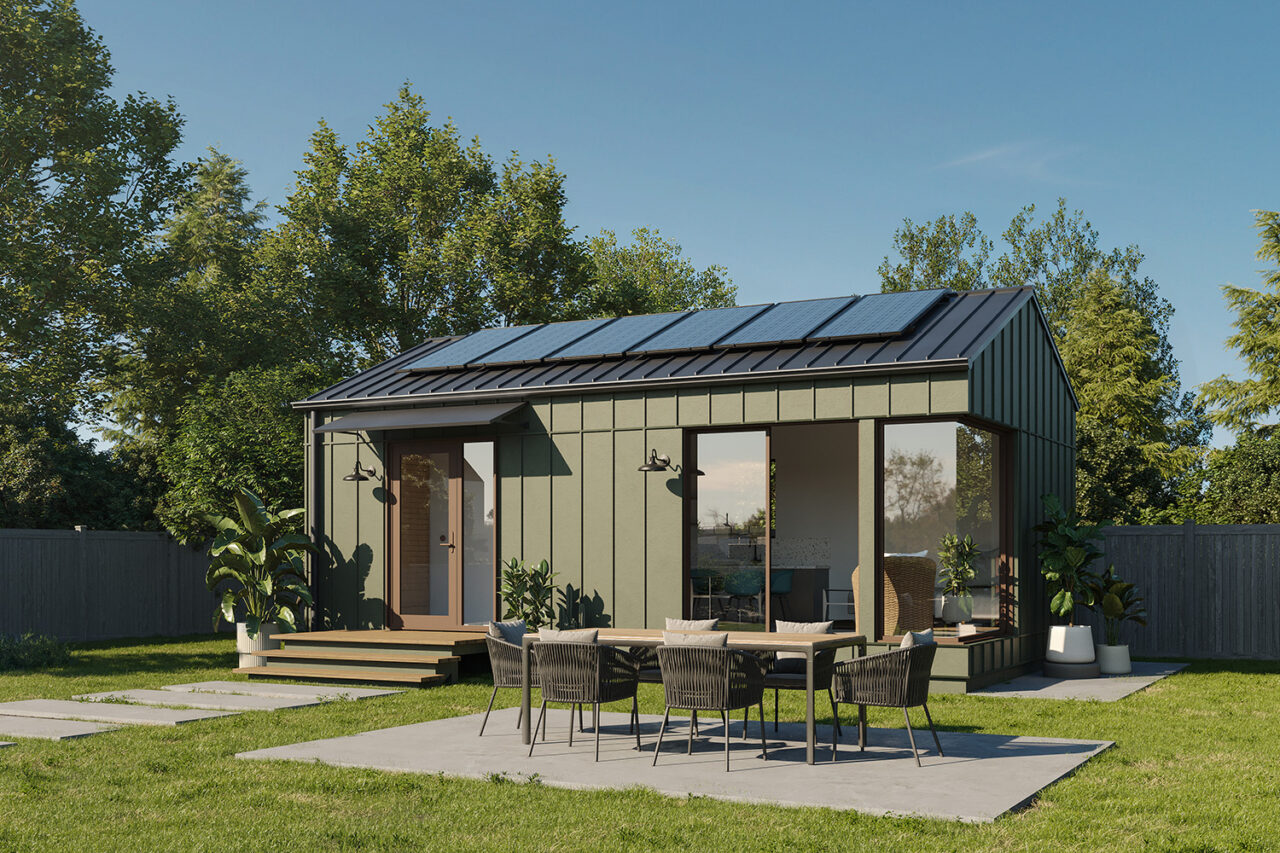
Mayor Mamdani has unveiled “ADU for You,” a website to help accelerate the construction of Accessory or Ancillary Dwelling Units (ADUs). The web platform was designed and developed by WXY Architecture + Urban Design (WXY), who distilled the zoning, code, and feasibility questions a homeowner might have into a toolkit to make it easier to build an ADU on their property. An ADU can be constructed as cottage for an aging parent, a first apartment for an adult child, or a dedicated space for a caretaker or extended family on their property, for example. The platform includes a guidebook with a library of eleven pre-approved plans sourced through a nationwide call for submissions. Designed by nine architectural firms—ANE Design, Beam Architects, EEREE, FAR Architecture, Anne Morrison Architect + Leonardo Leiva Rivera, Reform Architecture, SITU, and WikiHouse, Unit Two Development, and VL Architects, these design options are available in a variety of styles, sizes ranging from 280 to 785 square feet, and estimated construction costs. Even though they have already undergone review by the Department of Buildings (DOB) for code compliance, the designs do not replace professional design services and will still need to be reviewed at each specific site. WXY worked in collaboration with the Mayor’s Office, DOB, the Department of Housing Preservation and Development (HPD), as well as Habitat for Humanity Habitat for Humanity New York City and Westchester County, and KMA. ADU for You has received support from AIA New York, Regional Plan Association, Open New York, and other organizations.
Malcolm Shabazz Harlem Market Transforms into Passive House Project
After more than three decades, the open-air Malcolm Shabazz Harlem Market, known for selling West African crafts, traditional clothing, goods, and food, has temporarily relocated to make way for the new Malcolm Shabazz Harlem Plaza, a new mixed-use multifamily development designed by Think! Architecture + Design and currently under construction at West 116th Street between Fifth Avenue and Malcolm X Boulevard/Lenox Avenue. Upon completion, the new pedestrian arcade will be topped by large skylights to evoke shopping in the former market. The main market entry will feature a translucent art wall that will serve as a central identity and characterize the essential meaning and history of the market. Rising above the market are two nine-story buildings that will provide 123 units of 100 percent affordable housing that conform to the City’s Extremely Low and Low‐Income Affordability (ELLA) criteria. The project will also implement Passive House design principles and won the Blue Ribbon Award in Round 4 of the New York State Energy Research and Development Authority’s (NYSERDA) Buildings of Excellence program, winning the distinguished project award and a major capital development grant. The energy and sustainability performance of the building will meet Energy Star, Enterprise Green Communities, Indoor airPLUS and Fitwel certifications. Considered the center of Muslim life in Harlem, the existing Malcolm Shabazz Mosque, known for its green dome, is also part of the development. The project is being developed by the Malcolm Shabazz Mosque Development Team and The Procida Companies.
Brooklyn Museum Builds New Home for its Arts of Africa Collection
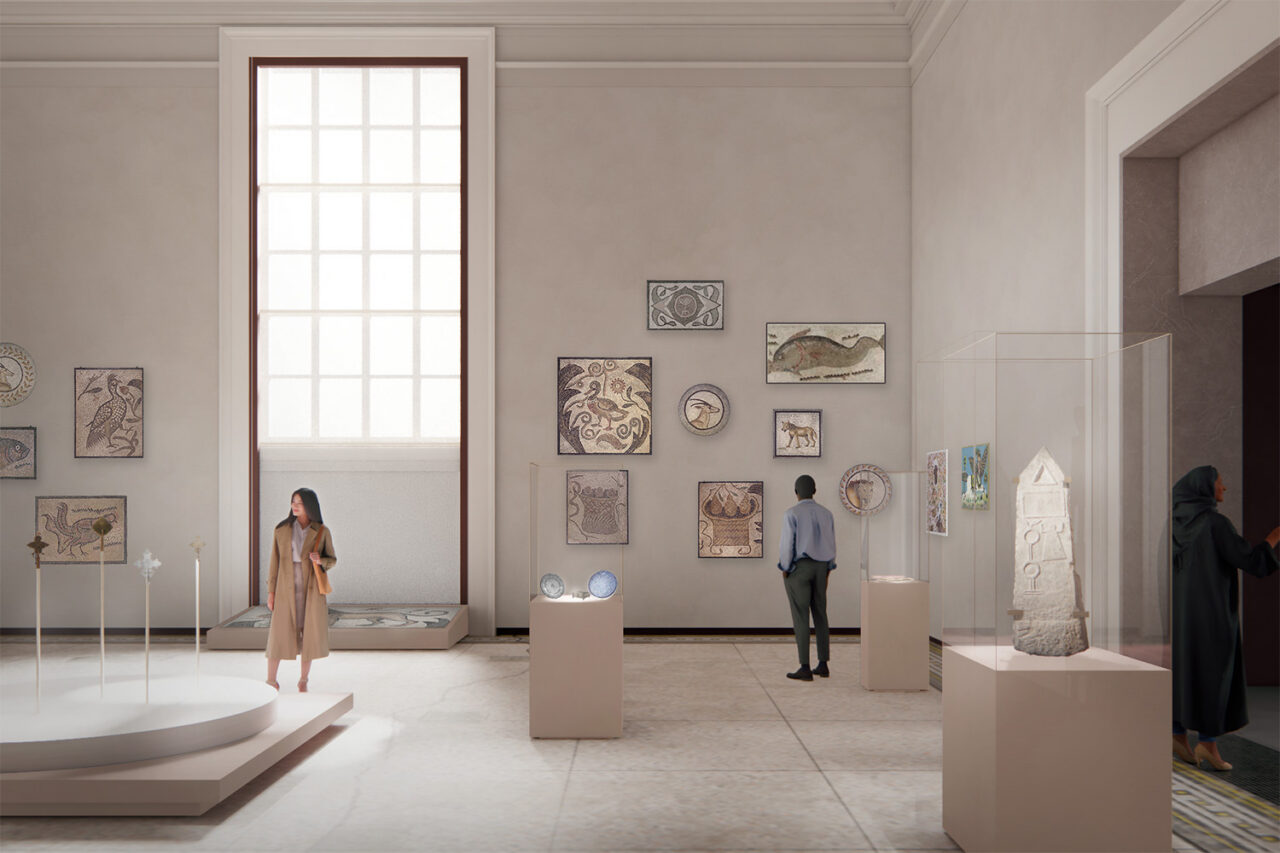
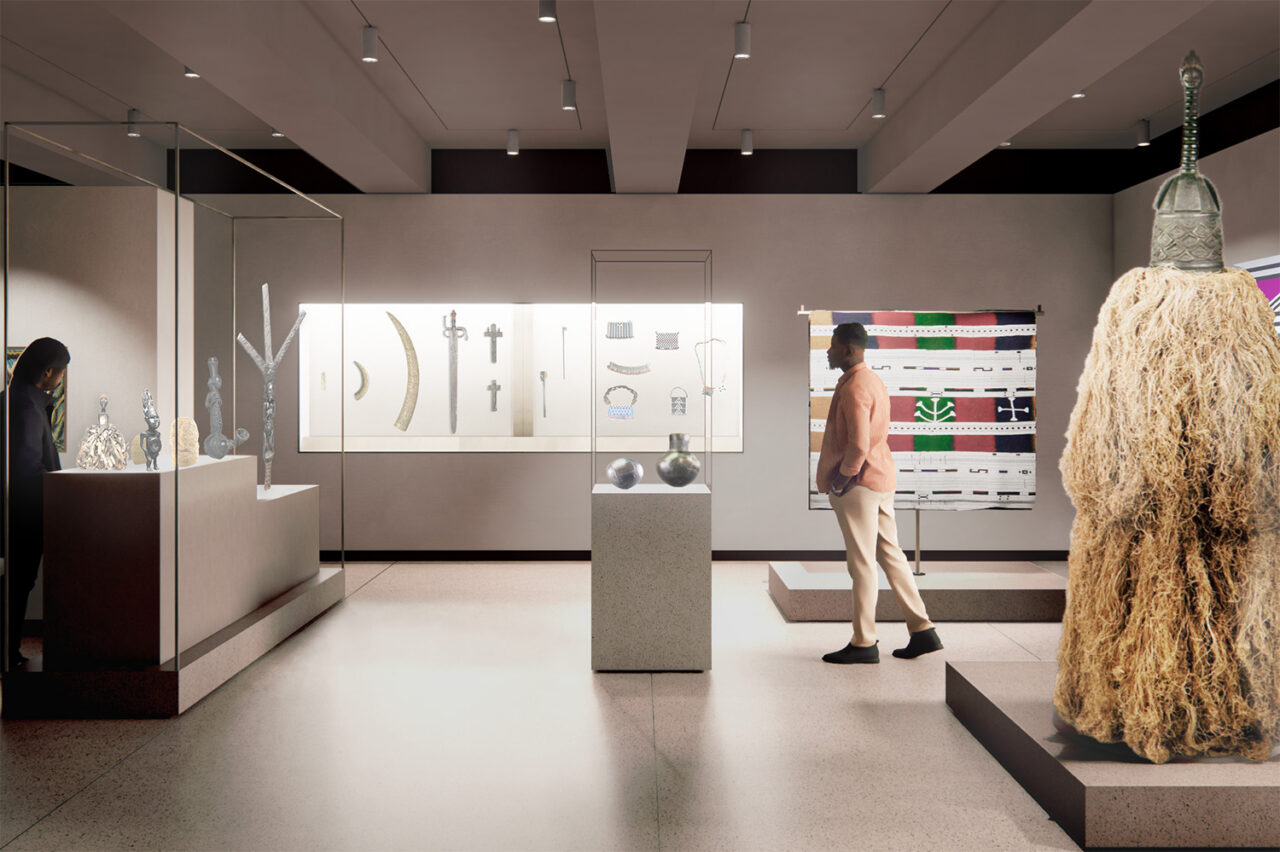
Peterson Rich Office (PRO), in consultation with Beyer Blinder Belle on historic preservation, has been commissioned by The Brooklyn Museum to design its new permanent galleries for its Arts of Africa collection. The 6,400-square-foot project will be transformational for the museum, which holds a renowned 4,500-piece African art collection. Located on the Museum’s third floor, adjacent to the Beaux-Arts Court, the installation will connect with the Museum’s Egyptian art galleries, uniting North Africa with the rest of the continent. The project also marks a new milestone for the McKim, Mead & White-designed Museum, as it transforms previously underutilized spaces, which served as onsite storage. Constructed at different times during the Museum’s architectural history, these galleries vary dramatically in ceiling height, proportion, structural systems, and historical details, and the design strategy is to honor these individual narratives while uniting them into a cohesive new gallery experience. Rather than concealing modern necessities such as lighting systems and climate control, they will be exposed and celebrated as a new architectural layer. All new metal elements will be finished in a rich accent color, creating bold contemporary contrasts within the space. Historical plaster ceilings and moldings will coexist with contemporary materials, traditional proportions will frame modern display strategies, and natural daylight will blend with calibrated artificial illumination. The project is expected to start in summer 2026 and the galleries will open with an inaugural installation of over 300 works from antiquity to the present in fall 2027.
In Case You Missed It…
New Pilot Projects were announced at Grace Farms’ fifth annual Design for Freedom Summit including the National Juneteenth Museum (Fort Worth, TX) designed by designed by Bjarke Ingels Group (BIG), Alligood Song Architecture and KAI Enterprises; Bloomberg Park Avenue Office Expansion (New York) designed by Fogarty Finger with Socotec as sustainability advisory partner; and Médano by Viñoly (Montevideo, Uruguay). There are now more than a dozen Pilot Projects across four continents.
A new community space dubbed “The Classroom” has opened at the Thomas Phifer and Partners-designed Pavillion in Battery Park City’s Wagner Park. The 1,200-square-foot space was designed for public engagements, private rentals, catered events, and business meetings. The Pavilion’s rooftop garden is already open and a new restaurant is expected to follow later this year. The Pavilion’s arched vaults lead to an entry piazza with sweeping views of the green space and harbor and Wagner Park, designed by with passive and deployable measures to withstand severe storms.
CO Adaptive is conducting a salvage operation for reusable materials at Hunter College’s Bellevue School of Nursing Brookdale Campus which is about to undergo demolition to make way for new on the 2 million-square-foot Science Park and Research Campus (SPARC). The project will follow the City’s Circular Guidelines for Design and Construction, an operational toolkit published by New York City’s Economic Development Corporation for reducing waste and embodied carbon in the built environment.