





by: Linda G. Miller
Fashion Institute of Technology Opens New Academic Building
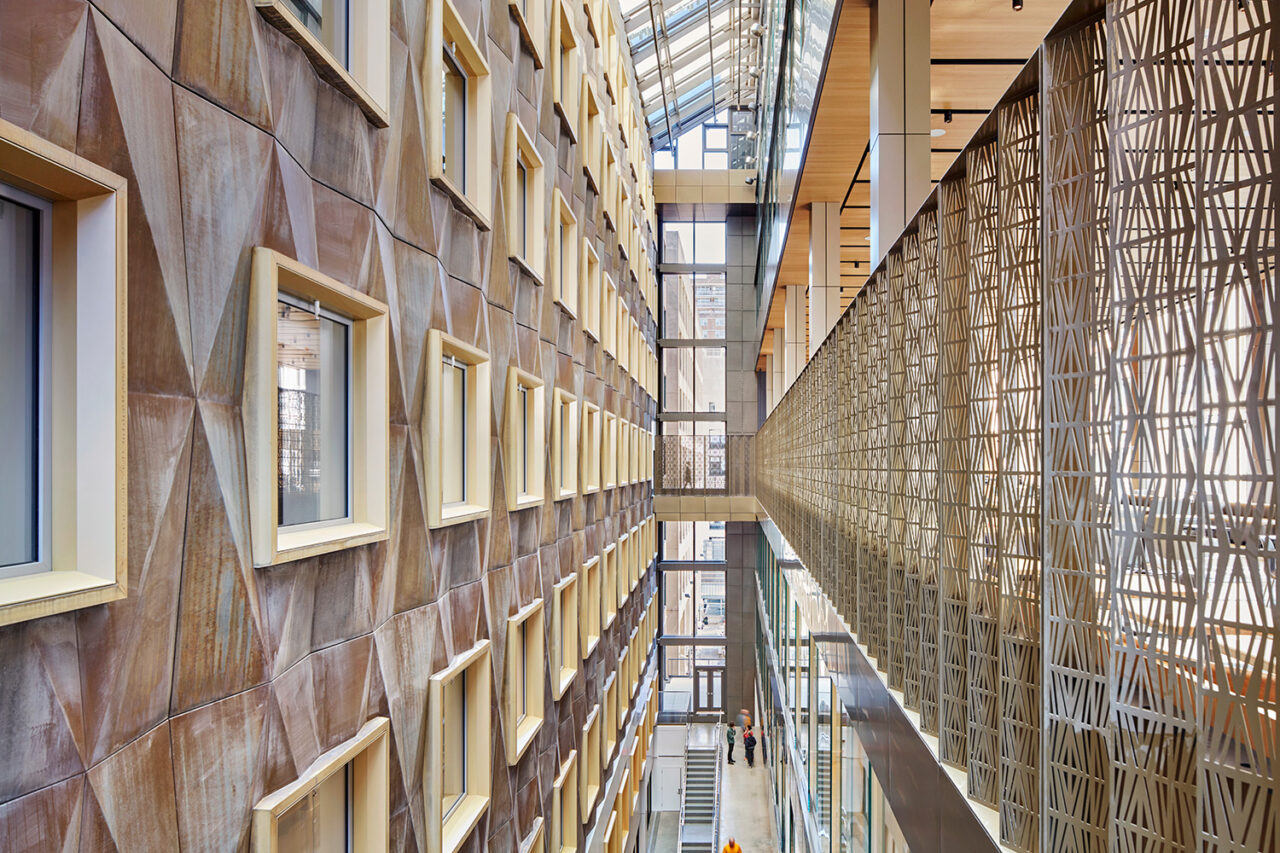
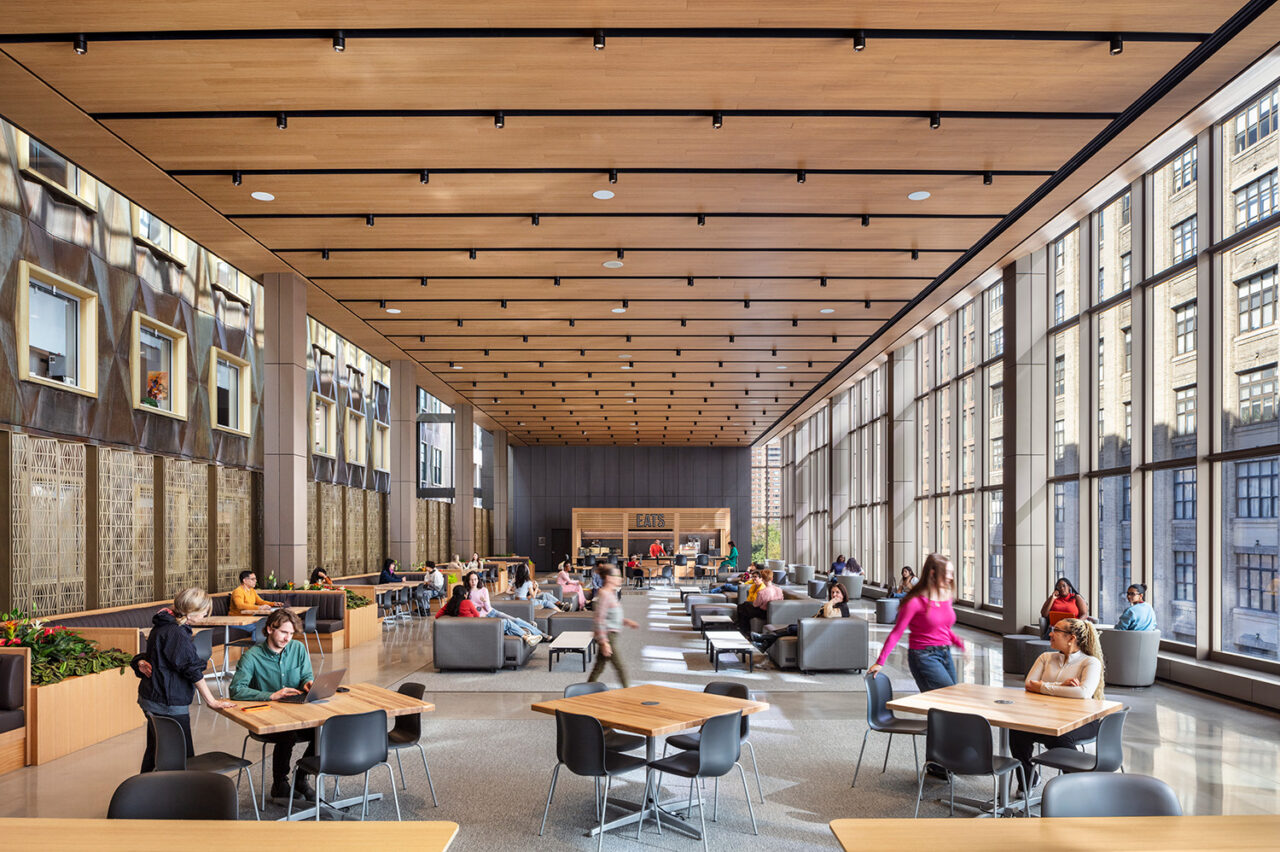
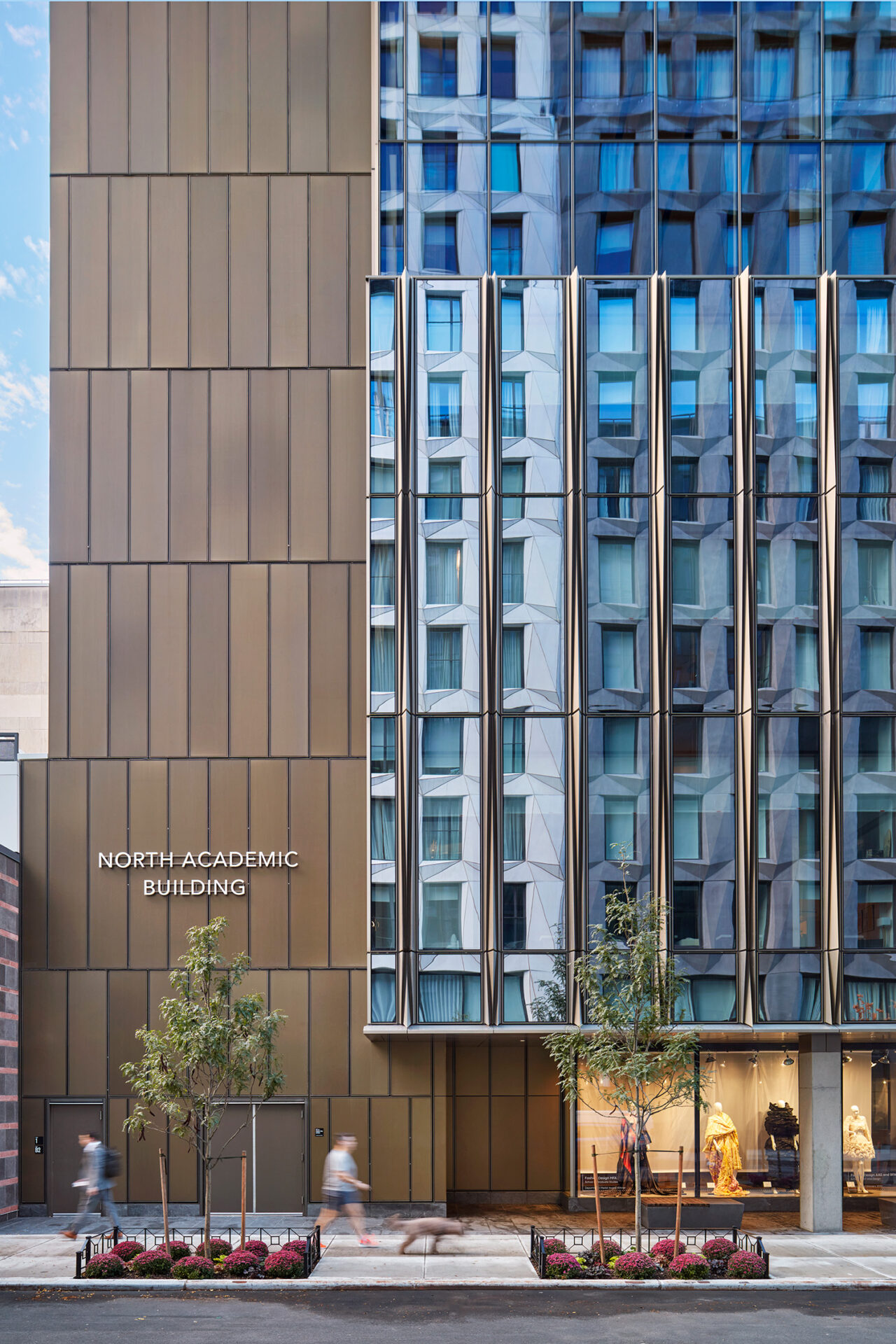
Designed by SHoP Architects, the Joyce F. Brown Academic Building at the Fashion Institute of Technology (FIT) is the college’s first new building in almost 50 years. The ten-story, 110,000-square-foot building on West 28th Street is named for FIT’s president who is completing her 27-year tenure. The building is conceived as a new gateway to a mid-century modern campus in the Garment District. With its glass façade, the building redefines FIT’s presence in the neighborhood and gives passersby a view into what’s taking place inside the school. Street-level displays feature student work from competitions and other in-class presentations. From the below-ground, double-height knitting lab, the largest campus knitting lab in the country, those on the street can view works in progress. The building features 26 classrooms, studios, and labs on floors two, three, four, seven, and eight. The auditorium, also visible from the street on the second floor, serves as a multipurpose space for lectures, presentations, and small events. Bordered by double-height floor-to-ceiling windows on one side and a perforated metal screen that echoes the building’s design motif on the other, the full-floor Student Commons on the fifth floor provides views of the building’s atrium, which serves as an extension of the common space. The President’s Office is expected to move into the ninth-floor office suite in the future. A fully accessible, double-height lobby connects to the rear of the Marvin Feldman Center, FIT’s main campus building on West 27th, and a soaring, light-filled 15-foot-wide atrium is set between the new building and the Feldman Center. Sustainability features include 39 new solar panels, capable of producing an estimated 21,222 kilowatt hours per year of energy; highly efficient plumbing fixtures that decrease water consumption over 35%; and demand-controlled ventilation reduces the amount of ventilated air when rooms are unoccupied or minimally occupied, resulting in a significant reduction in energy used to condition outside air. The project has been underway since 2003 when SHoP won an FIT-hosted National Endowment of the Arts competition.
Harvard University Unveils New Mass Timber Building
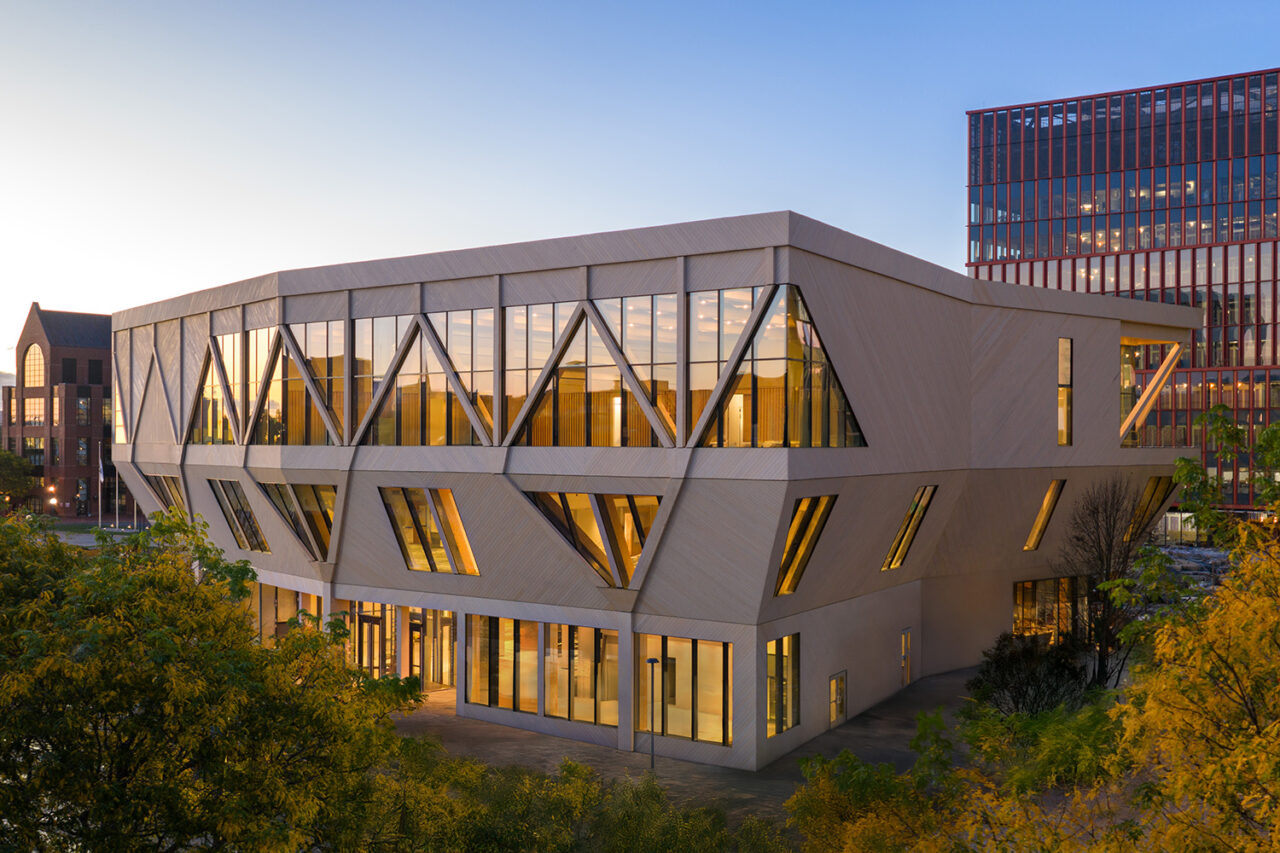
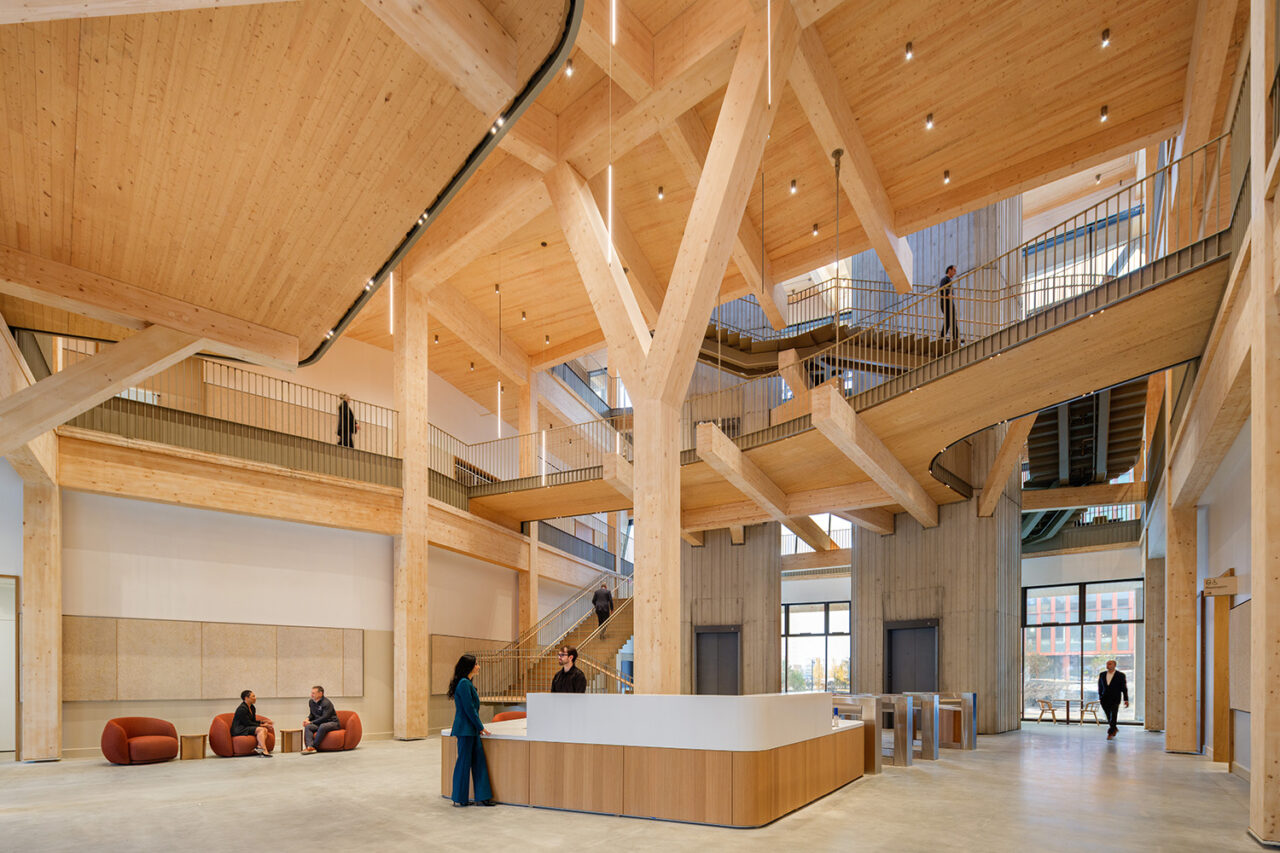
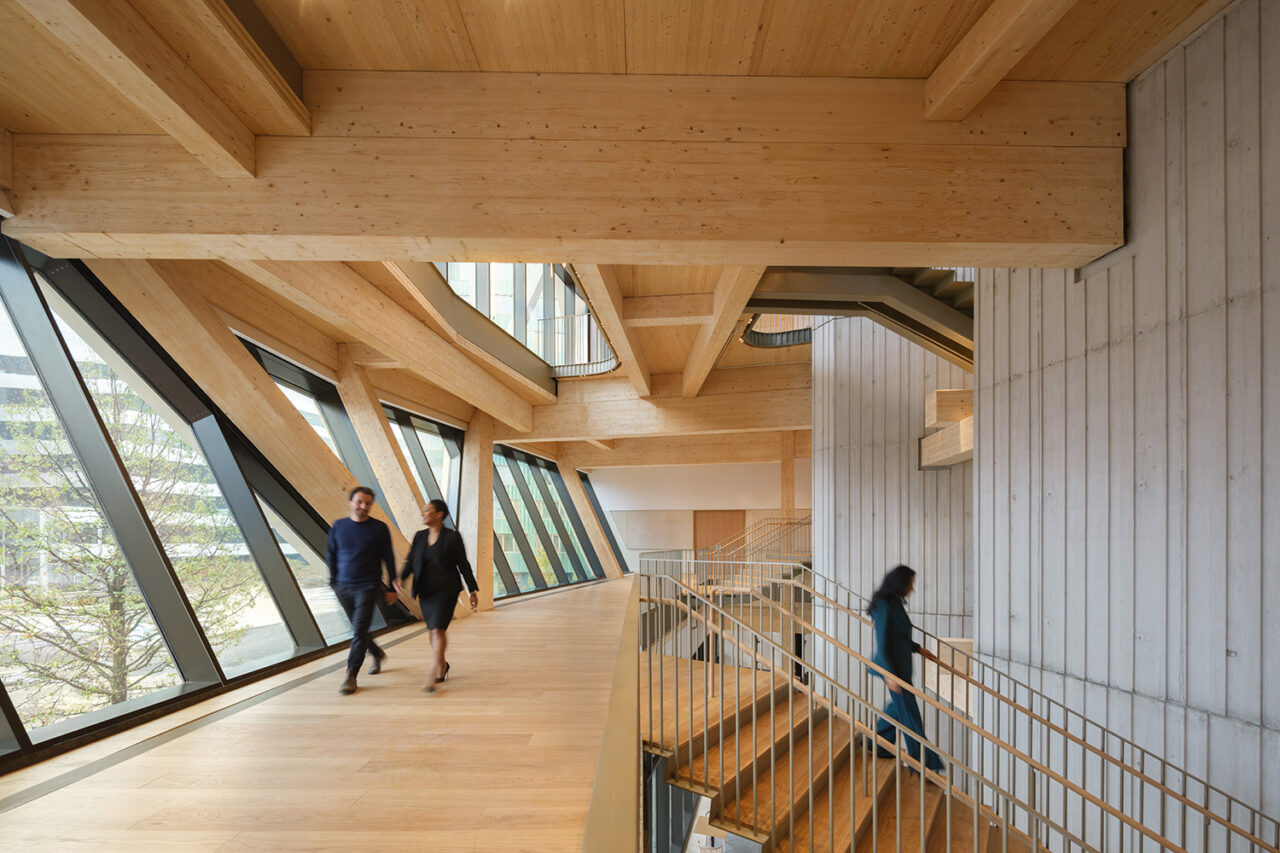
Studio Gang has completed the David Rubenstein Treehouse at Harvard University, located in Allston, establishing the first university-wide hub for meetings, conferences, and special events. The 55,000-square-foot building is positioned at the forefront of Harvard’s burgeoning Enterprise Research Campus, a new mixed-use district in Boston’s Allston neighborhood. What was once a formerly industrial and vacant parcel of land has been transformed into an active area focused on research, enterprise, and innovation. The 55,000-square-foot building’s mass timber and low-carbon concrete construction are both firsts for the Harvard campus. The building’s exposed mass timber structure creates an architectural identity, signaling that the building is a destination for innovation. On the façade, canted timber columns branch outward like a tree to support a cantilevered upper floor. Each face of the building is strategically inflected to embrace its outdoor environment and the surrounding neighborhood. The north and south inflect outward to draw people towards the building’s multiple entrances, while the east and west inflect inward to expand pedestrian corridors. On the ground level, three entrances connect to a double-height atrium, welcoming visitors and allowing them to flow through the building to the surrounding campus. The atrium spills outward onto two covered porches that create outdoor gathering areas to be enjoyed throughout the year. Evoking what it feels like to climb up into a treehouse, a central stair lit by skylights immerses guests in the warmth of the building’s mass timber structure. Upper floors support meetings and events through a series of spaces that vary in size and can accommodate different uses. The building’s main space, the Canopy Hall, features an adjoining open-air terrace and expansive views of the city framed by the structure’s timber columns. Additional spaces that encourage informal convening and interaction are designed into every floor. The design makes use of responsibly sourced wood and concrete made from ground glass pozzolan, a cement replacement derived from post-consumer glass containers. Further, the design supports zero fossil fuel combustion on-site and a significant reduction in energy use through natural daylighting and self-shading, rooftop solar panels, a raised floor that conditions the interior while concealing major buildings systems, and a connection to Harvard’s District Energy Facility, which provides the building with heating, cooling, and electricity. The Rubenstein Treehouse is among the first buildings to open on Harvard’s Enterprise Research Campus, whose master plan was co-led by Studio Gang and Henning Larsen with landscape architecture by SCAPE and urban planning and local advisory by Utile.
The Packer Collegiate Institute Presents Garden House Expansion
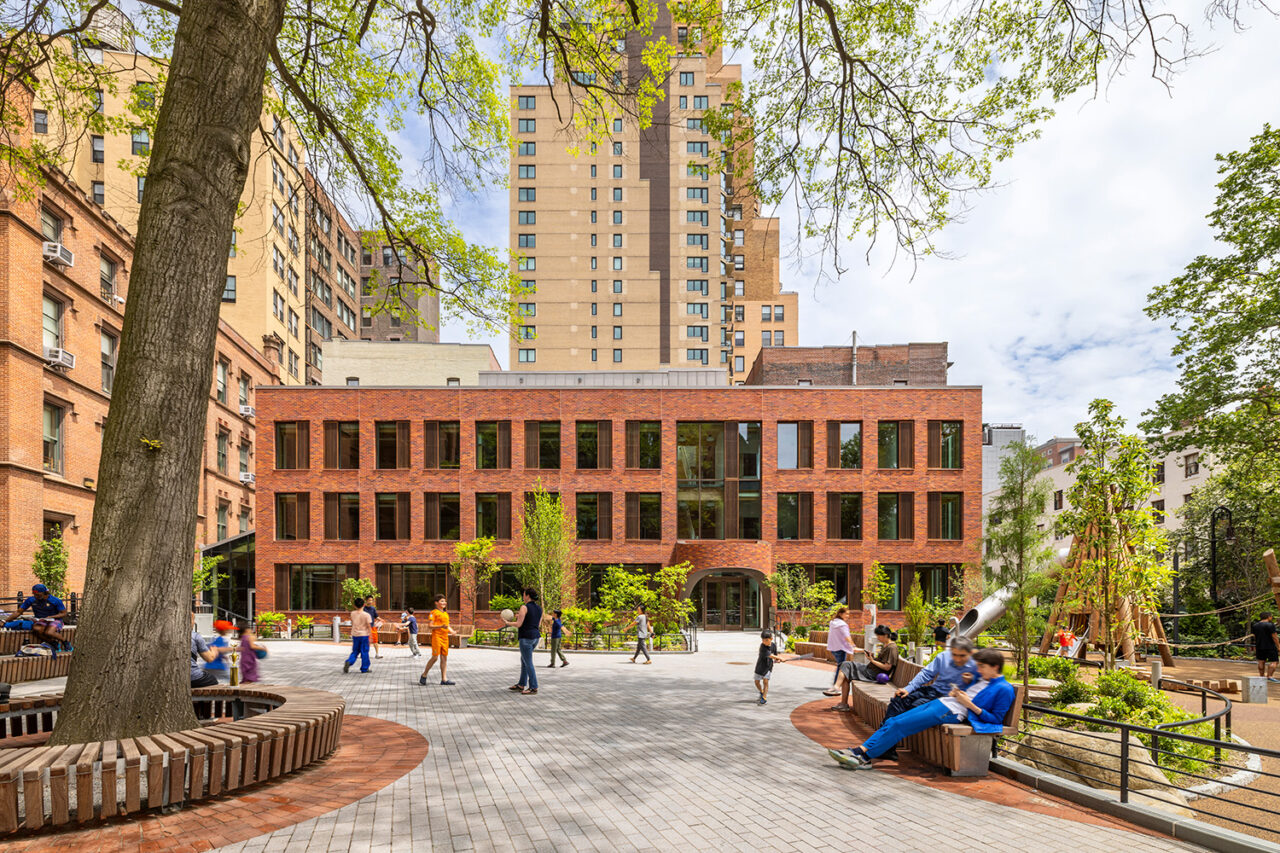
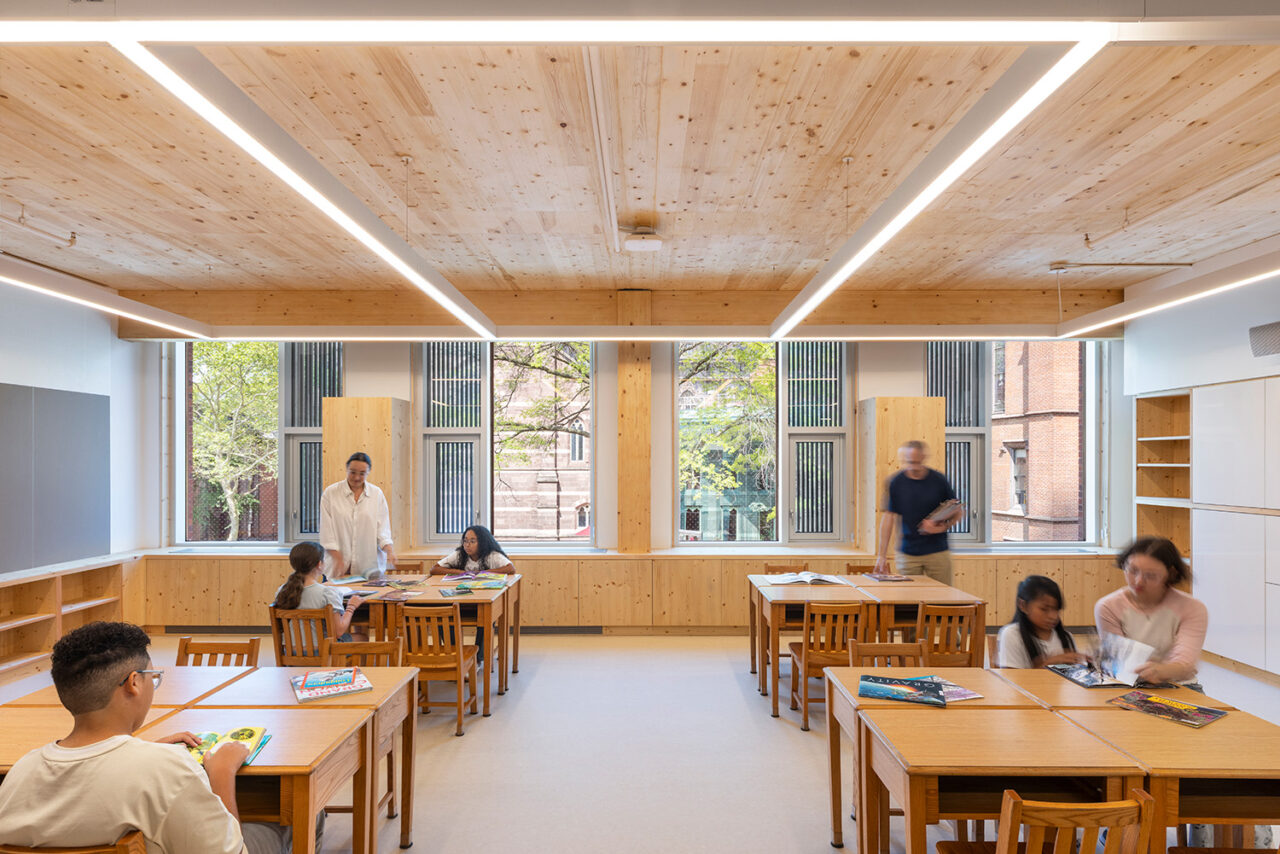
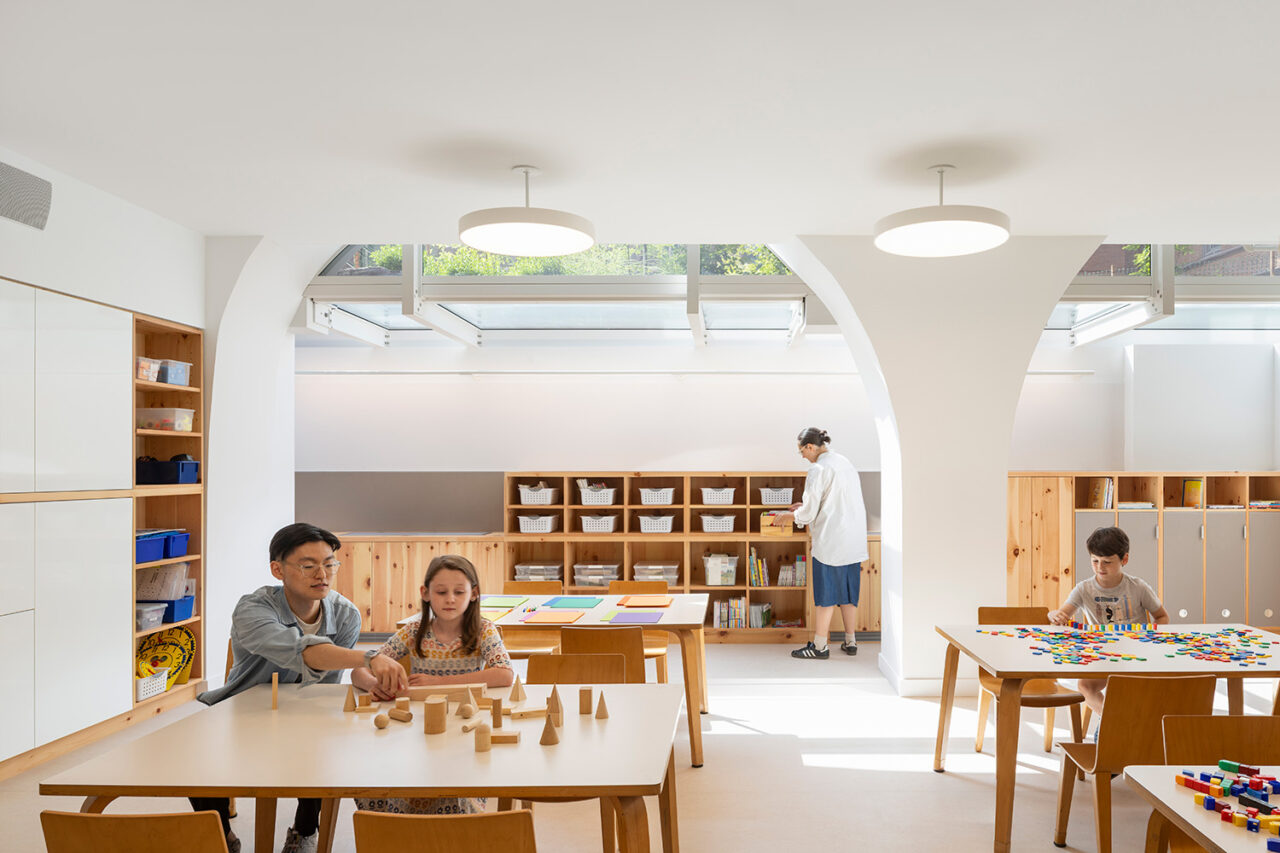
WXY architecture + urban design (WXY) has completed the first major capital project to emerge from the firm’s 2022 Facilities Master Plan for The Packer Collegiate Institute which presents a sustainable vision for the future educational design. Founded in 1845, the coeducational day school serving Pre-K through 12 students, the Packer campus, located in the heart of the Brooklyn Heights Historic District, is composed of a connected patchwork of acquired historic buildings, including the former St. Ann’s Church. The new four-level Garden House, which stood underutilized on the edge of the school’s 1.7-acre campus, now serves students in the 1st through 4th grades, with each grade having its own sequence of classrooms, learning suites, washrooms, and breakout spaces. The new 17,250-square-foot expansion extends from the preserved shell of the existing 8,200-square-foot 1869 brownstone. The addition’s red-brick exterior, made with 100% recycled clay content, is seamlessly integrated within the brick façade of the original Garden House and echoes the masonry buildings on the campus and in the surrounding neighborhood. Constructed from sustainably managed wood from northern Ontario that complements the building’s historical details, the building is also the first mass-timber school building in New York City. The cross-laminated and glulam timber elements that form the building’s primary structure, have been left exposed. to maximize daylight, classrooms line a single-loaded corridor, opening sight lines into the outdoor garden, which was revitalized by WXY in partnership with landscape architects Starr Whitehouse. Flexible classrooms offer generous natural light with the warmth of wood, healthy materials, and acoustic strategies that provide focus and comfort for early learners. As outlined in the Facilities Master Plan, the school is committed to reducing campus energy consumption by 30 percent by 2040. The Garden House advances this goal via a fully electric design that pairs high-performance insulation, daylight-responsive lighting, and efficient HVAC systems with low-carbon, durable materials. Two green roofs further improve energy performance and manage stormwater on-site.
Nashville’s Neuhoff District Announces Mixed-Use Project Around Former Slaughterhouse
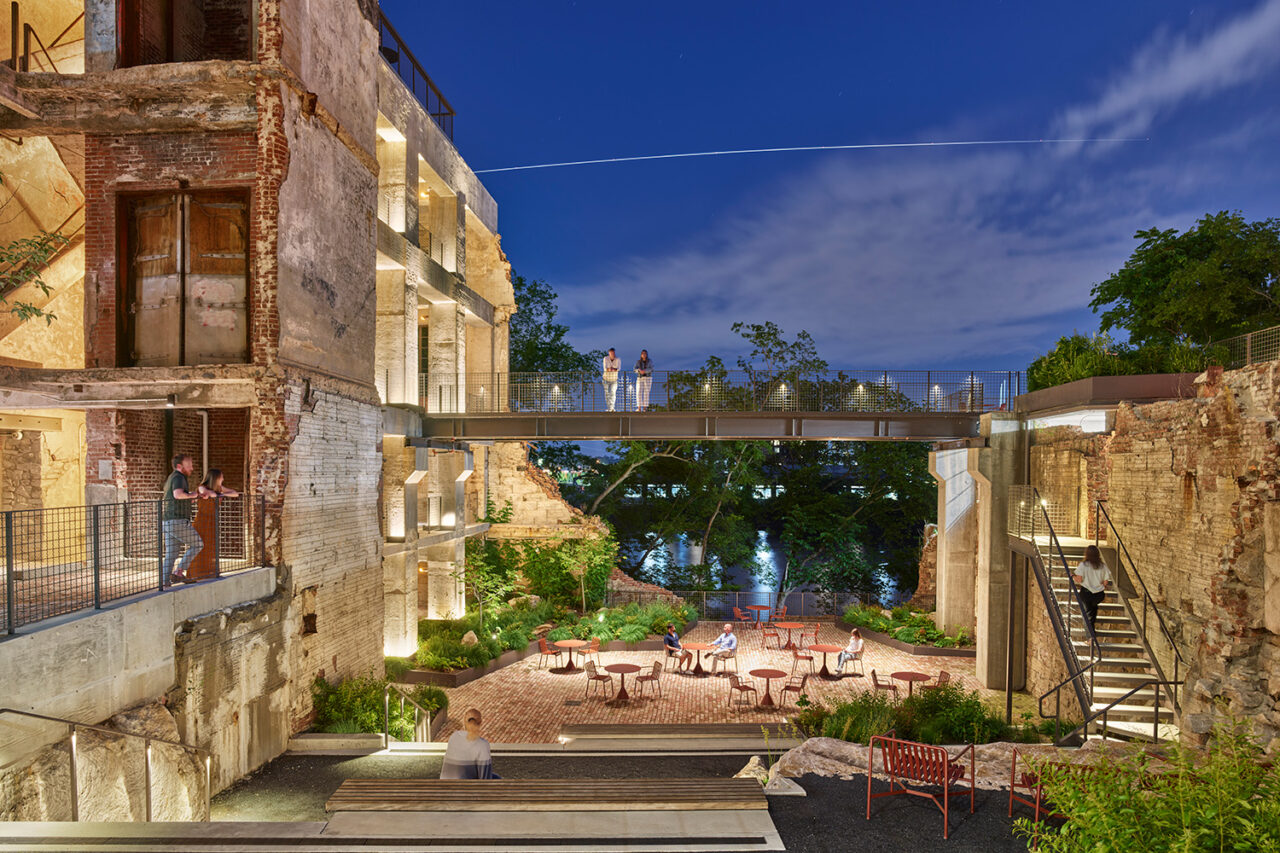
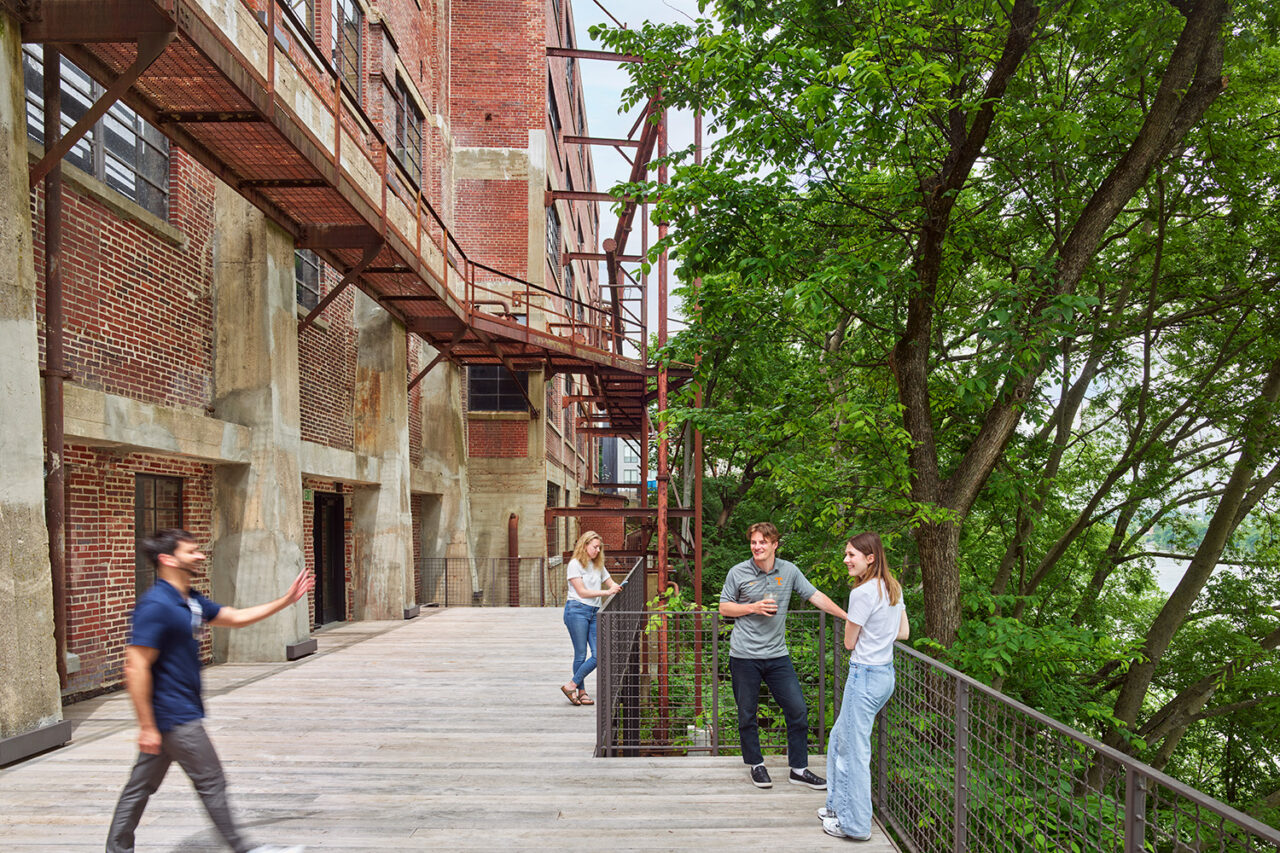
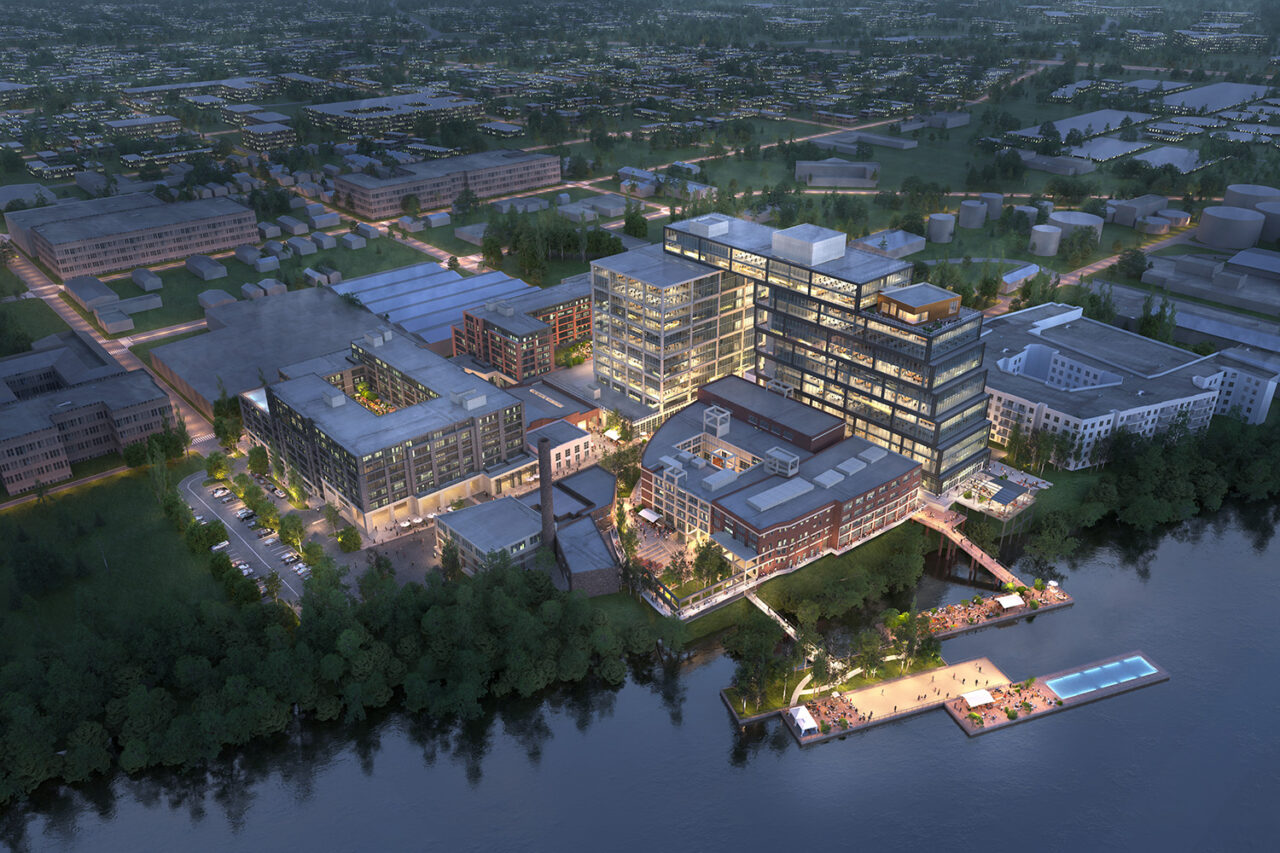
Just northwest of Nashville, TN, S9 Architecture is transforming the Neuhoff District, a section of Germantown, once a working-class neighborhood known for its historic warehouses and Victorian style buildings, into a 14-acre mixed-use project composed of new construction and adaptive reuse projects. Sited high on a bluff above the Cumberland River, the 1.3 million-square-foot multi-phased development includes office and residential space and retail/dining establishments. Existing concrete and brick structures, along with traces of historic use, anchor the project’s master plan. Their layered history and evolution informed the approach to stabilize and reinterpret them as urban ruins, preserving the site’s authentic character while setting the stage for new interventions. Embracing the site’s found conditions, S9 incorporated worn masonry walls, exposed structural systems, and layered industrial textures as authentic design elements. The district gets its name from the Neuhoff Packing Company complex that once occupied the building. The century-old space had sat abandoned for the past five decades; now its preserved remnants have become the centerpiece of the new development. Surrounding the former slaughterhouse are new buildings that form a modern industrial village prioritizing pedestrian-friendly environments, with shared streets and structured parking relegated to the site periphery. The new buildings and public spaces were conceived using materials and a palette drawn from the surrounding industrial fabric, creating a cohesive sense of place that feels both contemporary and simultaneous, rooted in context. The steep river bluff and adjacency to Germantown’s historic fabric further guided circulation and massing strategies, inspiring a network of terraced courtyards, catwalks, and public spaces. Developed by New City Properties, the design team includes Smith Gee Studio, HKS as architects-of-record, landscape architect Future Green Studio, and interior design by S9 in collaboration with Husband Wife.
Princeton University Museum of Art Reopens After Six Years
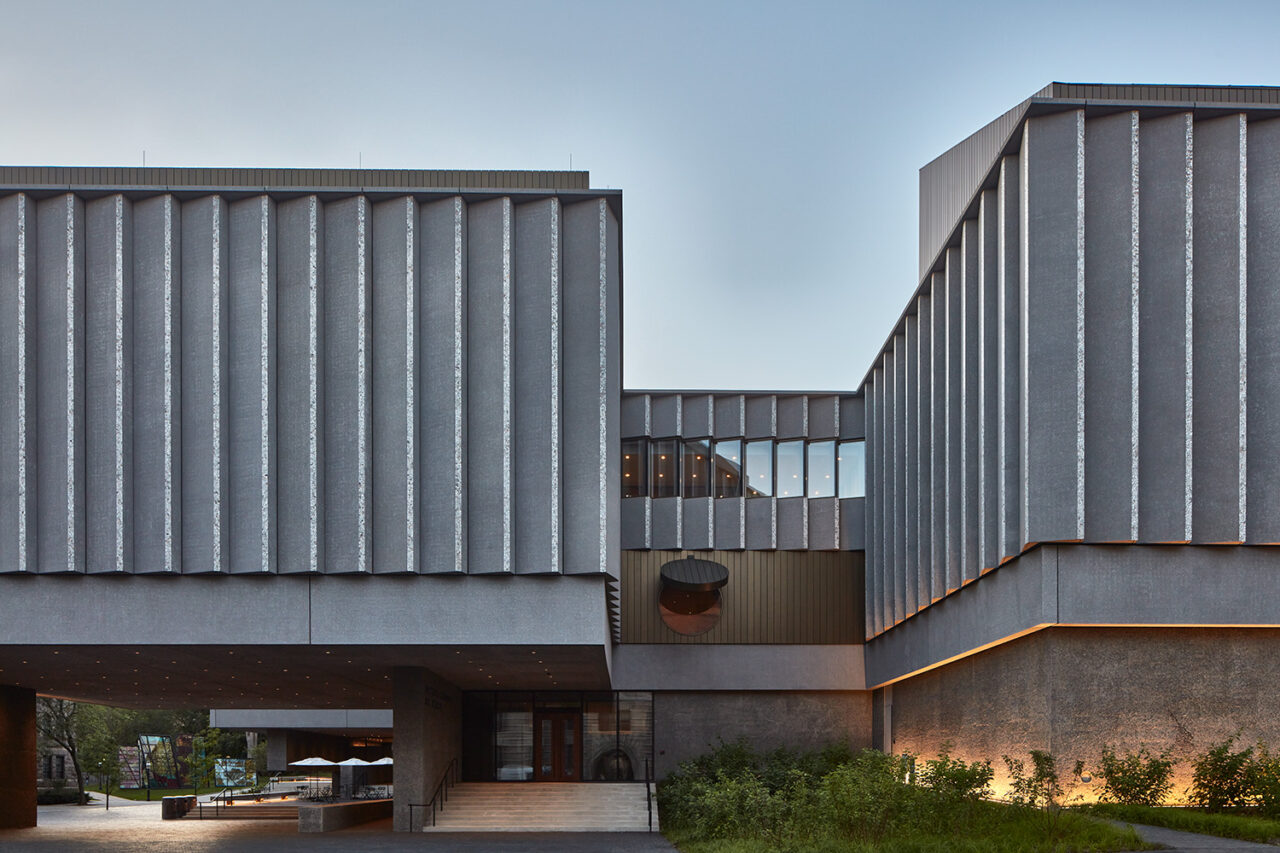
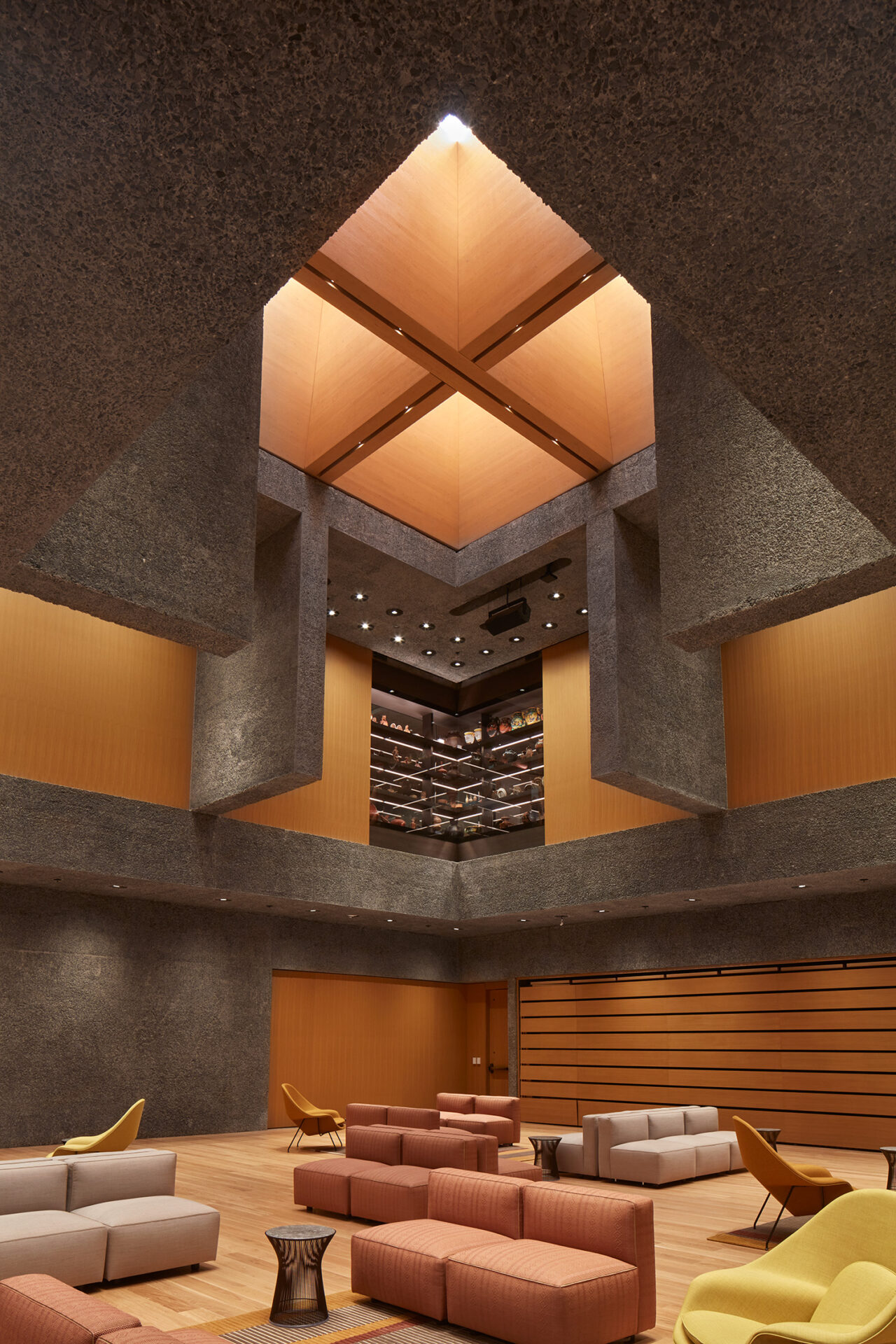
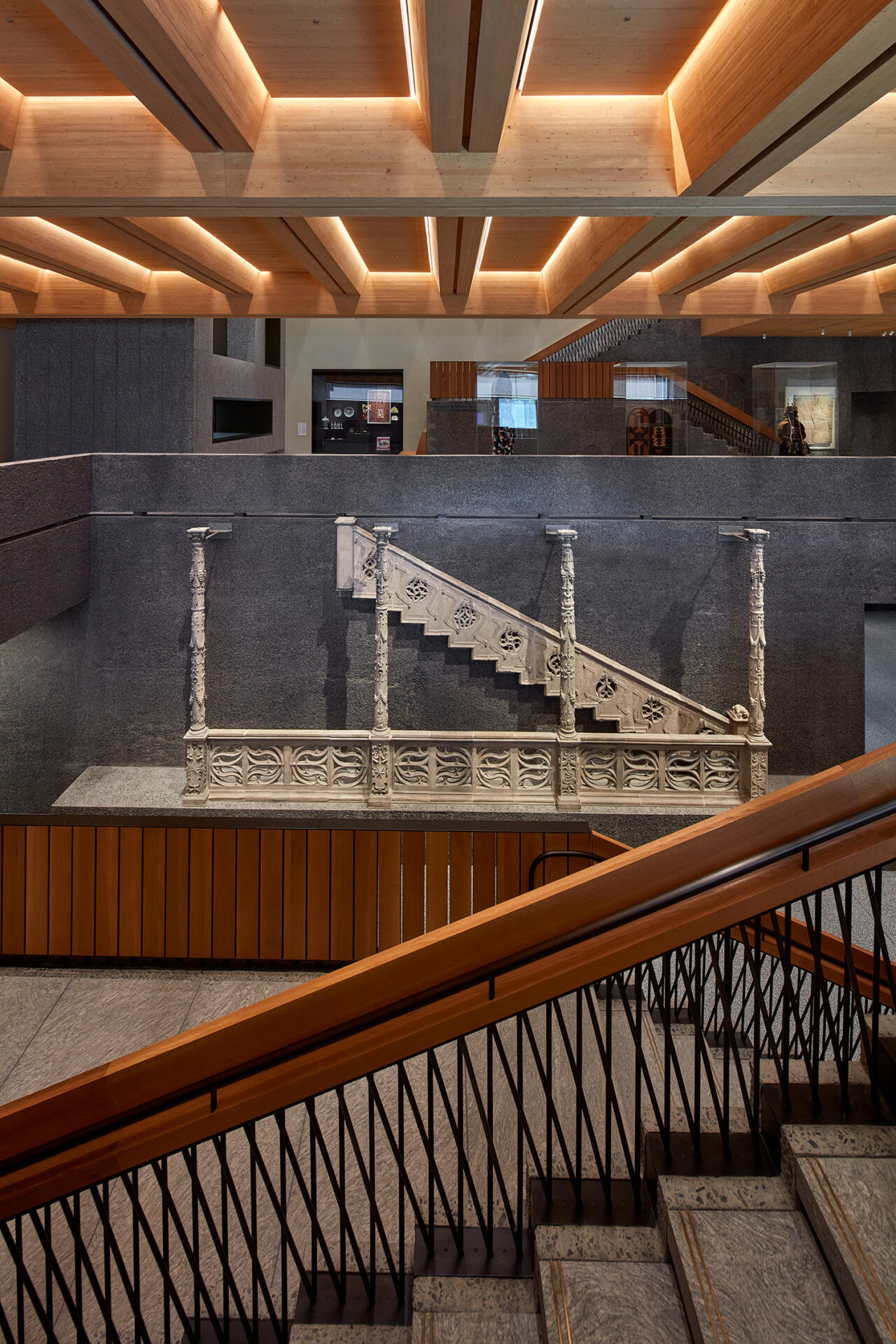
Designed by Adjaye Associates with executive architect Cooper Robertson, the new 146,000-square-foot Princeton University Museum of Art (PUAM) has reopened after a six-year hiatus on the same site its predecessor occupied. With double the exhibition space, the Museum devotes 80,000 square feet in 32 galleries ranging in size from 144 square feet to 3,987 square feet, for the display of more than 117,000 objects. Works of art, including ancient Roman mosaics, a medieval Spanish staircase assembly, medieval French stone window surrounds, and stained-glass windows are integrated into the architecture placing visitors into contact with works of art in the galleries and public spaces. The exterior of the building is constructed of precast panels of stone aggregate, alternating between rough and polished finishes, accented with extruded aluminum panels with anodized bronze finish. Windows provide framed views into the building and out onto to the campus. The three-level building consists of nine interlocking pavilions. Seven pavilions contain galleries, an eighth houses the Museum’s conservation studios, and the ninth is home to Marquand Library, the University’s research library for the fine arts. The building includes outdoor terraces that include spaces for performances and events that can accommodate two hundred and two thousand people. The ground floor has entrances on all sides, inviting guests traversing the campus to utilize two interior “artwalks,” which feature works of art, including site-specific sculpture and large-scale paintings, giving visitors a peak into the galleries even at times when the Museum is closed. The Grand Hall is designed to function as a lecture hall, performance and event space, and social gathering space. The triple-height volume is the most complex engineering feat of the building’s construction and features “floating concrete” structural elements, as well as white oak wall panel accents and controllable daylighting from the skylights above. The Grand Hall can be transformed to accommodate classes, lectures, and performances, as well as larger events and informal social gatherings. The mass-timber building has glulam beams in key public areas, including five pavilion galleries, the exterior entry court, the Grand Stair entry sequence, the Grand Hall, and the Museum restaurant. The use of glulam beams as load-bearing elements of the building’s construction advances Princeton’s commitment to sustainability, while introducing one of its key aesthetic elements.
In Case You Missed It…
Bonhams, the 230-year-old auction house, is opening its new US flagship in Steinway Hall, a New York City landmark at 111 West 57th Street. Scheduled to open on February 9, 2026, the 42,000-square-foot, four-story space designed by Gensler will stand at the base of the SHoP Architects’ supertall tower.
In Brooklyn’s Dumbo neighborhood, the NYC Department of Transportation (DOT), the NYC Department of Environmental Protection (DEP), the NYC Department of Design and Construction (DDC), the Landmarks Preservation Commission (LPC), and the DUMBO Business Improvement District have completed the end of an infrastructure project. This included the historic restoration of 26 blocks, the rebuilding of cobblestoned streets, improved stormwater drainage, reduced combined sewer loading into the harbor, newly added bike lanes, and the creation of the new Pearl Street Plaza.
The Gaming Board has recommended that all three bids for New York City casino licenses be granted to Hard Rock Metropolitan Park designed by SHoP Architects and Field Operations, Resorts World New York City by Perkins Eastman, and Bally’s Bronx Casino by HKS and Gensler. The Gaming Commission will make its final decision by the end of this month.
As part of New York City’s Living Libraries program, the New York City Department of Housing Preservation and Development (HPD) and The New York Public Library (NYPL) has announced that Settlement Housing Fund (SHF) and Kalel Companies (Kalel), Bernheimer Architecture, and LEVENBETTS will reimagine Grand Concourse Library into The Heartwood, a new community hub that includes approximately 113 affordable, rent stabilized homes atop a new public library.