


Research Spotlight
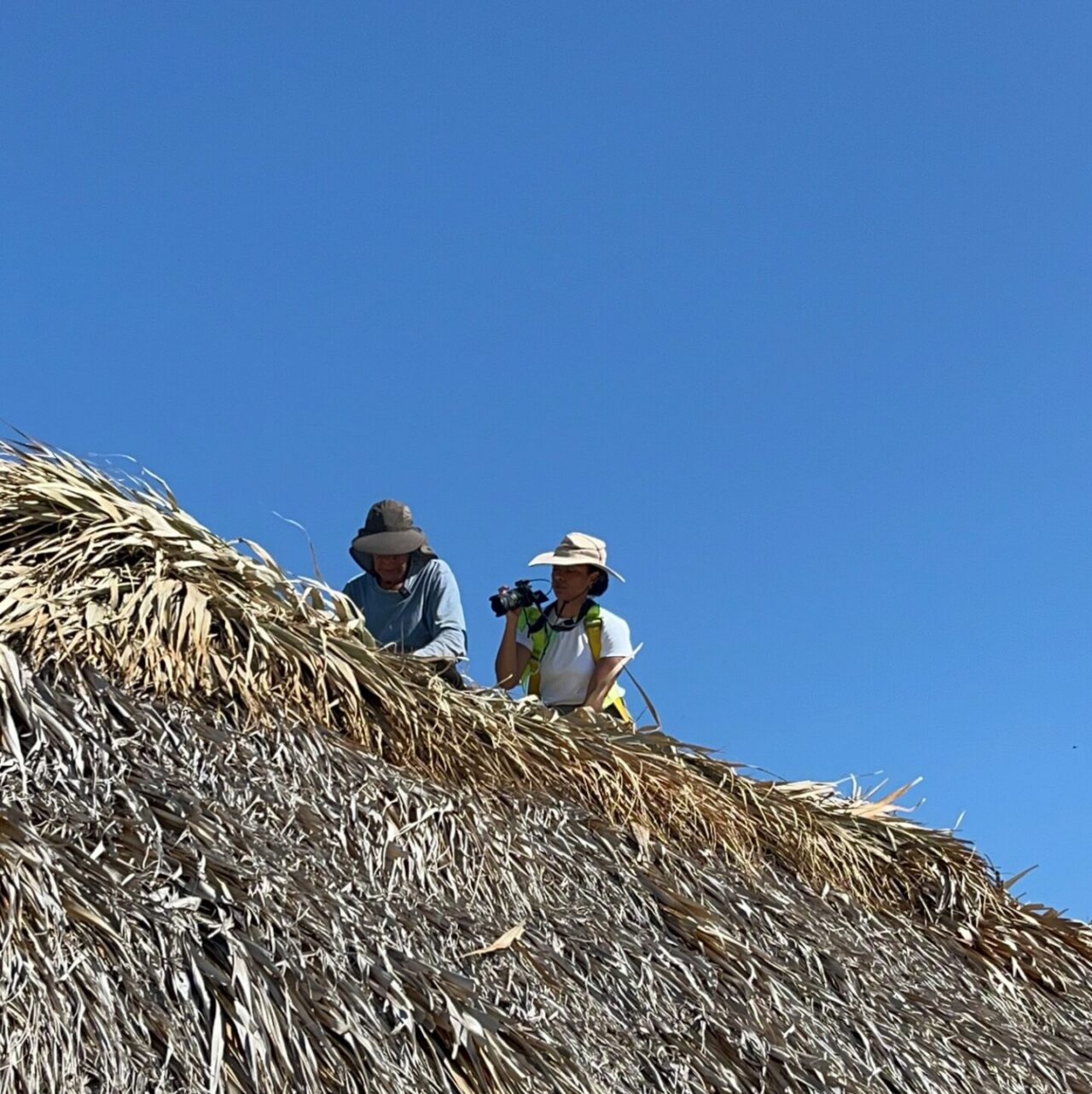
Research often begins with questions that history has left unanswered. For Wayne Evans Holness and Rose Mary Florián Rodríguez, RA, NOMA, those questions led them across Latin America and the Caribbean in search of stories that have too often been overlooked. As recipients of two AIA New York honors—the Linda and Turan Duda Research Fellowship and the Stewardson Keefe LeBrun Travel Grant, respectively—Holness and Florián Rodríguez embarked on independent research projects examining how Afro-descendant, Black, and Indigenous communities have shaped the built environment across the regions. Through archival research, fieldwork, and conversations with local residents, historians, and knowledge keepers, both researchers sought to recover histories that remain largely absent from traditional architectural narratives.
This Spotlight contains two parts: An essay by Florián Rodríguez and Holness about their research, and the folllowing Q&A with Oculus Editor Jennifer Krichels in which the authors discuss the necessity of that work, the role of oral history in architectural research, and what architects can learn from building traditions rooted in cultural memory, stewardship, and belonging.
You both have a sense of urgency about how the work is presented and told. Can you tell me more about what motivates that?
ROSE MARY FLORIÁN RODRÍGUEZ: I have a sense of urgency in documenting oral histories of traditional building techniques in the Caribbean because the people who hold this knowledge are in their late years. Except for isolated groups who focus on preserving traditional building techniques or alternative ways of building with the land, there is little interest by younger generations to learn how to build with the ancestral knowledge that our elders hold. The Caribbean is a prime region for tourist developments focused on extractive luxury projects. There is an increase in displacement in favor of multi-million-dollar gated communities for foreigners. This rupture between local communities and their relationship to the land results in a complete erasure of traditional building knowledge.
WAYNE EVANS HOLNESS: Hearing the stories my grandmother shared of her hometown of Limón, Costa Rica was the catalyst that led to this project. Taking walks with her through the town came with her narrations of what used to be in now-abandoned lots and gave context to the city’s history I wouldn’t have known otherwise. This helped me realize the importance of generational knowledge and oral histories and the critical nature of hearing from these voices while they’re still here.
Can you share more about your processes, for other architects looking to undertake work like this? What is the research that happens before a trip versus what happens on the trip?
WEH: Before the trip, I spent a lot of time reading existing material on cities and sites that were the most relevant to the research questions that were forming. I wanted to get a broader understanding of the context that was available to study so I could expand my scope outside of the original set of stories I heard from my family. I also wrote daily as I put my proposal together. That helped me to process some of the patterns I was noticing across locations and gave me the mental space to clarify my thesis (what exactly I was looking for) and the critical research questions I was asking. Part of my application process required an itinerary and budget, so it helped to list the exact sites I’d visit and how much time I would need in each city. That part was really helpful because after I was selected for my fellowship, the only thing I needed to do was book the travel! I waited to contact locals for conversations about my visit until after it was confirmed to ensure the timing logistics were settled. In my case, I also scheduled archive visits a few weeks in advance. On the trip itself, I documented the spaces through photos, videos, and hand sketches. I also spoke with local residents about their neighborhoods, recording audio when consented. I would also jot notes down throughout the day and write more extensively in the mornings or evenings to capture that day’s mental findings and any ideas that surfaced.
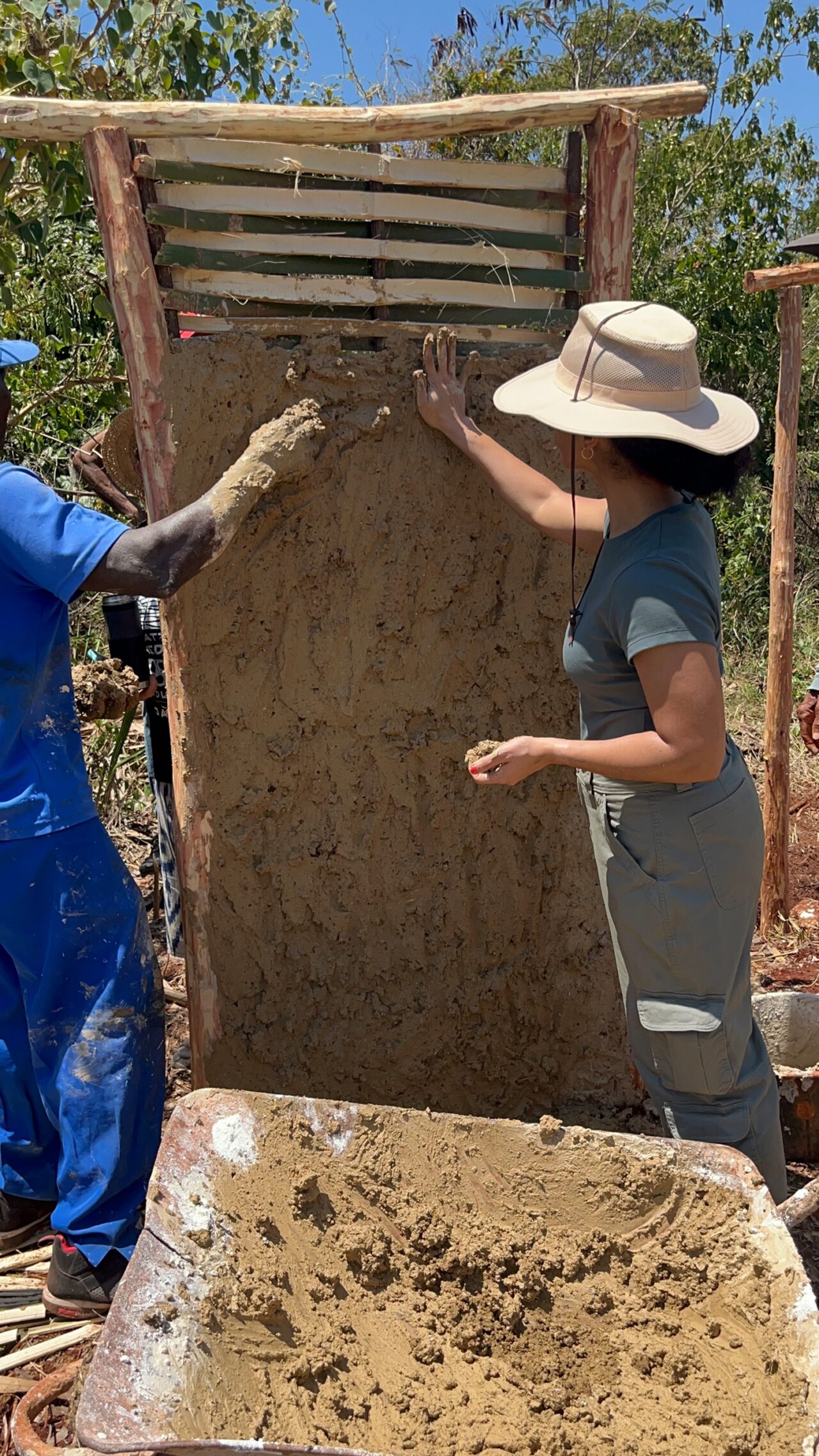
RMFR: It is essential to engage in research that feels deeply personal. With certain topics, especially those related to Black culture contributions, there will be times when you know you have a good research question that needs to be answered, but the information available is very limited. I spent weeks just trying to come up with the right combination of keywords to find written work related to my research idea. But once you find that one written source relevant to your main research question it becomes much easier. The references used by the authors you engage will continue to give you guidance and a framework to develop the research.
Before a research trip, you must have a clear framework to guide your inquiries into the subject you are interested in. This comes from reading as many texts related to the research as possible. Once your base knowledge is developed you can look into contacting the authors you read, the projects you learned about, and the institutions that might be doing similar work to yours. Most of the time, people are very happy to talk about their work and will be generous with their time if you show that you have engaged with their work and are interested in enriching the research. Before my trip, I identified multiple people who I wanted to interview in person. I had virtual meetings with all of them to explain my interest in their work and confirm their willingness to be interviewed in person while I was in their country. During the trip, things might change, people might become unavailable, or the interview date needs to shift a couple of days. I think that the most important part during the travel portion of the research is to have flexibility and have a couple of alternative plans lined up. Also, the communication with the interviewees before the trip establishes a level of trust and commitment that helps everyone remain accountable to make the meeting happen.
Do you have any anecdotes you would like to share from your time speaking with people and conducting research?
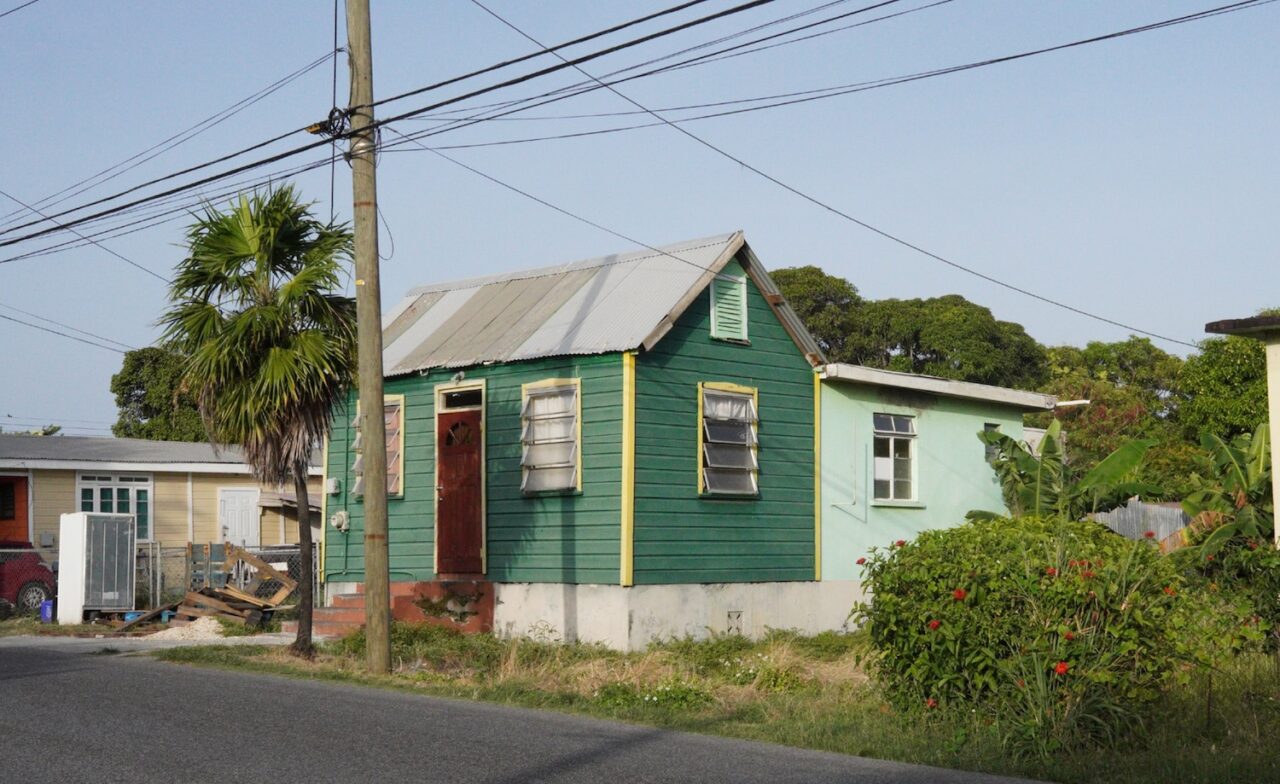
RMFR: The first country I visited as part of the Stewardson Keefe LeBrun Travel Grant was Jamaica. I knew I had to speak to Dr. Patricia Green. She is an architect and historian who has written some of the few texts about vernacular architecture in the Caribbean. She was the first person I interviewed during the trip, and she was the most challenging. Over the years, she has had multiple people approach her for interviews that felt extractive and performative, so she was very cautious about me interviewing her. I sat down with her and proved that I had engaged with her texts. I came prepared with questions, but she immediately challenged me to think deeper about her work and my interest in the subject. During our conversation, I described to her my grandparents’ house in the Dominican Republic. She stopped me and asked me, “What is that house?” I paused and said, “A bohío!” That’s been the biggest breakthrough I’ve had while doing this research. A bohío is the Indigenous word for house and through my education I exclusively associated this style of houses to the Indigenous people of the Caribbean. But in that moment with Dr. Green, I knew that this iteration of a vernacular house was adapted through time and influenced by other cultures that carried this type of house into today’s architectural lexicon of the Caribbean.
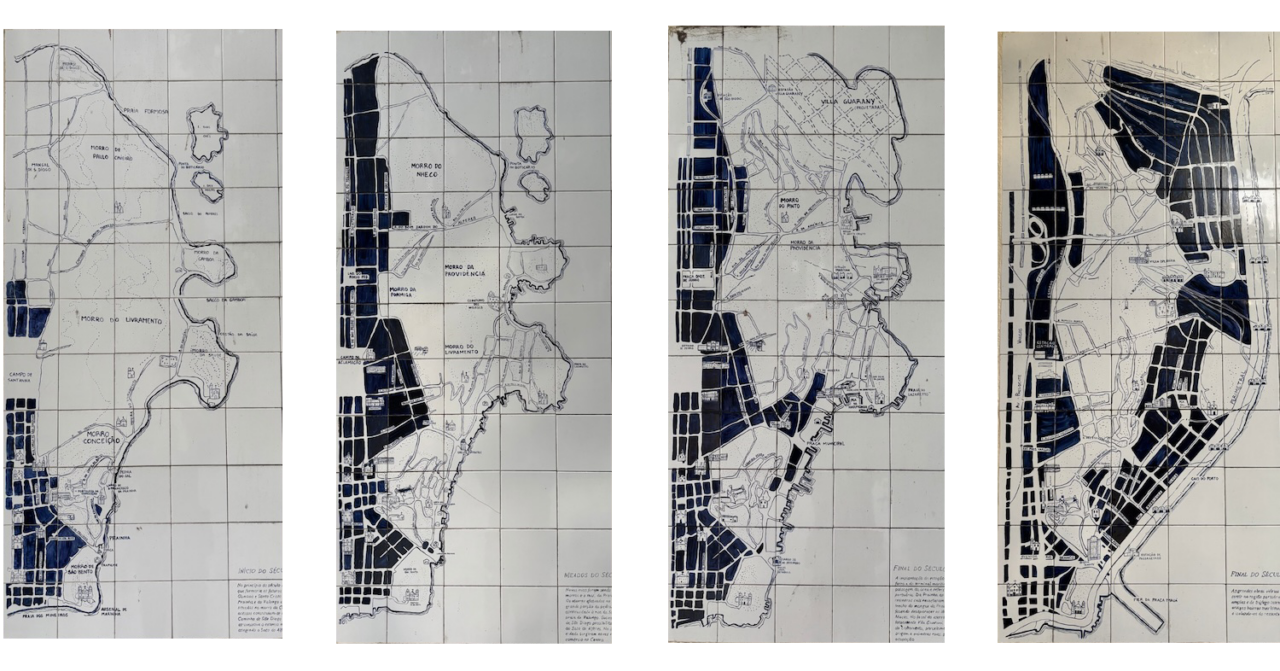
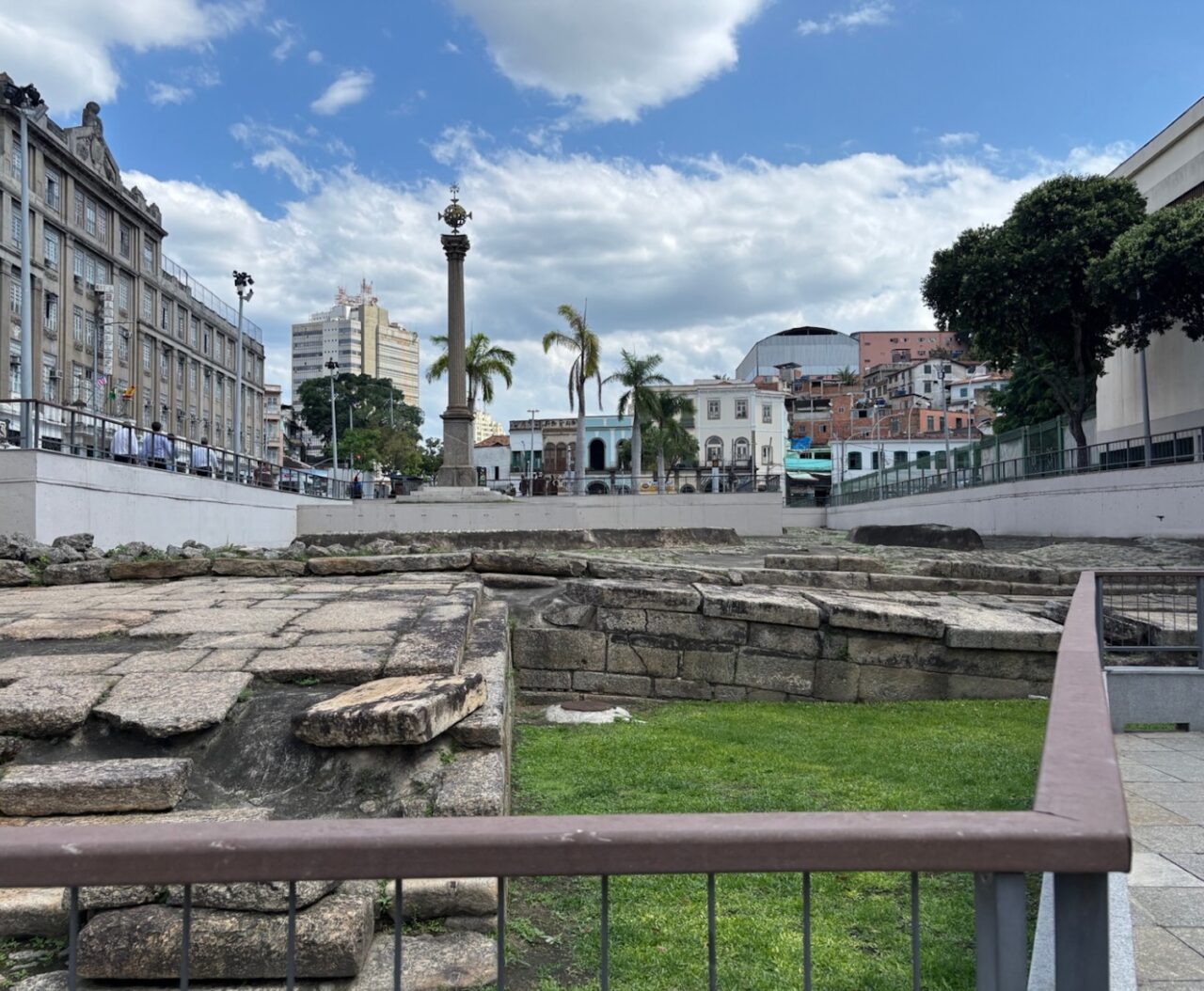
WEH: In Rio, I visited the Museum of Afro-Brazilian History and Culture. Bruna, one of the librarians, very kindly pointed me to some of the literature and helped me find some old maps of Rio and other cities as part of my archival search. She also spoke with me about the Pequena Africa neighborhood the museum sits within and shared the history of the building, which used to be a school, library, and cultural center before becoming its current iteration. We even discussed the significant African linguistic influence of Brazilian Portuguese. That interaction was one of many that speaks to so much of the kindness and generosity I received from the diaspora during my research and the stories I simply would not have heard otherwise.
What relationship do you see between oral history and architecture?
RMFR: In Saidiya Hartman’s Venus in Two Acts, she describes the archive as “a death sentence, a tomb”. These records of history tell incomplete stories and it is on us to fill in the gaps and expand these stories by recovering and documenting oral histories. There is a rigidity in architectural history that leans very white and patriarchal. What is considered “worthy” was decided by a system that oppresses the existence of the Black and Indigenous body. Documenting oral histories is an opportunity to learn about architecture through those who have been pushed to the margins. Architecture is a physical representation of our culture, politics, and history; therefore, what should be recognized as “worthy” is everything that encapsulates the story of each country and its relationship to the world.
WEH: To me, architecture and oral history are linked through culture. The built environment partially serves as containers for human culture. Art, music and dance, food, spirituality, and collective memory are all woven into the urban fabric, which serves to preserve or erase them. In a similar way, oral history serves as a container for cultural lineage to be remembered or forgotten. Telling stories about spaces helps us remember what was, so we can be better informed about what stands now and can hopefully step more intentionally into what can be.
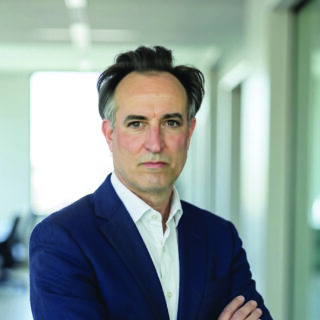
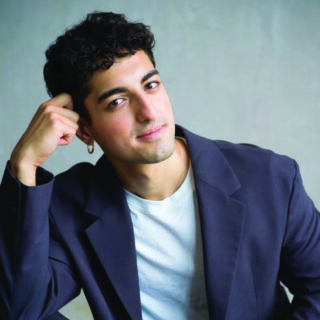
Rose Mary Florián Rodríguez, RA, NOMA, is a Black Puerto Rican architect, artist, and independent researcher with nearly a decade of experience in the design industry. Her research explores the historical contributions of Black builders and technologists across the Caribbean, informing a practice that values both innovation and cultural continuity in the spaces we create today.
Wayne Evans Holness is a designer, writer, and researcher whose work sits at the intersection of African diaspora cultural cartography, architecture, and urban history. His research centers on how Afro-descendant communities have shaped cities across Latin America, often in ways overlooked by prevalent architectural narratives. His work excavates these spatial stories and expands their place within society’s collective memory.