





by: Linda G. Miller








The Obama Presidential Center Opens This Weekend
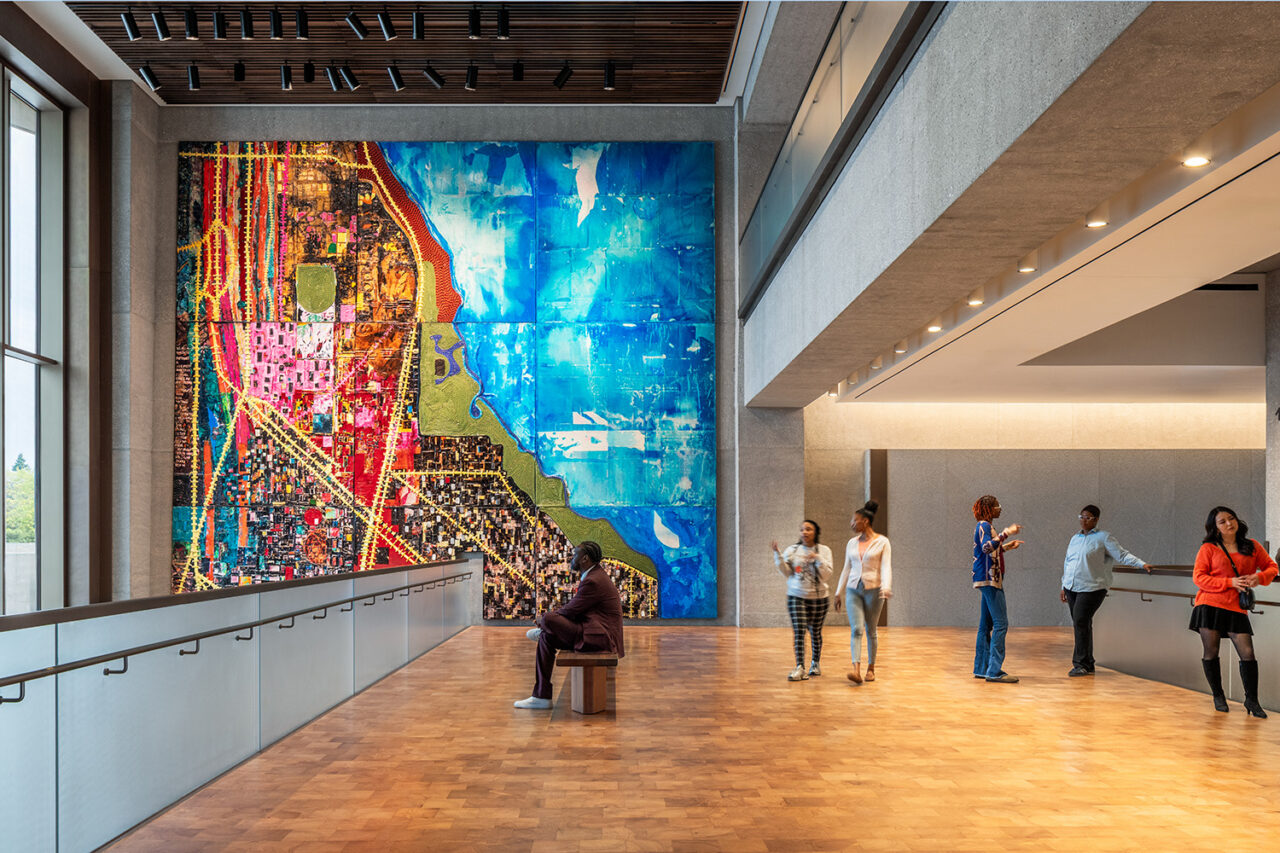
The Obama Presidential Center, designed by Tod Williams Billie Tsien Architects (TWBTA), opens to the public on June 19. Placed in the South Side of Chicago, the Center commemorates the 44th president of the US, planned to be a global hub for inspiring, empowering, and connecting people to make change. Located on 19.3 acres in historic Jackson Park on Chicago’s South Side, the Center invites visitors of all ages from across the street and around the world to explore the ideas and values that shape our democracy, engage with the story of President Barack Obama and former First Lady Michelle Obama, and be inspired to bring change home to their own communities. At the heart of the campus is the 225-foot-tall granite clad Museum Building. Visitors journey through exhibits designed by Ralph Appelbaum Associates, from the founding of the United States, social movements of the 20th century, the Obama campaign and presidency, and life in the White House. At its crown, five-foot tall letters spell out quotations from Obama’s speeches, and the letters create a screen for the publicly accessible Sky Room at the top of the building. The exterior also features Julie Mehretu’s one-of-a-kind painted glass art installation. The Center is designed as a campus integrated with landscape designed by Michael Van Valkenburg Associates, who developed the campus masterplan. In addition to the monumental museum tower, the campus contains the Forum Building, a community and civic space, and a branch of the Chicago Public Library, which are mostly clustered at the north end of the campus. John Lewis Plaza, a space for visitors to gather for performances, programs and other events serves as the entry point for these buildings. Home Court, a 60,000-square-foot multi-purpose space designed by Moody Nolan includes an NBA regulation size court, gymnasium and community spaces and anchors the southwest corner of the campus. The Obama Foundation had selected TWBTA in 2015 out of a field of seven firms to be Architect of Record and lead the design team and Interactive Design Architects (IDEA) to serve as the Associate Architect.
Bruce Springsteen Center For American Music Opens in New Jersey
Designed by COOKFOX, the Bruce Springsteen Center for American Music (BSCAM), has opened at Monmouth University in West Long Branch, NJ. This new cultural landmark is dedicated to telling the story of music in this country while celebrating Springsteen’s work within that tradition. Just blocks from where Springsteen wrote “Born to Run,” the 30,000 square-foot two-story mass timber structure houses exhibits on Springsteen’s music and of American music; the Springsteen archives; a 240-seat auditorium; and gallery space for changing exhibitions. The façade, composed of weathering steel rain screen panels, recalls New Jersey’s the industrial heritage. The building uses sustainably harvested European spruce in glue-laminated timber (GLT) and cross-laminated timber (CLT). All wood is left unstained to express its natural character, while the resin-infused paper surfaces of the millwork is a material also commonly used by guitar makers for fretboards. Visitors enter via a long, elevated boardwalk that runs through an undulating grassy meadow. The progression continues inside the double-height, central hall, which bisects the open interior layout into a performance space to the north and exhibition galleries on two levels to the south. The auditorium anchors the Center’s public programming, designed for concerts, lectures, and screenings. Thin vertical wood slats were designed to give human scale to the large space, to define and unify the curved surface of the interior walls, and to conceal acoustic panels that are tuned to both absorb and reflect sound. Overhead, “starry night” lighting in the ceiling creates an immersive atmosphere inspired by nighttime performances on the Jersey Shore. The archive preserves Springsteen’s papers and notes, all forms of recorded music, programs, posters, tee shirts, ticket stubs for the purpose of research and exhibition. Scholars, writers, students, researchers and others will be able to study in private carrels on site, and will have access to artifacts from the archives, including for listening in many media, in a controlled setting. Exhibition design by C&G Partners includes eight galleries of rare artifacts, interactive experiences, iconic photography, a hands-on rehearsal studio, and an immersive concert experience. Floor-to-ceiling photographic murals showcase Springsteen’s creative process from the pages of his notepad and his private songwriting studio and recording space, to the stages of his biggest performances. Designed in collaboration with LaGuardia Design Group, the topography is filled with native plantings that improve local biodiversity and act as a bioswale for managing stormwater. At the entrance to the building a London Plane tree symbolizes the “Memory Tree,” that stood outside Springsteen’s childhood home and evokes memory, place, and storytelling central to Springsteen’s work. The design is consistent with COOKFOX’s biophilic design approach, creating an environment that supports health, focus, and connection to place. The building is scheduled for LEED v4 BD+C and meets museum grade environmental standards. The project is also pursuing the LEED Social Equity within the Supply Chain pilot credit by prioritizing products that meet all eight fundamental conventions of the International Labour Organization.
Erlanger Park to Open New Ballpark Venue
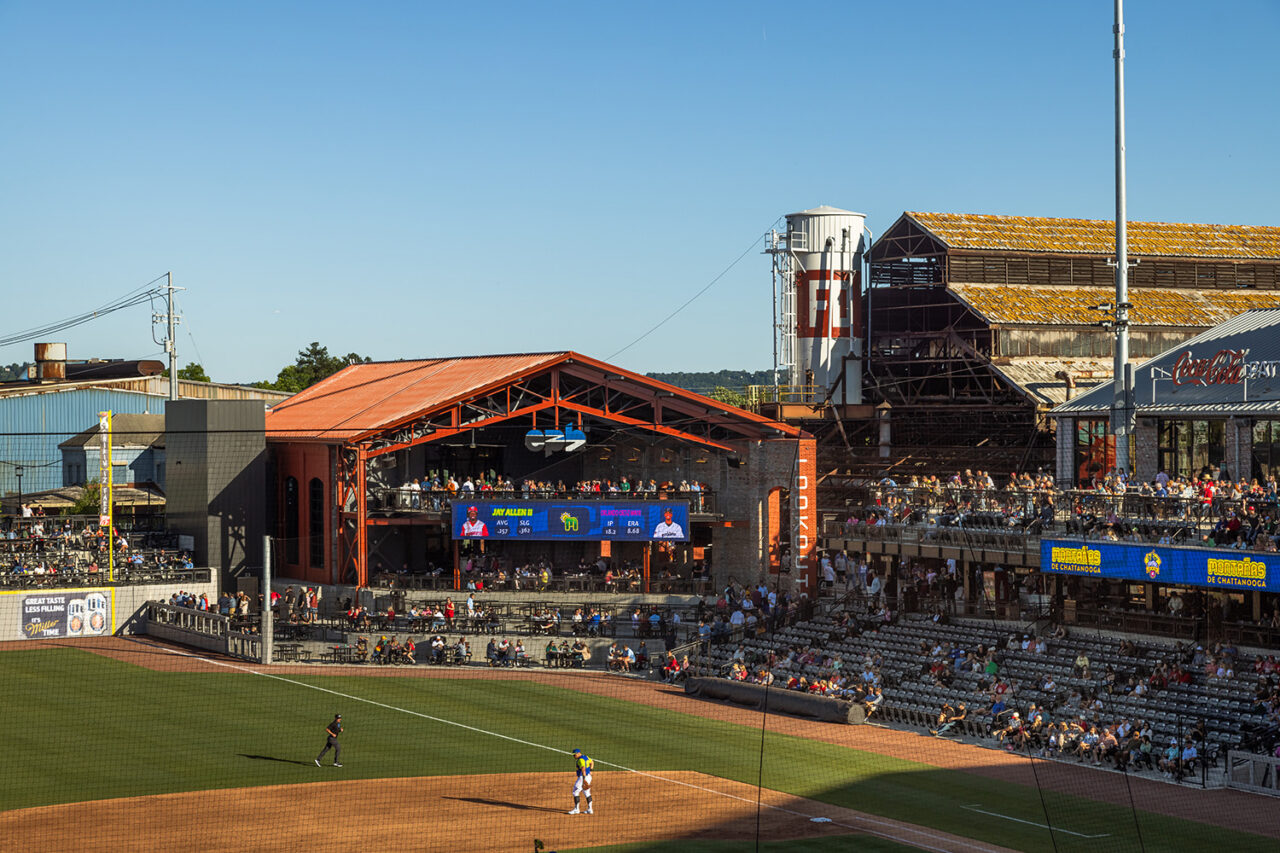
With the opening of Erlanger Park, located on the southwestern edge of downtown, the Chattanooga Lookouts, a Double-A baseball team, has a new 8,032-seat venue with premium seating, tiered outfield seating, and a grab-and-go food hall. Designed by S9 Architecture, with DH&W serving as Executive Architect, the Minor League Baseball (MiLB) ballpark’s sunken field, grandstand, and 360-degree concourse prioritize public space and permeability, creating both a sports venue and a civic amenity. The ballpark is located on what was an industrial wasteland and formerly the site of the U.S. Pipe/Wheland Foundry, closed since 2006. Fans enter via three gates custom Cor-Ten steel screens that will weather in time, designed by local artist Tommy Bronx. The ballpark is sited within a complex of six adaptively reused industrial buildings and stabilized foundry ruins that have been transformed into spaces now used for retail, social spaces, and other amenities. The Coca-Cola Pattern Shop, where workers once fashioned the molds used in the foundry has been transformed into a configurable 24,000-square-foot indoor-outdoor building now used for corporate retreats, company gatherings, and receptions. Its moveable section walls feature found molds from the foundry and blown-up images of Chattanooga baseball history and ballparks. The ballpark serves as the anchor for a 140-acre S9-designed mixed-use district along the Tennessee Riverwalk that includes retail, office, and a 300-unit residential building. Conceived as three elongated steel tubes atop a podium, the residential building references the historic foundry. Between these linear forms, shared amenity spaces offer views of the ballpark and surrounding neighborhood. Construction on this next phase of the project is expected to start later this year.
Amant Arts Opens New Mixed-Use Complex
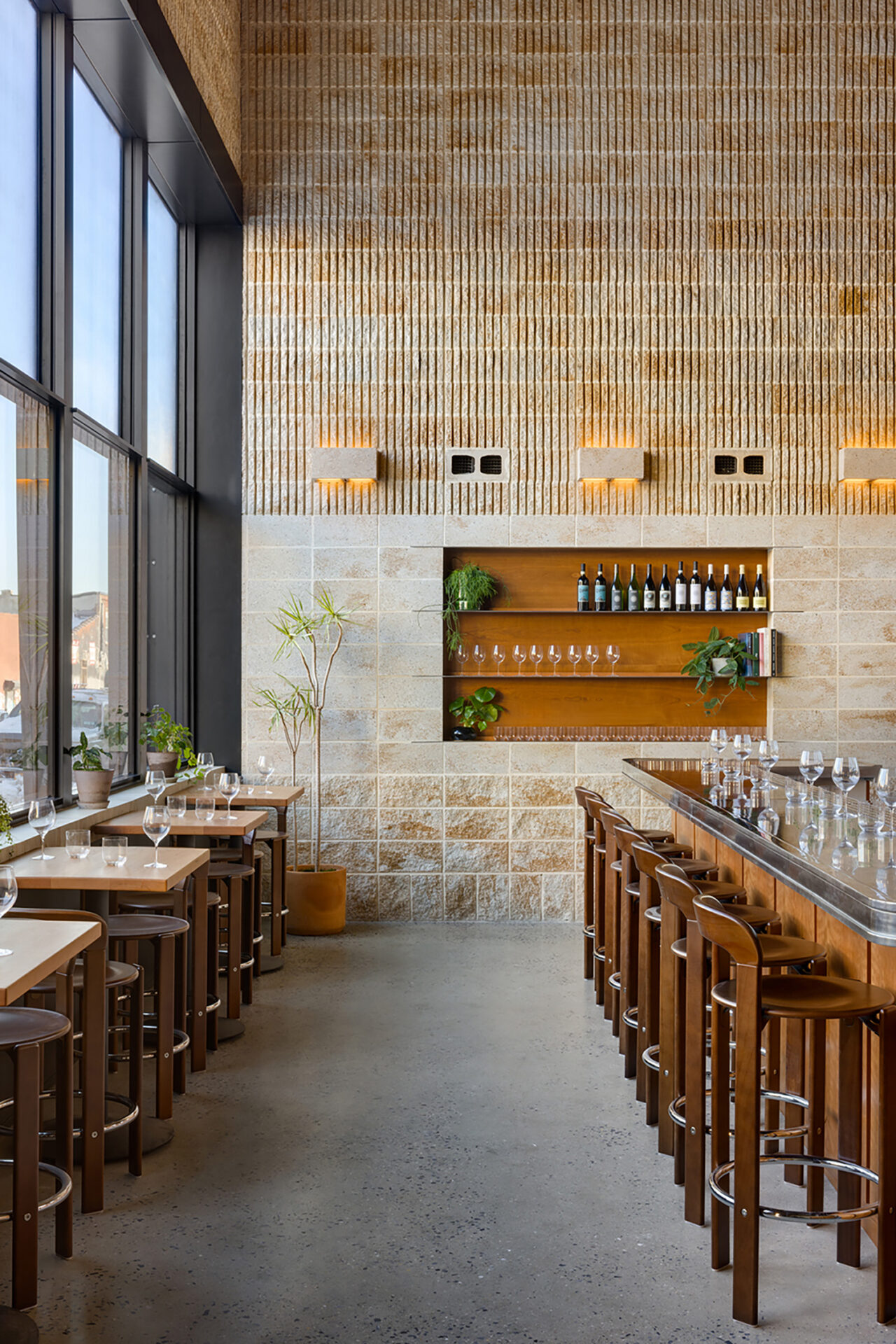
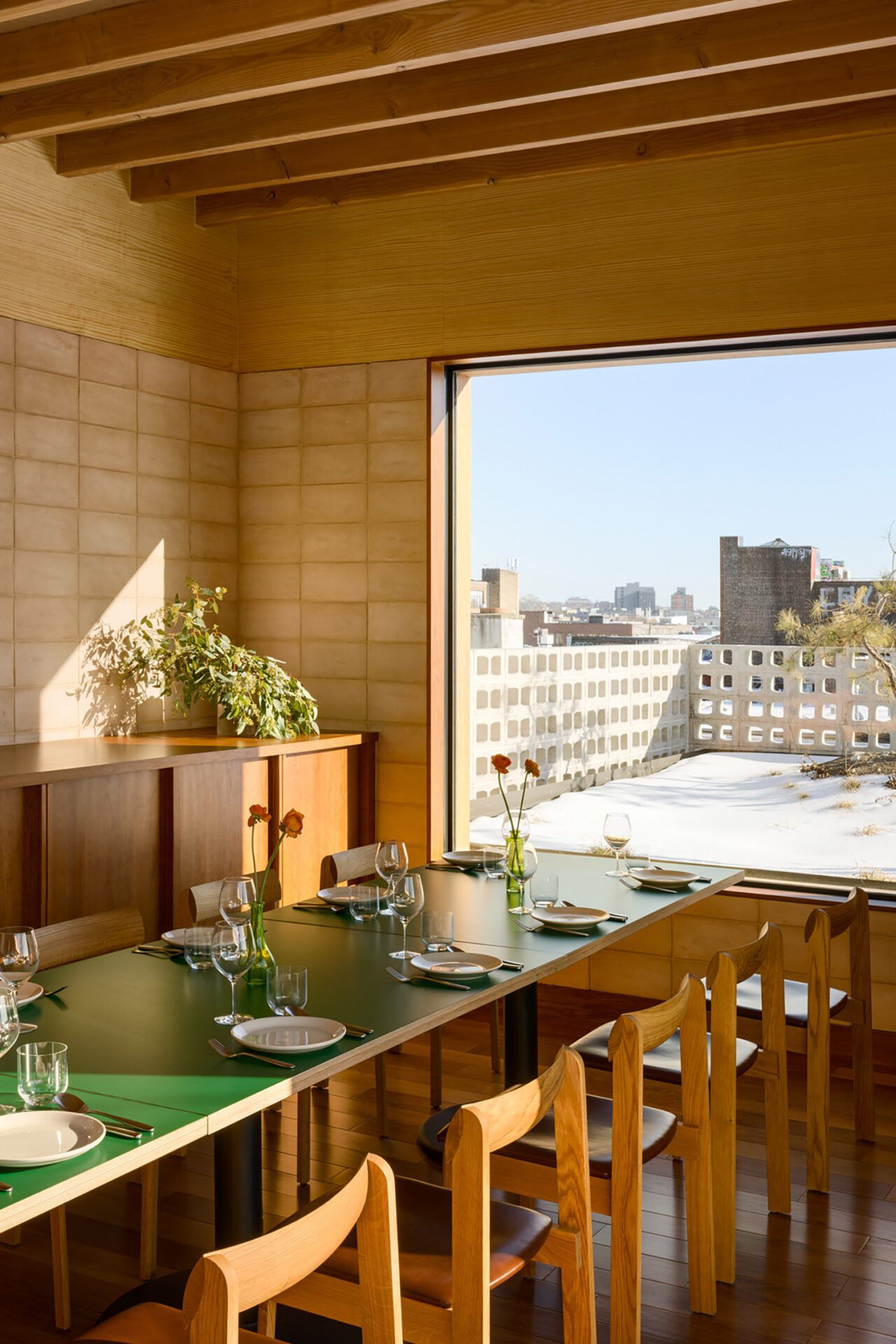
GRT Architects has completed a 10,000-square-foot mixed-use building for the Amant art complex at 312 Maujer Street in the East Williamsburg section of Brooklyn. Working closely with Amant founder and CEO Lonti Ebers, they transformed an uninsulated warehouse into an all-electric exhibition space and restaurant. The project preserves and reinforces an existing single-story warehouse building while adding a second story with mass-timber beams and textured concrete-block walls. A windowless upper volume clad in marled concrete blocks creates a contrast with the utilitarian brick below. The building houses a 1,500-square-foot flexible gallery and performance space and Zoli, a seafood-focused restaurant containing 35 seats in the main dining room and 18 at the bar. “Satellite,” a site-specific artwork by Pierre Huyghe features three large aquariums and serves as a divider between the main dining area and the bar. The living installation is inspired by the ecology of the nearby Newtown Creek Superfund site just blocks away. An additional 25-seat enclosed private restaurant and seasonal bar are located on the rooftop. In collaboration with Verdant, the rooftop is designed as a rewilded landscape with an untreated wood deck and native plantings. Material selections echo the industrial legacy of the neighborhood. GRT worked with a nearby manufacturer to cast two-tone concrete blocks to serve as structure and finish which were laid out to create a tripartite wall that gives scale to the warehouse’s 20-foot volume. Blocks vary from rusticated at the base to polished at eye level to corduroy above. “Turned” and modified blocks have become light fixtures, ventilation grates, and screening elements. The space is completed with a simple palette of materials picked to age naturally without applied finishes including a natural burlap paneled ceiling, cast pewter bar, cork wall cladding and reclaimed fir tables. Opened in 2021, Amant is a 31,000-square-foot nonprofit arts center designed by SO–IL, spread across five buildings and houses exhibition galleries and a residency program. Its existing bookstore and café were recently redesigned by GRT, who is currently working on a prefabricated structure that will support pop-up events and performances.
Gotham Football Club Announces First Dedicated Training Facility
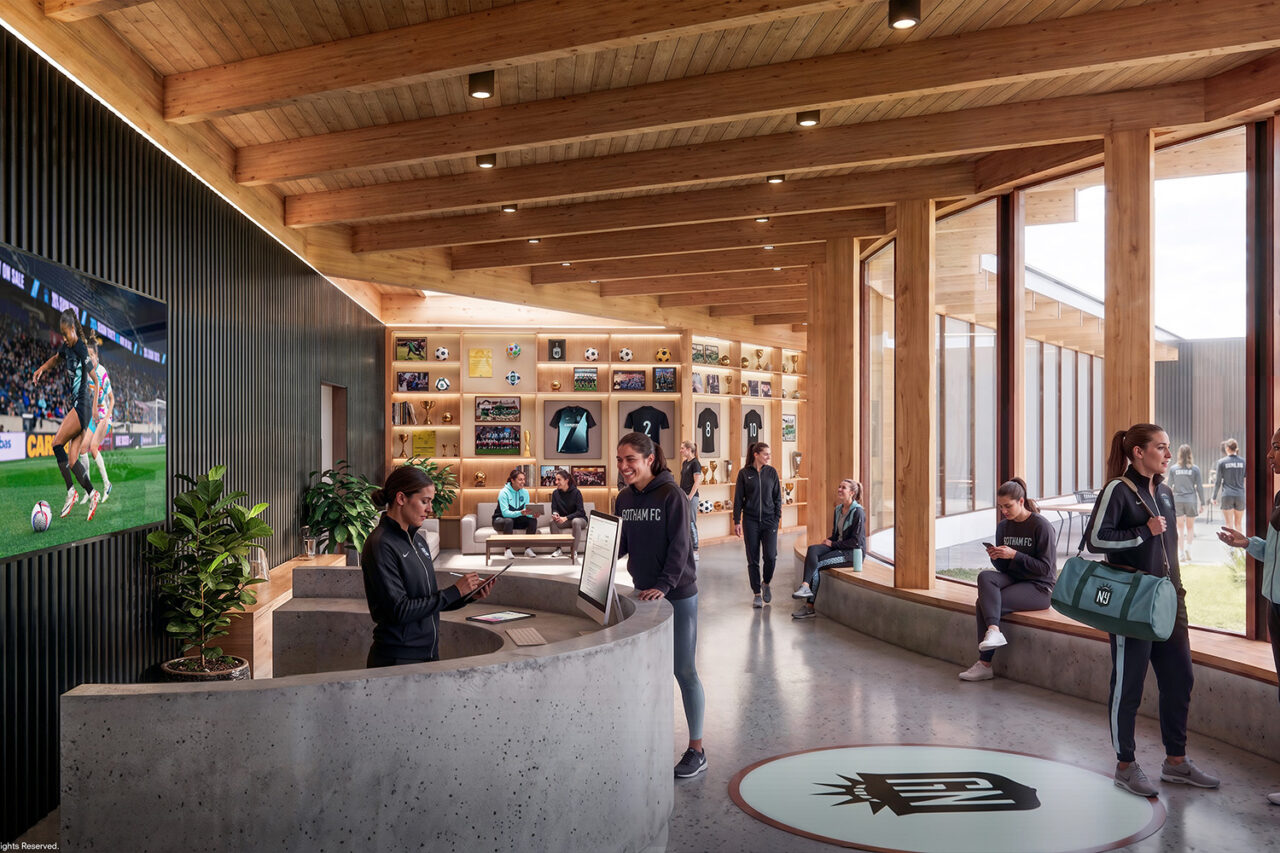
SHoP Architects has been appointed by Gotham Football Club to design a new training facility for its championship-winning top-tier professional women’s soccer team, located in Whippany, NJ. By adapting and expanding the existing campus, the project will transform the former training facility of the Major League Soccer club the New York Red Bulls, into a 27,000-square-foot purpose-built center. Designed with input from the players, the project features three existing outdoor fields and a new pre-engineered metal building will house a full-size synthetic turf pitch, enabling year-round training on-site. Guided by principles of athlete-centered design, durability and campus cohesion, programmatic and design decisions directly support player performance, preparation, and staff efficiency, from recovery and wellness spaces to the new locker room, dining hall, meeting rooms, and offices. New social spaces intended to connect existing buildings are being designed including the Gotham Quad which will serve as a communal space for relaxation, celebration, and reflection. The use of sustainable timber in this space and throughout the new construction will connect the players to nature. After two decades, the 2025 NWSL Champions will have its own facility after borrowing fields or sharing them with other teams across the state. Renovations will begin late this summer, with full project completion targeted for summer 2027.
In Case You Missed It…
New renderings have been unveiled for the redevelopment of New York Penn Station. With Practice for Architecture and Urbanism (PAU) as the lead design architect, the redevelopment project aims to transform Penn Station into a larger, more accessible hub serving over 600,000 daily commuters. Among the priorities are reorganizing circulation throughout the station, reducing congestion, and introducing expanded waiting areas, retail, and passenger amenities.
A new free public observatory has opened at the David N. Dinkins Municipal Building at 1 Centre Street in the Civic Center. Located within the Beaux-Arts cupola of the 40-story building, Centre 360 was renovated by the Department of Citywide Administrative Services (DCAS). Designed by McKim, Mead & White and constructed between 1909 and 1914, the building was designated a New York City landmark in 1966.
The former home of the Planned Parenthood clinic at 26 Bleecker Street in the Noho Historic District will be transformed into 15 luxury condos plus ground floor retail space. The Landmarks Preservation Commission approved the design for the Classical Revival-style building by BKSK Architects which also includes the restoration of the building’s brick, terracotta, and cast-iron elements and other preservation and modernization improvements.
In 1940, the children’s ward of Gouveneur Hospital in Manhattan became a Wonderland. Artist Abram Champanier had painted a fantastical mural for its walls, commissioned by the Federal Art Project. Titled Alice of Wonderland Visiting New York, the mural imagined Alice exploring the city. Now through September 27, visitors to the Museum of the City of New York will be able to view all 16 panels of the mural that have been rescued, restored, and replicated over decades.