







by: Linda G. Miller






Reimagined Doris Duke Theatre Combines Advanced Tech with Indigenous Values
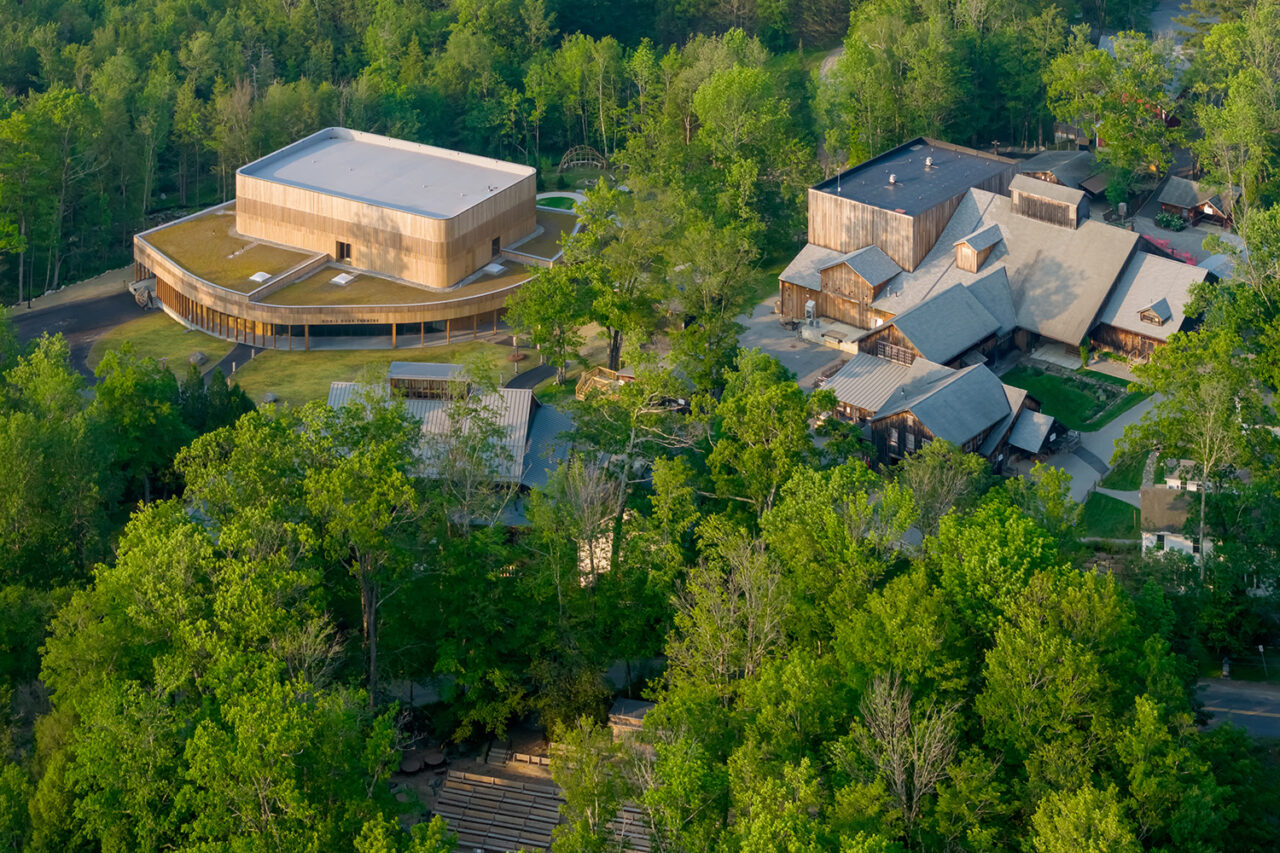
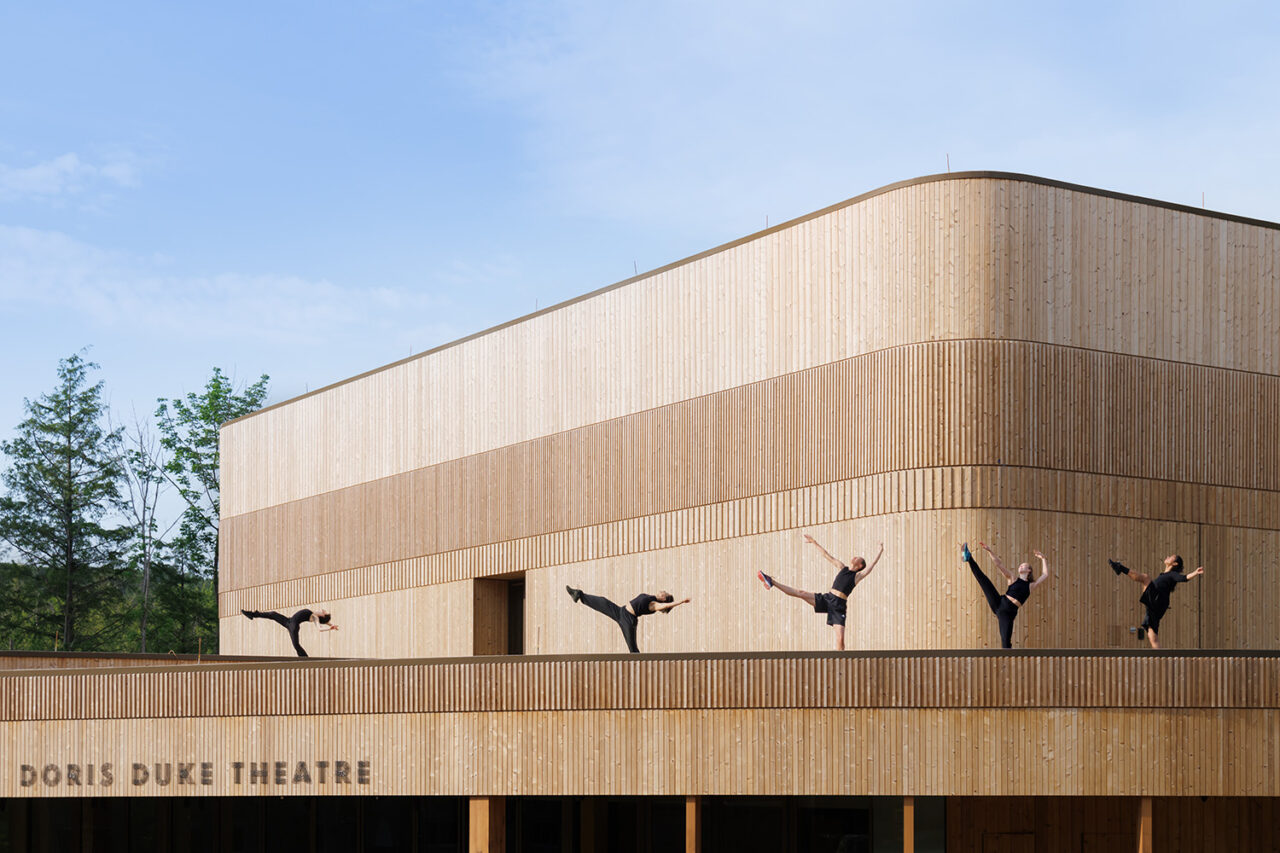
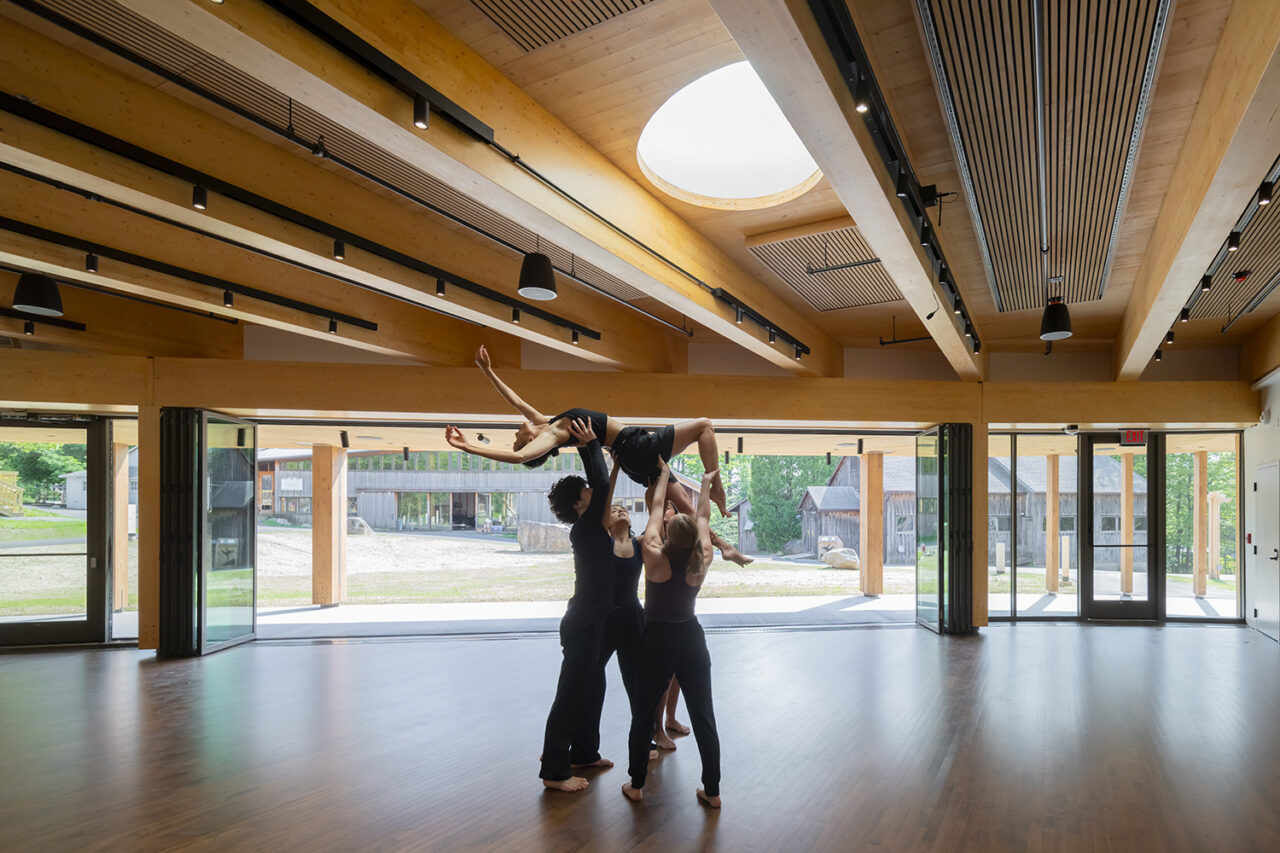
This month, the Jacob’s Pillow Dance Festival unveiled its new Doris Duke Theatre, located on the Jacob’s Pillow campus in the Berkshire mountains of Massachusetts. Occupying the site of the former studio theater from 1990, which was destroyed by fire in November 2020, the reimagined theater was designed by Dutch firm Mecanoo as lead architect, in partnership with architecture and landscape architecture firm Marvel, and theater and acoustics consultants Charcoalblue. Interdisciplinary artist, curator, and convener Jeffrey Gibson, who is a member of the Mississippi Band of Choctaw Indians and of Cherokee descent, served as a consultant on the building’s relationship to the site and Indigenous values, a key element of the building’s design. The approximately 20,000-square-foot space allows for multi-use flexibility, supporting performances, events, residencies, and more, sometimes simultaneously. The theater seats 220 to 400 patrons in the main performance space, with an array of seating and stage configurations. The space is set to become one of the most technologically advanced theaters in the world dedicated to dance; it includes capabilities such as a spatial audio system, infrared camera tracking of performers for interactive video content, and live performance interactions with recorded and projected dance content. The theater will provide a makerspace for artists seeking to integrate artificial intelligence, extended reality, robotics, and immersive platforms into live performance. The mass timber building features a thermally treated pine façade, designed to weather over time. The design facilitates rainwater collection in a future phase, and the veranda provides natural shading. Inspired by the region’s beauty, the landscape designed by Marvel harmonizes with its surroundings, reflecting the rich local ecology of the Berkshires. This design not only nurtures a deep connection between the performing arts and nature but also honors the area’s Indigenous history. To the west of the theater, the landscape design will create a central quad, framed by a sculptural “scramble” made from locally sourced stone to welcome dancers and visitors and provide spaces for lounging, rehearsal, and celebration. To the east, landscapes designed by Indigenous artists celebrate Indigenous knowledge, with a garden and a communal fire pit that reflect the land’s cultural traditions and recognize the original inhabitants that inform Jacob’s Pillow and its identity.
In East Harlem, DXA Studio Transforms Former Church Site Into Mixed-Use Housing
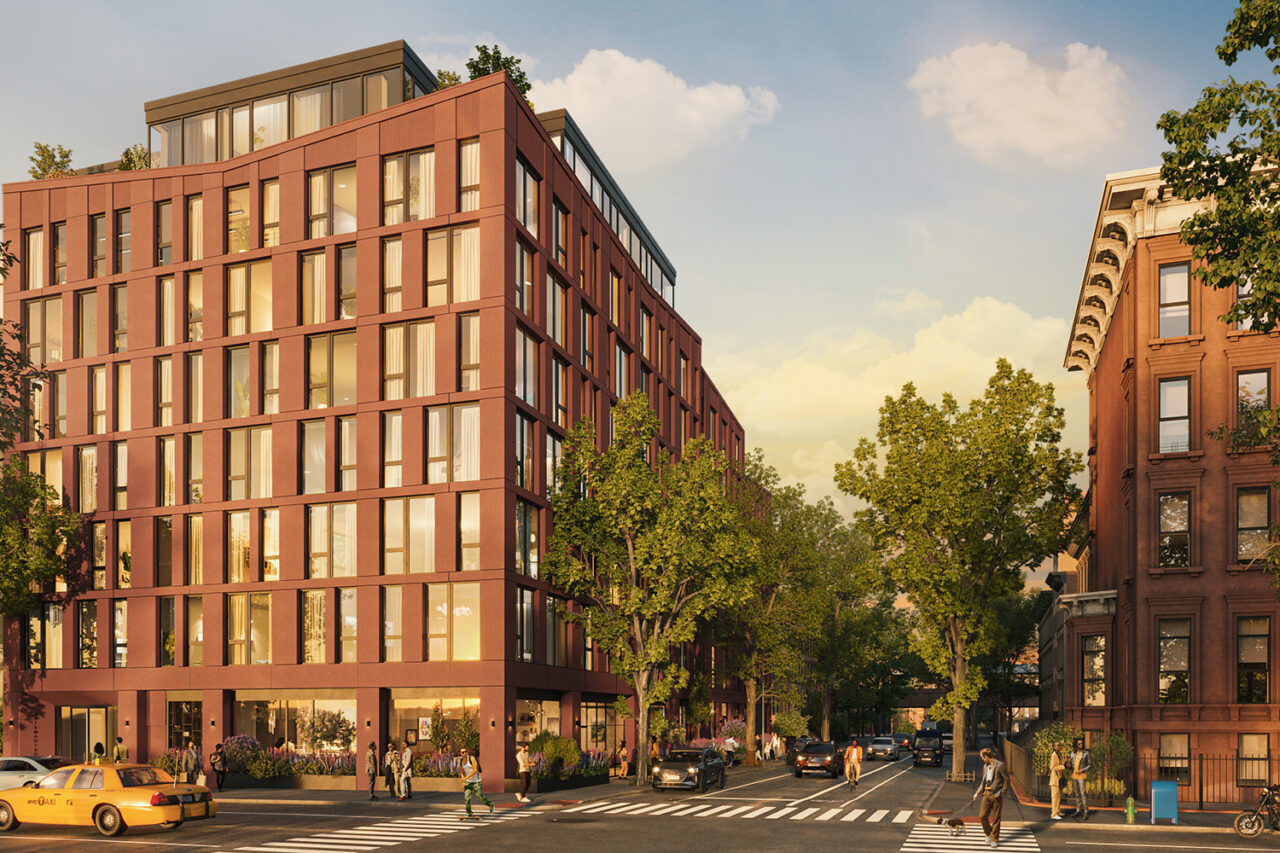
The design of DXA Studio’s 1975 Madison Avenue at 126th Street pays homage to its predecessor, the Metropolitan Community Methodist Church, a Victorian Gothic building that once stood on the tree-lined street in Harlem from 1871 until its demise in 2019. The new 100,000-square-foot building’s gabled columnar design and earthen hues recall the former structure, blending in with the surrounding brownstones. Nearing completion, the eight-story rental building will yield 97 one- and two-bedroom units, 30 of which have been designated as affordable. A community facility space on the ground floor ensures the site remains engaged with the broader neighborhood. Amenities include a ground-floor wellness garden that recalls the site’s ecclesiastical history, a media lounge, a fitness center, co-working space, lounges, and a rooftop terrace which will offer social, recreational, and fitness opportunities. Developed by The Davis Companies (Davis), in partnership with Eloise Capital, 1975 Madison is completely electric. Energy-efficient appliances, lights, and heating and cooling systems minimize environmental footprint, while abundant bicycle storage and parking space pre-wired for EV charging stations make sustainable transit options an easier choice for residents. Large-pane, high-performance glazing around the perimeter walls offer ample views of the surrounding cityscape, framed by deep columns that minimize solar heat gain. DXA’s portfolio includes many projects like this one that involve the transformation of buildings of faith-based organizations that have fallen into disrepair into much-needed, new sustainable housing.
Baisley Pond Park Residences by Aufgang Architects, Developed by Riseboro, Welcomes Residents
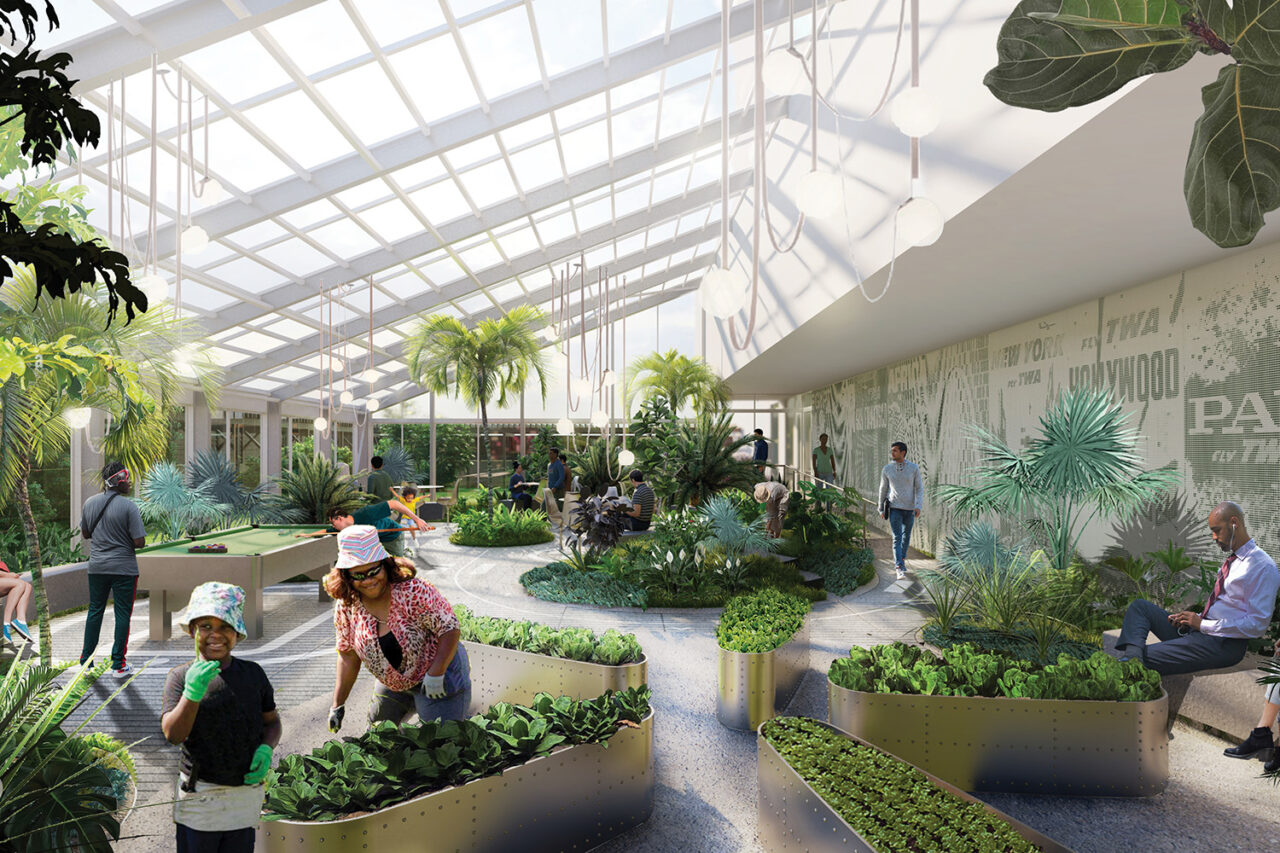
Located at 143-06 135th Avenue in South Jamaica, Queens, Baisley Pond Park Residences is preparing to welcome its first residents. Developed by RiseBoro Community Partnership and Slate Property Group, the project is the first hotel-to-housing conversion completed under New York State’s Housing Our Neighbors with Dignity Act (HONDA). The 415,000-square-foot, 12-story residential building designed by Aufgang Architects involves the conversion of the former 350-key JFK Hilton Hotel which opened in 1988 and closed in 2023; it now holds 318 affordable apartments, ranging from studios to three-bedrooms, including supportive units for formerly homeless residents. As a former hotel, the building already had layouts compatible with the new intended use, making the construction process quicker and easier. The architects only made selective changes to internal walls where necessary. Landscape architecture firm OSD (Office of Strategy + Design) designed a communal indoor-outdoor greenhouse space for gardening and recreational activities. The hotel’s commercial kitchen is being converted into a facility for Meals on Wheels. Amenities include a computer lounge, yoga space, children’s playroom, and a community space on the ground floor. New all-electric heating and cooling systems have been installed to reduce emissions and new rooftop solar panels have been installed. The interior design was done by Studio Parallel.
CetraRuddy Shares Updated Designs for Residential Tower in Queens
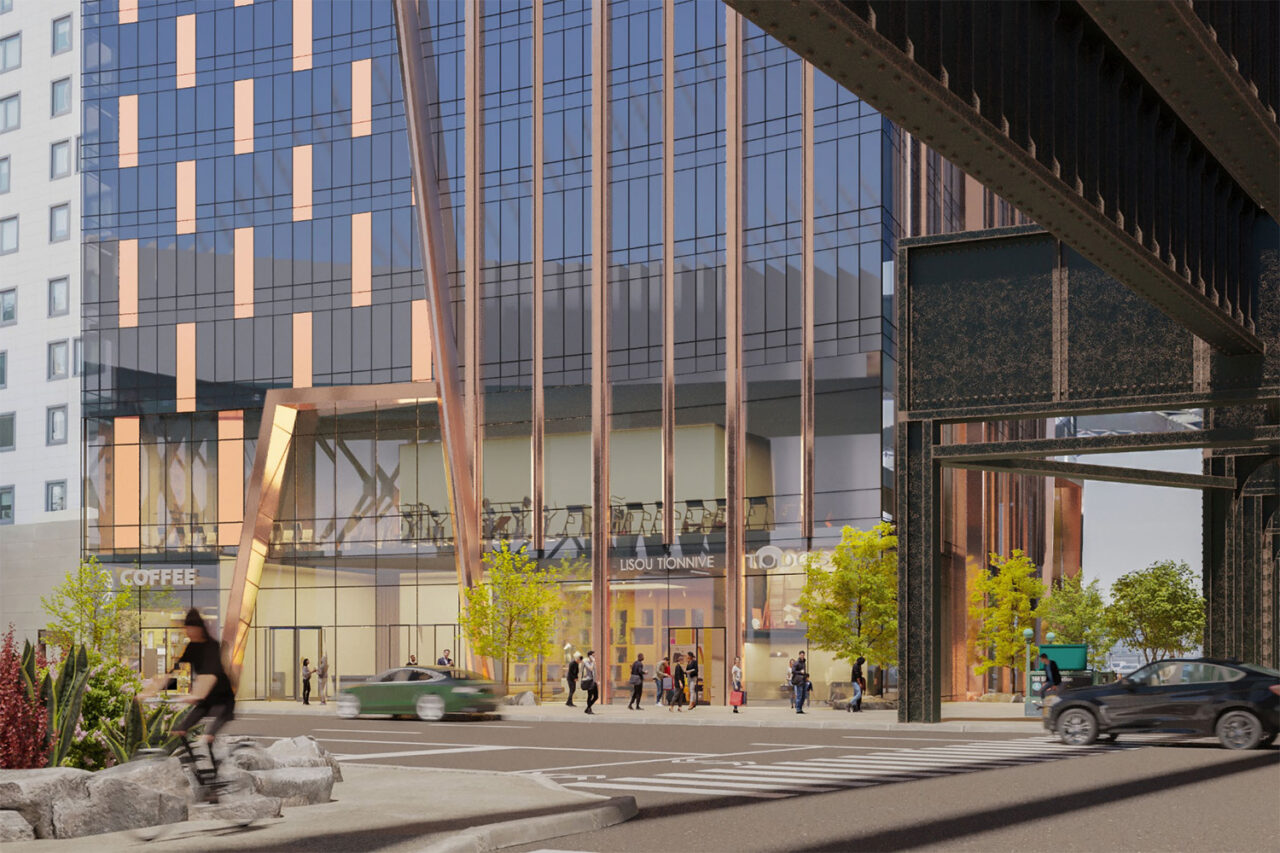
A 46-story residential tower designed by CetraRuddy located at 30-25 Queens Boulevard is set to rise on the corner of Queens Plaza East and Queens Boulevard, directly west of the Sunnyside Yards rail tracks in Long Island City, Queens. The site, once occupied by an open-air parking lot, a gas station, a low-rise commercial structure, and a vacant lot, will yield 561 residences: 451 rentals and 110 condos, ranging from studios to two-bedrooms, along with 21,000 square feet of ground-floor retail. New renderings for the 511,000-square-foot tower reveals a façade composed of a reflective glass curtain wall accented with vertical strips of copper-toned paneling running the full height of the tower. Amenities include a rooftop pool, regulation-sized basketball and pickleball courts, a fitness center with a movement studio, and a solarium with a full kitchen and dining area. Residents will also have access to private outdoor terraces with grilling stations, a content creation and recording studio, and co-working lounges. The tower, which is expected welcome residents in early 2028, is being developed by LargaVista Companies in collaboration with Baron Property Group.
In Case You Missed It…
The scaffolding has been removed to reveal the comprehensive renovation on the Waldorf Astoria hotel, overseen by Skidmore, Owings & Merrill (SOM). After nearly eight years, the famed individual and interior landmark is about to open its doors to guests and visitors who can marvel at the grand hotel’s historic spaces such as the Park Avenue Lobby, Peacock Alley, the Silver Corridor, and features including the Waldorf clock and Edward Emerson Simmons’ mural, which have been conserved or recreated. The upper floors of the hotel now contain private residences and 375 redesigned guest rooms.
NYC Parks, in collaboration with Starr Whitehouse landscape architects and planners, has unveiled a concept plan for the future of Hart Island in Long Island Sound. The Hart Island Concept Plan is a 20+ year vision for improvements to the City’s public cemetery. The plan includes improved access to the island, enhancing the visitor experience, bolstering resiliency, and strengthening island operations, while taking into consideration the ongoing necessity of burial operations. Proposed highlights include a modest welcome center with restrooms and seating, an adaptive reuse of the island’s historic chapel as a space for remembrance, an upgraded maintenance and operations compound, shoreline stabilization recommendations, and forest restoration strategies for natural areas.
The Brownsville section of Brooklyn is gaining a new cultural arts center, plus 283 affordable housing units designed by Aufgang Architects. The Brownsville Arts Center & Apartments (BACA), located at 366 Rockaway Avenue, will contain a mix of studio to three-bedroom layouts and feature a 28,000-square-foot center with flexible performance, rehearsal, and studio space for community arts organizations. Construction on the all-electric project is scheduled to begin this month, with completion expected by December 2027. Developed by Gilbane Development, Blue Sea Development, and Artspace Projects, the project was selected through a competitive request for proposals (RFP) process led by the Department of Housing Preservation and Development (HPD), paving the way for affordable housing that integrates cultural expression and the arts. The project has received financing and is recognized by NYSERDA through its Buildings of Excellence and Building Cleaner Communities competitions.
The Museum of Modern Art (MoMA) has opened a exhibition that focuses on the 50-year lifespan of the Nakagin Capsule Tower, a groundbreaking project by Japanese architect Kisho Kurokawa (1934–2007) that was located in Tokyo’s Ginza District from 1972 until 2022. The Many Lives of the Nakagin Capsule Tower is on view now through July 12, 2026 in MoMA’s street-level galleries, presenting a capsule A1305 alongside nearly 45 pieces of contextual material that showcases the evolving and unexpected uses of the building. These materials include the project’s only surviving model from 1970–72; original drawings, photographs, and promotional ephemera; an archival film and audio recordings; interviews with former tenants; and an interactive virtual tour of the entire building.
The Solar One Environmental Education Center, designed by Bjarke Ingels Group (BIG), is nearing completion. Located along the East River waterfront at Stuyvesant Cove Park, the Center will be a model of resiliency for hurricanes, storm surges, and other potential emergency conditions, featuring advanced sustainable building engineering and design components. Due to its location in a V-Zone, the building will be elevated 10 feet with elevated mechanicals, steel structure, and a foundation that is hurricane, tornado, and seismic-resistant.
Said to become the Upper East Side’s most expensive condo, Studio Sofield is designing a 22-story residential building clad in limestone that will offer 26 residences at 1122 Madison Avenue at 84th Street for Legion Investment Group and Nahla Capital.
Shigeru Ban Architects’ (SBA) Paper Log House has been acquired by SFMOMA for their permanent Architecture + Design collection. The house comes from Shigeru Ban: The Paper Log House, an installation fabricated and installed by students at The Cooper Union and SBA’s NYC team.