



by: AIA New York
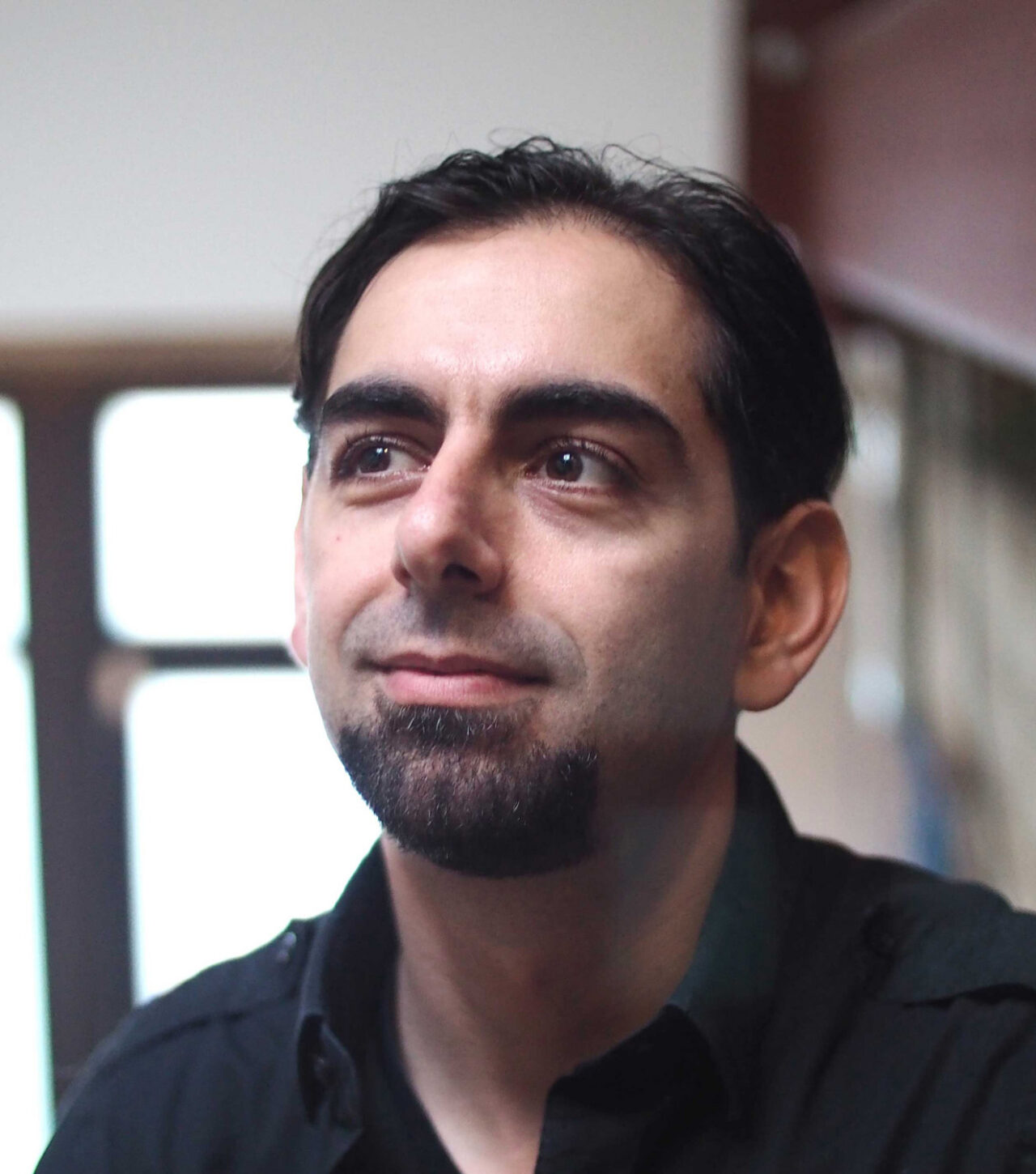



Charles Portelli, FAIA, RIBA, CDT, is a Senior Associate and Digital Innovation Strategist for Perkins&Will’s I/O group, focusing on envisioning 3D models and data as a focal point for project design and delivery strategies. Through his work, Portelli advances computational design as a craft, transforming complexity into clarity through process and innovation. His impact extends globally through education and mentorship, bridging practice and academia to inspire the next generation.
Portelli also teaches Environmental Parametrics at Rensselaer Polytechnic Institute’s Center for Architecture Science and Ecology (CASE) program, where he focuses on combining parametric modeling, optimization, and daylighting as a strategy to inform design. He has taught and guest lectured at multiple institutions, including Pratt, CUNY College of Technology, and MIT.
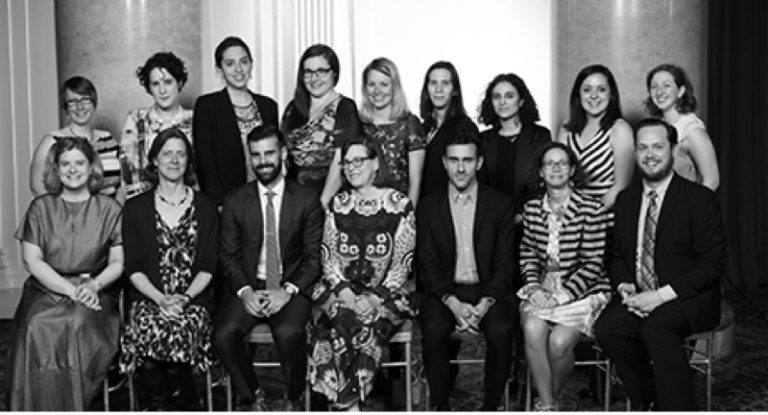
This year, the Jury of Fellows of the AIA elevated Portelli to its prestigious College of Fellows in the second category of Fellowship, which recognizes achievements at the national level in the science and art of planning and building by advancing the standards of practice. Portelli was recently celebrated at the Center for Architecture during the 2026 New Fellows Celebration and at the AIA Conference on Architecture (AIA26) in San Diego.
Q: How did you decide to pursue architecture?
I’ve been around buildings my entire life. I come from a family of craftsmen, woodworkers, and operating engineers, and I grew up taking things apart and putting them back together; everything from toys to circulating pumps. I worked in construction to pay for college and was certified to operate building mechanical systems before I graduated. At the same time, I’ve been deeply creative. Understanding how buildings are constructed gave me the foundation to imagine how they could be improved. That intersection of making and imagining, systems and form naturally led me to architecture. I often say: “Architecture is my first language; technology is in my blood.” Pursuing architecture allowed me to bring those two instincts together.
Q: What are your thoughts on architectural education today?
Education is fundamental. It is the single greatest investment I’ve made in myself, and the core value I bring to the profession. I would not be where I am without it. For that reason, I’ve made it a priority to remain actively connected to academia through teaching, guest lecturing, design reviews, and mentorship.
Architectural education today carries an even greater responsibility. As our profession discusses diversity, equity, and inclusion, we must recognize that the future of our industry is shaped in our schools. If we want a more diverse profession, we must cultivate more diverse classrooms and create environments where all students can thrive.
I’ve had the privilege of teaching classes where women outnumbered men and where many students would traditionally be considered minorities in the field. Supporting and empowering those students has been deeply motivating. Providing them with rigorous tools, technical confidence, and creative agency is one of the most meaningful ways I can contribute to the profession’s evolution.
Q: What are some of your favorite recent projects that you’ve worked on?
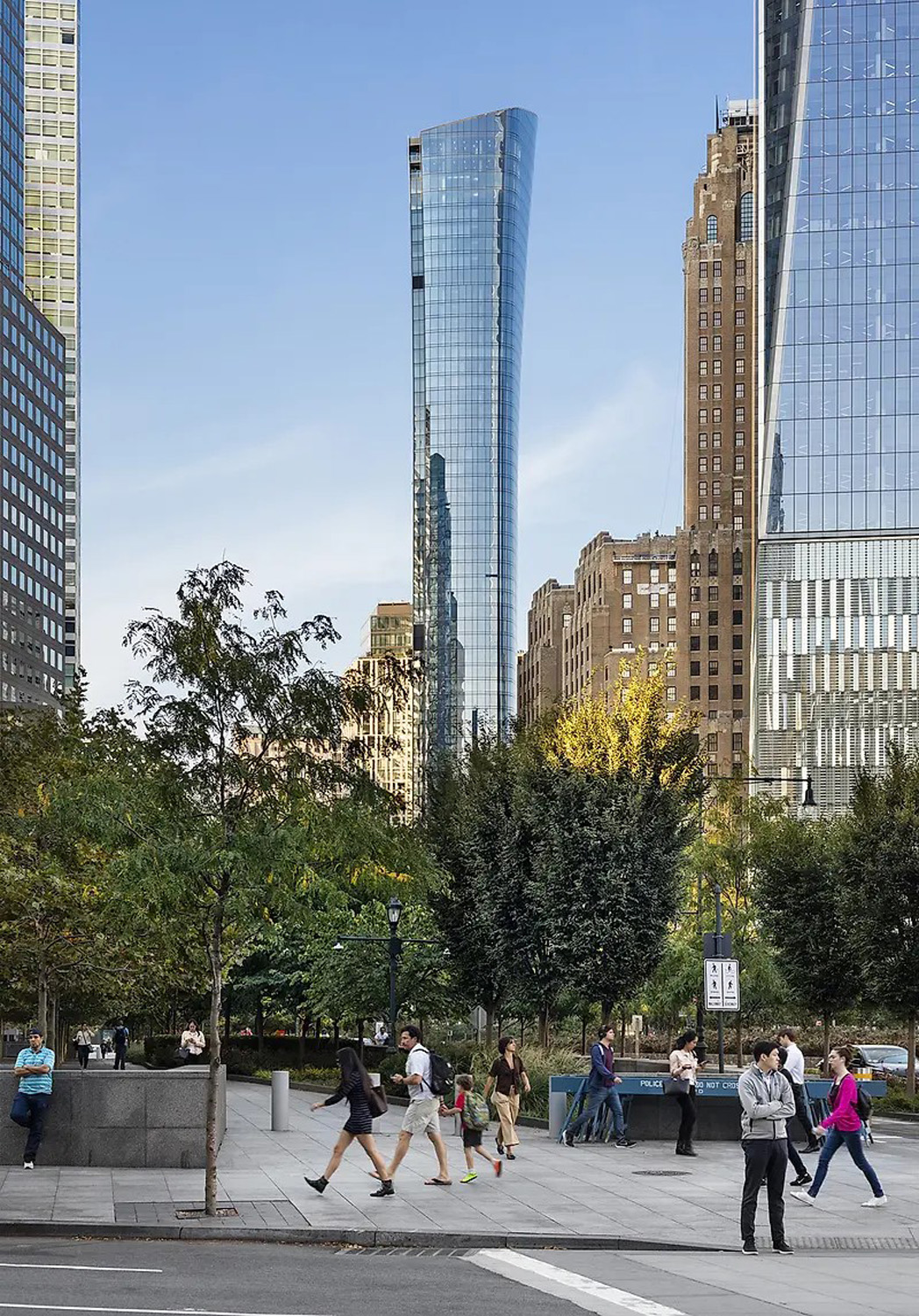
Two projects stand out as defining moments in my career. The first is a pencil tower in Tribeca. The second is a line of chairs developed with Bill Pedersen. Although dramatically different in scale, both projects share a common thread: they moved from design to fabrication directly through the three dimensional models we developed.
In one case, we generated the G-code for the fabricator directly from our model. In the other, the facade fabricators used our digital model as the foundation for their work, building upon it rather than recreating it from scratch. In both instances, the model was not simply a representation tool but a production tool.
These projects pushed beyond conventional workflows and demonstrated that a fully integrated digital process could reduce time, cost, and risk, while achieving a high level of quality. More importantly, they showed that computational design can directly shape how things are made, not just how they look.
Q: What has been particularly challenging in your recent work?
One of the most persistent challenges in my recent work has been questioning established processes. I have often found myself asking, “Is there a better way to do this?” Our profession is fraught with many mundane tasks that are still executed manually and add little value to the design itself. I find this as an opportunity to identify those inefficiencies and develop systems that streamline them, allowing me to focus more energy on creativity and problem solving. At the same time, my career path has not followed a traditional trajectory. As a computational designer working within a conventional architectural framework, I have often occupied an ambiguous space. Designers sometimes viewed me as purely technical, while technical teams sometimes viewed me as a designer. Navigating that lack of definition was challenging. Over time, I learned to embrace that ambiguity. Rather than seeing it as a limitation, I used it as an opportunity to define my own path. That perspective has allowed me to bridge disciplines, integrate technology with design intent, to explore ideas more broadly and create value in ways that do not always fit neatly into traditional roles.
Q: How do you feel about the state of the industry right now?
My feelings about the industry cycle over time, but one belief remains constant: the profession must continue to evolve. If we operate as we always have, we will struggle to meet increasing demands and complexity. We must elevate how we value our expertise and ensure other stakeholders recognize the value and depth of our contribution to the built environment.
Another major opportunity lies in mentorship. It can no longer flow in only one direction. Younger professionals bring fluency in emerging technologies, while seasoned architects bring judgment, experience, and a deep understanding of design and delivery. When these strengths are intentionally paired, the result is transformation rather than simple knowledge transfer. The future of the industry depends on embracing collaboration across generations and integrating technology as a core part of practice to redefine how architecture is conceived and delivered.
Editors’ Note: This feature is part of a series celebrating the members of the American Institute of Architects (AIA) New York Chapter who are elevated each year to the AIA College of Fellows, an honor awarded to members who have made significant contributions to both the profession and society. Learn more about Fellowship here.