


Topics
-
June 7, 2026
![Image Courtesy of AWEchair]() Image Courtesy of AWEchair
Image Courtesy of AWEchair![Image Courtesy of AWEchair]() Image Courtesy of AWEchair
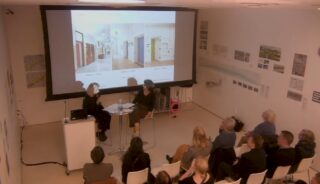
Image Courtesy of AWEchairDuring our April meeting, the AIANY Design for Aging Committee was deleted to welcome Paul Beyer, Director of Smart Growth at the New York Department of State, Office of Planning, Development & Community Infrastructure, to present the work they’ve done with the New York State Department of Health (NYSDOH) and New York State Office for the Aging (NYSOFA) on accessible, age-friendly community design, particularly through the Master Plan for Aging. Beyer introduced the Smart Growth/Age-Friendly Community Planning Grants and the Accessibility Public Infrastructure Fund, both of which support local communities in developing accessible, age-friendly plans and projects. He also shared a brochure designed to help communities—particularly those seeking funding through these programs—incorporate accessibility and age-friendly principles into their planning and development efforts.
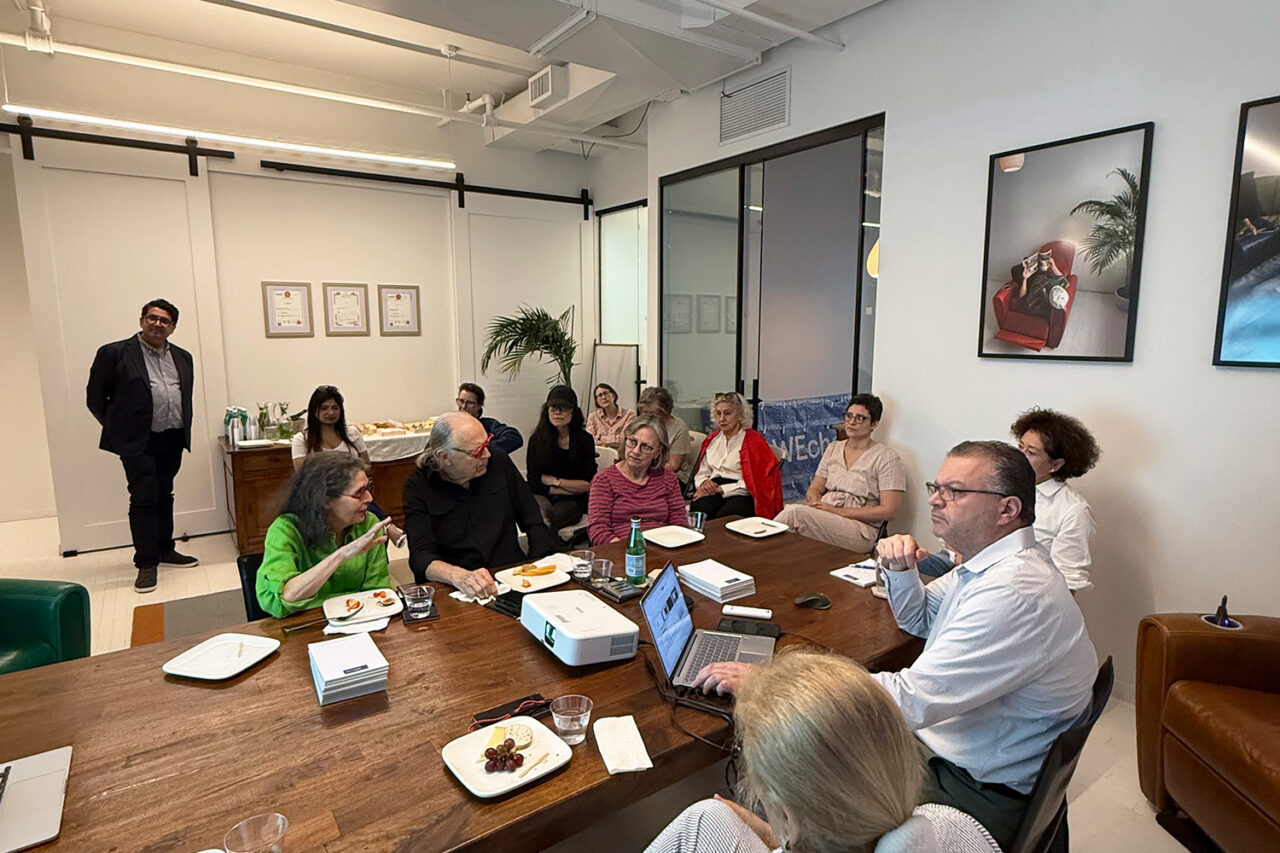
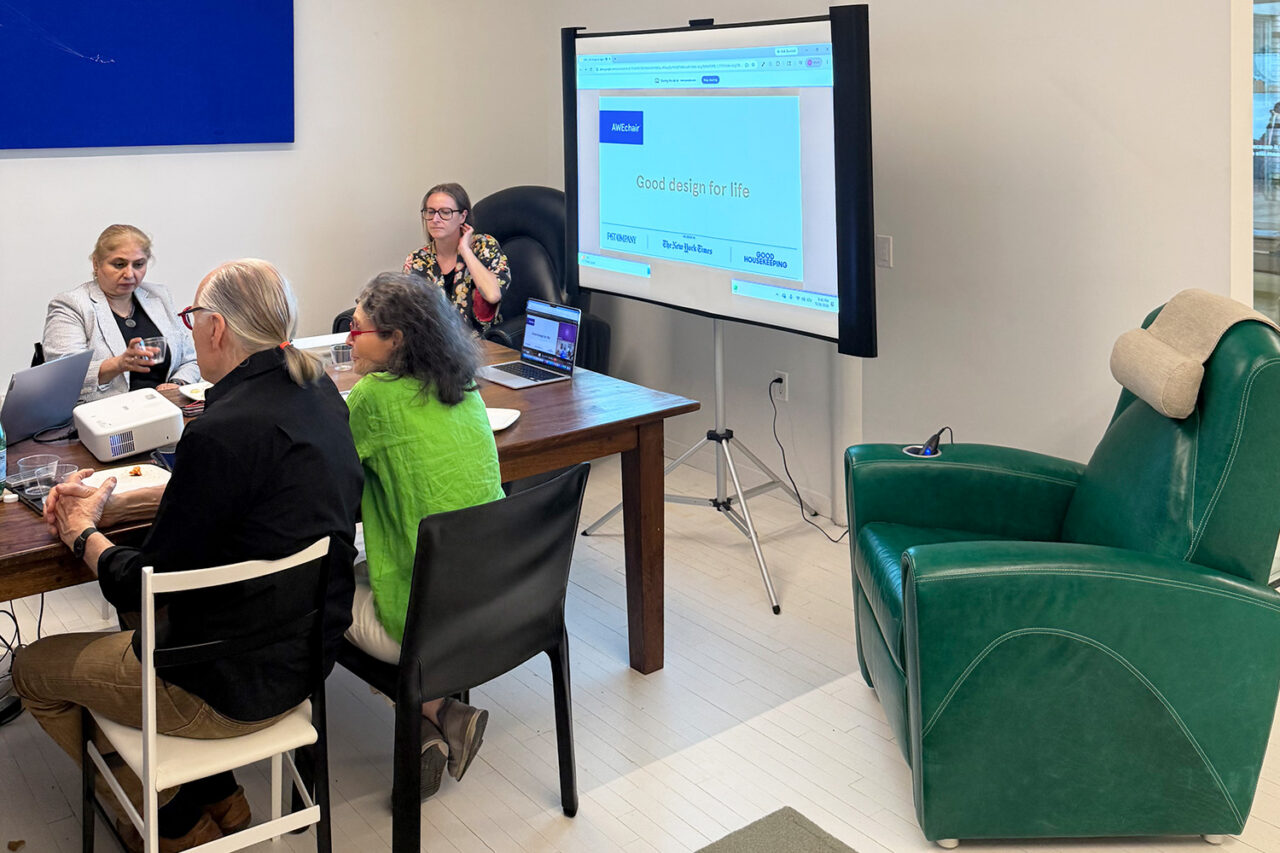
Additionally, on May 28, Committee members visited the AWEChair showroom and enjoyed an engaging and informative experience. We explored the chairs firsthand, learned about the design intentions behind the products, and exchanged ideas of design for aging. The visit led to a lively and fruitful discussion, with participants offering valuable feedback and perspectives. As one respected senior once shared, successful design for aging can be remarkably simple: an accessible bathroom, a home organized on a single level, a short and convenient path between the bedroom and kitchen/dining area, and a comfortable lift chair for watching television. Through conversations like these and thoughtful design innovations, we are one step closer to creating environments that support people in living comfortably, safely, and independently as they age.
-
April 12, 2026
![Image Courtesy of AIANY DFA]() Image Courtesy of AIANY DFA
Image Courtesy of AIANY DFA![Image Courtesy of AIANY DFA]() Image Courtesy of AIANY DFA
Image Courtesy of AIANY DFA![Image Courtesy of AIANY DFA]() Image Courtesy of AIANY DFA
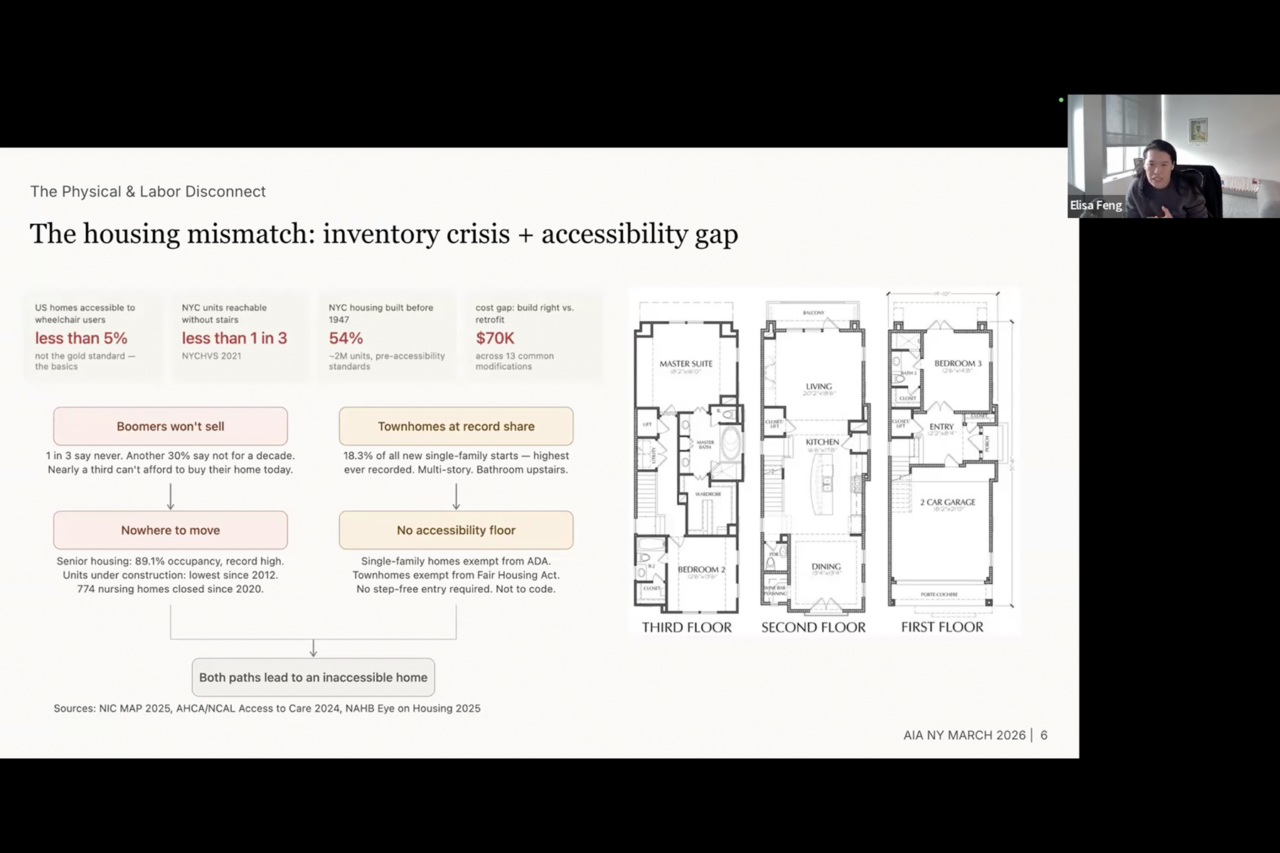
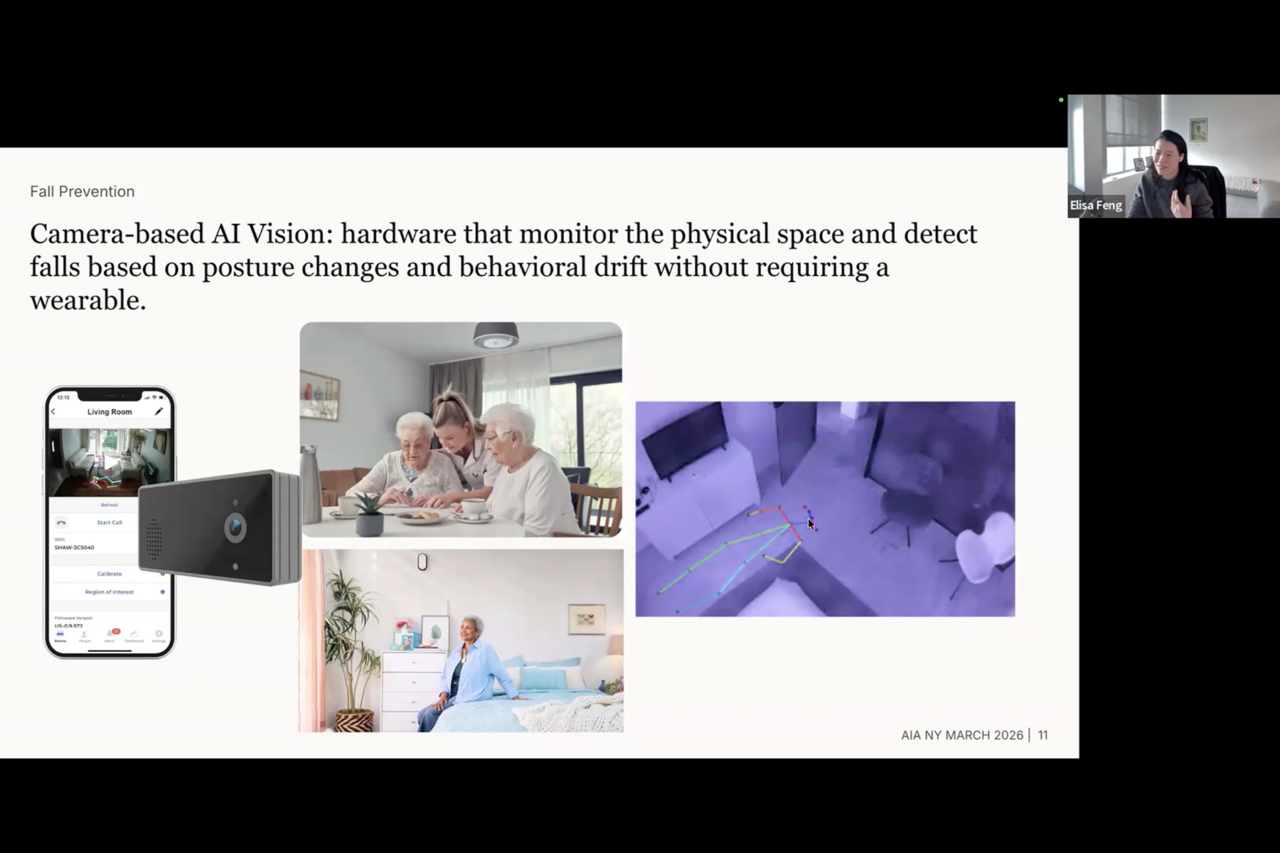
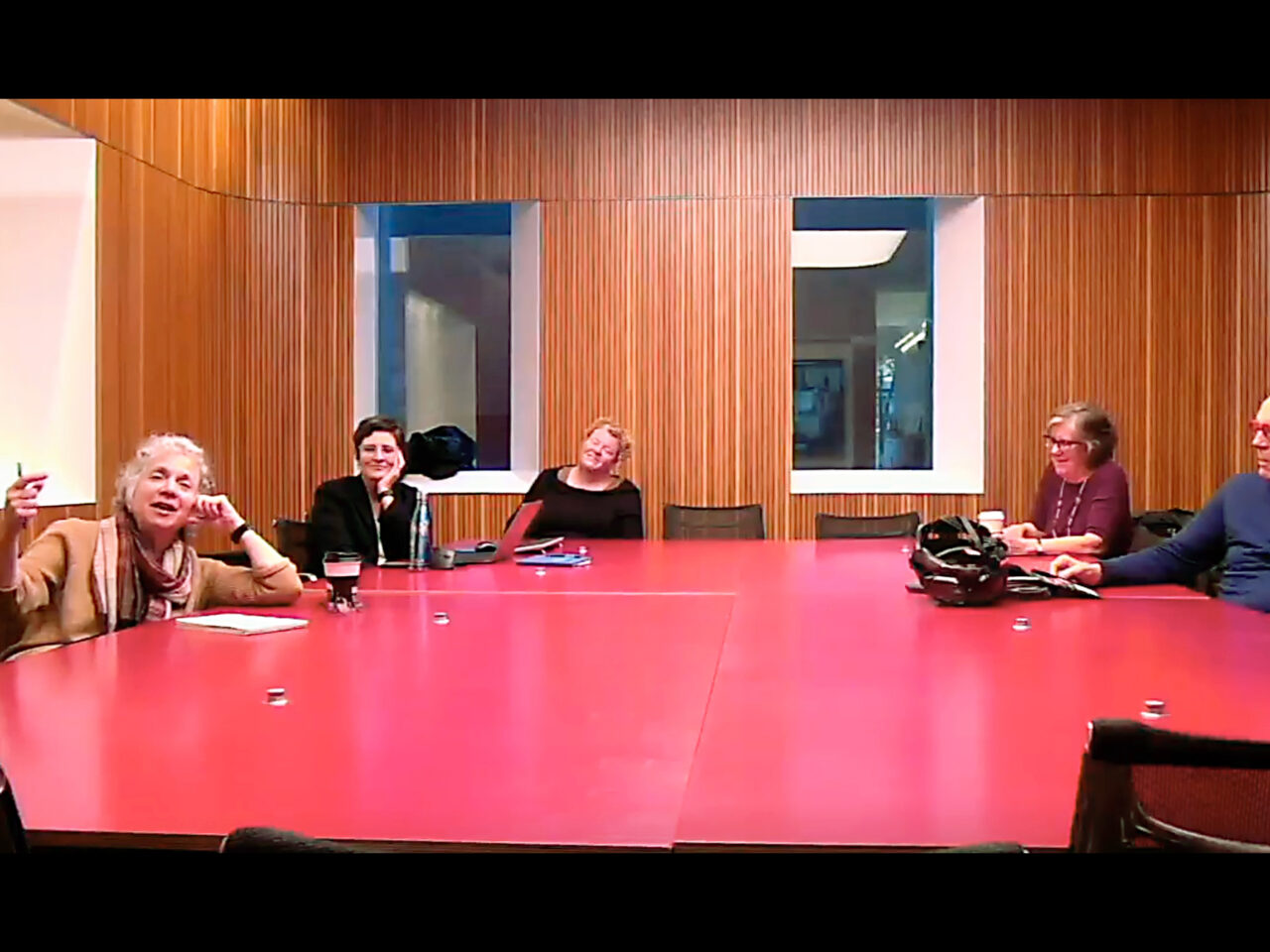
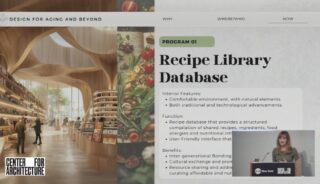
Image Courtesy of AIANY DFAThe Design for Aging Committee March meeting was delighted to have Elisa Feng who presented her research “The Architecture of Dignity: Solving the Care Crisis Through Design & Technology”, which examines the challenges of aging in New York City. Her talk offered valuable insights, encouraging us to move beyond standard discussions of ADA compliance and instead confront the systemic shortcomings of our current care infrastructure.
Focusing on New York’s unique density and housing typologies, the presentation explored key “friction points” in existing conditions—from pre-war walk-ups to the psychological resistance toward institutional aesthetics. It concluded with a forward-looking vision for a collaborative care infrastructure, where architecture, AI, and robotics intersect. Elisa highlighted the potential for architects to design “phygital” (physical + digital) environments that foster seamless collaboration between human caregivers and machine support—ultimately restoring peace of mind to families and dignity to residents.
Here is the recording of the meeting. Elisa Feng is a product builder working at the intersection of space and human well-being. Explore her Age Anywhere project, a learn-in-public weekly journal investigating how better aging infrastructure can be built through physical spaces, technology, culture, and everyday routines.
Coming up:
- April 23: Paul Beyer from the New York Department of State will be presenting NYS Master Plan for Aging.
- Spring field trips: We’ll be visiting Assistance with Elegance Showroom in May, and a WSFSSH Senior Building in Upper West Side (time/date TBD).
-
November 9, 2025
![Image Courtesy of Rick Bell]() Image Courtesy of Rick Bell
Image Courtesy of Rick Bell![Image Courtesy of Rick Bell]() Image Courtesy of Rick Bell
Image Courtesy of Rick Bell![Image Courtesy of Chia-Yi Huang]() Image Courtesy of Chia-Yi Huang
Image Courtesy of Chia-Yi Huang![Image Courtesy of Chia-Yi Huang]() Image Courtesy of Chia-Yi Huang
Image Courtesy of Chia-Yi Huang![Image Courtesy of Chia-Yi Huang]() Image Courtesy of Chia-Yi Huang
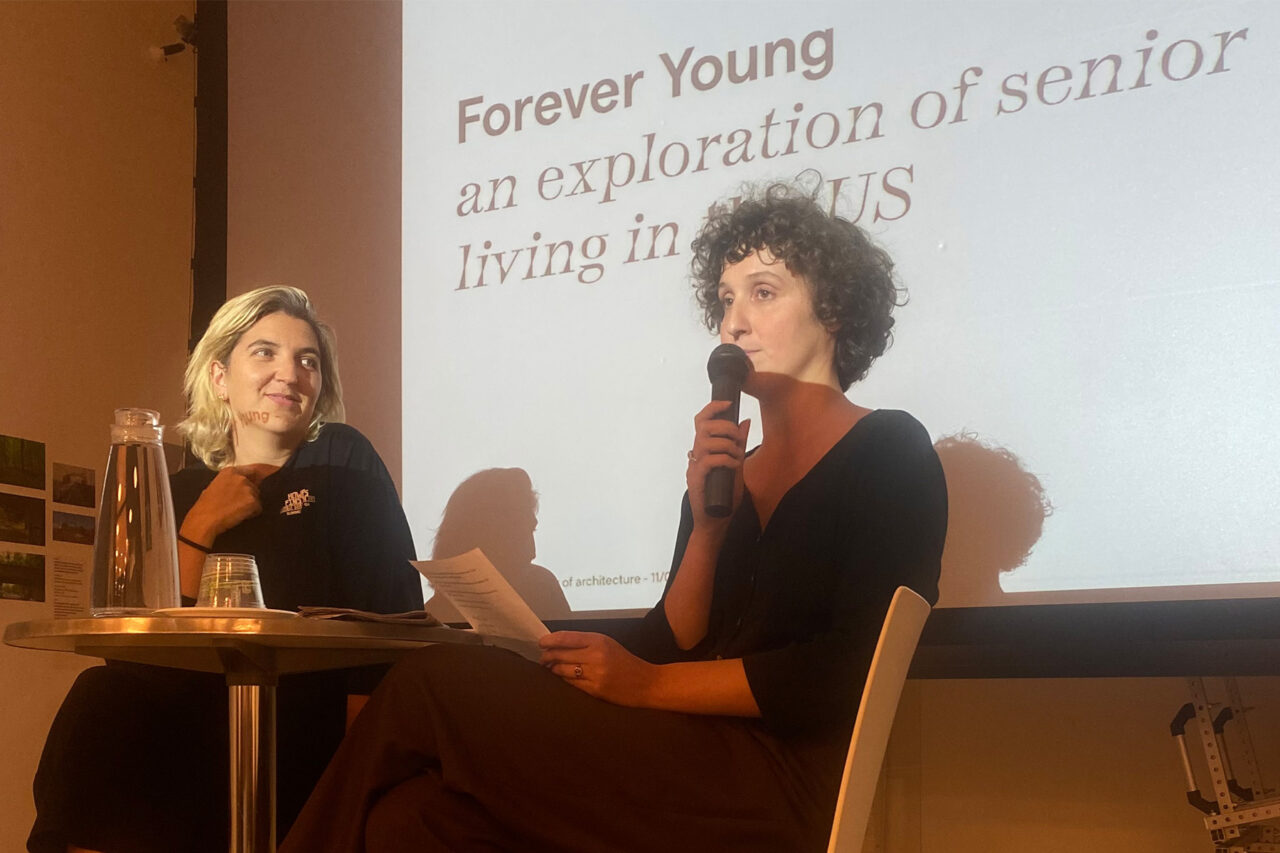
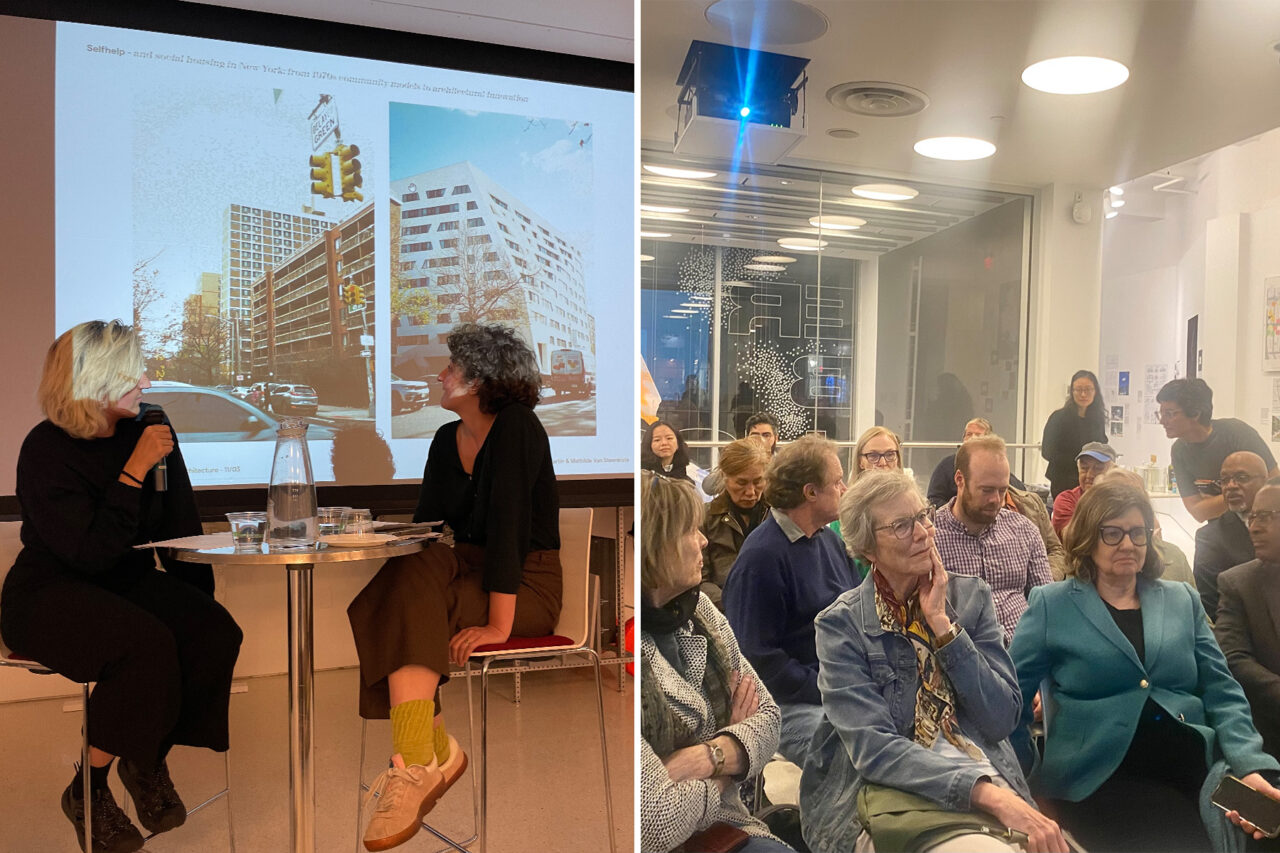
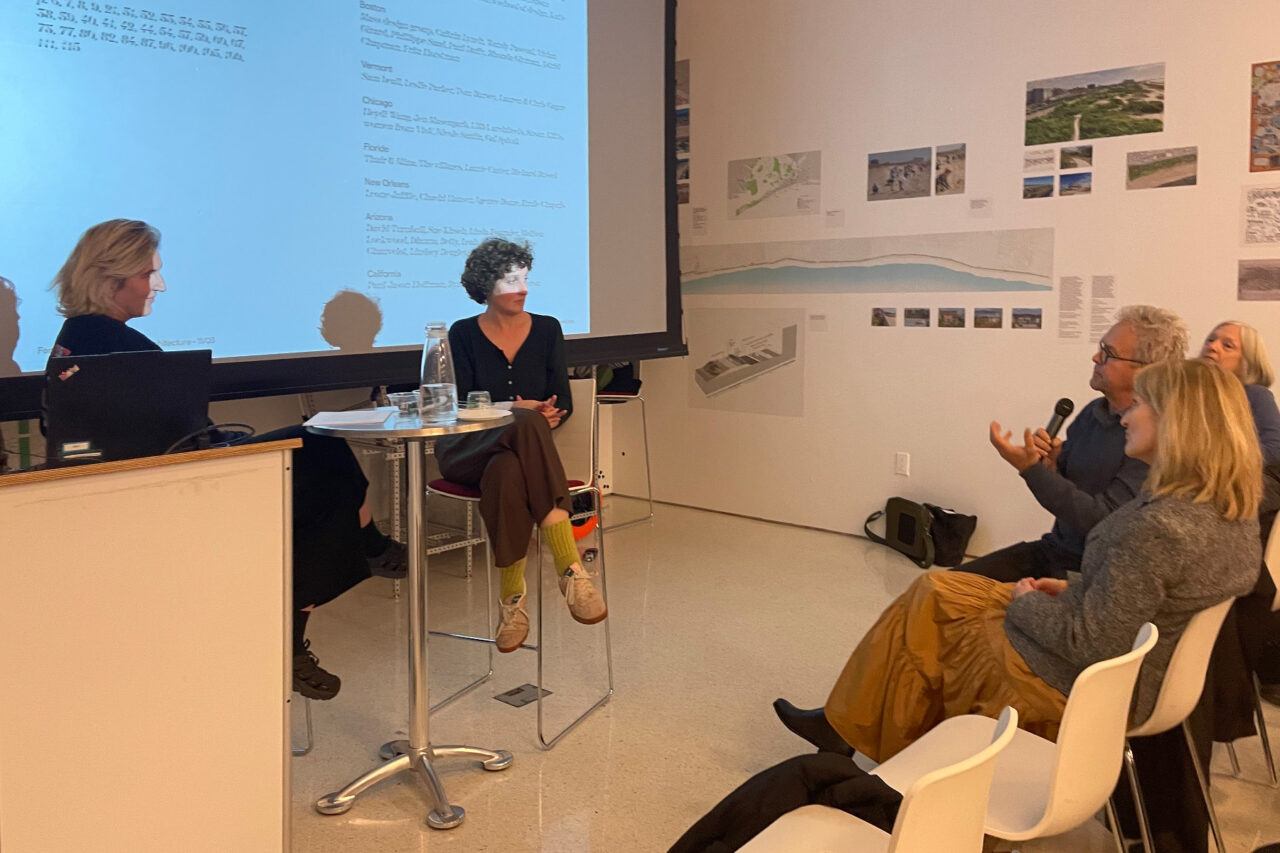
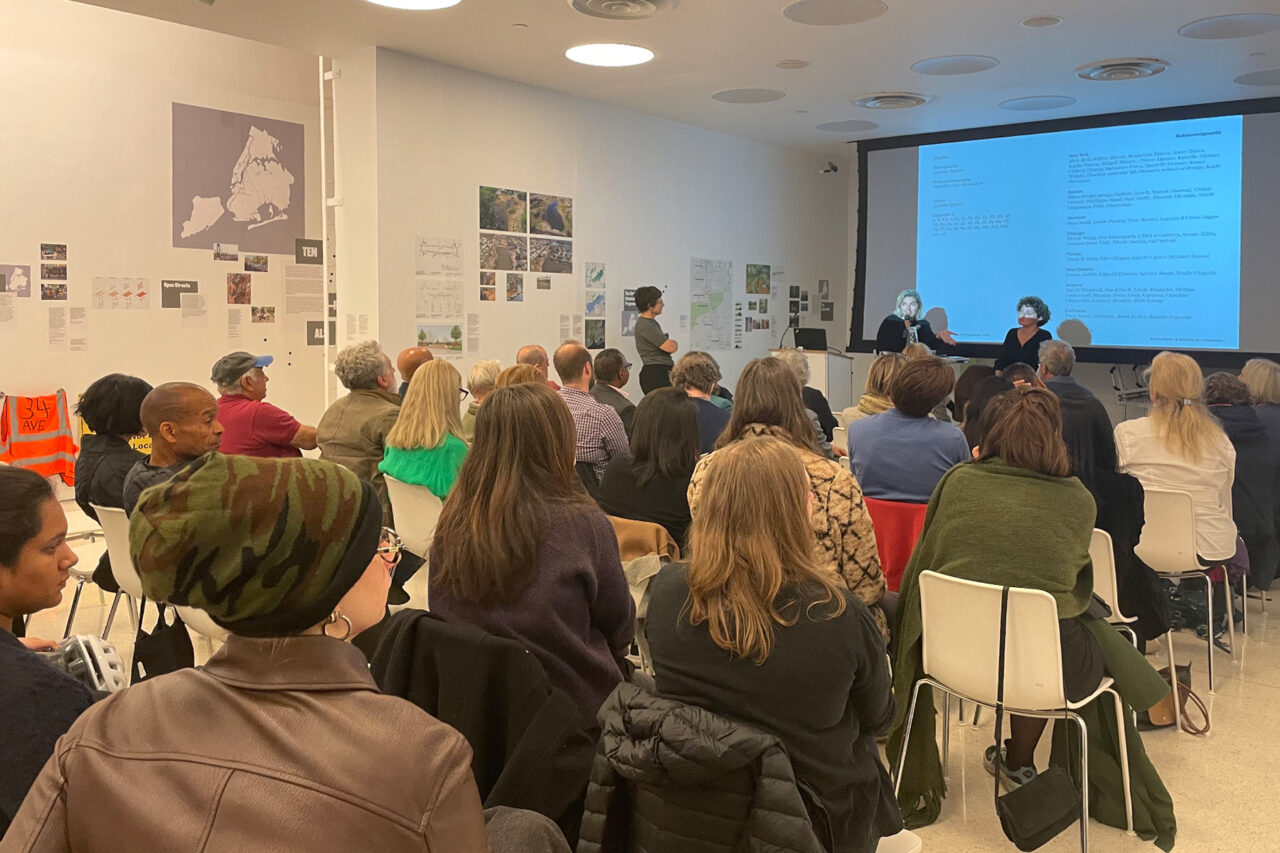
Image Courtesy of Chia-Yi HuangOn November 3, the AIANY Design for Aging Committee was pleased to host Paris-based Aurélia Martin, Designer of Villa Albertine, and Mathilde Van Steenkiste, Architect of Villa Albertine, for an engaging and informative talk focused on their three-month research journey across the United States exploring the diverse living environments of American seniors.
Aurélia and Mathilde visited 23 projects from Florida to Arizona, passing through Illinois and New York to explore how seniors organize themselves to improve their living conditions and how architecture and design can support this change. From communal living experiments to age-restricted villages, from LGBT senior centers to the aging populations housed within the utopian architectures of the 1960s, this journey explored diverse initiatives and models of living in later life.
The presentation traced each project through its macro-planning, landscape design, building layouts, and interviews with residents about their daily routines, offering a vivid, immersive tour of each site and its unique strengths and shortcomings. Ultimately, these studies invite us to reflect on the kind of life we envision for ourselves as we age. They also provide valuable insights for planners and designers striving to create environments that support aging with dignity and vitality.
This exploration was made possible thanks to the 2024 Delano/Aldrich & Emerson Fellowship supported by the American Institute of Architects (AIA). And a complete recording of the presentation and discussion can be found here.
-
October 19, 2025
![Image Courtesy of Soohyun Ahn]() Image Courtesy of Soohyun Ahn
Image Courtesy of Soohyun Ahn![Image Courtesy of Yutaka Takiura]() Image Courtesy of Yutaka Takiura
Image Courtesy of Yutaka Takiura![Image Courtesy of Chia-Yi Huang]() Image Courtesy of Chia-Yi Huang
Image Courtesy of Chia-Yi Huang![Image Courtesy of Yutaka Takiura]() Image Courtesy of Yutaka Takiura
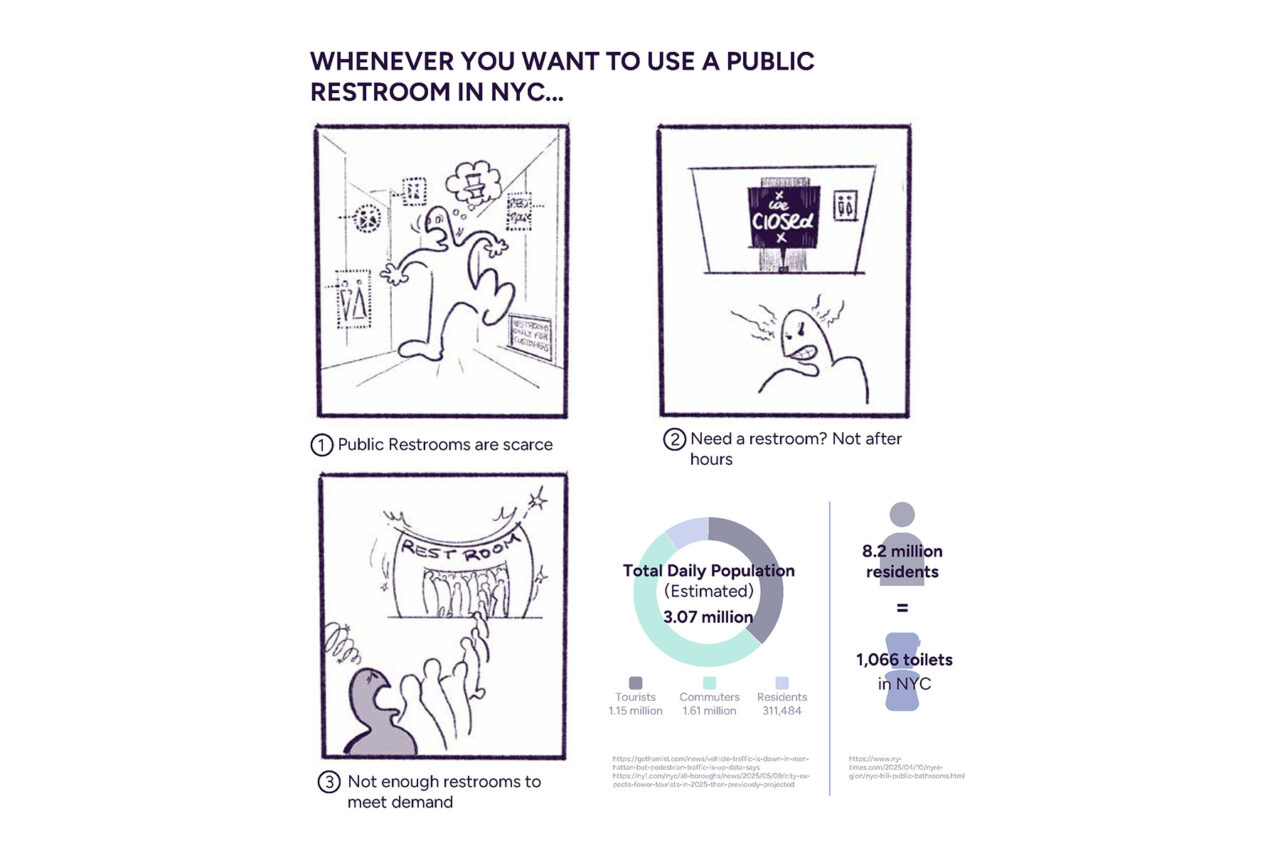
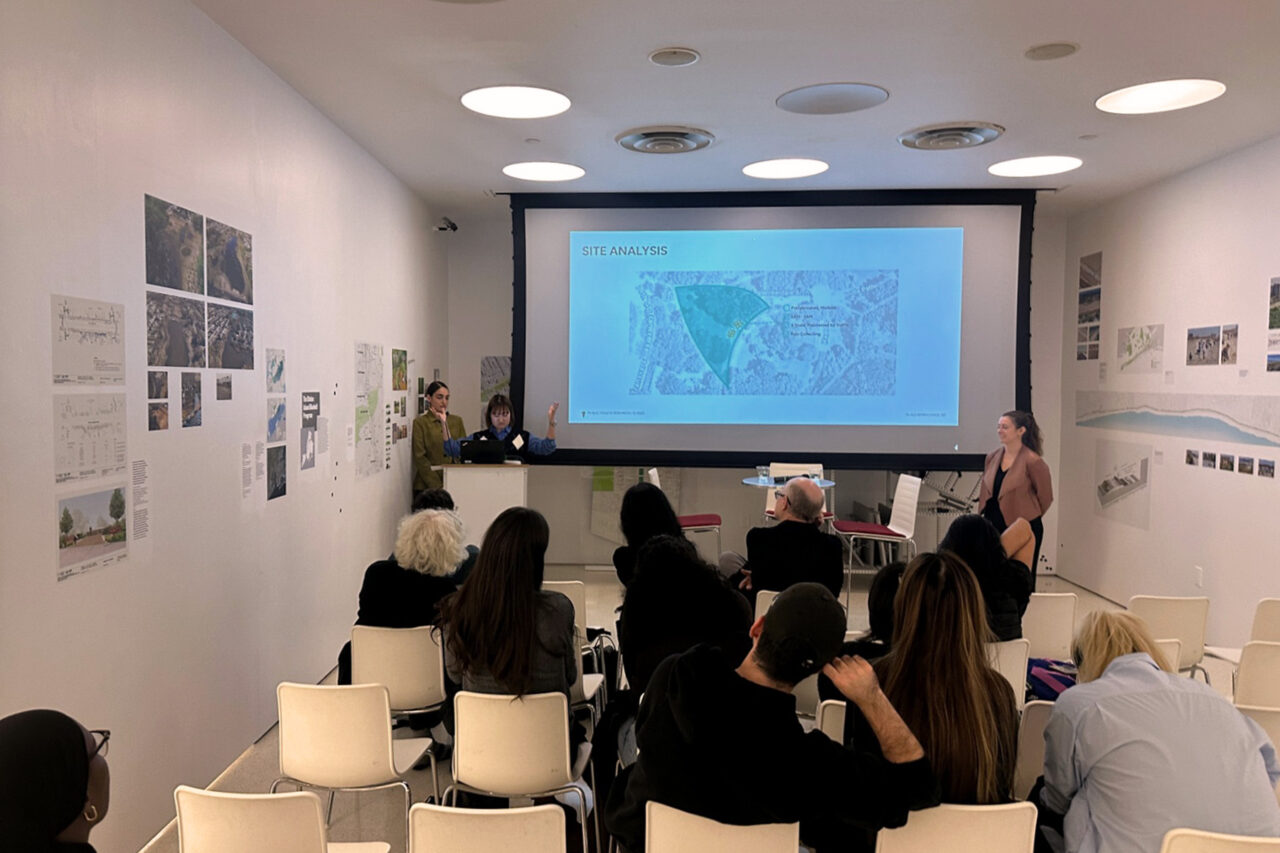
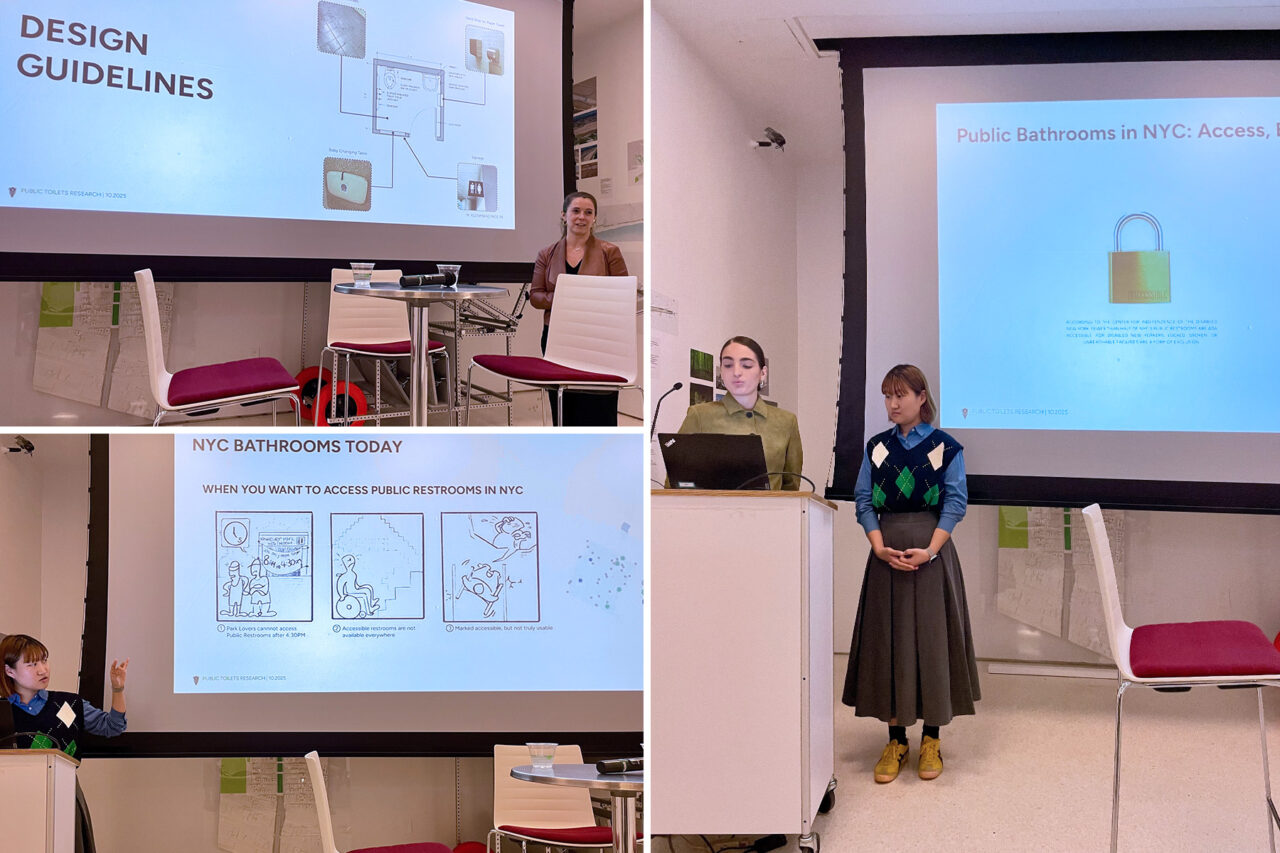
Image Courtesy of Yutaka TakiuraOn October 15, the AIANY Design for Aging committee was pleased to host Margot Kleinman, AIA, Adjunct Assistant Professor at Pratt Institute and her students Soohyun Ahn and Elizabeth Hammett from Pratt Institute School of Design‘s Summer 2025 class “Public Toilets.” This class is a combination of research and design thinking to investigate the public toilet experience, recognizing the opportunity presented by the recently passed Bathroom Bill, which calls for the creation of 2,100 public restrooms in NYC by 2035.
The presentation began with an introduction to public restrooms in New York City, focusing on three key themes: access, equity, and wayfinding. It also featured case studies of modular restroom designs, including the APT, Greeley Square, Throne, and Green Flush. Finally, students presented their design proposals for new restrooms in Central Park incorporating features for rainwater preservation. During the Q&A session, both the speakers and audience emphasized that maintenance is a critical factor to consider.
The event was also recorded and will be available on our website in about 2-3 weeks.
-
June 8, 2025
![Stonewall House. Images Courtesy of Chia-Yi Huang]() Stonewall House. Images Courtesy of Chia-Yi Huang
Stonewall House. Images Courtesy of Chia-Yi Huang![Happy units and happy residents. Images Courtesy of Katherine Kline]() Happy units and happy residents. Images Courtesy of Katherine Kline
Happy units and happy residents. Images Courtesy of Katherine Kline![Names and faces behind the great project. Images Courtesy of Chia-Yi Huang]() Names and faces behind the great project. Images Courtesy of Chia-Yi Huang
Names and faces behind the great project. Images Courtesy of Chia-Yi HuangThe AIANY Design for Aging Committee May meeting was delighted to have Barbara Baer, Director of the NYFSC Home Sharing and Respite Care Program, to present their Home Sharing Program, followed by a stimulating discussion. As one of the first programs of its kind, the Home Sharing Program has significantly supported the seniors in aging in place while offering an affordable housing solution for New Yorkers. To date, the program has successfully matched 50 hosts and guests this year. Learn more about this impactful initiative here.
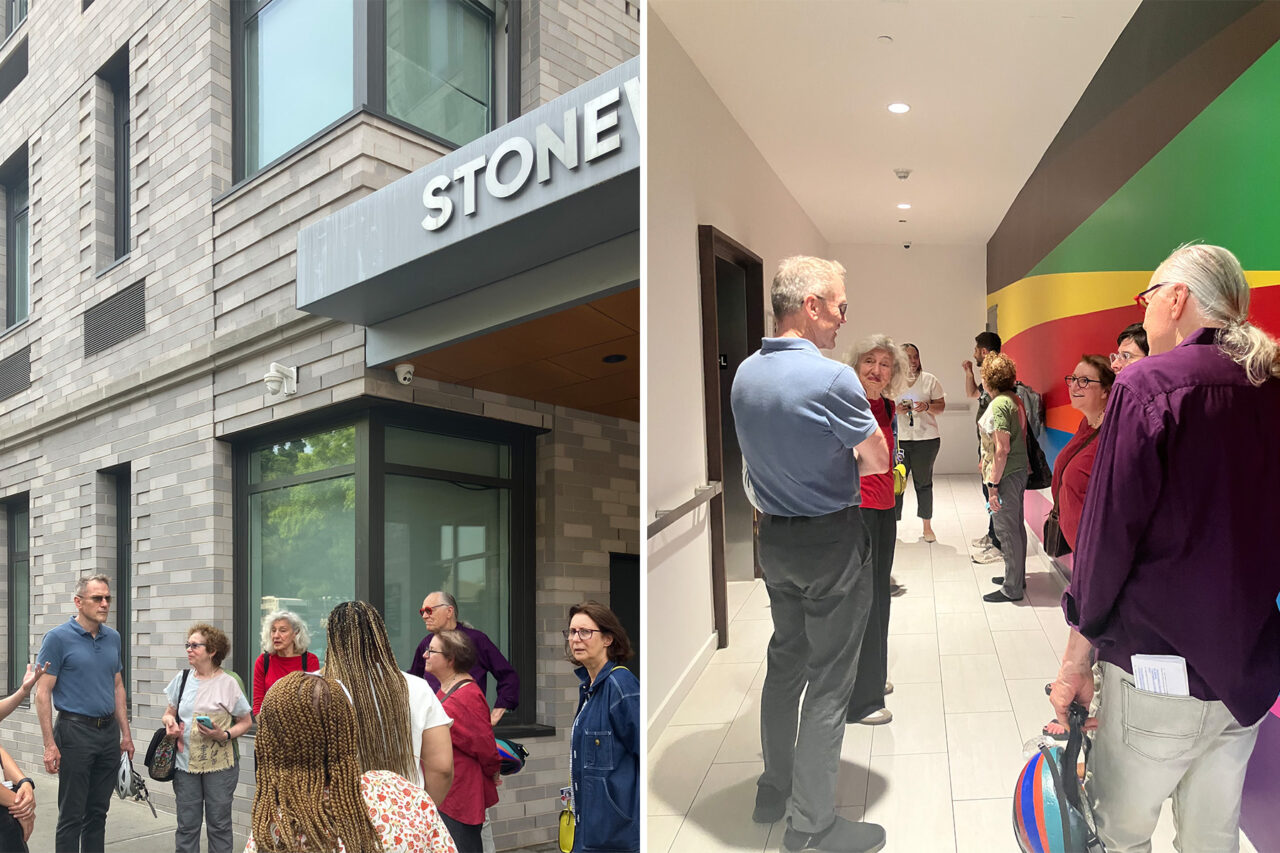
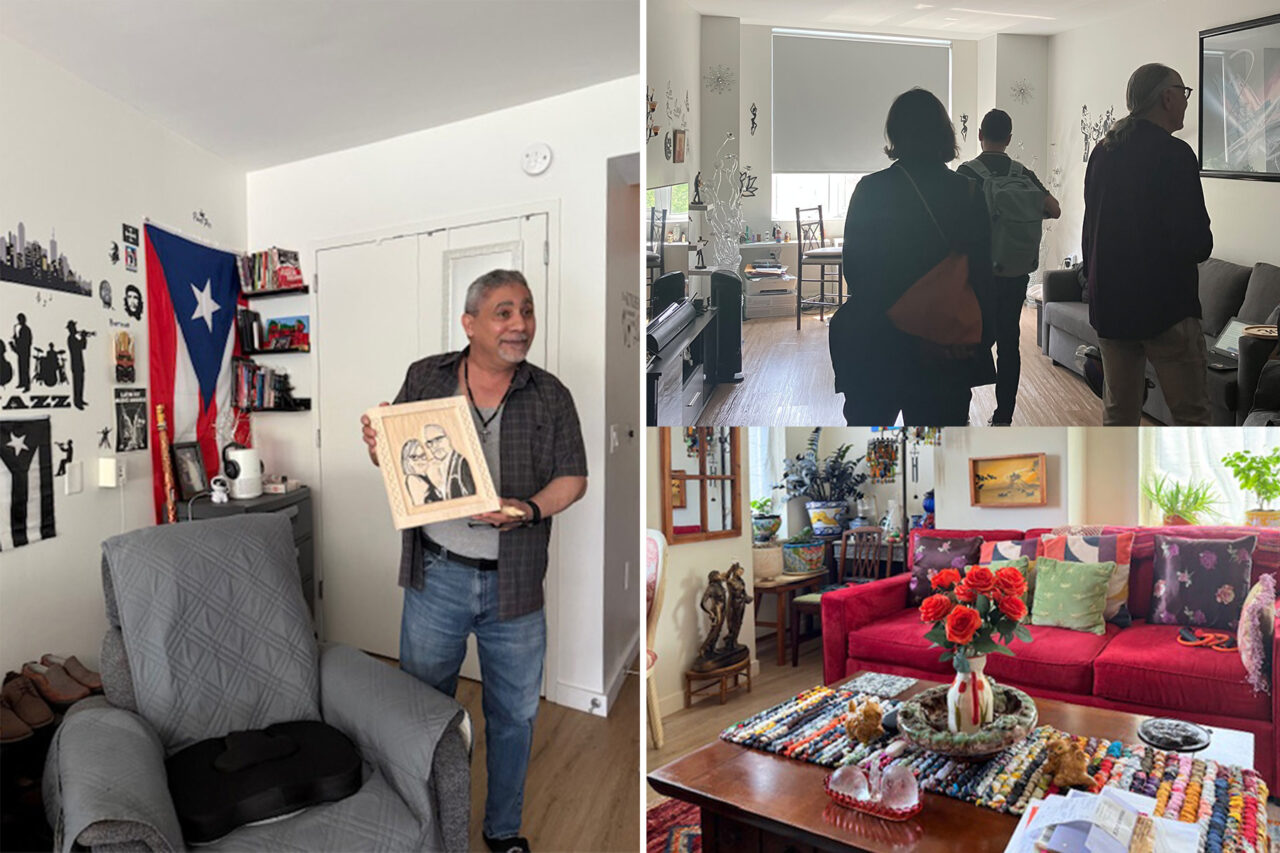
On June 5, Committee members enjoyed a guided tour of Stonewall House in Brooklyn, led by the site director Odi Chigewe. Located in Brooklyn’s Fort Greene neighborhood, Stonewall House is the largest LGBTQ+ friendly elder housing development in the country and New York City’s first LGBTQ+ Friendly Elder Housing. In addition to exploring the public spaces within the Sage Center, the group had the opportunity to visit two residential units and speak with residents. The thoughtfully designed spaces promote ease of maintenance and contribute to residents’ happiness, while well-curated programs help cultivate a vibrant, supportive community. Dylan Goodman from SAGE and architect Ted Porter of Ted Porter Architecture joined the tour, offering insights into the design intent and the operational strategies that sustain the building’s success, and the ongoing challenge of securing sustainable funding for programs. As Kate Henenberg remarked, “It was an inspiring day!”
-
April 12, 2025
![Image Courtesy of AIANY DFA]() Image Courtesy of AIANY DFA
Image Courtesy of AIANY DFAThe Design for Aging Committee March meeting was delighted to have Paula Span from the New York Times. We had a wonderful time hearing Paula’s insights on aging in a place like NYC. Many ideas, concepts and projects came up during the discussion:
- Village to Village Network: “Villages are community-based, nonprofit, grassroots organizations formed through a cadre of caring neighbors who want to change the paradigm of aging. …The Village Movement originated in Boston with Beacon Hill Village, leading the way for a more economically efficient model for aging.”
- The Green House Project: “A Green House home is a small-scale, self-contained, and self-sufficient community providing nursing home and assisted living care – with elders at the center of every decision.”
- Gotham Point and The Suffolk: Examples of projects that have recently been built which provide affordable senior housing within multi generational housing complexes.
- New York Foundation for Senior Citizens: NYFSC will be joining our May 22 meeting to talk about their programs including a Home Sharing Program which Paula referenced in “We Need Each Other”: Seniors Are Drawn to New Housing Arrangements.”
Here is the recording of the meeting. Check out more Paula’s great articles such as “Senior Housing That Seniors Actually Like“, “When the Neighbors Are All Older, Too“, and “‘Aging in Place, or Stuck in Place?’“.
Coming up:
- May 19: Pratt Students will be presenting their work from their “Design for Aging and Beyond” course (taught by our very own Yutaka). Watch out for the AIA announcement.
- May 22: Barbara Baer from the New York Foundation for Senior Citizens would be presenting the Home Sharing and Respite Care Program.
Good reads and more:
- Helping Communities Meet the Needs of Older Residents — and Their Caregivers: Interesting background info of age-friendly ADU.
- Creating Age-Friendly Developments: A practical guide for ensuring homes and communities support ageing in place, put together for developers, planners, etc. in Greater Manchester, UK which has been a beacon of light for considering what it is like to be older in this area and how to improve lives of older residents.
-
March 2, 2025
![Image: Courtesy of Chiayi Huang.]() Image: Courtesy of Chiayi Huang.
Image: Courtesy of Chiayi Huang.![Image: Courtesy of Chiayi Huang.]() Image: Courtesy of Chiayi Huang.
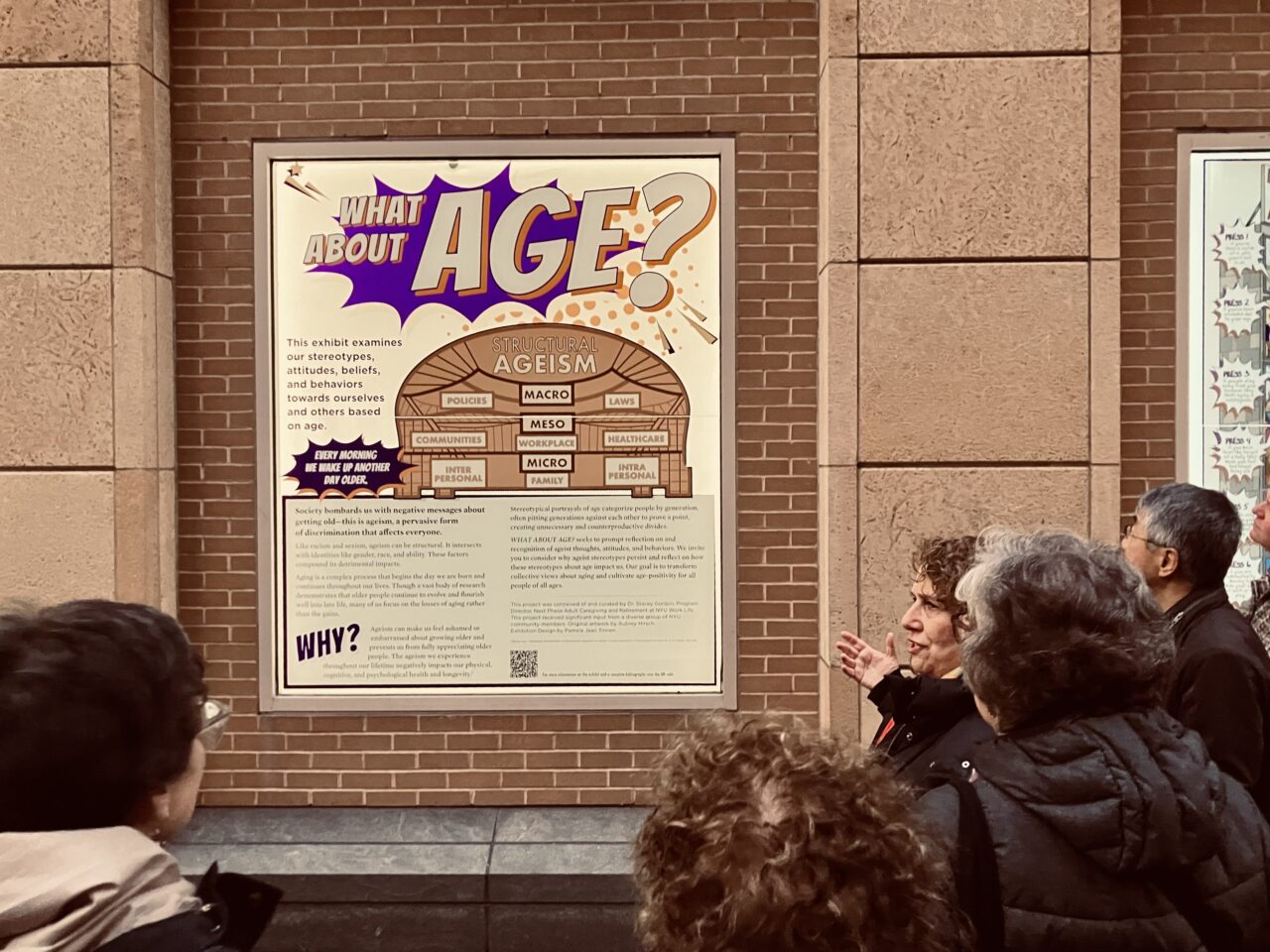
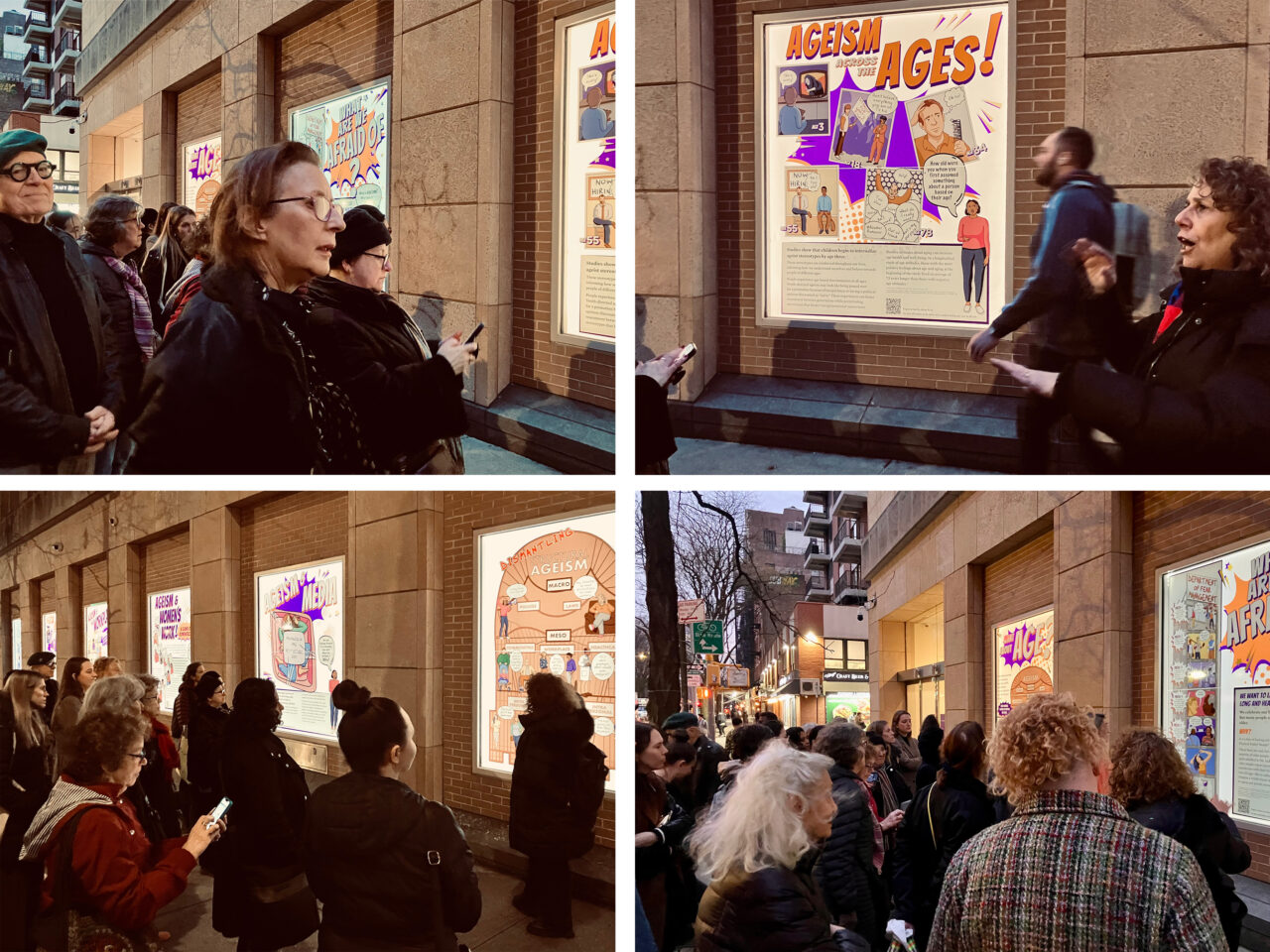
Image: Courtesy of Chiayi Huang.On February 27, the AIANY Design for Aging Committee joined an interactive tour and discussion about “What About Age?“, an exhibition on the impact of ageism in contemporary society. Dr. Stacey Gordon, the exhibition director and Program Director of Next Phase Adult Caregiving and Retirement at Work Life, provided an insightful overview of the product’s creation, the message behind each panel, and how we can see reflections of ourselves within the exhibit. In the post-tour discussion, she encouraged attendees to reflect on their feelings about their current age. Committee members had the chance to reassess their own views on aging, hear perspectives from peers of different ages, and reconsider how aging-focused design can support both physical and mental well-being.
Coming-up:
- March 27: Paula Span (journalist from the New York Times who focuses her writing on aging) will join our meeting.
- May 22: Barbara Baer from the New York Foundation for Senior Citizens would be presenting the Home Sharing and Respite Care Program.
Good reads and more:
- Rightsizing in Place (AVA Housing): a key insights video exploring an Irish NGO with an innovative scheme—helping older homeowners to renovate their single family home so they can age in place, while creating and managing a new affordable rental unit.
- Reimagining Senior Housing: a webinar exploring key questions as how do investors and developers identify solid opportunities? Which deals are most attractive to lenders? And which types of properties offer the greatest ROI potential? Register here.
- The New Senior Health Care Consumer: Optum Healthcare, the consulting division of United Healthcare, recently released a white paper on the growing healthcare needs of seniors. Item 1 could greatly benefit from input and participation from professionals in the AEC field.
- In memory of Jerry: it is with deep sadness that we share the passing of Nathan Jerry Maltz, one of the founding co-chairs of the Design for Aging Committee. We are considering dedicating one of our upcoming programs in his honor. As Christine so beautifully put it, “Jerry was a unique and endlessly curious New Yorker who embodied the best of the city.” He will be greatly missed.
-
December 4, 2024
![Image Courtesy of AIANY DFA]() Image Courtesy of AIANY DFA
Image Courtesy of AIANY DFA![Image Courtesy of AIANY DFA]() Image Courtesy of AIANY DFA
Image Courtesy of AIANY DFA![Image Courtesy of AIANY DFA]() Image Courtesy of AIANY DFA
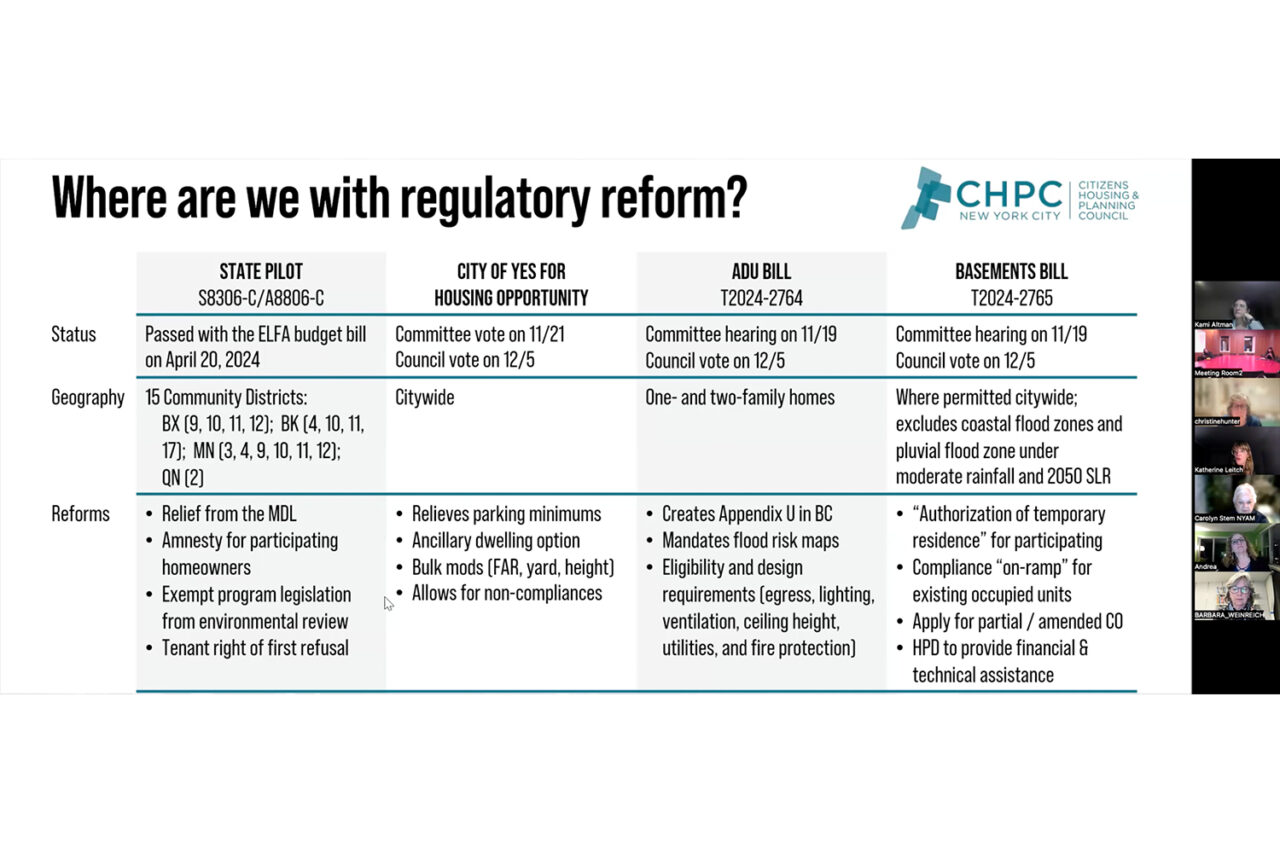
Image Courtesy of AIANY DFAThe Design for Aging Committee November meeting was delighted to have Kate Leitch from Citizens Housing & Planning Council (CHPC) who presented CHPC’s work related to ADUs (Accessory Dwelling Units). Check out their publications here! And a complete recording of the presentation and discussion can be found here.
We also talked about potential Field Trips. Ted Porter is working with his contact at Marvel to organize a tour of Stonewall House Senior Residences. This would likely happen in the early part of 2025. We agreed that a Friday afternoon trip would be best for most of us. Christine Hunter is working with MAP to organize a tour of Rheingold Senior Residences. Both projects are in Brooklyn so we could potentially combine the two in one day. We will continue to discuss the logistics and update the group once details are firmed up.
Finally, we discussed the NYCHA project that is being revived with DFA funds. We are forming a sub-committee to expand on the study done a few years ago with NYCHA’s Amsterdam Houses. A kick-off meeting is scheduled for 1/30 at 6pm at the Center for Architecture.
Coming up:
- December End of Year Potluck: We will meet on 12/12 (5–6:30pm) in person at the Center for Architecture. Feel free to bring food and/or drinks to share!
- January: David Gissen will join our meeting that month. David is the author of The Architecture of Disability and is a professor of Architecture and Urban History at The New School.
- February: Paula Span (a journalist from the New York Times who focuses her writing on aging) will join our meeting that month. Read one of her latest articles here: https://www.nytimes.com/2024/10/07/realestate/senior-move-managers-relocation.html
-
![Image Courtesy of Brian Pape]() Image Courtesy of Brian Pape
Image Courtesy of Brian Pape![Image Courtesy of Brian Pape]() Image Courtesy of Brian Pape
Image Courtesy of Brian Pape![Image Courtesy of Brian Pape]() Image Courtesy of Brian Pape
Image Courtesy of Brian Pape![Image Courtesy of Brian Pape]() Image Courtesy of Brian Pape
Image Courtesy of Brian Pape![Image Courtesy of Brian Pape]() Image Courtesy of Brian Pape
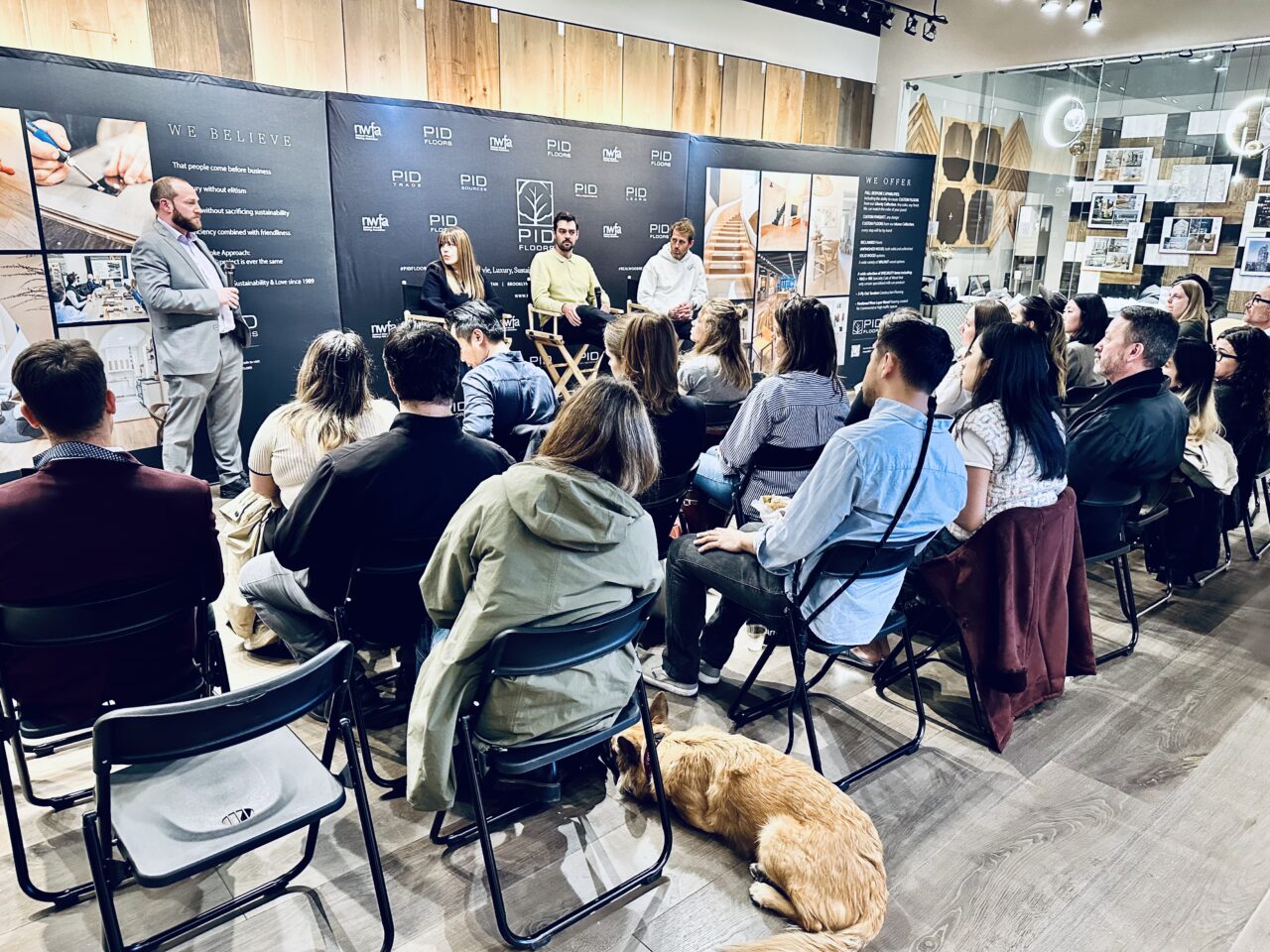
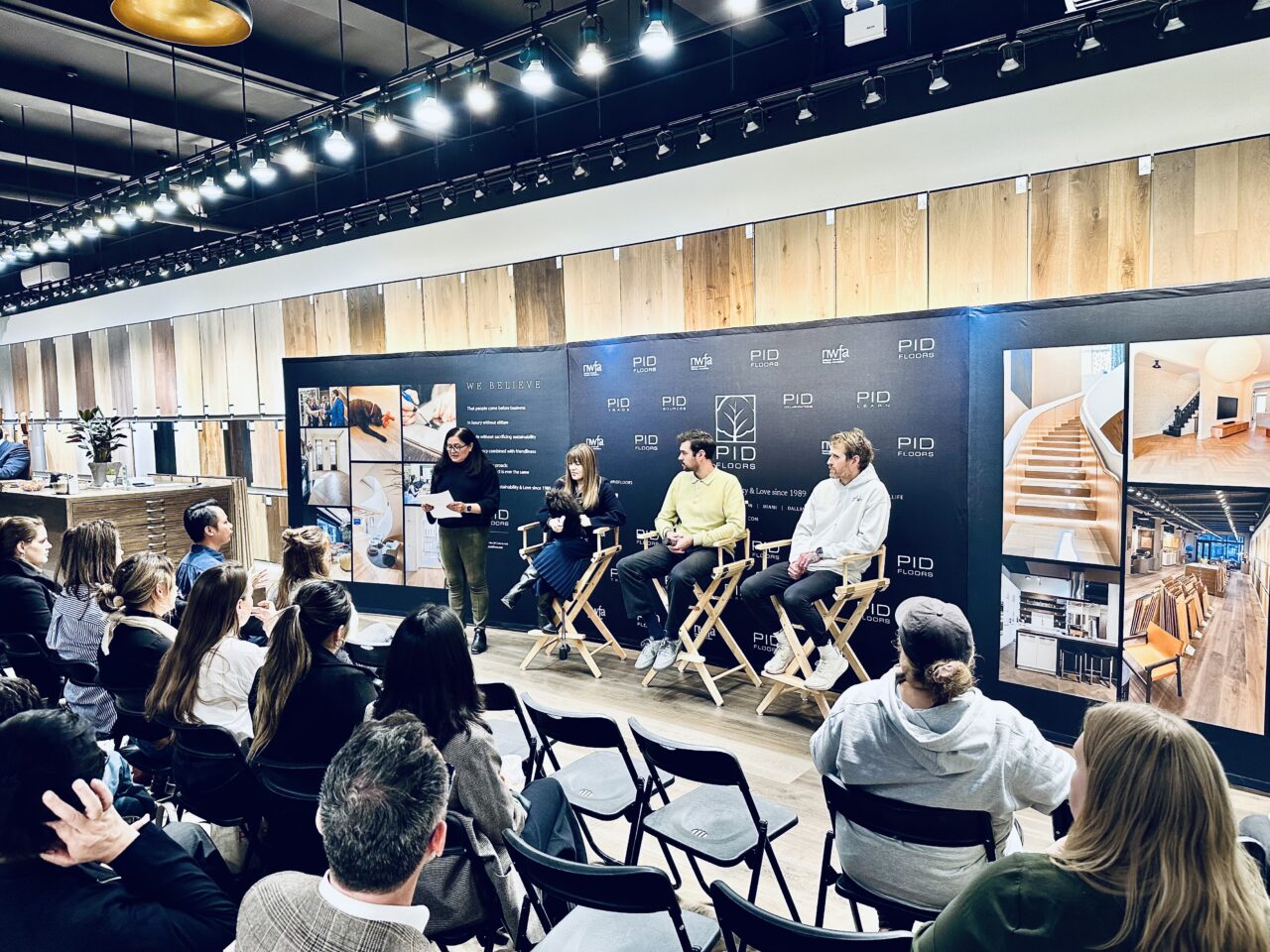
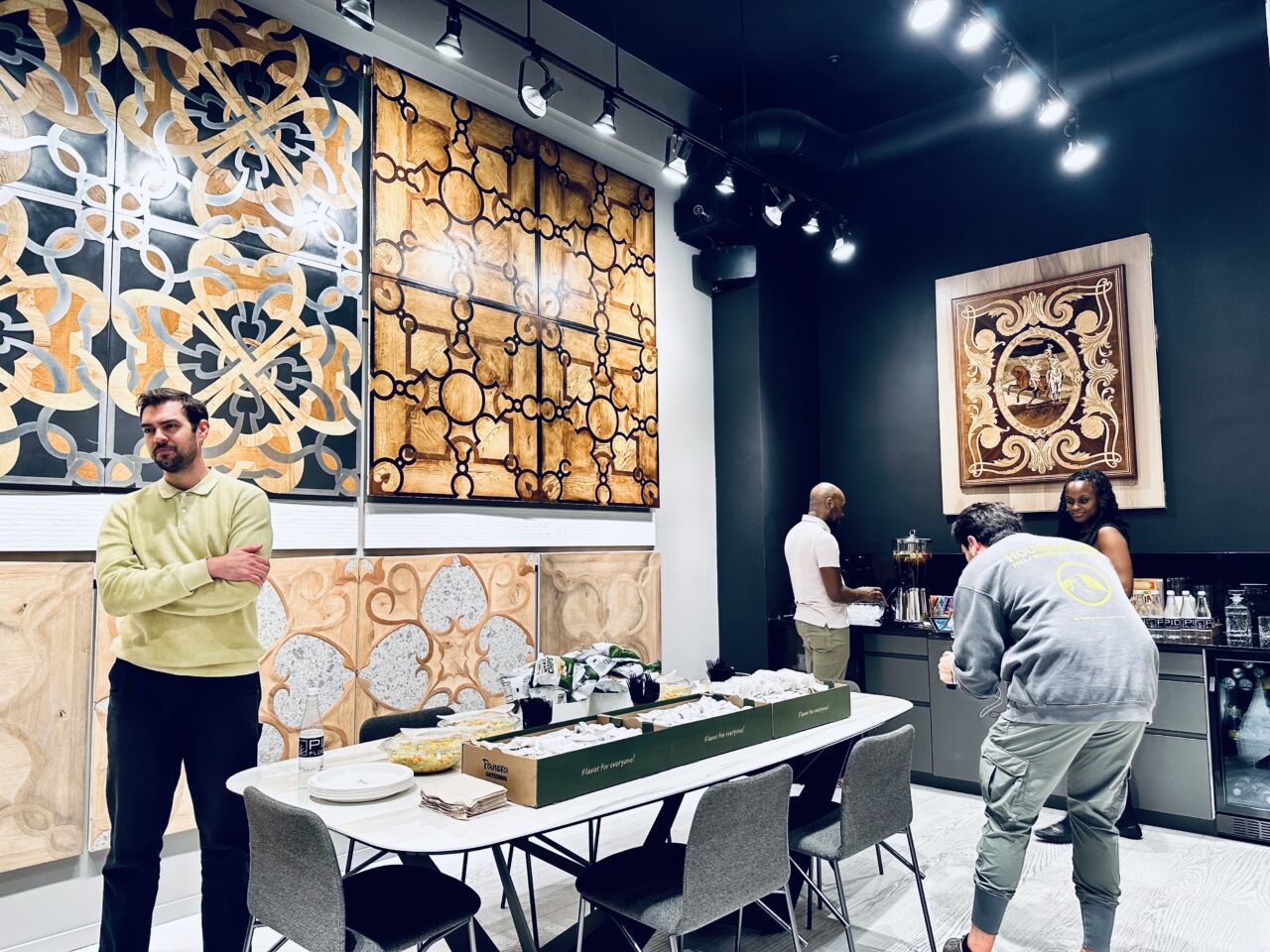
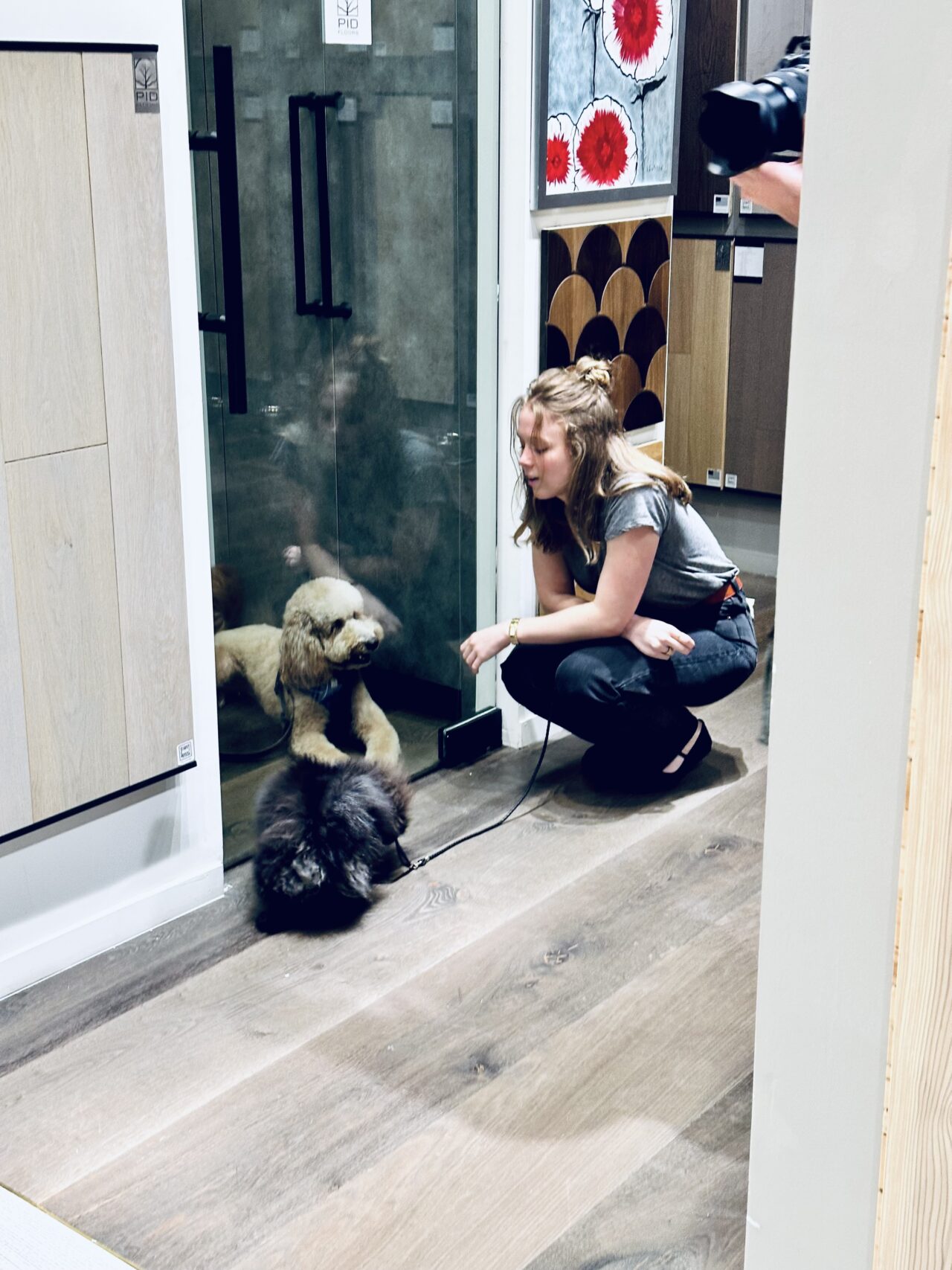
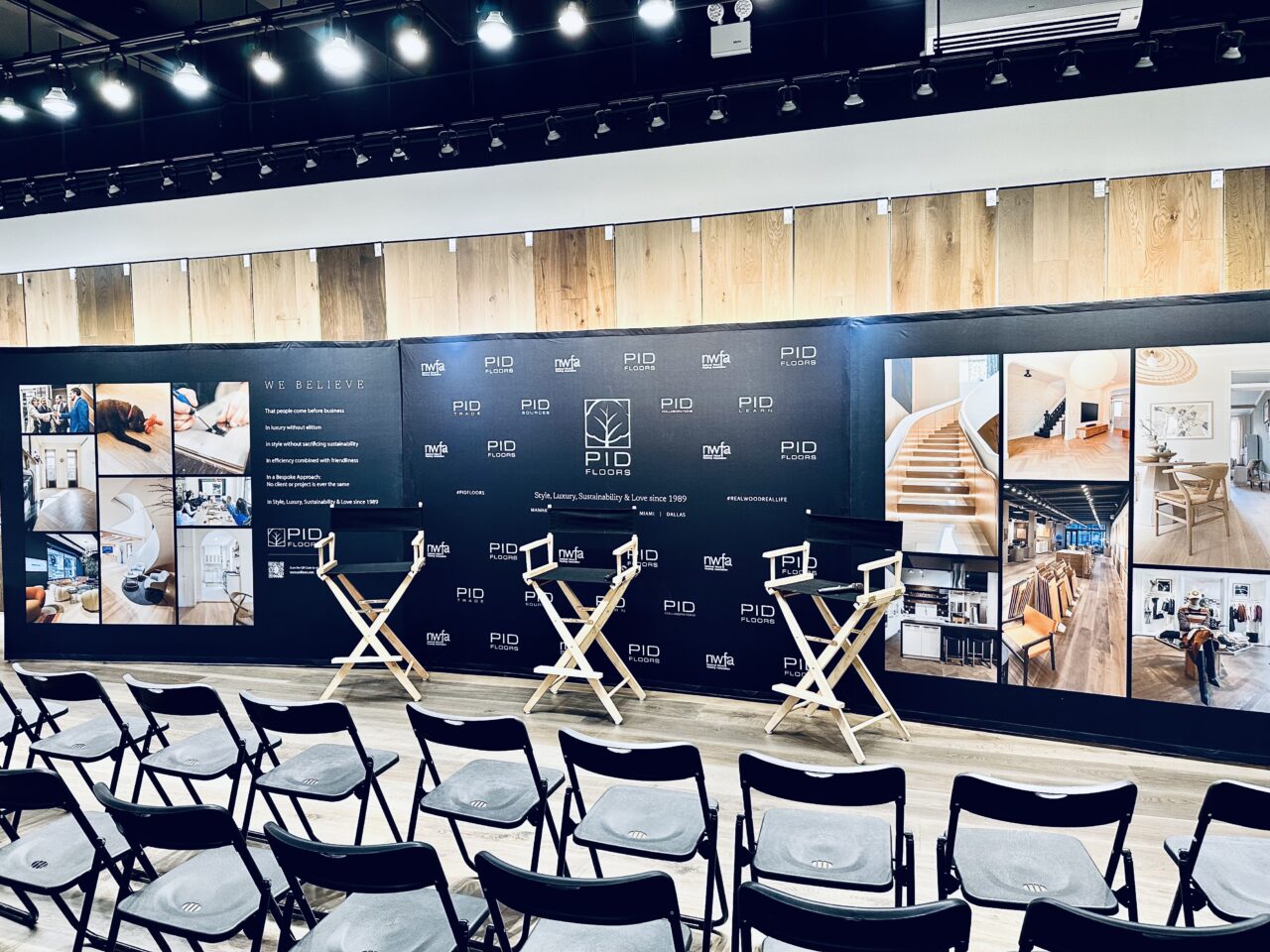
Image Courtesy of Brian PapeOn November 20, the AIANY Design for Aging and AIANY Committee on Residential Architecture were pleased to co-host a cocktail party and conversational workshop at PID Floors Showroom to allow dog-loving designers, puppy-care professionals, and emotionally supportive canine companions to share knowledge and experience gained from successfully creating dog-friendly spaces.
Elaine Santos, Principal, Elaine Santos Design, Christopher Gardner, Principal, TUNA Architecture, and Colin Hunter, Canine Trainer, Dogtown had a conversation in a casual manner with each other. Elaine and Chris spoke to what they take into consideration when designing homes for their clients with dogs. Colin spoke to wellness strategies used by Dogtown for dogs of all types/breeds and ages. In addition to indoor, outdoor design considerations were also been discussed. Each told a story with regards to their professional relationship to designing for or caring for the needs of dogs.
The event was quite a success, where the speakers emphasized the “universal design aspects” that included planning for animals as well as older folks; heights of cabinets, stairs vs. ramps, access routes, avoidance of barriers. The many aspects of mutual benefits of having proper places designed for pets that help the humans too. Having pets at the event also had a special effect on everyone, and it was special for the pet owners to have their pets welcomed to the gathering. -
November 3, 2024
The Design for Aging Committee October meeting was delighted to have Haym Gross, founding member of NYC 2030 District, a non-profit climate partnership focused on building energy and renewable energy, to speak to us about his work with Bridge St. Development Corporation, and Karp Strategies (as well as others) to preserve HUD 202 Senior Supportive Housing in Brooklyn (and beyond). Haym’s team is engaged in studying current conditions at a number of these properties and recommends improvements. Kendall Christiansen (member of the committee) is also involved and talked about his experience on the project as well.
A few resources that were brought up during the meeting include:
- Cadence OneFive: an online platform that can help building owners optimize and understand financial incentives for their building’s energy retrofit needs among other things.
- Heat/ Cool Smart Brooklyn: an example of a successful program administered by NYC 2030 District and sponsored by the Brooklyn Borough President and NYSERDA to help owners retrofit their buildings with envelope improvements and electrification of heat.
We also talked about ideas on how to use DFA committee funds that were recently confirmed by AIANY to be available. The group agreed to move forward with expanding on the study done a few years ago with NYCHA’s Amsterdam Houses. The project focused on ways to better accommodate seniors living in multi-generational communities. One idea is to come up with a prototype that is more applicable to the majority of NYCHA buildings. We will discuss this more at the November meeting to figure out the next steps, so ideas and participation are welcome from interested members as we try to define the project more!
Coming up:
- Next meeting. We will meet on 11/21 from 5-6:30 pm and the meeting will be hybrid. Kate Leitch from Citizens Housing & Planning Council (CHPC) will be presenting the work the organization has been doing related to ADUs (Accessory Dwelling Units). CHPC is a non-profit research and education organization focused on housing and planning policy in NYC.
- December: We will meet on 12/19 in person at the Center for Architecture. The idea would be to have a Holiday potluck get-together! We will discuss this at the November meeting.
-
July 31, 2024
Happy summer! The DFA July Committee Meeting had a heated discussion on the topic of ADUs with new zoning—an opportunity for people to age in place with families. Members expressed interests in ADU zoning changes being offered in NYC and design for aging with ADUs, and brainstormed potential connections with AARP NYC, Jonathan Marvel (affordable housing company), and AIANY Custom Residential Architects Network and/or Housing Committee.
The discussion also covered co-housing projects such as Carehaus which provides aging in place with a sense of community, and NYCHA campus projects like the Atrium at Sumner and Stonewall House that bring different experiences to their residents. The Committee would like to invite related designers and/or residents to share their thoughts.
During the August meeting on 8/22, we will have the pleasure of welcoming NYSID Graduate students who are completing their Master’s in Public Services in Healthcare Interior. Four students will be presenting their capstone proposals:
Sarah – affordable multigenerational housing in East Village
Wenqi – luxury aging-friendly apartments on Highline
Wenfei – new universal design for medical services – nurse station, cabinets, and way-finding
Ashley – hospice for the young population in Puerto RicoSo join us in August!
-
May 27, 2024
![Image Courtesy of Marcela Alvarez, Yuan Fang, Priyashi Mehta, Amy Cul, Jieqi Chen, Alessia Gallo.]() Image Courtesy of Marcela Alvarez, Yuan Fang, Priyashi Mehta, Amy Cul, Jieqi Chen, Alessia Gallo.
Image Courtesy of Marcela Alvarez, Yuan Fang, Priyashi Mehta, Amy Cul, Jieqi Chen, Alessia Gallo.![Image Courtesy of Yutaka Takiura]() Image Courtesy of Yutaka Takiura
Image Courtesy of Yutaka Takiura![Image Courtesy of Yutaka Takiura]() Image Courtesy of Yutaka Takiura
Image Courtesy of Yutaka Takiura![Image Courtesy of Yutaka Takiura]() Image Courtesy of Yutaka Takiura
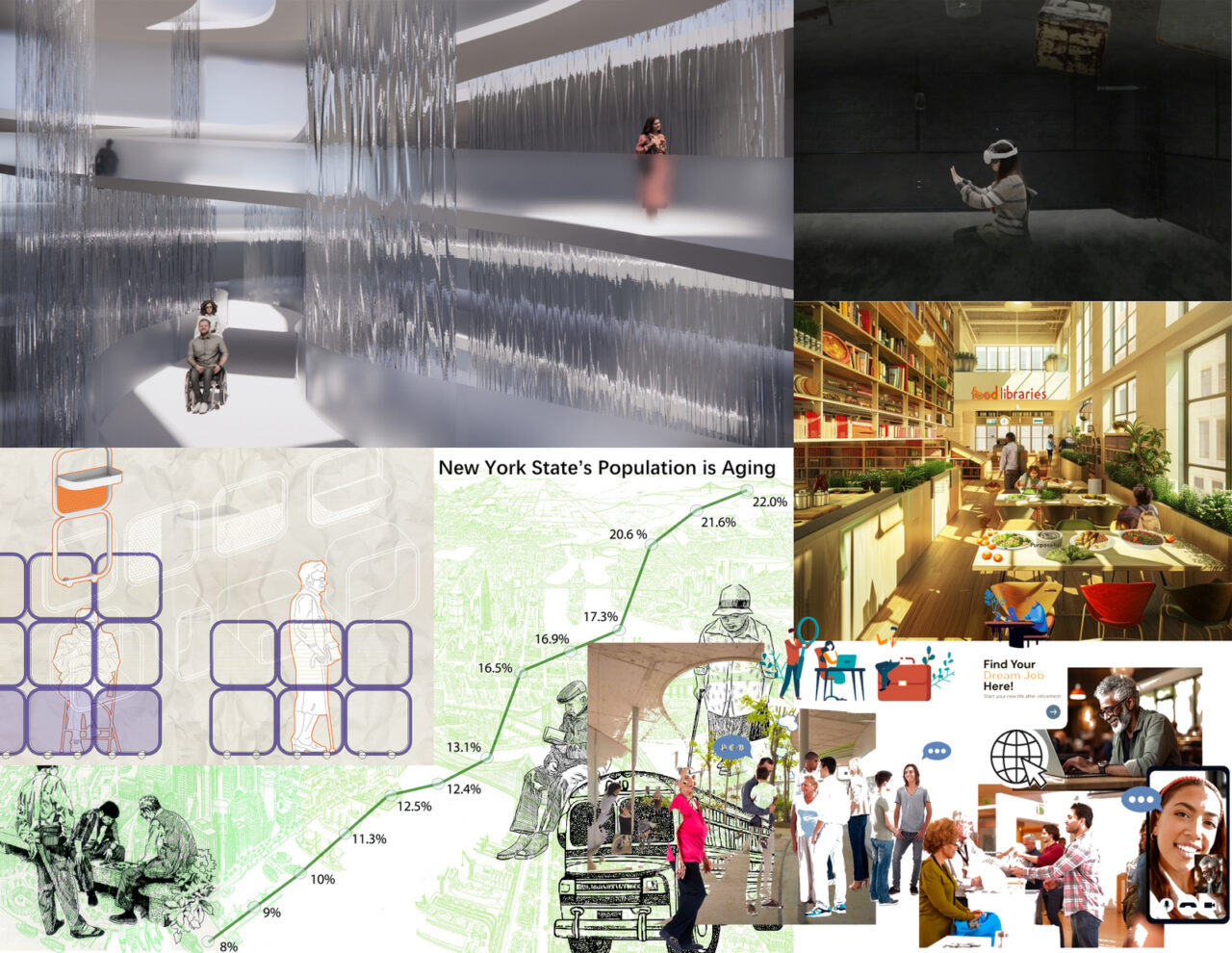
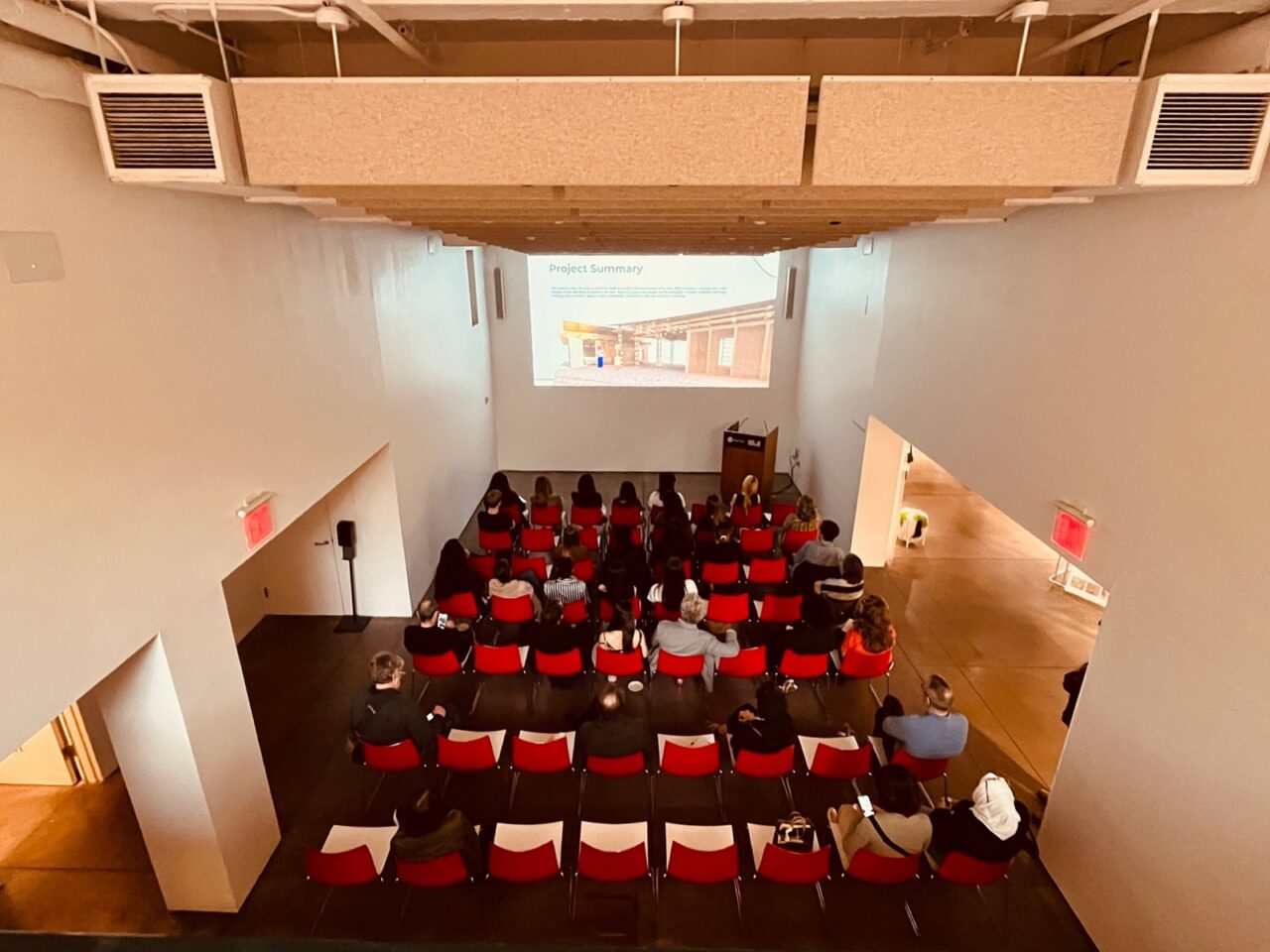
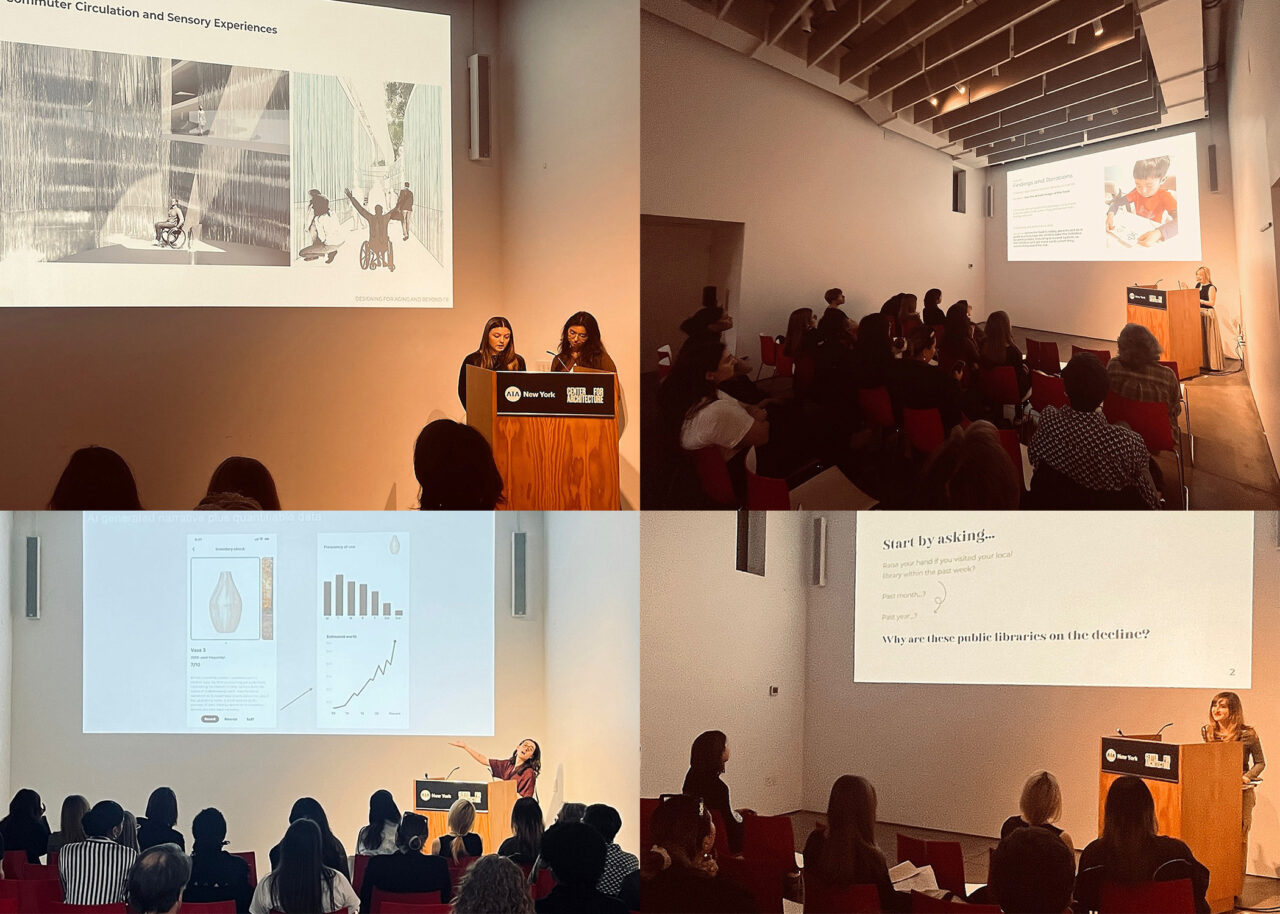
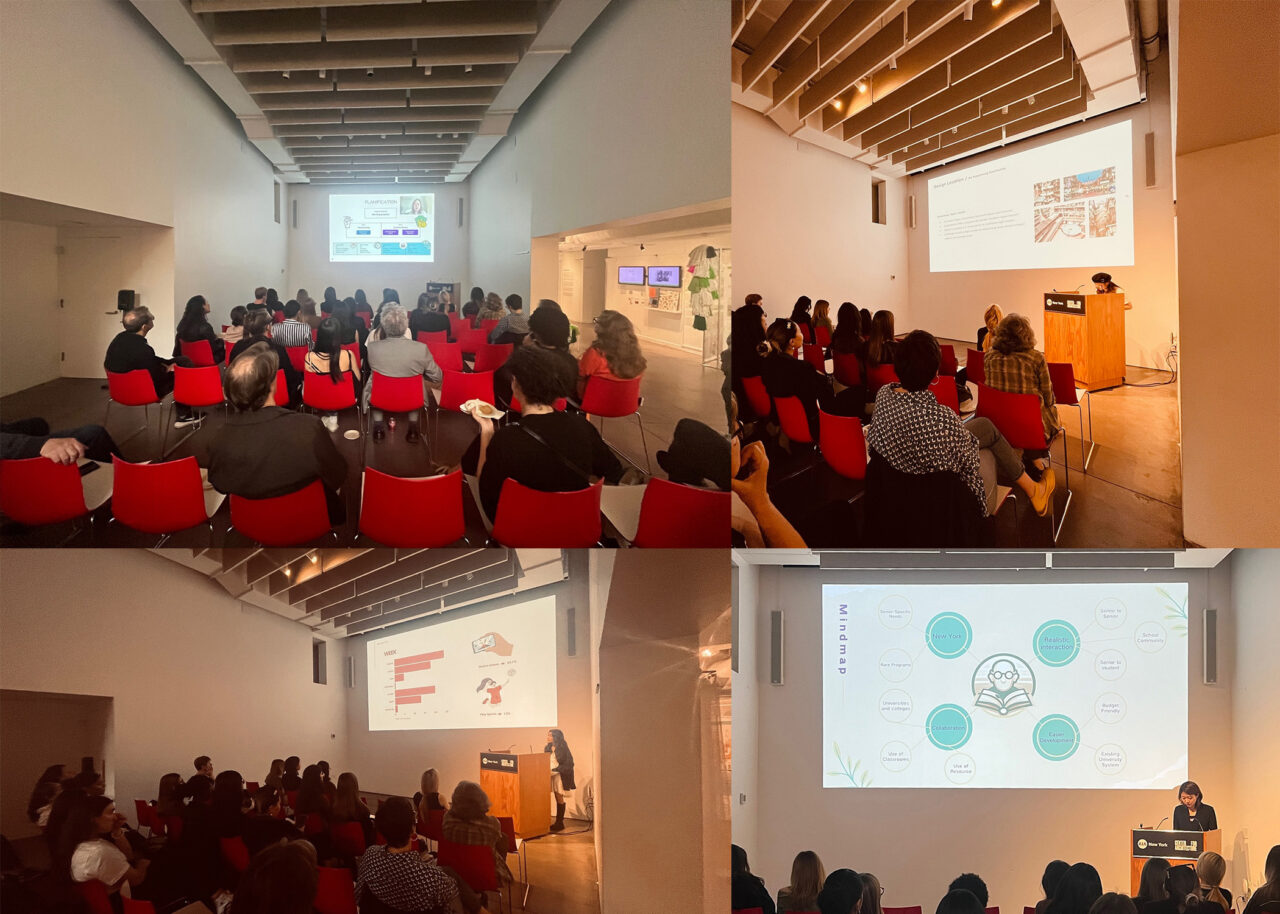
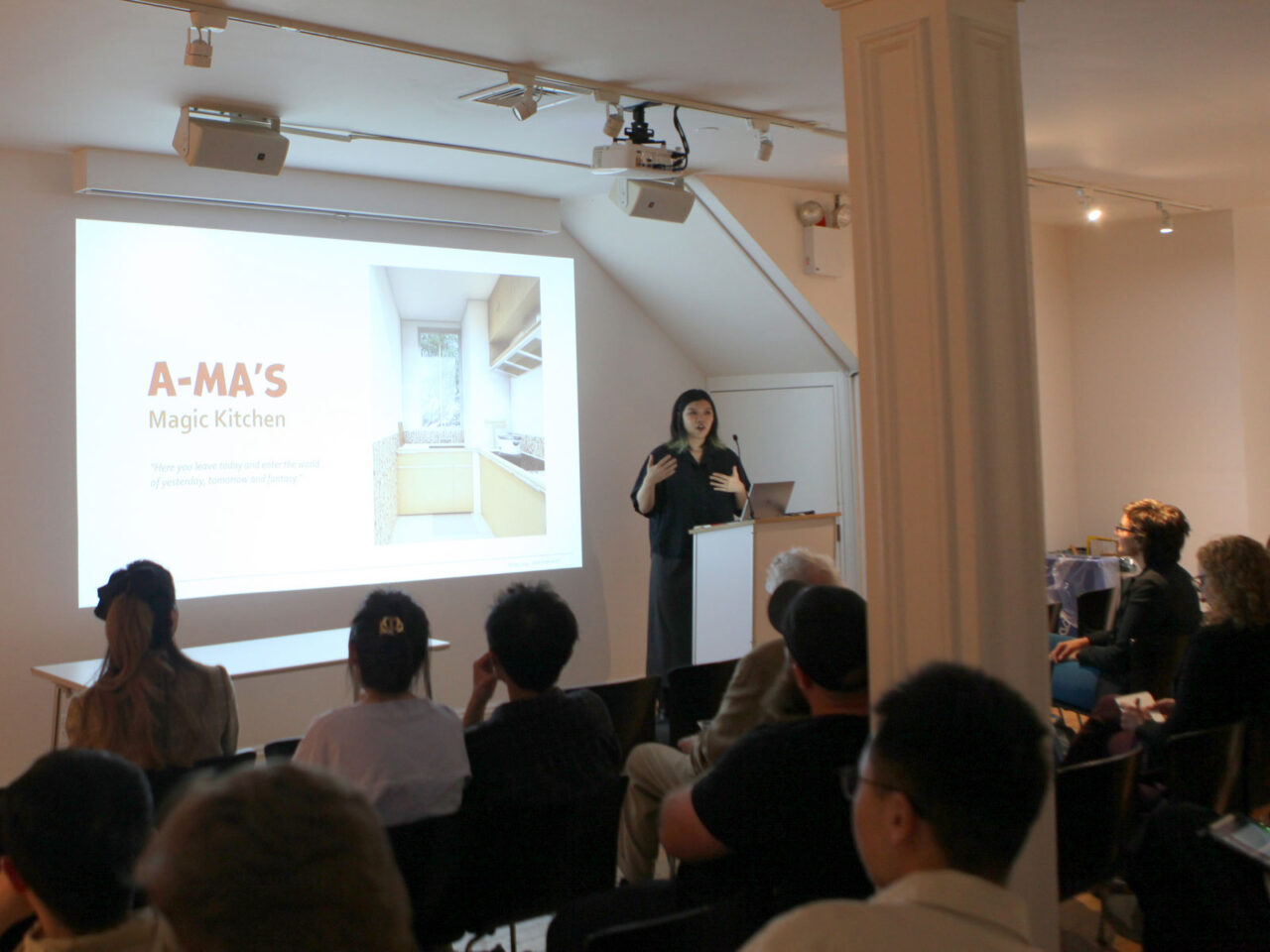
Image Courtesy of Yutaka TakiuraOn May 9, the AIANY Design for Aging committee was pleased to host Yutaka Takiura, AIA, Associate Professor at Pratt Institute and his students Marcela Alvarez, Jieqi Chen, Chuying (Amy) Cul, Yuan Fang, Alessia Gallo, Isabella Lee, Audrey J. Li, Shijia Ma, Ghezlan A. Al Henaidi, Evie Kaufman, Priyashi S. Mehta, and Chia-Yu (Ariel) Wei from Pratt Institute School of Design‘s Spring 2024 class “Design for Aging and Beyond.” The class conducted in-depth research on social issues and had the opportunity to meet with professionals and organizations outside the classroom. Each student developed a design proposal based on their research and experiments to assist people in need, including the aging population. In this presentation, audience witnessed the students’ exceptional skills and unwavering commitment to social justice:
The students’ projects were really great. And you had a fantastic turnout. – Andrea Lillo
It was good to see all the great work your students were doing! They were all so engaged with their projects and expressive. – Eric Gering
Thank you again for inviting us to a great presentation of your student’s projects. I am glad I was able to attend and take notes as it is a relevant topic for me personally. I thoroughly enjoyed these presentations and have already shared some of what I’ve learned with others outside of the design industry. – Melida Valera
Professor Yutaka Takiura congratulated the students of gaining unique ideas and perspectives to be ready to step outside of the campus and make a real difference. Their ideas and potential have the power to change lives, and we can’t wait to see what they will achieve in the future. A complete replay of their presentation can be viewed here.
-
April 17, 2024
![Photo: NYCHA.]() Photo: NYCHA.
Photo: NYCHA.On March 13, the AIANY Design for Aging Committee was pleased to host Jamar Adams, Founder & Managing Principal at Essence Development, Jonathan Gouveia, Vice-president of Real Estate Development at NYCHA, Manish Chadha, AIA, Principal at ILA, and Ruchika Modi, Principal at PAU, for an engaging and informative panel focused on NYCHA’s Fulton-Elliot-Chelsea Houses redevelopment, moderated by Brian J. Pape, AIA, LEED-AP, Green & Historic Preservation Specialist, President of Brian J. Pape Architect & Consultant PC, and Co-Chair of the AIANY Design for Aging Committee.
NYCHA is the city’s biggest landlord, in all 5 boroughs, for the 400,000 people who call NYCHA home. Nearly 275,000 families were on the waiting list for a NYCHA apartment this year. Architects and politicians are seeking the expansion of social housing, and prioritizing projects that mass produce substantial, properly sized homes. But funding these endeavors has been very difficult. Finally, the city’s public housing in Chelsea is in the process of a $1.5 Billion plan of revitalization of the Elliott-Chelsea and Fulton House campuses. Panelists discussed the design strategy for NYCHA’s Fulton-Elliot-Chelsea Houses redevelopment, the special considerations that benefit the older population, and how to integrate amenities for a diverse demographic into the urban context, considered the aging population that dominates public housing developments.
Even while the plans are being developed, essence is already adding to the residents’ quality of life by providing private security guards on campus, hiring pest control firms, making entry door fixes, and completing numerous in-unit repairs. Then, a single building will be vacated by moving residents (at developer’s expense) to other vacant campus units. This will allow a new as-of-right building to be constructed, large enough for community facilities on the lower levels, then senior housing units, and other apartments for all who would need to move in from other NYCHA buildings. Once this new facility is settled in, further replacement of other buildings can continue, until 100% of current NYCHA residents are resettled there.
The new NYCHA buildings will differ widely from existing projects. Buildings will be planned for ADA (Americans with Disability Act)- compliant elevators, more than one for each floor so disabled residents aren’t stranded when one fails. There will even be roof terraces on many buildings. The size and quantity of ADA compliant bathrooms will be greatly increased. On a community level, the new campus will have more social services and community activity programming. Buildings will be sited along the street sidewalks to better connect residents to the surrounding neighborhoods by using ground floor activation with local grocers, clinics, or other services. There will be open space improvements, with programming and cultural displays. Resiliency will be built in to landscaping and utilities.
We know mixed-use buildings and mixed-income neighborhoods produce better health, education, and economic outcomes for residents. That is the goal of this administration and civic-minded New Yorkers, and that is the goal of this Chelsea redevelopment. Nevertheless, it will take a successful completion to convince many that our government is capable of providing caring communities of social housing.
-
April 13, 2024
![Two elderly women seated and doing a high five with an elderly man in the background]() Photo: iStock.com/Rawpixel.
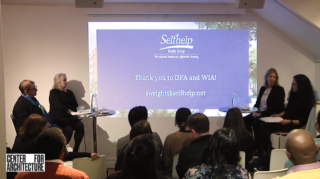
Photo: iStock.com/Rawpixel.On April 2, the AIANY Design for Aging and AIANY Women in Architecture Committees were pleased to host Valerie A. Mutterperl, AIA, LEED AP, Principal of Perkins Eastman, Gail Ressler, Owner of Gail Ressler Interior Design, and Susan H. Wright, RA, CPHC, LEED AP, VP for Design and Construction of Selfhelp Realty Group, for a profound and candid conversation focused on the female perspective of designing for an aging population, moderated by Chia-Yi Huang, AIA, LEED AP, member of the AIANY Design for Aging Committee.
Over the years, we’ve found that women designers are growing in numbers. Also, more women are Executive Directors, CEO’s, and CFO’s of senior resident service providers and care communities. In the panel we highlighted the growing voices of these women professionals who are focusing on Design for Aging. Panelists shared stories about the following topics:
- What does their career path look like?
- How or when did they start designing spaces for aging?
- What’s their perspective when they approach a project?
- How do they set up design goals that impact the end-users?
- What are they the most excited about in their work?
- How did they harness this passion as fuel to their work to create a place for themselves that embraces their skills and sets them apart from the crowd?
- What advice do they have for other professionals?
They also talked about how our industry is doing, and how we can continue to positively impact Design for Aging. Their projects are from very different sectors of this industry, but their stories are all amazing and touching. The experiences and conversations are important for everyone to hear. We missed Darcy Connors, Executive Director of SAGEServes, this time but we’ll surely invite her to share with us in the future! A complete replay can be viewed here.
-
The Design for Aging Committee March meeting was delighted to have Lisa Cini, award-winning senior living designer, author, and CEO of Infinite Living, to present the renovation of the historic Werner House into a senior-friendly Airbnb that incorporates aging in place design concepts and technologies. Cini created a website to showcase products she recommends at bestlivingtech.com and captured the process of renovating the Airbnb mansion in documentary series titled “Infinite Living Secrets of the Werner House.”
Cini’s presentation sparked a lot of great discussion. We appreciate her sharing with us these wonderful ideas and examples!
As we enter the spring, more Committee events will be happening, including:
- Design for an Aging Population: The Female Perspective, April 2
- Pratt Student Presentation, May 9
- Remembering Herb Oppenheimer
The complete meeting agenda and events in formation for Tafel Hall panels can be accessed here. We look forward to seeing everyone on April 25!
-
February 9, 2024
Attendees of the Design for Aging Committee’s January Meeting were delighted to have Jack Carman from Design for Generations discuss his experience as a landscape architect designing memory care spaces. From theories such as Roger Ulrich’s Supportive Design Theory, which argues that window views may influence recovery from surgery, to real-life examples like Central Park in Royal Caribbean Cruises, which presents gardens as quiet places onboard for passengers to “relax”, Jack provided his insights on garden design and great resources for us to continue exploring more design work for the creation of therapeutic outdoor environments. The following potluck and get-together also welcomed committee members to another great new year!
On March 13, 2024, at 6:00pm, the AIANY Design for Aging Committee will host the program NYCHA Redevelopment of Chelsea & Elliot Houses in Manhattan at the Center for Architecture. The presentation will focus on the precise ways that the design team has considered the aging population as the predominant tenants of public housing developments. So don’t miss it!
-
January 16, 2024
![Image Courtesy of Portland Memory Garden.]() Image Courtesy of Portland Memory Garden.
Image Courtesy of Portland Memory Garden.![Image Courtesy of Portland Memory Garden.]() Image Courtesy of Portland Memory Garden.
Image Courtesy of Portland Memory Garden.![Image Courtesy of Portland Memory Garden.]() Image Courtesy of Portland Memory Garden.
Image Courtesy of Portland Memory Garden.The DFA December Committee Meeting was delighted to have Brian Bainnson, ASLA, PLA, Principle of Quatrefoil Inc. to present the project he developed, the Portland Memory Garden. Brian is a landscape architect as was his father. He attended RISD and then moved out to Portland, Oregon. The Portland Memory Garden is designed for people with Alzheimer’s disease and other memory issues. It also provides respite for their caregivers and is open to the entire community. The Garden is fully fenced and enclosed, featuring restrooms, looping paths, wide walkways, lots of seating, tinted concrete to reduce glare, concrete sloping raised garden beds, lighting for nighttime with transition so that shadows don’t cause falls, and good benches with arms so as to see to the next bench throughout the garden. Brian talked about the funding, the master plan, how the site was selected, and how the garden is managed and maintained after it was dedicated in May 2002. He also shared about his knowledge of the coalition operation, the programs and uses, the choose of planting, and the conditions of other memory gardens in the U.S. The presentation and the following Q&A was truly engaging and knowledgable.
This Spring DFA Committee is going co-host many interesting events, such as a panel with WIA Committee, an event with NYCHA, and student presentations with different schools. The complete meeting agenda with an extended list of ideas from previous meetings and events in formation for Tafel Hall panels can be accessed here. Also, we were going to have a member potluck/get together at the January meeting. We look forward to seeing everyone on January 25!
-
December 2, 2023
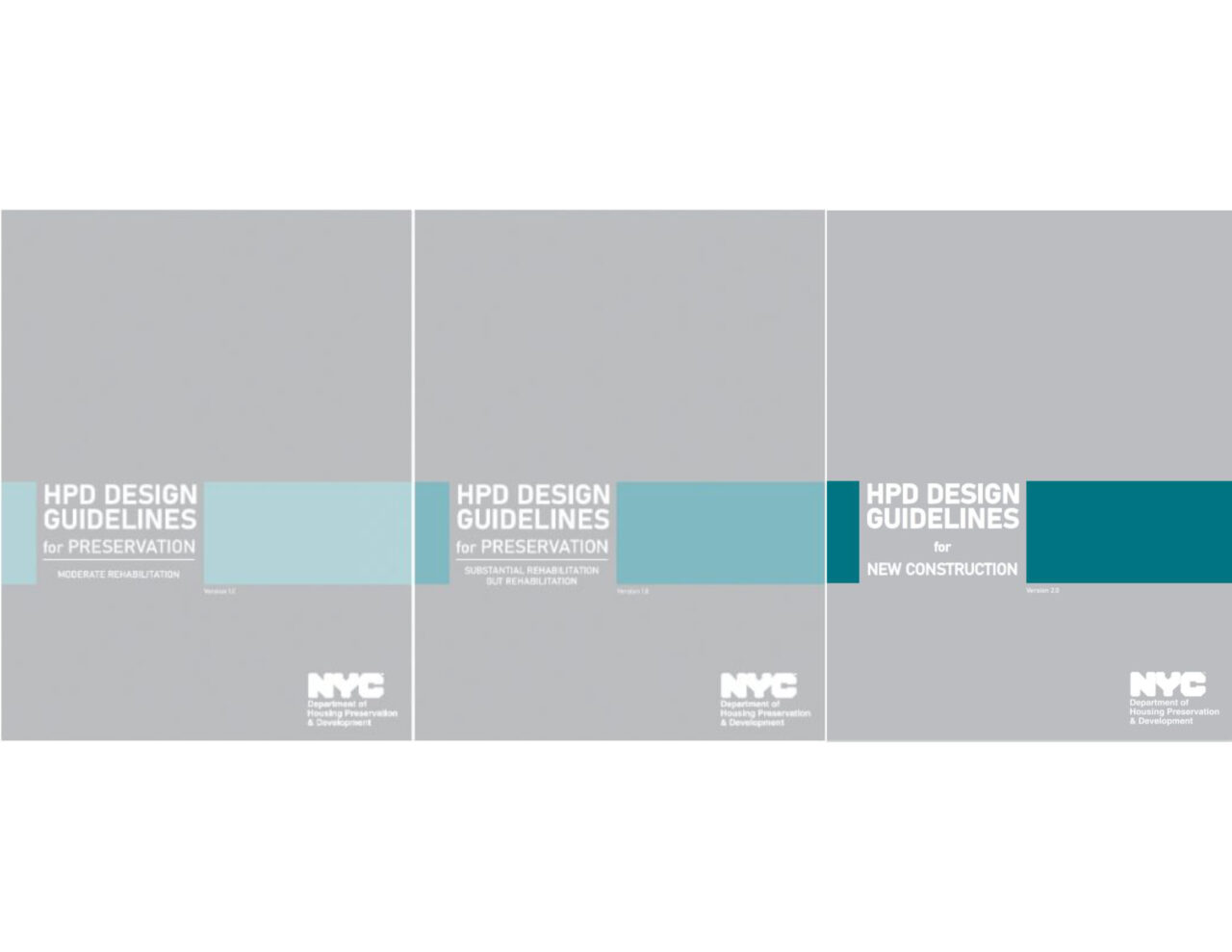
![HPD Design Guidelines. Image Courtesy of HPD.]() HPD Design Guidelines. Image Courtesy of HPD.
HPD Design Guidelines. Image Courtesy of HPD.The DFA November Committee Meeting was delighted to have Brian Baldor from NYC HPD to present new HPD Design Guidelines, focusing on items related to senior housing, mostly new construction (NC). The update was triggered by HPD’s commitment to decarbonization, electrification and emphasis on affordable housing, referring to Climate Resiliency Design Guidelines, dates for Local Law 154 to eliminate gas use in new construction, and Building and Land Use Approval Streamlining Taskforce (BLAST).
Among the HPD’s New Construction Updates of sustainability, resiliency and design and programmatic requirements, Brian talked especially about senior housing and aging in place:
- Housing with seniors in at least 50% of units must provide adequate backup power generation to ensure that at least one elevator remains functional during an emergency, and a community space served as a “Place of Refuge” with natural ventilation and lighting and equipped with backup power for heating, cooling, WiFi, etc.
- To accommodate aging in place, space must have consistent light levels, dual handrails and slip-resistant stair strips, grab bars and accessible bathroom fixtures, and interior and exterior doors to be easily accessible.
The New Construction Two-Track Expedited Design Review Process includes:
- Design review for new projects which are very useful for special needs housing: Full design review – giving feedback on accessibility; Targeted design review – excluding accessibility if there is an accessibility consultant as part of the team; and Expedited pathway – no further reviews.
- Mandatory Design Consultation held around 10 months before closing to discuss key Guidelines items, non-sustainability scope items, and address any questions or concerns the development team may have.
- NC Design Guidelines Workbook transitioned from the Project Summary and submitted by the development teams throughout the process. It can be a useful tool to understand the projects.
The complete meeting agenda with an extended list of ideas from previous meetings and events in formation for Tafel Hall panels can be accessed here. Please note that the DFA December Committee meeting will take pace on Thursday, December 14, featuring landscape architect Brian Bainnson from Portland, Oregon to talk to us about the Portland Memory Garden, a memory garden in a public park. We look forward to seeing everyone in December!
-
November 5, 2023
![SAGE Center. Image Courtesy of Ted Porter Architecture.]() SAGE Center. Image Courtesy of Ted Porter Architecture.
SAGE Center. Image Courtesy of Ted Porter Architecture.![SAGE Center. Image Courtesy of CP Krenkler.]() SAGE Center. Image Courtesy of CP Krenkler.
SAGE Center. Image Courtesy of CP Krenkler.![SAGE Center. Image Courtesy of CP Krenkler.]() SAGE Center. Image Courtesy of CP Krenkler.
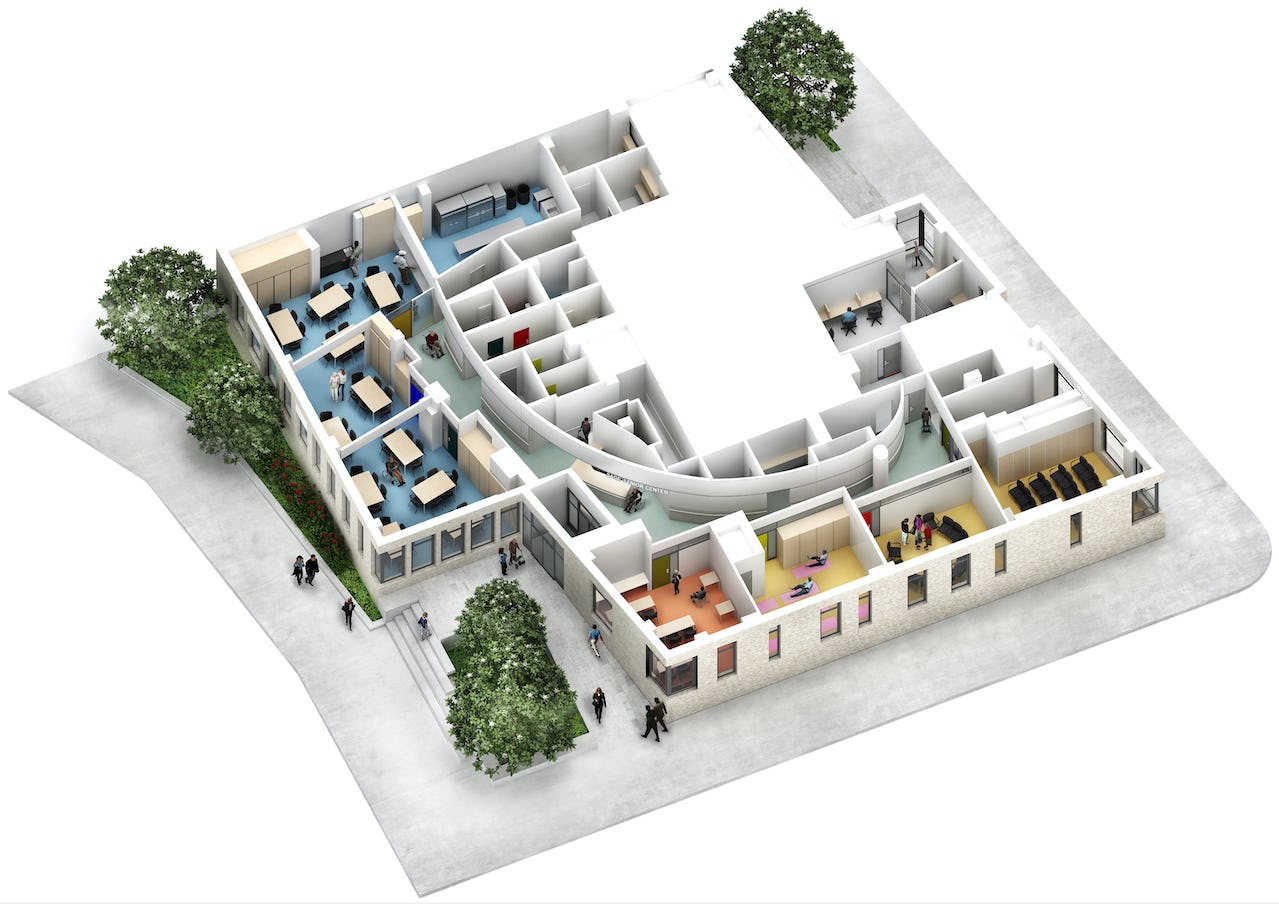
SAGE Center. Image Courtesy of CP Krenkler.This month we’ve enjoyed a tour of the Sage Center Brooklyn at Stonewall House on October 11 given by Ted Porter, AIA, as part of this year’s Archtober events. Ted Porter Architecture’s design of the SAGE Center provided a welcoming space where older adults can enjoy services and programs related to arts and culture, food and nutrition, fitness, health and wellness, and lifelong education within a warm, inviting setting.
Following the presentation of the project Avandell Dementia Village by Rich Rosen, AIA, and Geoffrey Roesch, ASLA, AIA in the September Committee Meeting , this month DFA Committee started to put together a project to advocate Alzheimer’s Memory Gardens to be incorporated in NYC Parks. The target was to research on ideal areas, with the goal of having one in each borough, that could potentially be presented to the Parks Department.
In November the Committee Meeting will take place on Tuesday, November 21 since that Thursday is Thanksgiving. HPD will present new design guidelines, focusing on items related to senior housing during the meeting. So don’t miss it!
-
October 13, 2023
![Avandell Village. Image Courtesy of Perkins Eastman.]() Avandell Village. Image Courtesy of Perkins Eastman.
Avandell Village. Image Courtesy of Perkins Eastman.![Avandell Village. Image Courtesy of Perkins Eastman.]() Avandell Village. Image Courtesy of Perkins Eastman.
Avandell Village. Image Courtesy of Perkins Eastman.![Avandell Village. Image Courtesy of Perkins Eastman.]() Avandell Village. Image Courtesy of Perkins Eastman.
Avandell Village. Image Courtesy of Perkins Eastman.The DFA September Committee Meeting was delighted to feature Rich Rosen, AIA, and Geoffrey Roesch, ASLA, AIA, both Principals at Perkins Eastman, who shared insights into one of their firm’s current project: Avandell Dementia Village, which was prominently featured in a recent New York Times article:
“As yet, there are no dementia villages in the United States, apart from a Hogeweyk-inspired dementia-care day center in South Bend, Ind. But one is in development in Holmdel, N.J., with plans to open its doors in the next two to three years. Designed by Perkins Eastman, an architecture firm based in New York, Avandell will comprise 15 homes in a farmhouse aesthetic, to reflect the rural surroundings. The suburban-style community is set to include a town center with a grocery store, bistro and community center. … Preparing for the future has been baked into the model.” – Joann Plockova, New York Times
Rich and Geoffrey described what dementia care was like 30 years ago, taking Perkins Eastman’s 1992 project Woodside Place in Oakmont, PA as example. Compared to other dementia facilities of the time, the scale at Woodside Place went from a large institutional setting to a much smaller building. The building was divided into three household wings, where 10 residents were grouping with dining and living areas, with access to secure landscaped gardens. Each house had a visual theme used for cueing and wayfinding to help orient residents. Another innovative feature was the Dutch door that when the upper half is left open, staff could look into private bedrooms for monitoring and residents don’t feel locked up.
Then came the Green House Project, which created beginnings of a village. Following were many other residential care projects all around the nation. In Europe there were also Hogeweyk Village in Amsterdam, Netherland, which was a small town with invisible secure perimeter, where 168 residents were surrounded by equal number of trained staff wearing everyday clothes. Based on the related research and project experiences, Perkins Eastman then began to create white papers on senior living – Perkins Eastman Thought Leadership, publication – Missing Main Street, and Podcast on Dementia – Shaping Dementia Environments, interviewing people in US and Canada who had developed unique dementia programs.
Larry Carlson, recently retired CEO of United Methodists in NJ, thought that there had to be a better way to have residences for those with dementia. He began working with Perkins Eastman to create Avandell Dementia Village. With human-centered approach to design, this project sets up a shared dementia-friendly environment, for 105 residents in 15 houses organized in neighborhoods that are connected without going outside. Buildings are developed in a weaving model, focusing on the three themes of empowered self, meaningful place and authentic community, creating opportunities for the residents to personalize their rooms. The project is expected to open in two years.
Besides the wonderful sharing from Rich and Geoffrey, DFA also have two relevant events in this month:
- Archtober event – SAGE Center Brooklyn at Stonewall House Tour on October 11, where Ted Porter Architecture gave a tour of the SAGE center and showcased their design which provide a welcoming space where older adults can enjoy services and programs related to arts and culture, food and nutrition, fitness, health and wellness, and lifelong education within a warm, inviting setting.
- New York School of Interior Design Studio Presentations on October 10 at the Center, where New York School of Interior Design professional-level Master of Fine Arts in Interior Design (MFA1) students presented their research and design projects from last year’s Interior Design Studio II focusing on Universal Design Principles and Accessibility in the residential environment.
The complete meeting agenda with an extended list of ideas from previous meetings and events in formation for Tafel Hall panels can be accessed here. Please note that the DFA October Committee meeting will take pace on Wednesday, October 25, adjusted date because of Annual Bond Gala taking place on 10/26. We look forward to seeing everyone in October!
-
July 31, 2023
The DFA July Committee Meeting was delighted to feature Jeffrey Rosenfeld, Ph.D. who gave an amazing presentation about Alzheimer’s Gardens. Jeff is a gerontologist who is involved in product-design and interior-design for older people. In addition to his consulting, Jeff is on the faculty at Parsons School of Design, where he teaches Design For Aging Populations. His books include Home Design in an Aging World, and also Unassisted Living. Both books were written with architect Wid Chapman, AIA. Jeff’s next book will be titled, Alzheimer’s Gardens: Designed For Healing.
Looking for inspiration in the book Midnight in the Garden of Good and Evil by John John Berendt, there’s no memory or recollection of what was when you have Alzheimer’s, including sight, hearing, touch, and smell. Alzheimer’s Gardens are environments where patients can access memories or sensations. They provide therapeutic components including circular or figure eight paths (they like to wander a lot), fragrant flowers in containers or growing in the soil, wind chimes, secure boundaries (some kind of fence), occasional seating (benches or chairs), and sunny and shady patches. However issues such as garden infrastructures, garden botanicals and humans in the garden (more than just for residents) need to be planned and addressed.
In the presentation Jeff showcased examples in Hampton Court, UK, Port Macquarie, Australia and Dax, France. His Alzheimer’s Garden Project for course Design for Aging Populations, Parsons School of Design will be given funding for poster sized designs that can be shared. Also, he has become enthusiastic in park benches after he brought his student’s “intergenerational bench” to the NY Parks Department. In the Q&A session attendees had extensive discussion about it, and the Committee expressed interests to get some of Jeff’s students’ work to be displayed at the Chapter.
After the presentation, members shared some resources and news regarding design for aging, such as:
- KS Handbook for Age Friendly Communities
- WHO Housing and Health Design Guidelines
- AARP International’s Equity by Design webinars
- Giesserei Multi-Generational House
- The over-65 rental market is growing: 5 apartment upgrades that boost appeal
- ADU student design competition released by Montclair Gateway
- Registration for undergraduates ends September 20
- Deadline for submissions on October 25
Events and presentations in formation includes:
- Richard Rosen/Perkins-Eastman will present their ongoing project: September 28 in DFA Committee Meeting
- Potential collaboration with WIA committee on Women Led Architecture Firms and Design for Aging: Q1, 2024
The complete meeting agenda with an extended list of ideas from previous meetings and events in formation for Tafel Hall panels can be accessed here. Please note that DFA Committee has no August monthly meeting. We look forward to seeing everyone in September!
-
June 30, 2023
![Image Courtesy of AIANY]() Image Courtesy of AIANY
Image Courtesy of AIANYOn May 18, the AIANY Design for Aging committee was pleased to host Yutaka Takiura, AIA, Associate Professor at Pratt Institute and his students Changxin Li, Sophie McCartney, Yuyao Fu, Sarena Wu, Yanya Mei, Yuqing Lei, Byoungwook Kim, Yanyu Yang, Salvi Bhila, and Yuzhi Wang from the course “Design for Aging and Beyond” on a presentation of their research and design proposals. Interior Design and Architecture students in the class have explored how to improve and support the quality of life for older populations. Their projects emphasized holistic approaches to frequently complex problems. Their ideas ranged from adapting kitchens and living rooms to be more accessible and responsive to reimagining whole blocks of homes as a combination of public and private spaces. An in-depth article covering this event can be found here. A complete replay can be viewed here.
-
June 28, 2023
The DFA June Committee Meeting reviewed the discussion from the last meeting regarding global examples of architecture (or planning) that respond to the needs of older persons. Valuable resources and links include:
- Fitwel which is a building certification system which promotes occupant health is an examples that are specifically responding to the needs of older persons in the face of climate change.
- The Clarion Group (London, UK) is an example of a company that supports new community housing including housing for older persons.
- NYAM’s Global Roadmap for Healthy Longevity
- Centre for Ageing Better
- Katherine Kline has been in contact with Christophe Lalande (Head of Housing at UN habitat) who noted work his organization is doing related to housing and sustainable design.
- DFA co-chair Brian Pape is in touch with real estate developers working on NYCHA capital improvement projects.
Kathy has also shared:
- Her extensive notes and the report for THE STATE OF THE NATION’S HOUSING 2023,
- Her notes for Equity by Design – Principles in Action: Clarion Housing Group, and
- The booklet regarding AGE-FRIENDLY BROOKLYN TASK FORCE.
The complete meeting agenda with an extended list of ideas from previous meetings and events in formation for Tafel Hall panels can be accessed here.
-
June 14, 2023
![Image Courtesy of Urban Design Forum]() Image Courtesy of Urban Design Forum
Image Courtesy of Urban Design ForumOn Friday, June 23, 2023, 8:30 AM in the hybrid Social Science and Architecture Committee meeting, Design for Aging committee was pleased to co-host a presentation titled “Public Toilets – Where do they work and where do they not, and why?” by Julie Chou, AIA.
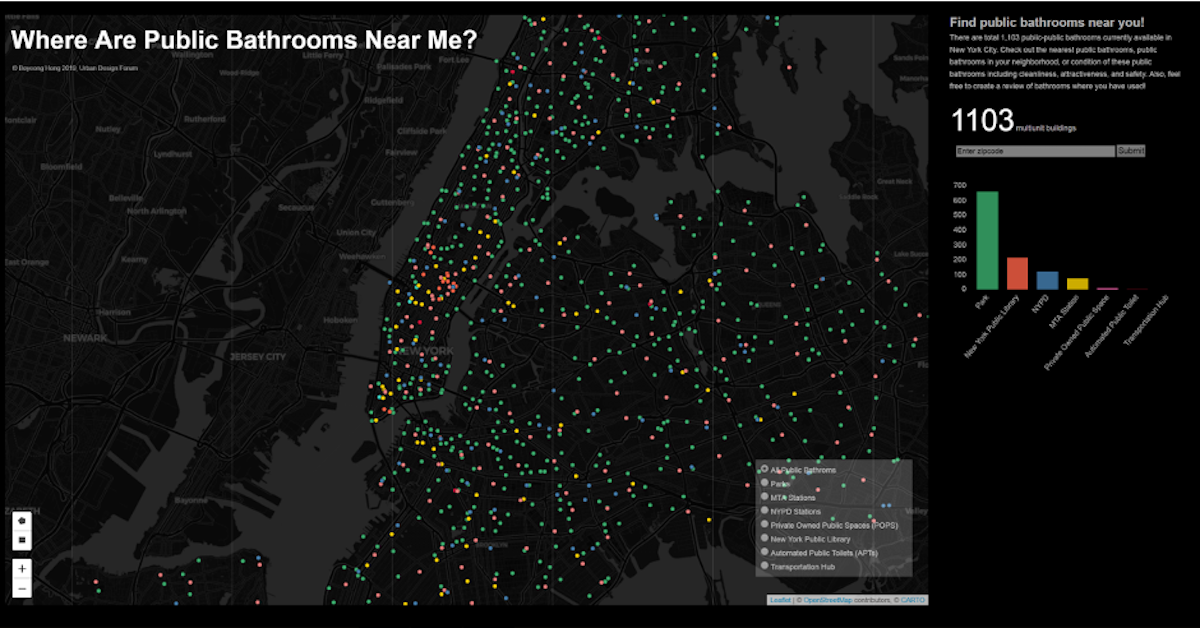
Julie Chou, AIA co-authored a public bathroom report in 2019 with the Urban Design Forum and currently leads a public bathroom working group with several community boards working to advance the future of our public bathroom system. She presented her work related to advancing the NYC public bathroom system. Anyone interested can review this map (created by the working group) of NYC public bathrooms to help identify where a public bathroom would be helpful and why.
-
June 27, 2022
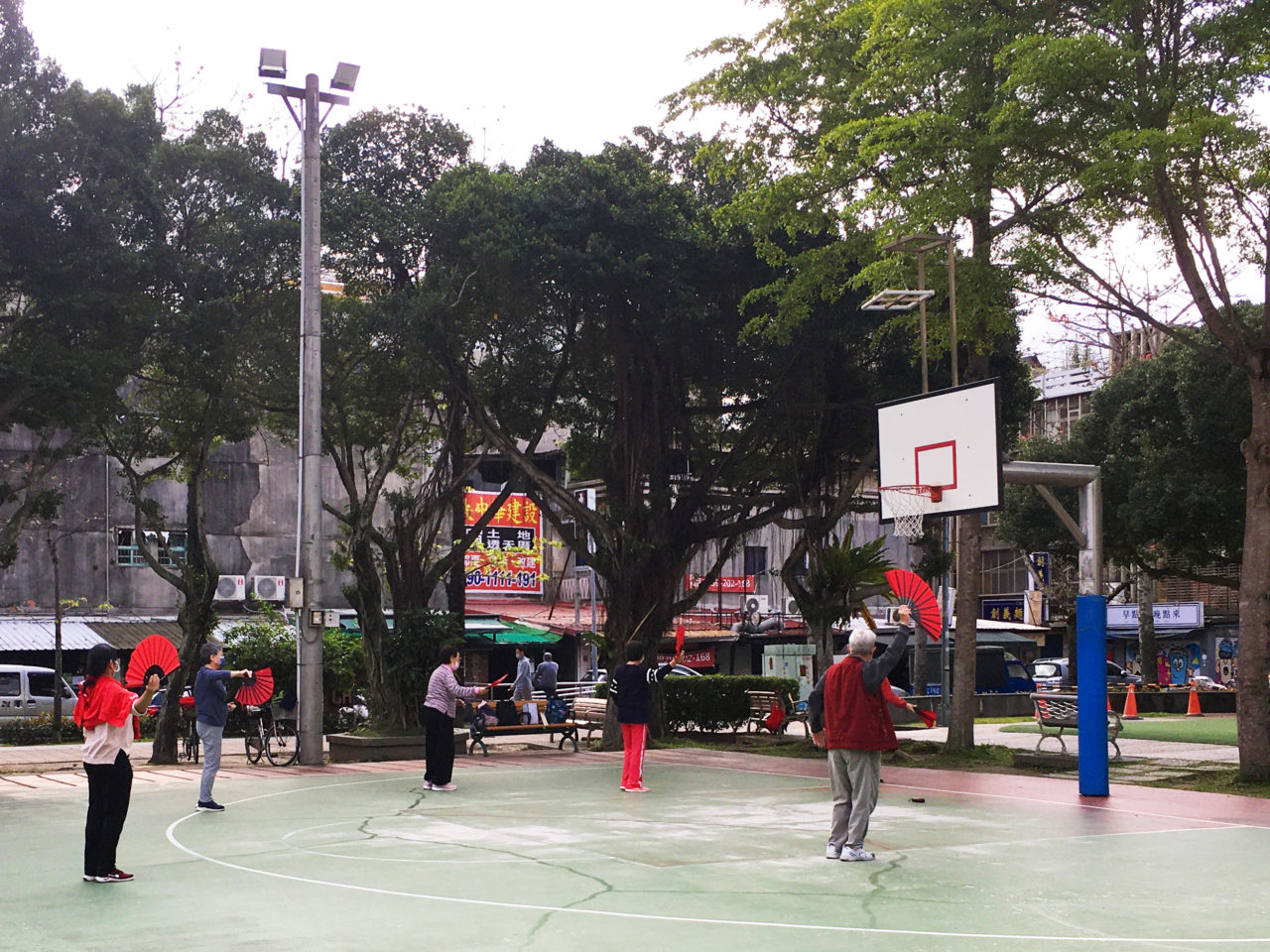 Images Courtesy of Chia-Yi Huang
On June 7, the AIANY Design for Aging committee was pleased to host Esteban Beita, PhD, Associate Professor at CUNY City Tech, Founder of Wabi Design, Tai-Li Lee, Assistant Professor at Pratt University, Partner of New Practice Studio, and Melissa Q. Navarra, PhD, Assistant Professor at Ateneo de Manila University (speaking remotely) on an informative and interesting discussion focused on urban aging in several east Asian cities, moderated by Ruth Finkelstein, ScD, Executive Director of Brookdale Center for Aging at Hunter College and Professor at School of Urban Public Health. This event was offered in person and virtually, marking the first in-person panel of the Committee since pandemic.
Often in the American imagination, Asian societies are better places to grow old. This event investigated that premise with panelists who specialize in issues of the elderly in three major Asian cities: Manila, Taipei, and Tokyo. Building on basic demographics, the panelists looked at the evolving living patterns of the elderly in large urban centers and how infrastructure and architecture can facilitate seniors’ independence and well-being. And the presentations opened up many more avenues of pursuit for better understanding how other urban areas address aging relative to housing, socialization, poverty, infrastructure, demographics, isolation, etc. In case you missed it, you can view a complete replay here.
-
June 19, 2021
On June 10, the AIANY Design for Aging committee, Planning and Urban Design, and Transportation and Infrastructure Committees were pleased to host Renia Ehrenfeucht, Author of “Sidewalks Conflict and Negotiation over Public Space”, Aimi Hamraie, Author of “Building Access: Universal Design and the Politics of Disability”, Jessica Murray, PhD, CUNY, Chair of NYCT Advisory Committee for Transit Accessibility, and Ariel Ward, Transportation Engineer, Planner, and Designer of San Francisco Municipal Transportation Agency (SFMTA) on an important and timely discussion focused on safe and equitable streets: age, ability, and inclusion, moderated by Claire Weisz, FAIA, Principal-in-Charge of WXY Architecture + Urban Design.
In 2020, pivotal national and global events brought about increased awareness of the notion of safety on our streets. Beyond the months of public health measures that required social distancing, we also experienced a public space paradigm shift as a result of the anti-racist movements demonstrating on our city streets. Within the design community and beyond, discussions about perceptions of safety and questions of who is kept safe in public, and by what means their safety is maintained, were resoundingly ignited.
While cities adapted quickly to the pandemic with ’slow’ and ‘open’ streets, pop-up bike lanes, and temporary parklet structures, these “exciting” new interventions can experienced differently—especially by marginalized, vulnerable, or minority people, including seniors, people with disabilities, and BIPOC communities—sometimes as obstacles to access of the public right-of-way or as foreign, or imposed, elements and cultures, especially if there has been an absence of community involvement during implementation.
As cities prepare for long-term recovery, any course of action under consideration by the design community should begin by assessing lessons learned and best practices. Revisiting the principles of Universal Design could point the way to desirable and just outcomes anchored in inclusion, accessibility, and process-based accountability.
This panel presented best practices and promising trends to advance goals of multi-modal, safe streets, sidewalks and curbside social spaces through designs that afford equity and dignity. The event concluded with a beautiful and powerful footnote: “Mobility over modality.” In case you missed it, you can view a complete replay here.
-
February 2, 2021
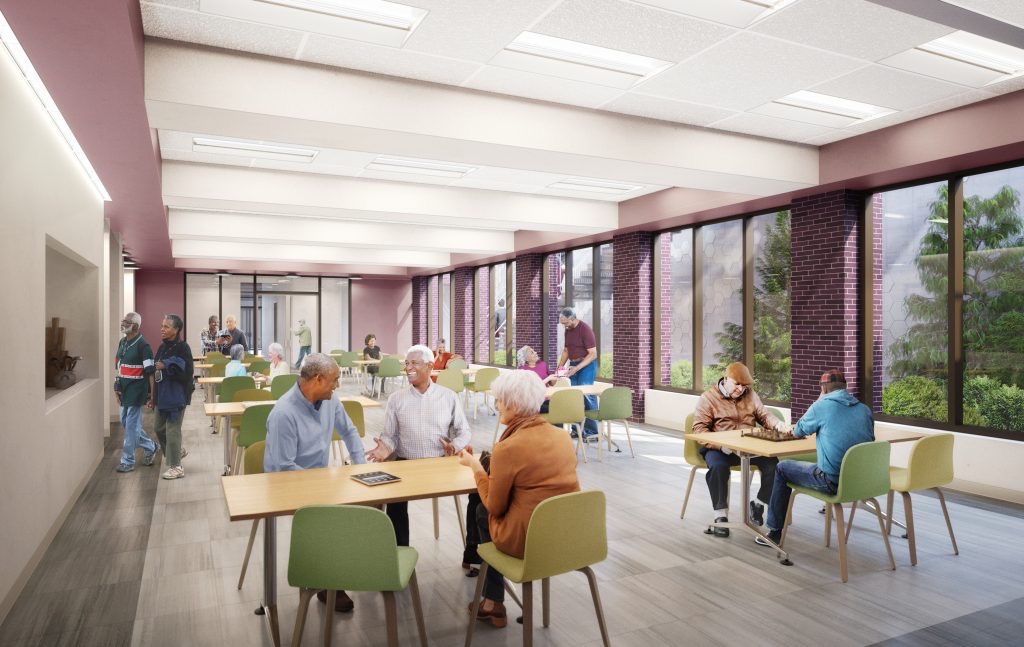 HELP Crotona Senior Housing by SAGE and HELP USA; Rendering by Nightnurse; Images Courtesy of Magnusson Architecture and Planning
On January 14, the AIANY Design for Aging committee was pleased to host Latisha Millard-Bethea, Director of Human Services, NYC Housing Initiative for SAGE and Jorge Chang, AIA, Partner, Urban Architectural Initiatives (UAI) on an important and timely discussion focused on racial diversity, equity and inclusion in senior housing, moderated by Roberta Washington, FAIA, Founding Principal, Roberta Washington Architects.
As part of the AIA’s Call to Action on Anti-Racism, this panel offered insights into what role race has in senior housing in NYC (and beyond). Topics included: Is not-for-profit or qualified-income senior housing more (or less) racially integrated than other housing in a given neighborhood/area? Are there any architectural design factors in senior housing where unconscious racial bias might come into play? What have architects for senior housing learned from the prospective tenants about their unique needs? Is there a “sweet spot” for number of residents that creates a rich, diverse community in senior housing?
During the panel, UAI’s senior housing programs and projects were presented. Stonewall House, SAGE’s first LBGT inclusive project located in Fort Greene, was also introduced and discussed. In case you missed it, stay tuned for a video of the event with extensive notes posted to this site in a few weeks.
-
November 17, 2020
![Image Courtesy of AIANY]() Image Courtesy of AIANY
Image Courtesy of AIANYOn November 11, the AIANY Design for Aging and AIANY Woman in Architecture committees were pleased to host Akiko Kyei-Aboagye, AIA, LEED AP, Principal, Urban Architectural Initiatives, Rachel Simpson, AIA, LEED AP BD+C, Senior Associate, Magnusson Architecture and Planning, Laura Mascuch, Executive Director, The Supportive Housing Network of New York, Takisia L. Whites, Director of New Initiatives and Underwriting, Robert Sanborn Development; Principal and Founder, Urban Impact Capital Partners, and Emily Lehman, Assistant Commissioner, Division of Special Needs Housing, NYC Department of Housing Preservation & Development on an important and timely discussion focused on design excellence in affordable and supportive housing in New York City, moderated by Jen Stencel, AIA, LEED AP, Associate Principal, Magnusson Architecture and Planning.
It was an inspiring presentation and discussion of how shared values lead the way to realizing healthy and affordable housing that will have a lasting impact. Leaders representing the architect, client, and public agencies demonstrated how close collaboration is essential in providing access to housing—a fundamental right—to our most vulnerable communities. As the industry works to respond to a health and economic crisis, we explored strategies to provide safe, equitable, and sustainable housing. In case you missed it, you can view a complete replay here.
-
August 5, 2020
On July 27, the AIANY Design for Aging and AIANY Interiors committees were pleased to host Jenny Lay-Flurrie, Chief Accessibility Officer, Microsoft; Elise Roy, MS, JD, UX Accessibility and Inclusion Lead, Google; Joel Sanders, FAIA, Principal, Joel Sanders Architect and MIXdesign; David Serlin, Associate Professor of Communication and Science Studies, University of California San Diego, on an engaging and informative virtual panel moderated by Anita Cooney, Dean, School of Design, Pratt Institute.
To commemorate the 30th anniversary of the signing into law of the Americans With Disabilities Act, we look to the future. The presentations addressed the question: What is the future of accessible design? The discussion was a wide-ranging exploration of new models of practice, expanded constituencies, and broader definitions of what inclusive design could be. It recognized issues of neurodiversity, responsive technology, and occupying/claiming space.
In case you missed it, you can view a complete replay here.
-
August 4, 2020
![Photo: Feng Cheng Tang]() Photo: Feng Cheng Tang
Photo: Feng Cheng Tang![Photo: Feng Cheng Tang]() Photo: Feng Cheng Tang
Photo: Feng Cheng Tang![Photo: Feng Cheng Tang]() Photo: Feng Cheng Tang
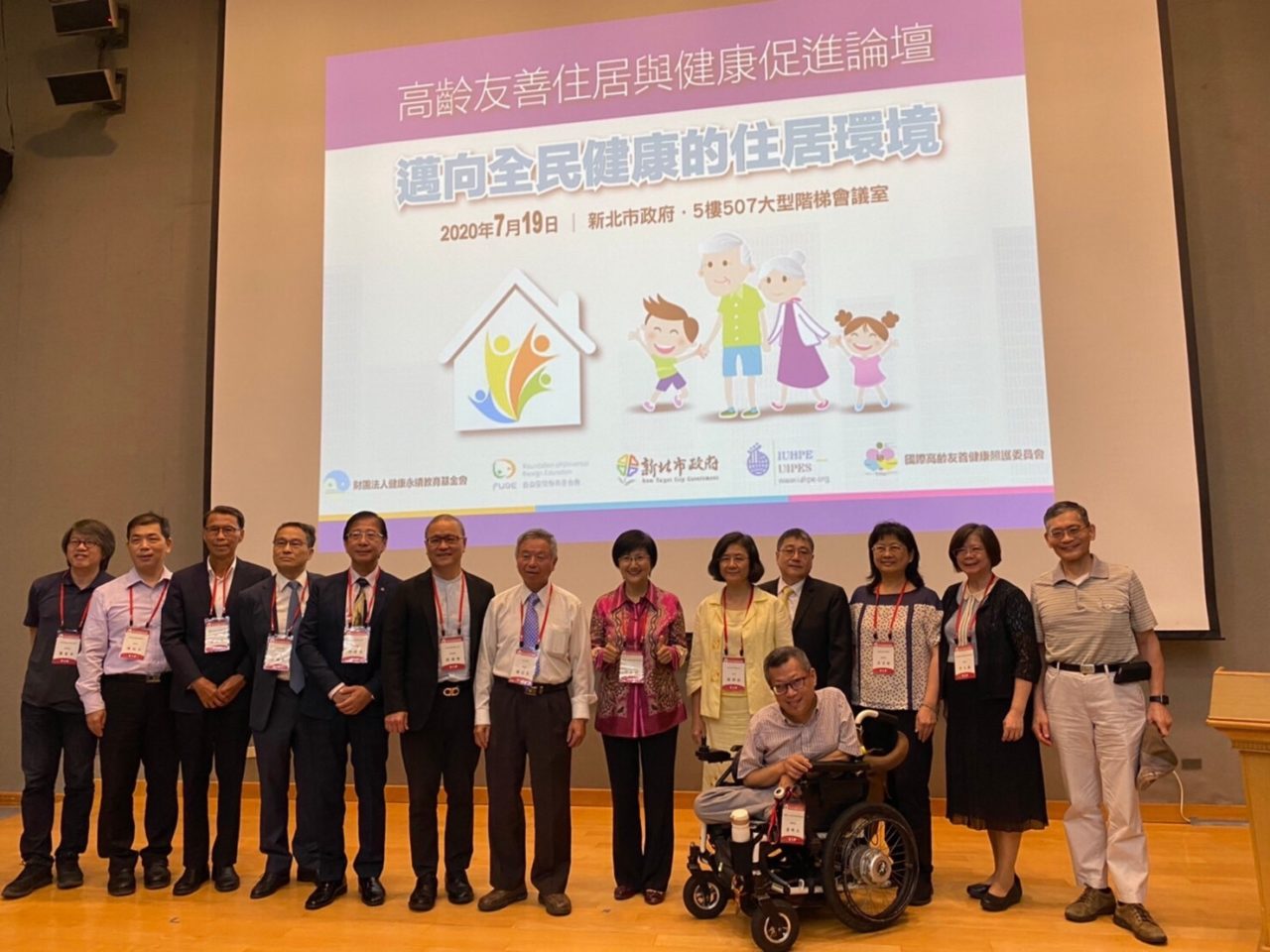
Photo: Feng Cheng TangOn Sunday, July 19, AIANY Design for Aging Committee was invited to participate in a forum in Taiwan on age-friendly housing and health promotion called “Towards Healthy Residential Environments for All.” It was co-organized by Health & Sustainable Development Foundation and Foundation of Universal Design Education in collaboration with the International Union for Health Promotion & Education (IUHPE). The program aimed to shape a common ground on what matters in healthy aging and what to consider in developing age-friendly housing.
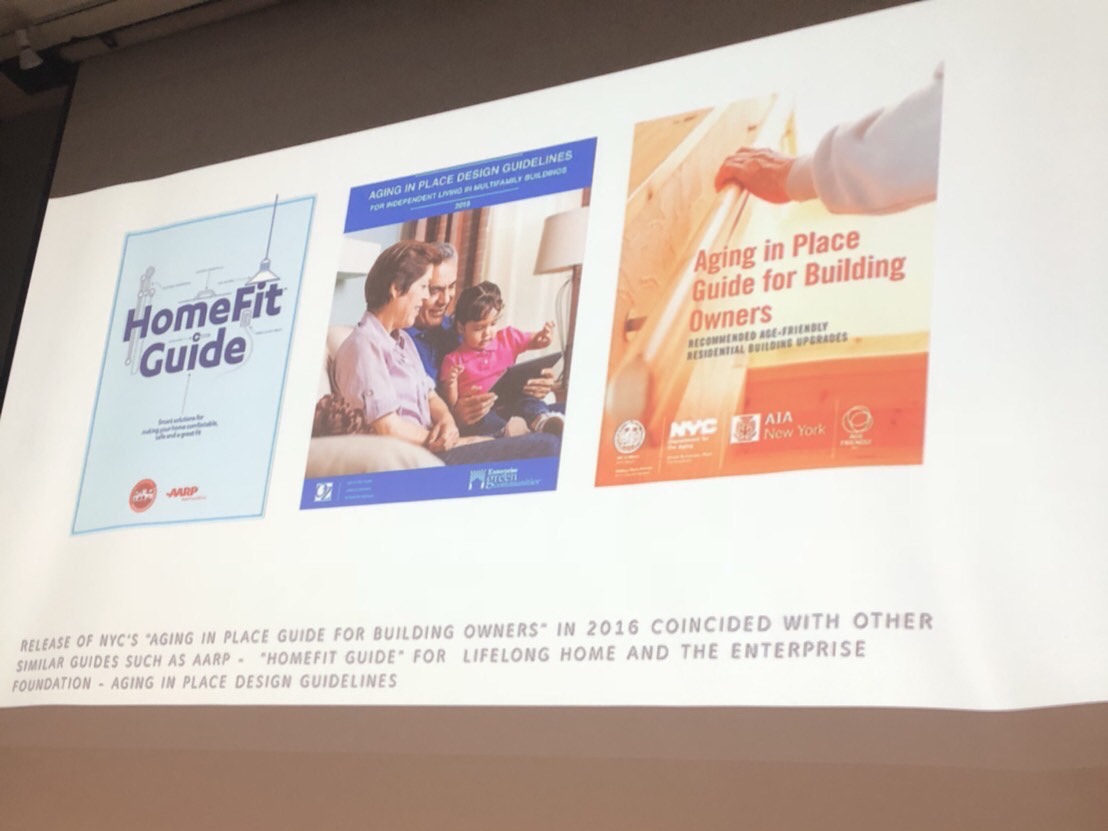
Susan Wright, AIA, from the AIANY Design for Aging Committee shared her insight of independent living and age-friendly housing in the panel. She presented a case study of seven recent examples of housing an aging population in New York City, aging in place renovation and technology. She also demonstrated the Aging in Place Guide for Building Owners collaborated by the NYC Department for the Aging and AIANY Design for Aging Committee. Her presentation triggered many discussions and provided a different view and approach for the audiences in Taiwan. (Watch both presentations below!)
Other presenters, including expertises from the local government agency, architectural industry, health care providers and educational institutes, talked about the public health focused strategies. They’ve also shared progresses, including successes and failures, in age-friendly housing initiatives in Taiwan. Around 200 participants attended this full day program to explore many more possibilities to support active aging, social participation and health equity.
-
March 18, 2020
On March 3, the AIANY Design for Aging and Architecture for Education committees were pleased to host Arthur Chang, AIA, Senior Project Architect, NADAAA; Matthew Kaplan, PhD, Professor, Intergenerational Programs and Aging, Penn State University; Margaret Sullivan, Principal, Margaret Sullivan Studio; Joyce Weil, PhD, Curriculum Manager, Older Adults Technology Center (OATS), on an engaging and informative panel at the Center for Architecture moderated by Miriam Sitz, Senior News & Web Editor, Architectural Record.
Older adults are the fastest growing age group in New York City, and children 18 and under account for 25% of the city’s population. Mounting research shows that older adults and adolescents benefit from intergenerational educational activities. With a focus on the role of architectural design in fostering these activities, this panel brought together diverse professionals presenting and discussing their work in the field including public libraries, intergenerational communities, university-level research, and programs helping adults learn technologies to live better in the digital age in an intergenerational setting.
“(The panelists) each offered a unique and thoughtful perspective which collectively made for an incredibly engaging event,” says Frances Fox, AIA, co-chair of Committee for Architecture for Education. “The audience was absorbed and engaged and really got a lot of new and important information,” says Brian Pape, AIA, co-chair of Design for Aging Committee. In case you missed it, you can view a complete replay here. -
February 5, 2020
On November 26, the AIANY Design for Aging and Housing committees were pleased to host Carole Agate, Senior Resident of Cornerstone Cohousing, from Cambridge, MA; Grace Kim, AIA, Founding Principal, Schemata Workshop, from Seattle, WA; and Jim Leach, President, Wonderland Hill Development Company (WHDC), from Boulder, CO, on a panel at the Center for Architecture moderated by Patrick B. Han, AIA, Principal, Office ESC from New York, NY.
Bringing together perspectives from tenants, designers and developers across the country, this panel explored examples of co-housing for seniors in urban environments and stressed the role of design in discussions about housing alternatives for seniors. The program also presented how co-housing can address accessibility and sustainability, and how these spaces can enhance benefits to elders.
In case you missed it, you can view a complete replay here.
-
September 18, 2019
![Tristan Porto, RLA, talked about Designing for Urban Seniors in NYC Parks. Photo: Brian Pape.]() Tristan Porto, RLA, talked about Designing for Urban Seniors in NYC Parks. Photo: Brian Pape.
Tristan Porto, RLA, talked about Designing for Urban Seniors in NYC Parks. Photo: Brian Pape.On April 23, the AIANY Design for Aging and Public Architects Committees were pleased to host Tristan Porto, RLA, Senior Project Manager, Capital Projects, NYC Department of Parks and Recreation, Britt Zuckerman, RLA, Senior Associate, Dirtworks Landscape Architecture and Bryan Patrick Ross, Senior Associate, Center for Active Design on a panel moderated by Richard Rosen, AIA, Principal, Perkins Eastman at the Center for Architecture.
The focus was on public open space design that meets the health and recreational needs of urban seniors as they age-in-place in their neighborhoods. Recent case studies of innovative design approaches in parks, the exterior spaces of civic buildings such as libraries and police stations, streets, and public plazas were presented.
-
August 9, 2018
Tuesday, 05.01.18 | 6pm to 8pm
Location: Hafele Showroom, 20 West 22nd St
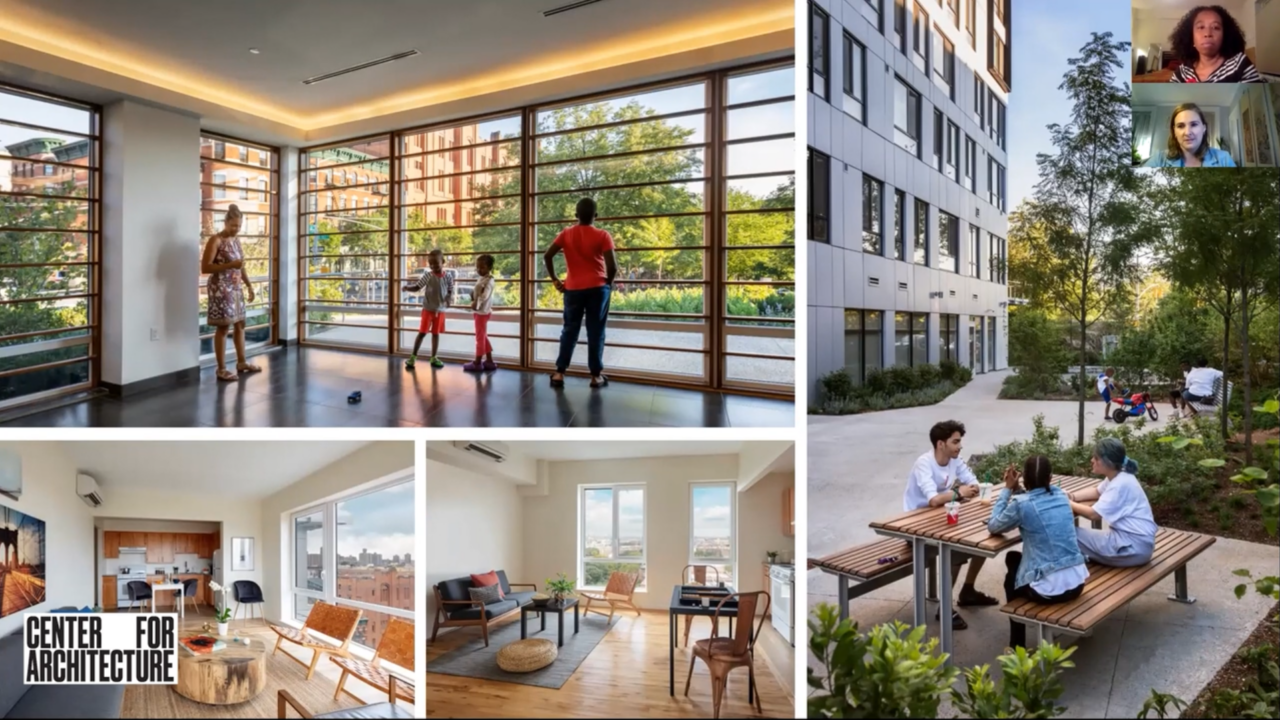
AIANY Design for Aging Committee and the AIANY Committee on the Environment (COTE) presented a program to provide an update on senior housing in New York City, specifically as it relates to accessibility and sustainable design.
The panel brought together perspectives and expertise from architecture, real estate development, municipal government, and accessibility consulting. Panelists offered insights into trends for senior housing, both new and re-purposed. They also examined trends in housing and communities for the elderly and those aging-in-place, and highlighted amazing designs for NYC seniors housing that are also examples of excellent environmental and energy-efficient design. The focus was on the latest developments and future directions in housing and communities for NYC’s aging population; and on outstanding retrofit projects that have re-purposed existing buildings into housing for the elderly and the disabled, while attaining superior levels of energy/environmental performance.
Case studies of exemplary NYC buildings were presented, along with the criteria and goals to which they have been developed.Panelists:
Rich Rosen, AIA, LEED AP, Principal, Perkins Eastman
Jack Esterson, Design Partner, Think! Architecture+Design
Isaac Henderson, Development Director, L+M Development Partners
Kleo J. King, Deputy and General Counsel, Mayor’s Office for People with DisabilitiesModerator:
Steven Winter, FAIA, Founder and Chairman, Steven Winter Associates -
November 10, 2017
Wednesday, 11.01.17 | 6pm to 8pm
Location: Center for Architecture
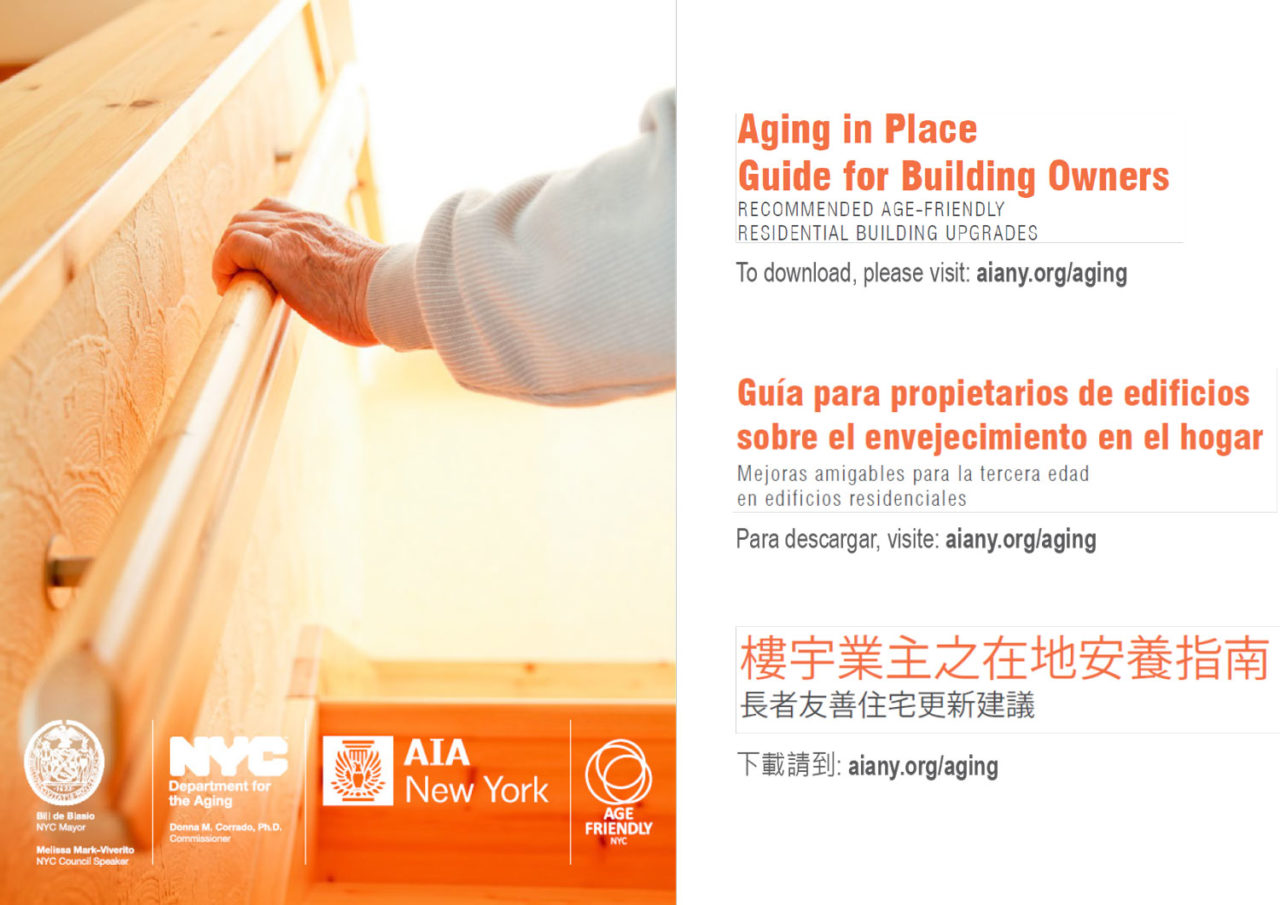
On 11.01.17, the committee celebrated the creation and publication of translated versions, in Spanish and Mandarin, of the Aging in Place Guide for Building Owners, which was created in 2016 by the NYC Department for the Aging with the assistance of AIANY. A panel discussion will review how different countries and cultures are addressing the needs of their senior populations, which in many cases are increasing as a proportion of total residents. Hear from local and international professionals on current efforts in the US, Asia and Europe. Is there a changing awareness on the part of governments and architects on the meaning and importance of universal design? What are the benefits of aging in place, both for seniors and for society as a whole?
English: Download PDF
Spanish: Download PDF
Mandarin: Download PDFSpeakers
Feng Cheng Tang, Chair, Foundation of Universal Design Education, Taiwan
Robert Wong, Project Development Director, Hong Kong Sheng Kung Hui Welfare Council Limited
Leah Kreger, RA, NYC Department for the AgingModerator
John O’Meara, President, HEWI Inc.