



by: Harry Abrams and Sally Lape
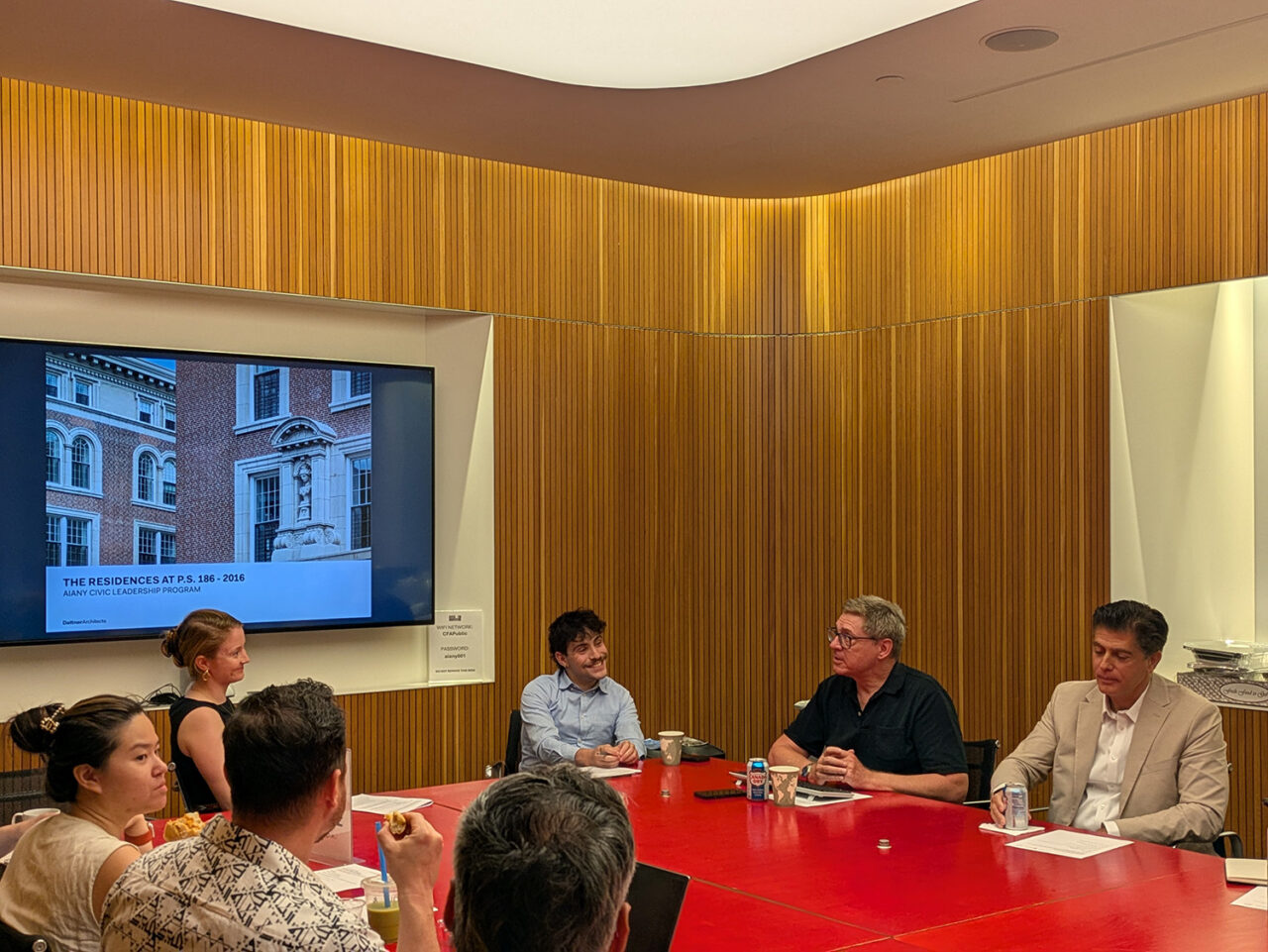
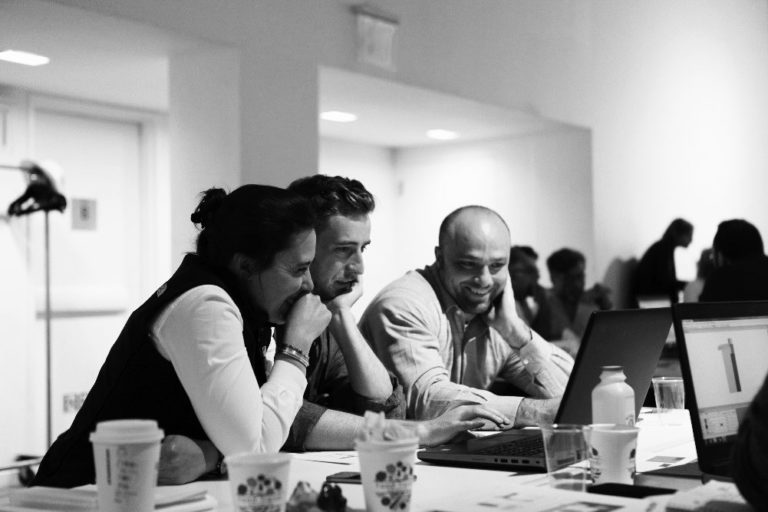
The development of housing, particularly affordable housing, is often met with strong public opinion, and can play a deep-seated role in community perspectives, allowing existing buildings to serve their neighborhoods in new ways. Harry Abrams and Sally Lape’s 2026 AIANY Civic Leadership Program development session explored projects that uniquely affect the communities they serve through the overlapping lenses of affordable housing and adaptive reuse, utilizing two relevant and contrasting case studies to frame the discussion.
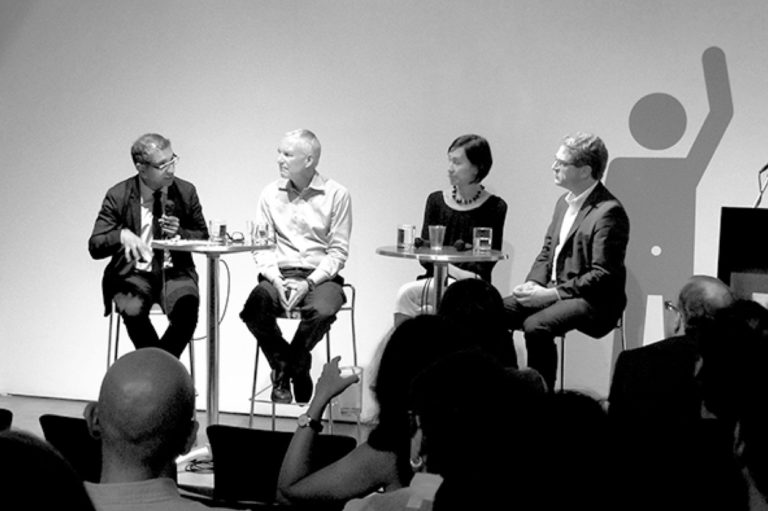
Lape and Abrams began by delving into the public’s perspective on affordable housing and the transformation potential that adaptive reuse brings. The panelists, Daniel Heuberger of Dattner Architects and Eugene Flotteron of CetraRuddy, then introduced the two case study projects. The first project, The Residences at PS 186, is located in a previously abandoned school, where Dattner Architects worked with the Boys & Girls Club of Harlem to develop 78 affordable units. The second project is CetraRuddy’s transformation of a former downtown office building into the SoMA Residences at 25 Water, the city’s largest completed office-to-residential conversion to date, containing 1,320 units, 25% of which are affordable.
Flotteron and Heuberger explored the unique constraints and opportunities surrounding each project through a discussion of the common restrictions and benefits of developing affordable housing, the decision to pursue adaptive reuse at each site, and the role of new housing in two contrasting neighborhoods. The Residences at PS 186’s H-shaped floor plan allowed for ample lighting to enter the units on all sides, and the redevelopment of a derelict site ensured the preservation of a piece of Harlem’s history. The initial use of 25 Water as an office building permitted the conversion to exceed typical maximum residential FAR requirements and exempted the building from more formal community engagement processes. The carving of two lightwells into the center of the building was a vital step in meeting building codes and providing a pleasant living space for future occupants.
To see the transformation of 25 Water firsthand, session participants then met with GFP Real Estate’s Greg Ericson on site. Building on Flotteron’s overview, Ericson highlighted the challenges of adapting wide office floorplates and discussed how the new 467-m tax exemptions are impacting the feasibility of office-to-residential conversions. He then led the group to upper levels where additional residential space was created by reclaiming square footage from the lightwells. The tour continued to a unit on a lower floor, illustrating the challenges of transforming wide office floorplates and small windows into comfortable living space, before concluding at the below-grade amenity levels, where residents have access to a sauna, bowling alley, and pool.
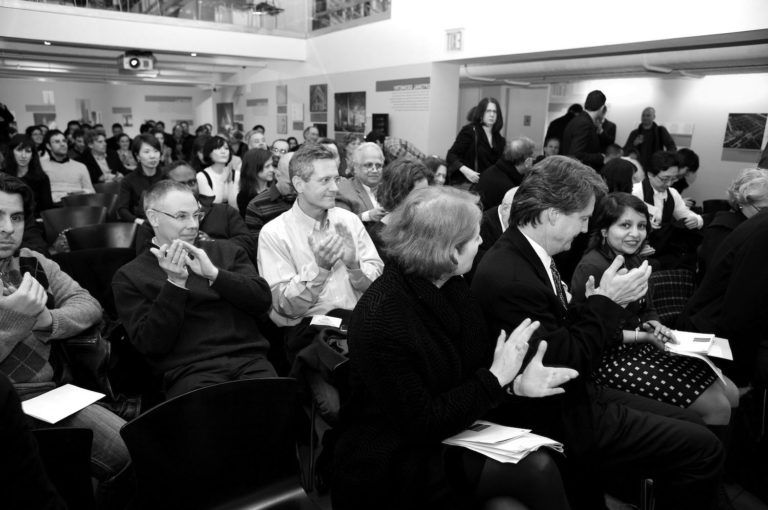
The development session provided a unique look at the possibilities of adaptive reuse in urban contexts, while highlighting the role of community engagement in designing spaces that serve the public. A central question raised by Lape and Abrams was how community engagement influences the success or failure of an adaptive reuse project or affordable housing development. However, the panelists provided key insights about how these projects are often most significantly shaped by legislative requirements and financial constraints, which can ultimately determine their overall viability. Though the featured projects in question took different paths in their development, both succeed in providing their communities with reimagined assets.