




by: Sherry Aine Te & Chenyan Wang
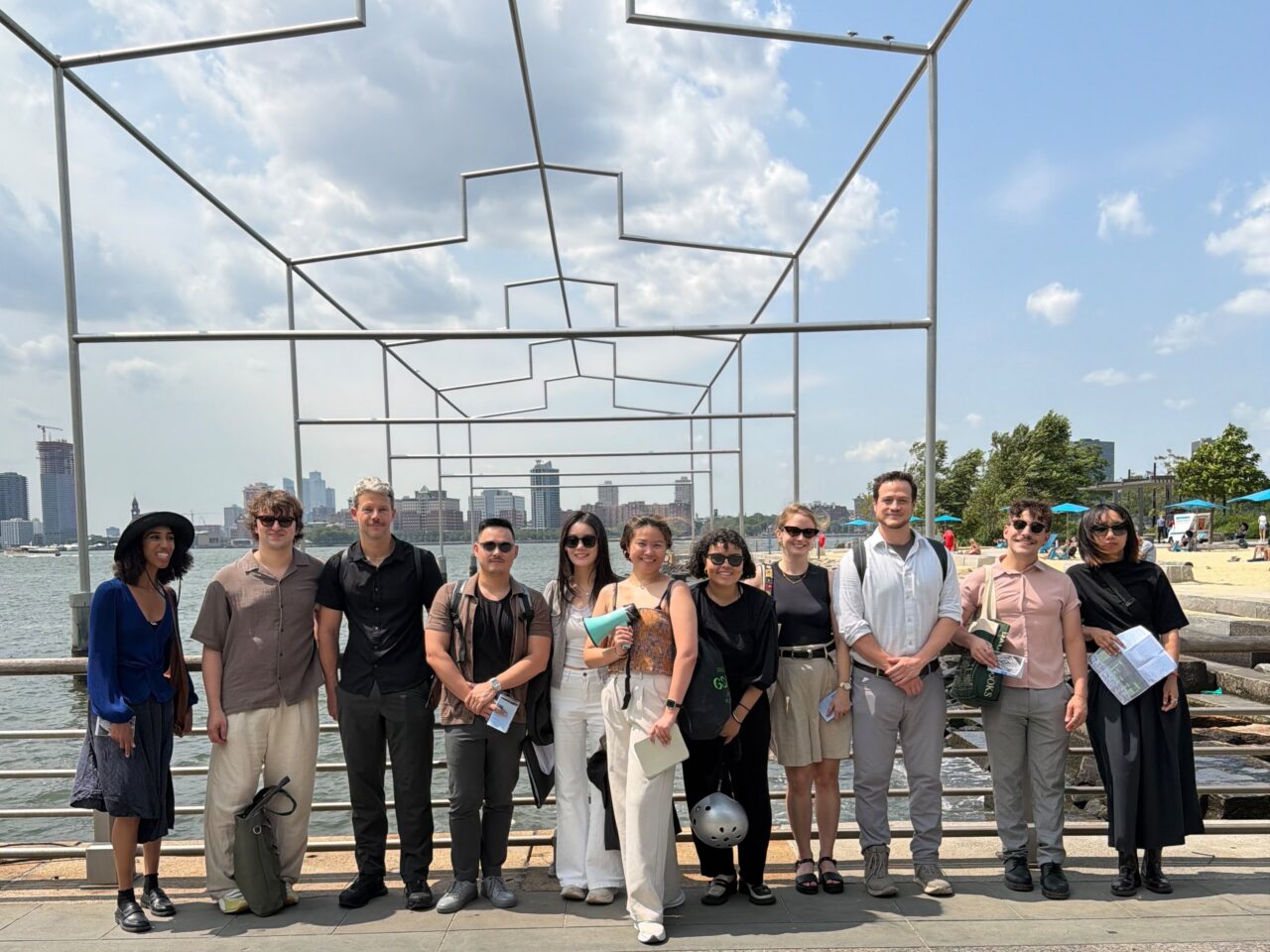
New York City’s waterfronts are, simultaneously, ecological systems, public spaces, development sites, transportation and industrial corridors, and critical infrastructure. In their 2026 AIANY Civic Leadership Program development session, Sherry Aine Te and Chenyan Wang explored how the city shaped its shoreline toward an ever-changing future, pairing a walking tour of the Hudson River waterfront with a moderated panel on how waterfront projects move from public vision to implementation.
The session grew from a shared interest in how waterfront projects advance beyond ambitious plans toward on-the-ground delivery. As climate adaptation, housing needs, public access, industrial uses, and stewardship compete for the same shoreline, development requires collaboration among agencies, designers, developers, and communities. Reflecting on how waterfront development can be turned into lasting public value, three themes anchored the session:repair and resilience, community and development, and public-private collaboration.
The day began with a walking tour along the Hudson River, from Pier 52 and Gansevoort Peninsula, to Pier 40, using the shoreline as a record of shifting industry, infrastructure, ecology, and public life. Historic images were presented and set against present-day conditions, tracing the shift from a once-intensive working waterfront to a landscape of recreation and ecology. At Pier 46, remnants of former pier structures demonstrated how obsolete infrastructure can acquire new ecological value; Pier 45’s history of informal use and role in LGBTQIA+ community life showed how public space takes on meaning beyond its intended design; at Pier 40, the mix of recreation, maritime activity, parking, and aging infrastructure raised questions about adaptive reuse and stewardship.
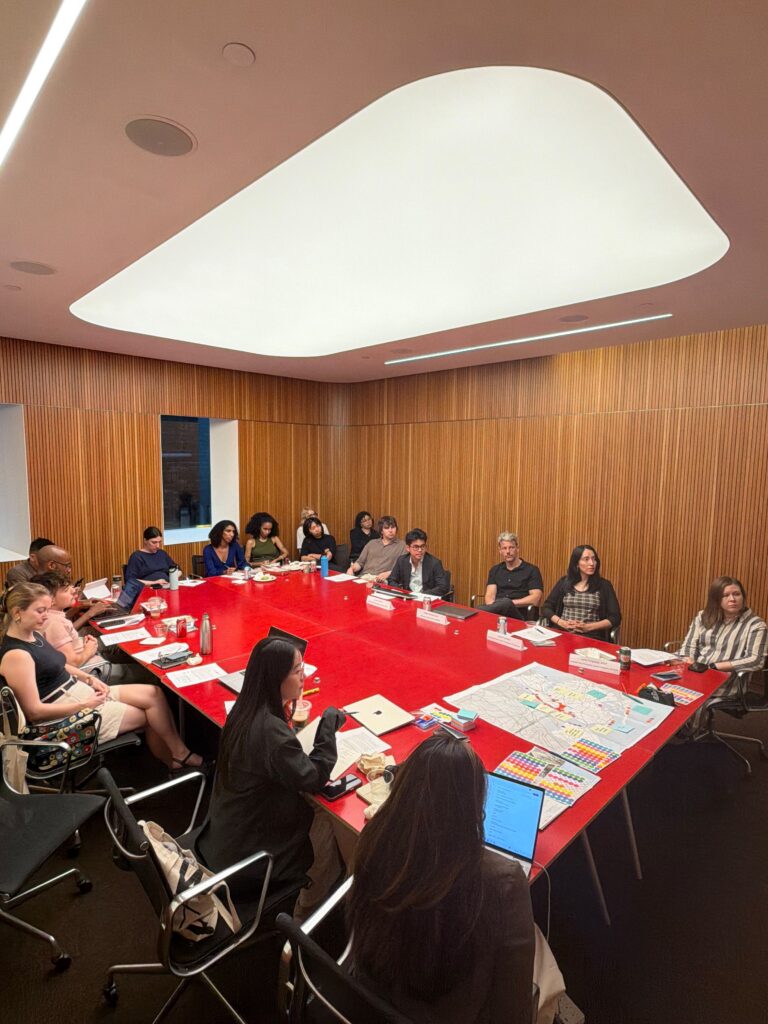
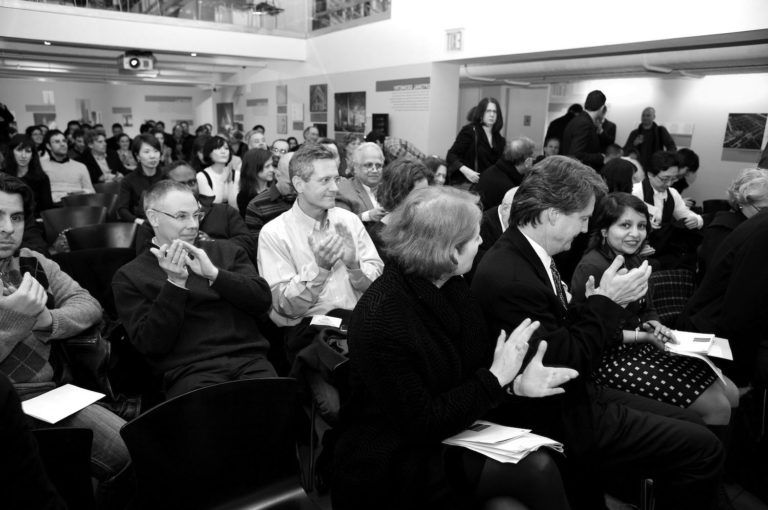
Civic Leadership Program, Development Session 3 at the Center for Architecture.
Back at the Center for Architecture, Te led an interactive mapping exercise in which participants marked the waterfronts they use most and hope to visit, shifting the conversation to how New Yorkers actually encounter and value the city’s shoreline.
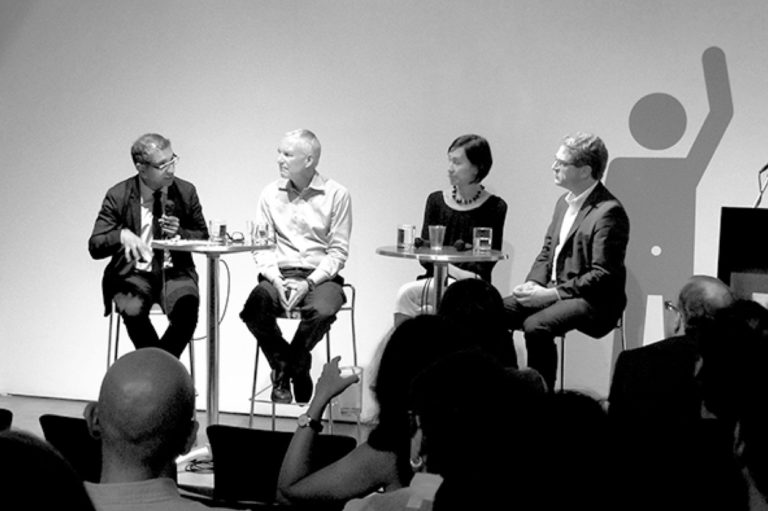
The afternoon panel emphasized the multi-hyphenate nature of waterfront development, bringing together four practitioners from the public and private sectorswith backgrounds in architecture, planning, real estate, and government. Panelists shared projects at various scales,from the city-led Bobby Wagner Walkway reconstruction,underscoring the city’s role in infrastructure repair, presented by Lena Ferguson, AICP, of NYCEDC, to sea-level-rise resilience work in University Heights, the Bronx, and the public impact of the East Side Coastal Resiliency project, presented by Laura Frances of ONE. Rutger Huiberts, AIA of MVRDV, presented on the importance of the waterfront to the city’s identity, using Cleveland’s lakefront development plan’s mission to draw residents to its downtown as an example. With civic leaders navigating more involvement in public discourse, the cohort learned from Lorenzo Obias of DCAS about his career trajectory and experience in the private sector and in city government. Obias also explored howwaterfront development stimulates innovation through the affordable housing development in the New Stapleton Waterfront, which will be the largest mass timber campus in New York City upon completion.
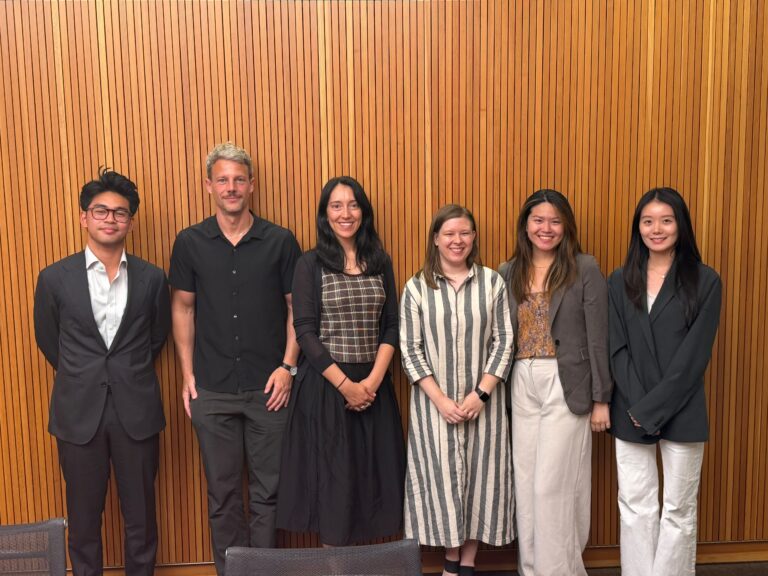
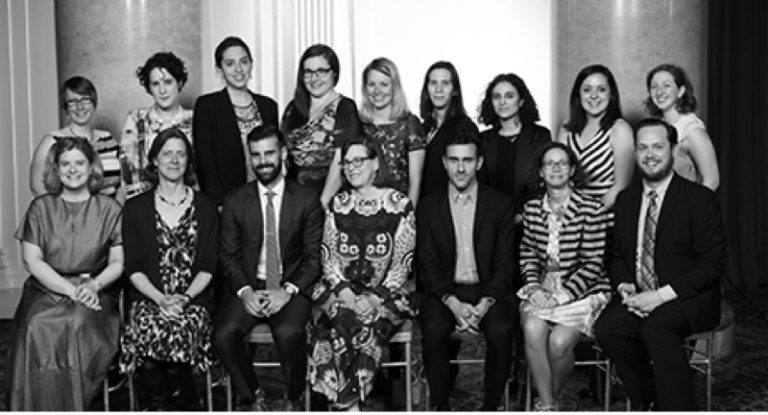
Civic Leaders and panel speakers, from left to right: Lorenzo Obias, Rutger Huiberts, Laura France, Lena Ferguson, Sherry Aine Te, Chenyan Wang.
The projects and perspectives discussed throughout the day showed how physical outcomes are shaped by capital investment, land-use policy, environmental risk, community priorities, and the responsibility of maintaining public infrastructure over time. A question raised by Wang lingered: how do you plan for a shoreline whose plans may take decades to implement, when climate conditions, market cycles, and community needs cannot yet be known—and which elements of a plan need to be fixed early, and which left open? Panelists emphasized frameworks that set clear long-term goals while staying flexible to shifting conditions and funding realities.
As New York continues to reinvest in its shoreline, the challenge ahead is not only expanding access to the waterfront, but determining how its ecological, social, and economic roles can continue to coexist.
Future Engagement: The conversation continues through Dynamic Edges NYC, which brings together session documentation, resources, and the waterfront pamphlet.