




by: Linda G. Miller




Sotheby’s Opens New Headquarters at the Breuer Building
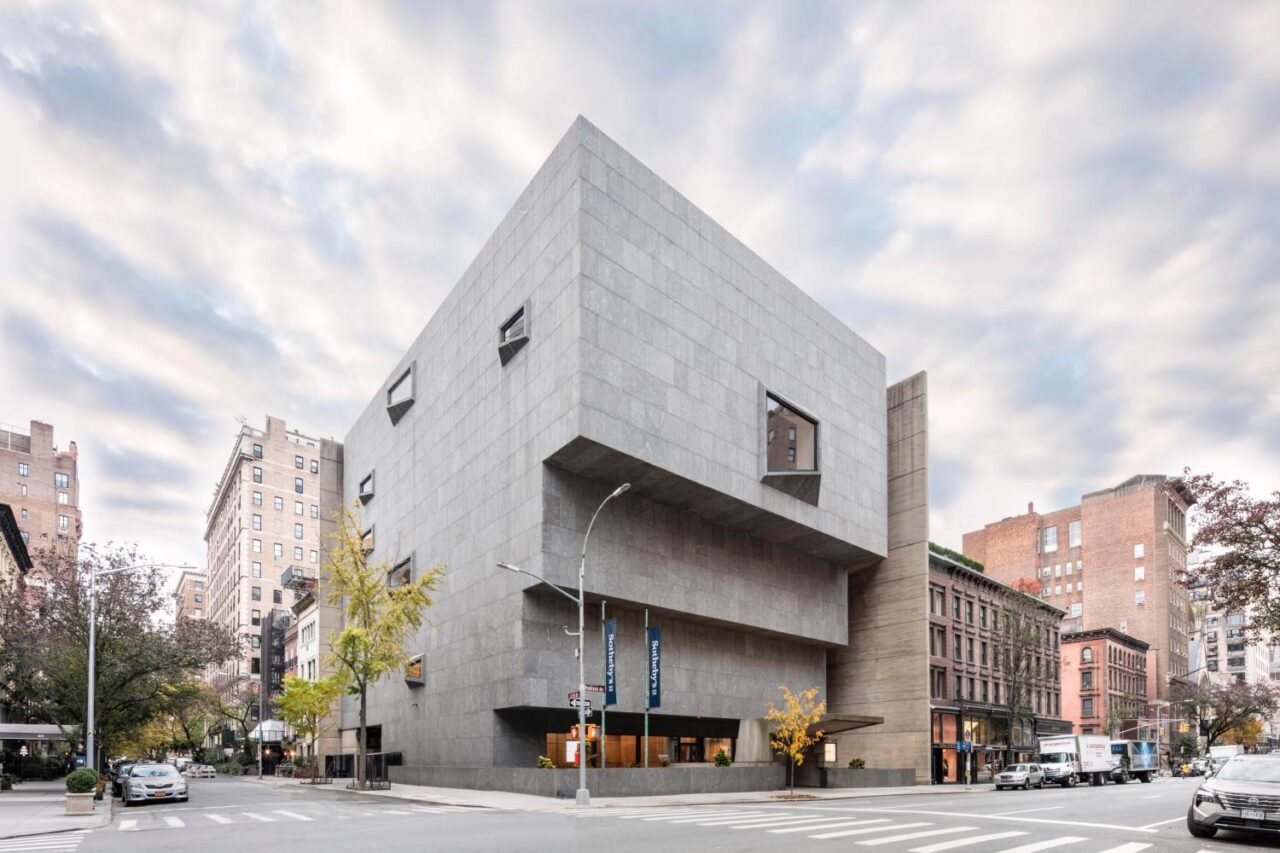
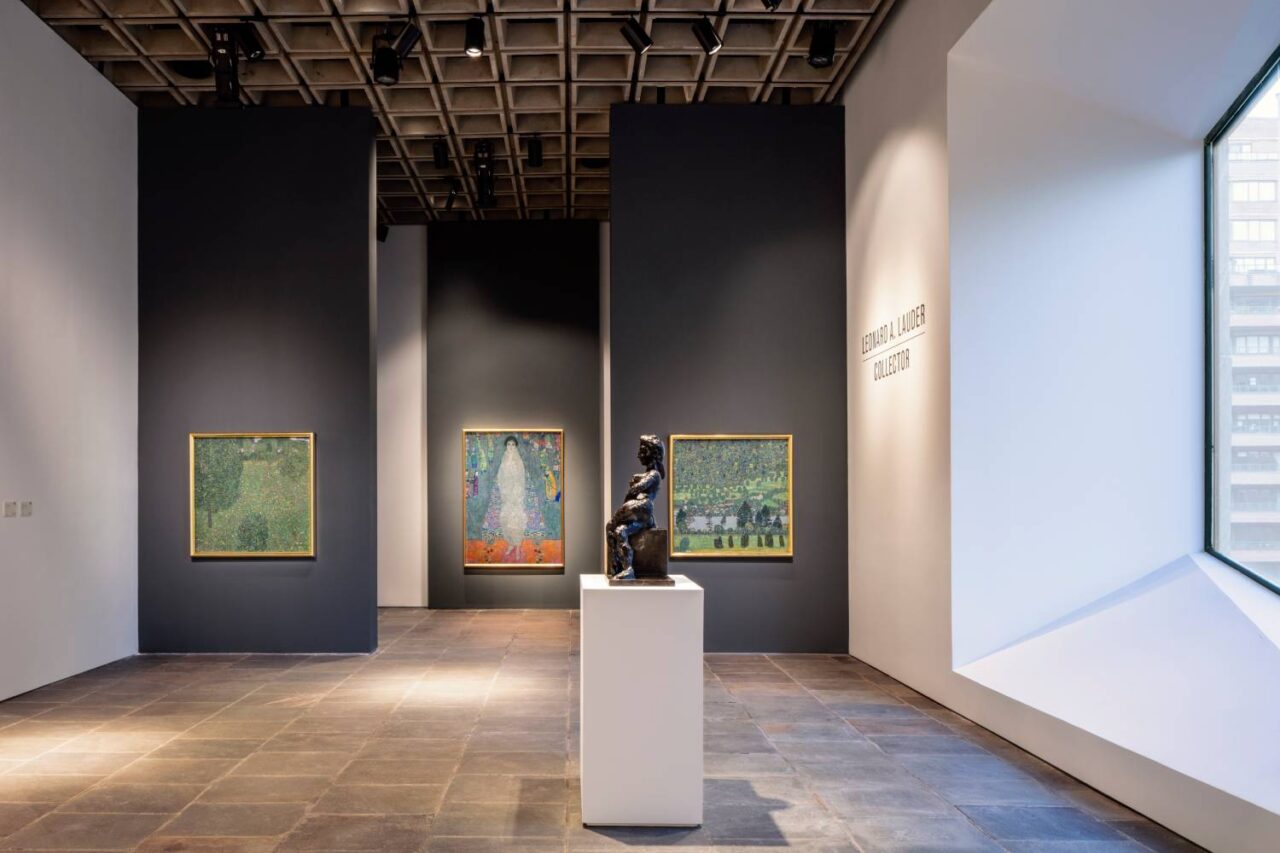
Sotheby’s has opened its new global headquarters at 945 Madison Avenue and 75th Street in what is known as the Breuer Building. Herzog & de Meuron, in partnership with PBDW Architects, adapted the building for the auction house. The project balances both innovation and preservation, ensuring that Sotheby’s new location continues to be a celebrated architectural masterpiece. Designed by Marcel Breuer and completed in 1966 as the third home of the Whitney Museum of American Art, the building subsequently was home to a branch of the Metropolitan Museum of Art and called the Met Breuer, and finally for The Frick Collection. In examining the structure as originally conceived in the 1960s, the design team aimed to reinstate the architect’s original vision while adapting it to the needs of Sotheby’s and the surrounding community. All spaces underwent careful updates that respect their historical resonance while offering opportunities for transformation in line with the building’s new use. These adaptations include enhanced exterior lighting that revives the building’s theatrical presence on Madison Avenue; a second-floor gallery that can transform into a sales room and can also be used for talks and events; removal of office spaces; reversion to original gallery floor plans; and new lighting and climate control. The inaugural season includes blockbuster exhibitions, which are free and open to the public. The building is in the Upper East Side Historic District, a New York City and national historic district, and the exterior and parts of the interior (lobby, basement, and main stairway interior) are New York City-designated landmarks.
Studio Museum in Harlem Unveils New Home
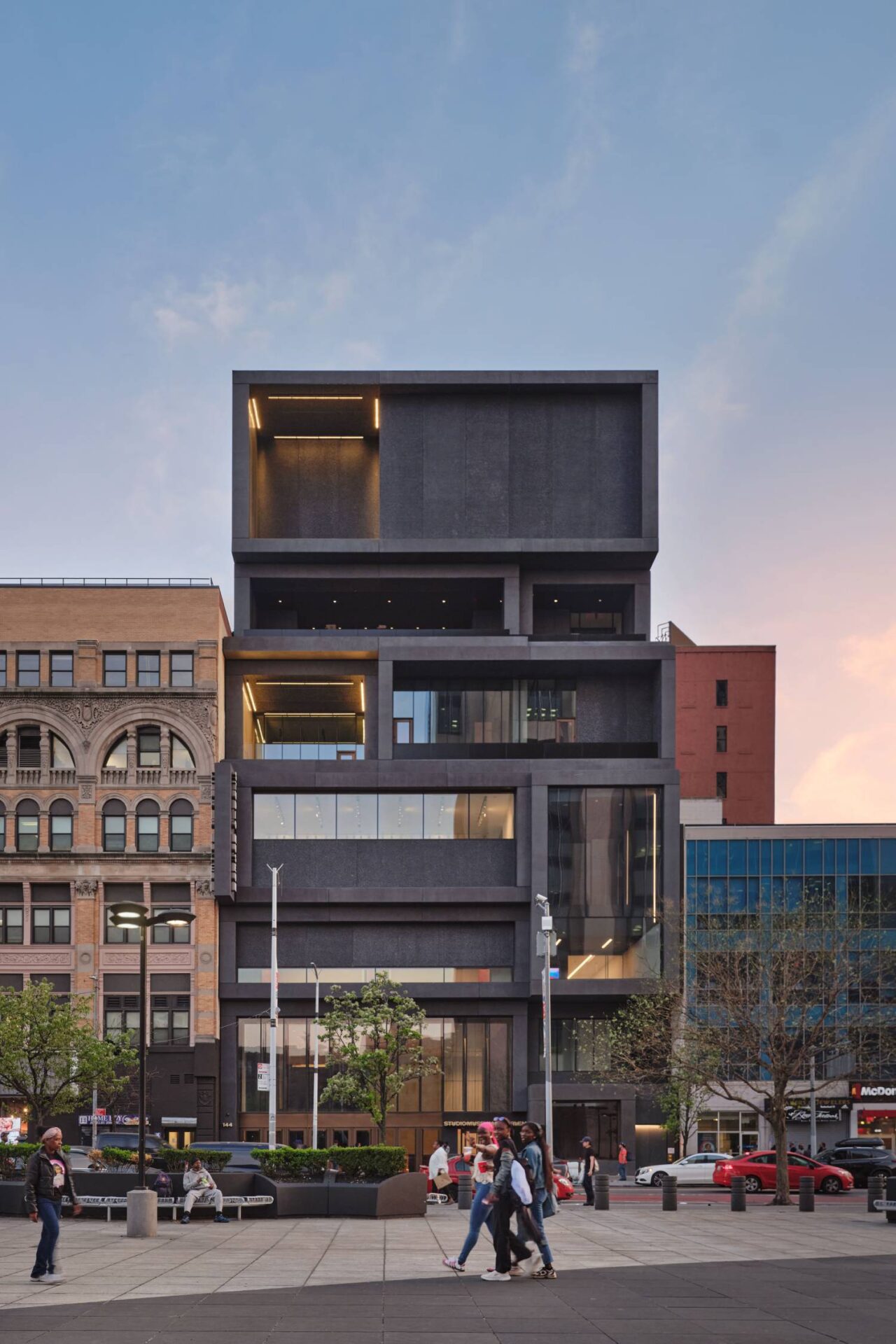
The Studio Museum in Harlem has reopened in its first purpose-built home designed by Adjaye Associates, with Cooper Robertson as executive architect. The museum continues to act as a cultural bridge connecting Harlem’s roots to the global art world. Since its founding in 1968, the museum has served as a forum for artists of African descent. The Museum’s permanent collection represents more than 800 artists, spans over 200 years of history, and includes nearly 9,000 works of art in a variety of media, including installations, paintings, performance, photographs, sculptures, textiles, time-based media works, and works on paper. To inaugurate its new home, the museum presents new commissions by artists Camille Norment (Untitled (heliotrope)) and Christopher Myers (Harlem Is a Myth).
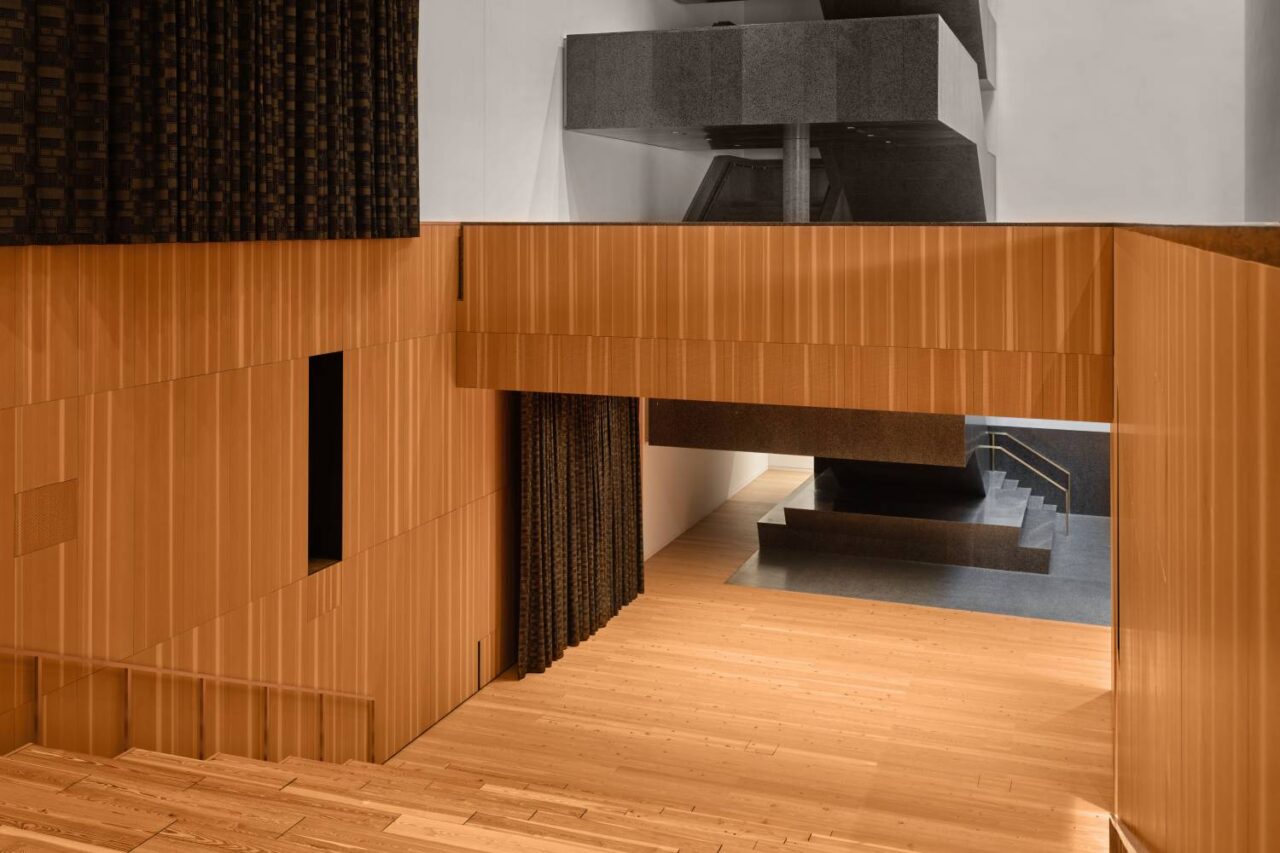
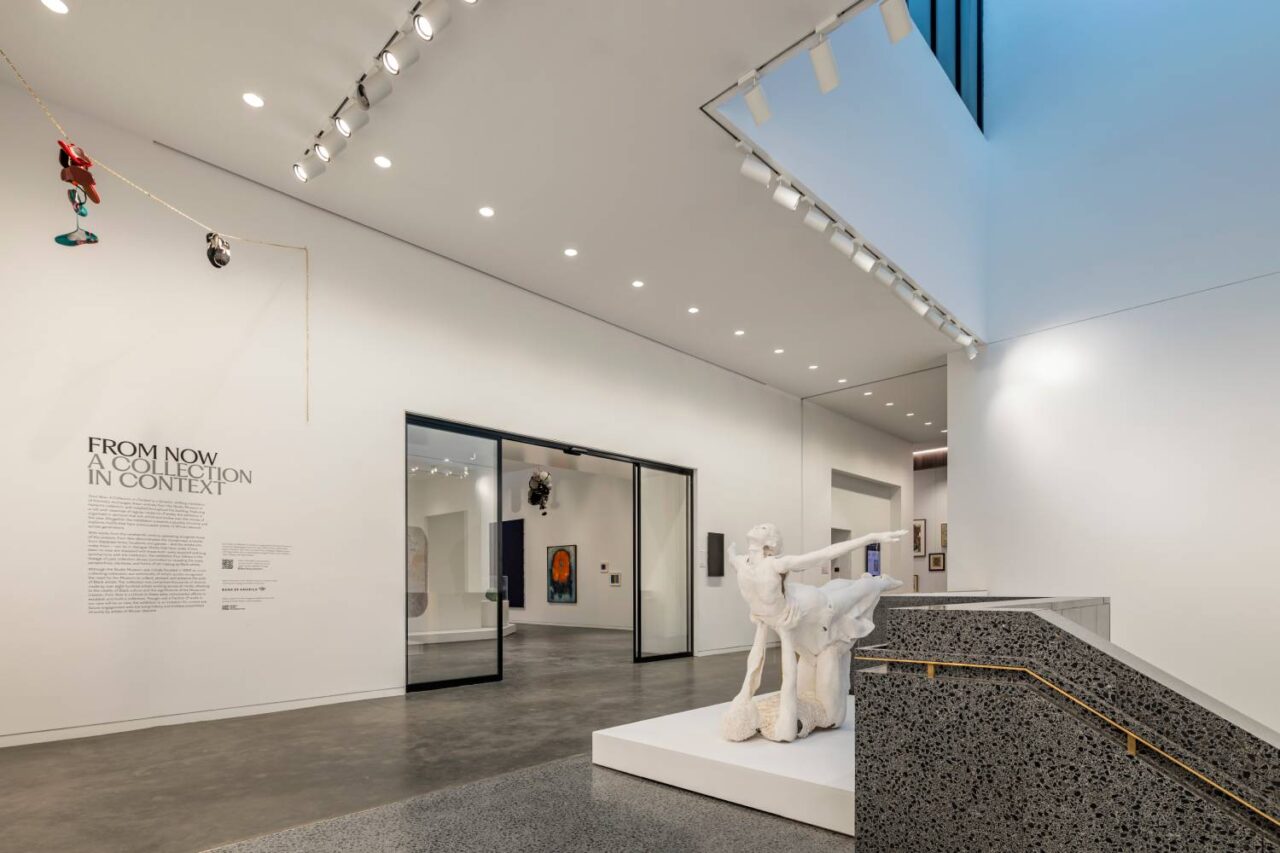
Built on the site of the previous museum at 144 West 125th Street, the 82,000-square-foot space is set out over five floors and represents an increase of almost 50% in exhibition space, 50% exhibition gallery space, and 60% more space for public areas. The building’s porous sculptural façade of precast concrete with distinct sandblasted and polished finishes echoes the material of local buildings. Its composition of stacked and interlocking volumes was designed to mirror the rhythm of the neighborhood. Frames, apertures, and doorways appear across the façade, referencing Harlem’s streetscape while revealing glimpses of the activity within. Four external art niches provide spaces for sculpture installations. The arrival sequence begins in a light-filled lobby on the first and lower floors, defined by the reverse stoop—a stepped landscape of engineered timber chosen for its sustainability, warmth, durability, and acoustic performance, extends down into the heart of the museum. The reverse stoop functions as both a gathering area and a flexible event venue. A full-length acoustic theater curtain closes to transform the openness of the lobby into performance space, designed by Fisher Dachs Associates. The retail store, a project space for exhibitions and information desk are also on the first floor, as well as the loading dock, while the café and public amenities are on the lower level. A sculptural staircase clad in terrazzo rises from the lobby, connecting the lower level to the fourth floor with look at points along the way. Its form reinforces the building’s vertical rhythm, connecting floors both spatially and experientially. The corridor galleries on each floor and staircase from the fourth floor to the roof terrace on floor six, are crafted from precast concrete to match the floors, with a satin brass railing. The Museum’s exhibition journey is anchored by galleries on the second and third floors. A double-height white-walled vaulted gallery space creates a focal point for the display of works from the Museum’s collection. The expansive, high-ceilinged rooms of the South Galleries provide flexible settings for large-scale installations and rotating exhibitions. The Education Studio, set over the second and third floors, is equipped with advanced audio-visual technology and a flexible layout. It functions as both a classroom and an activity space, supporting workshops, discussions, and creative programs for all ages. The Artist-in-Residence Studio on the fourth floor embodies the spirit of making at the Museum’s core. An informal communal area and a reading room also occupy the fourth floor. Flexible space for program, meetings, and special events on the fifth floor leads out to the roof terrace, a public outdoor space, with landscape design by Studio Zewde, presents views across Harlem and Manhattan. The Museum was developed through a public-private partnership with significant investment from the City of New York.
First Phase of East Side Coastal Resiliency Project Complete
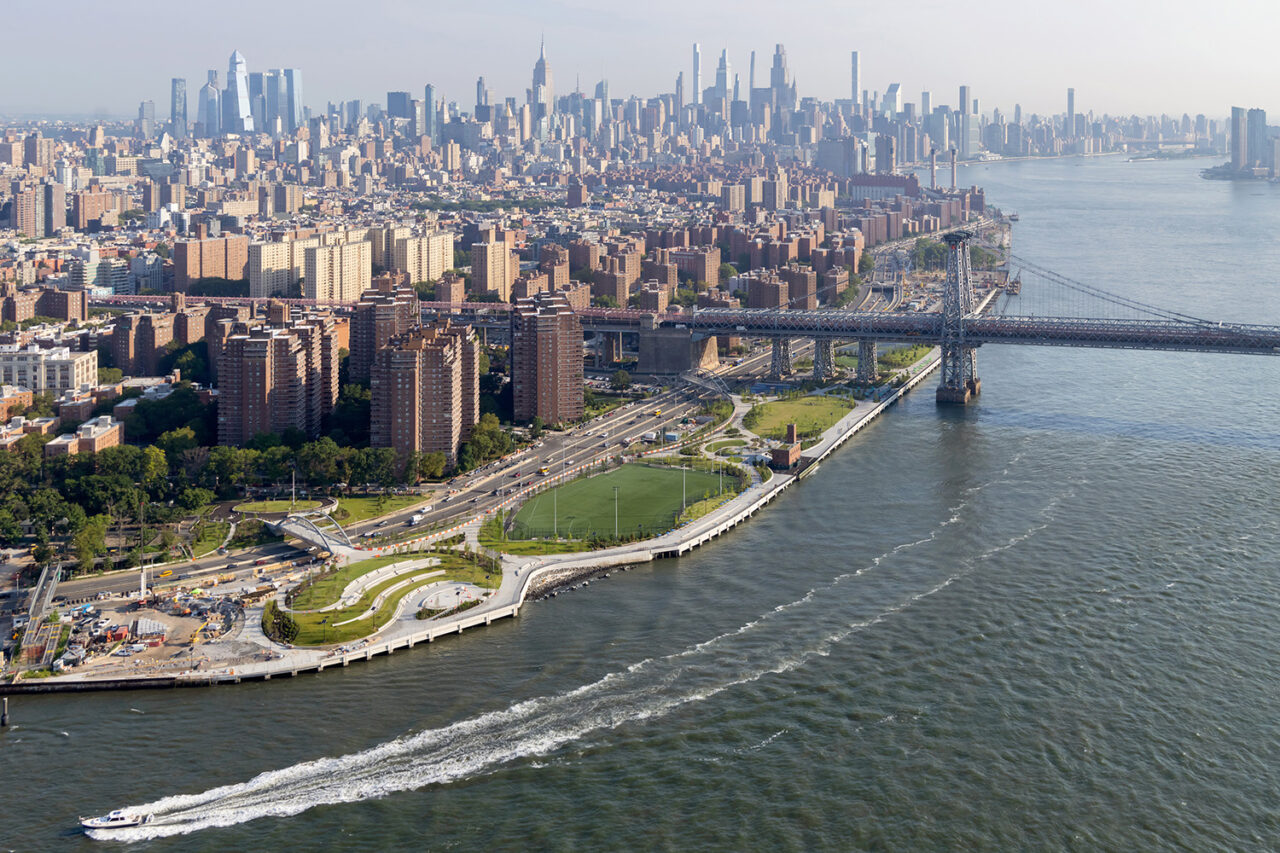
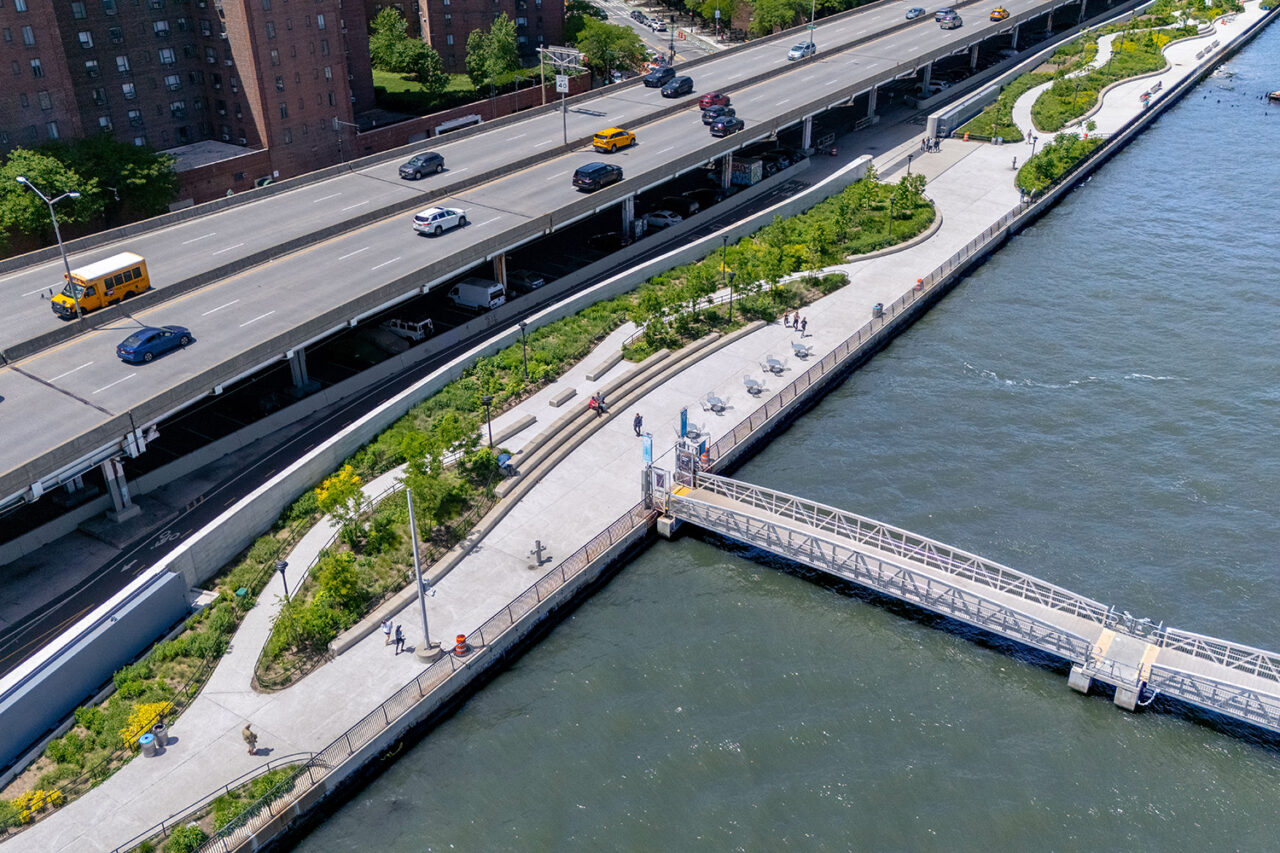
BIG-Bjarke Ingels Group (BIG) is bringing resilience and recreation to Manhattan’s East River waterfront. The 2.25-mile flood protection system dubbed the East Side Coastal Resiliency Project (ESCR) spanning Montgomery to East 25th Streets, has reached a major milestone with the opening of key areas of East River Park. Developed under the leadership of the NYC Department of Design and Construction (NYCDDC) and designed by BIG, Mathews Nielsen Landscape Architects (MNLA), ONE Architecture & Urbanism, AKRF, and residents of the Lower East Side the project is conceived as a “parkipelago” of interconnected parks along the East River waterfront, the creating a series of elevated green spaces that double as flood barriers while offering new public amenities for the neighborhood. Following the original 2014 BIG U vision for 10 continuous miles of protective park and public realm in the wake of Superstorm Sandy, the project is designed to safeguard more than 110,000 New Yorkers from future storms and tidal flooding. Located within the FEMA 100-year floodplain, ESCR integrates floodwalls, sliding gates, bridging berms, and elevated parkland into an unbroken protective system that shields critical infrastructure—including a major pump station, an electrical substation powering much of Lower Manhattan, and numerous schools and libraries, while enhancing daily life. Following the completion of ESCR’s first phase in 2024, the coastal redevelopment continues with the reopening of several major sections within East River Park around the Williamsburg Bridge. Elevated an average of eight to nine feet to provide vital flood protection, the park has been infused with 600 new trees and over 21,000 shrubs, grasses, and perennials—strengthening the shoreline and enhancing ecological character and features new basketball and tennis courts, picnic and BBQ areas, a multi-use turf field, grassy lawns, dedicated zones for nature exploration and water play, a new amphitheater, an extended esplanade, and two new pedestrian bridges at Delancey Street and Corlears Hook Park.
At East 23rd Street and Avenue C, the northern gateway to ESCR, is the new Solar One Environmental Education Center–designed by BIG with the NYC Economic Development Corporation (NYCEDC), Gilbane Building Company, TYLin (formerly Silman), Cosentini Associates, MNLA, and others. As the city’s first building to include ground-up solar photovoltaics and battery storage, the 6,409-square-foot, two-story timber-clad center expands Solar One’s mission to deliver environmental education, training, and technical assistance across New York City, including flexible classrooms for K-12 STEM educational programming for NYC Public Schools and community events. Defined by FSC-certified timber slats on the exterior, a roof fully clad in photovoltaic panels, and a battery storage system, the building minimizes the use of concrete and employs the material only at the flood level while incorporating lightweight, recyclable steel in the spaces above. The classrooms are elevated 19 feet above sea level, with ground-level storage areas enclosed by permeable metal grating, allowing water to flow freely during storm events. Inside, floor-to-ceiling windows frame sweeping views of the East River, Brooklyn, and Queens, while triple-glazed, bird-friendly glass mitigates sound from the adjacent FDR Drive. The classrooms seamlessly connect to a promenade of connected terraces and gardens within ESCR, creating a real-world learning experience right at the edge of the East River. The building neighbors 1,340 feet of new flood barrier wall, sliding flood gates, and flood resilient embankments to protect neighboring areas from coastal flooding. These resiliency efforts continue south, where BIG is also designing the North/West Battery Park City Resiliency Project (NWBPCR) with Turner & EE Cruz Joint Venture, SCAPE Landscape Architecture, and Arcadis, which runs from South Cove to North Moore Street in Tribeca.
Times Square Arts Presents Leo Villareal’s Pixel Dust for Midnight Moment
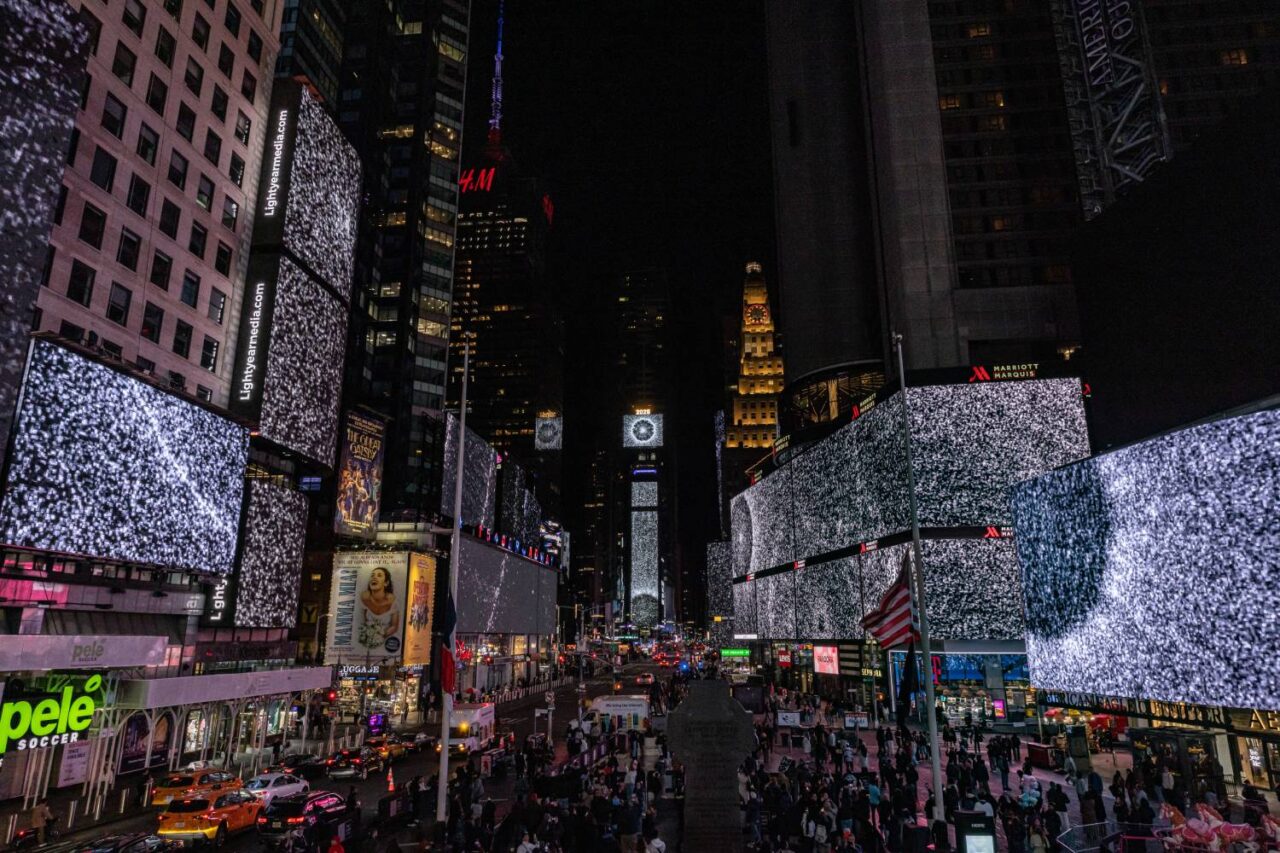
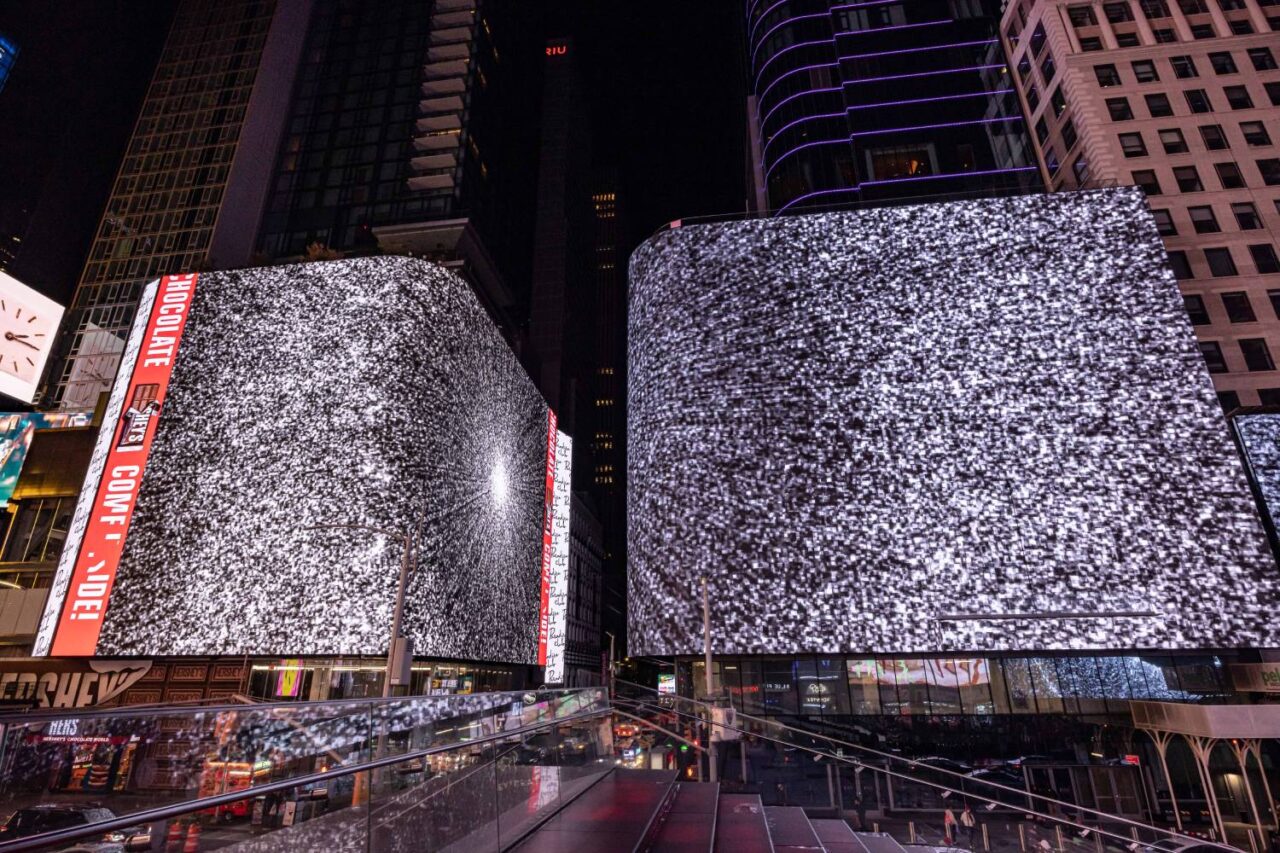
For its November Midnight Moment, Times Square Arts presents contemporary visual artist Leo Villareal’s “Pixel Dust,” on view nightly from 11:57pm to midnight. Interested in identifying the rules and governing structures of systems, the artist designs custom software to choreograph his moving compositions, exploring spatial and temporal resolution as he modulates parameters such as opacity, speed and scale. Using pixels and binary code as building blocks, the artist uses light to craft mesmerizing patterns inspired by nature and the cosmos, synchronized on over 90 electronic billboards throughout Times Square. Times Square Arts, the public art program of the Times Square Alliance, collaborates with contemporary artists and cultural institutions to experiment and engage with one of the world’s most famous urban places. Another new light installation by Villareal, “Celestial Passage,” transforms the city skyline nightly, illuminating the crown of the new 60-story JPMorganChase headquarters building at 270 Park Avenue with gently shifting waves of monochromatic light.
NYCHA and DEP’s ‘Cloudburst’ Initiative Produces Community Basketball Court
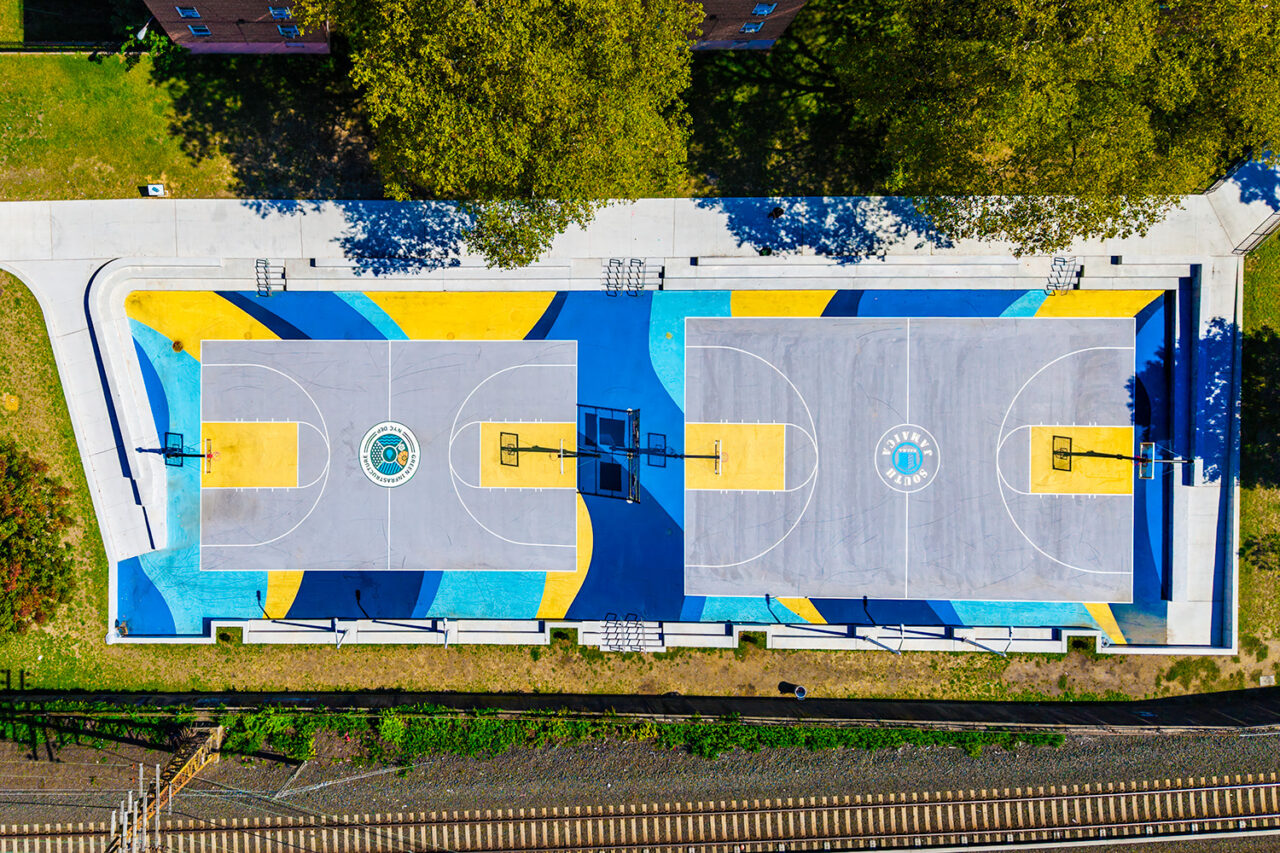
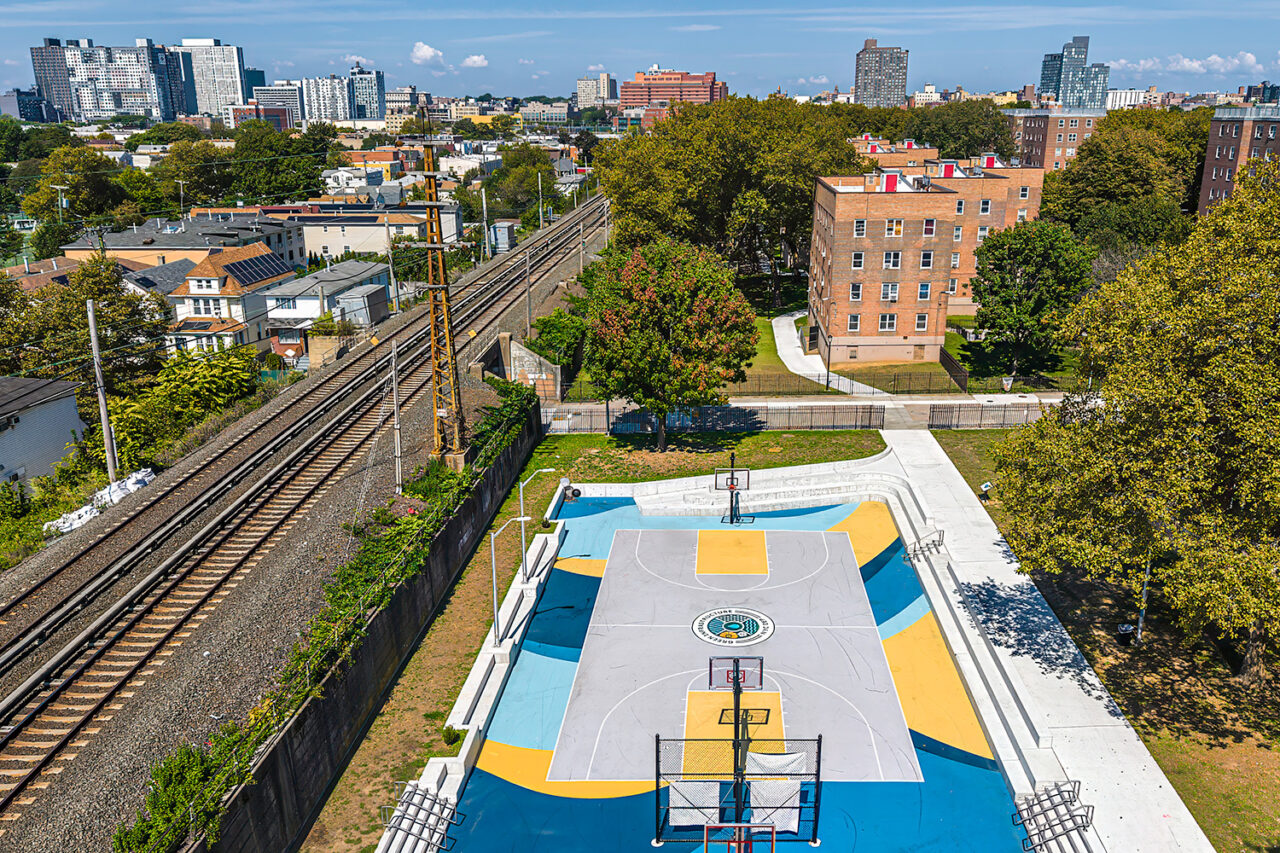
The New York City Housing Authority (NYCHA) and the Department of Environmental Protection (DEP), in collaboration with South Jamaica Houses residents, engineers, and design partners, have completed their first-ever “cloudburst” Water Square at the NYCHA South Jamaica Houses in Queens, and more projects are in the works. Developed by environmental engineering consulting firm Hazen and Sawyer and with design support from landscape architecture and urban planning practice Grain Collective, the climate resiliency project reimagines a community basketball court as a multifunctional space that not only provides a recreational amenity, but also protects against neighborhood flooding. Inspired by successful models in Copenhagen and Rotterdam, the water square provides amenities like sports courts, skate parks, outdoor events and seating areas during dry weather. During sudden heavy rains the square’s basin floods and the cloudburst system captures, stores, and redirects excess stormwater, preventing urban flooding by temporarily holding water from surrounding roofs and streets. The captured rainwater flows through underground pipes into storage tanks beneath the sunken basketball court, where it gradually seeps back into the ground or is directed to two planted bio-retention basins filled with bluegrass and black-eyed susans. These landscaped areas naturally filter rainwater and blend into the existing lawns, making climate infrastructure nearly invisible while enhancing the community’s green space.
National Building Museum Opens New Exhibition on Post-pandemic Cities
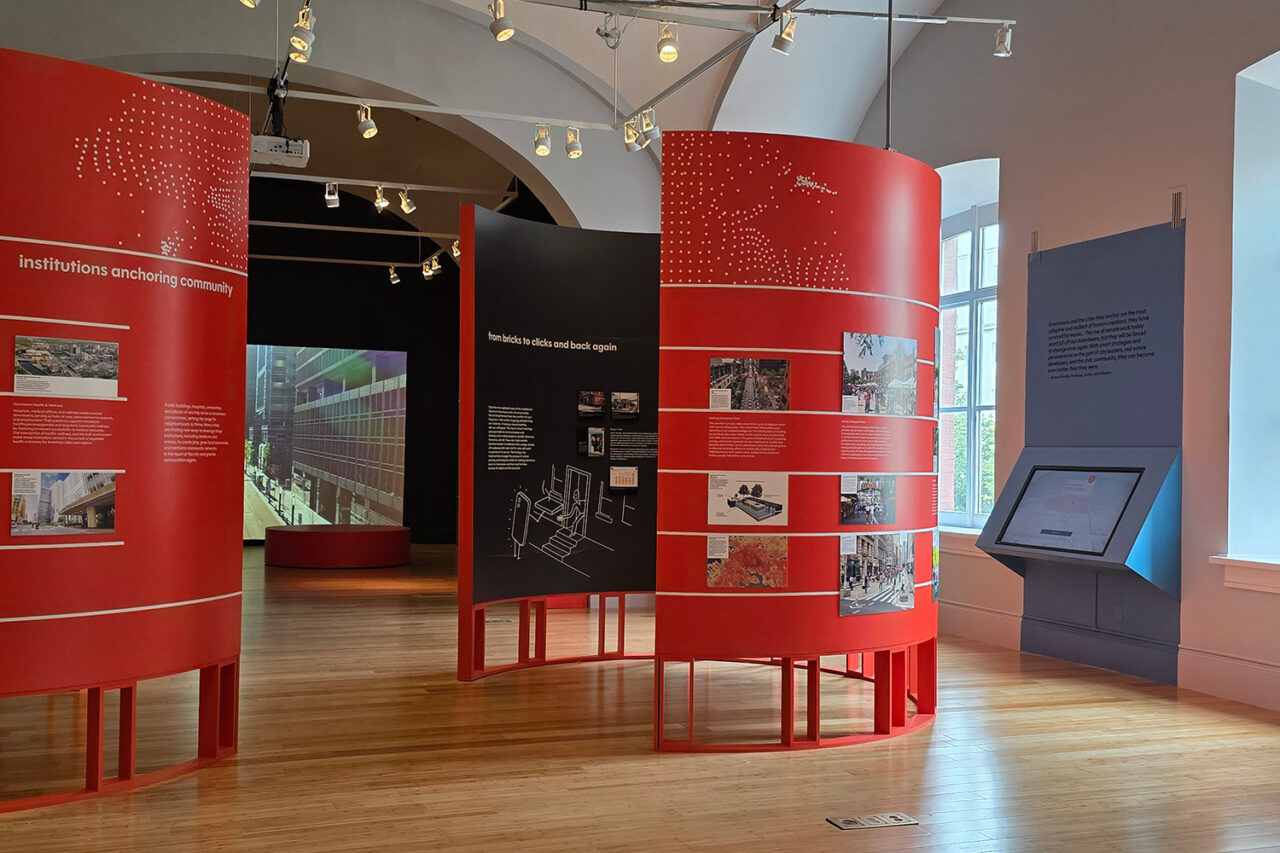
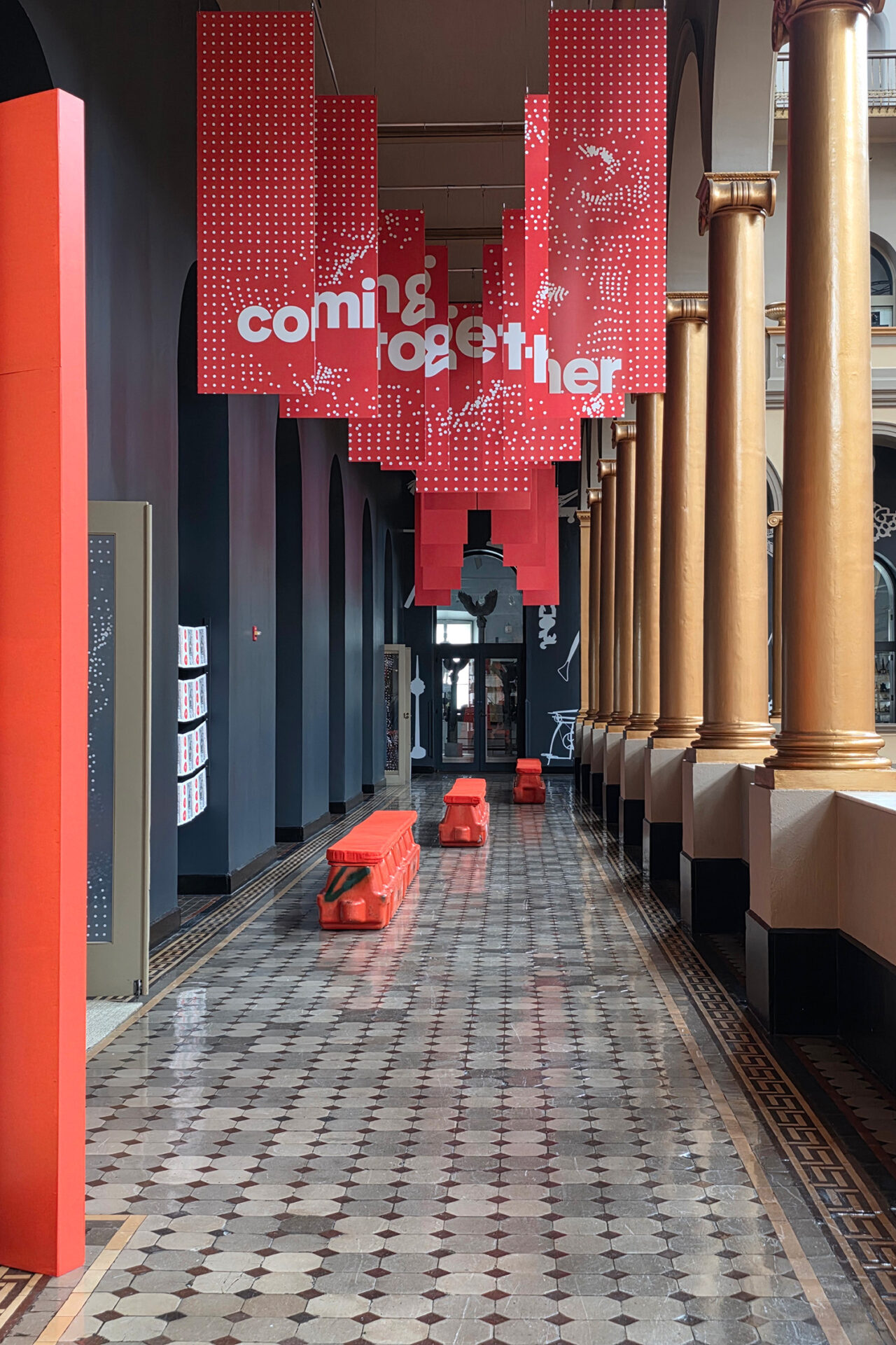
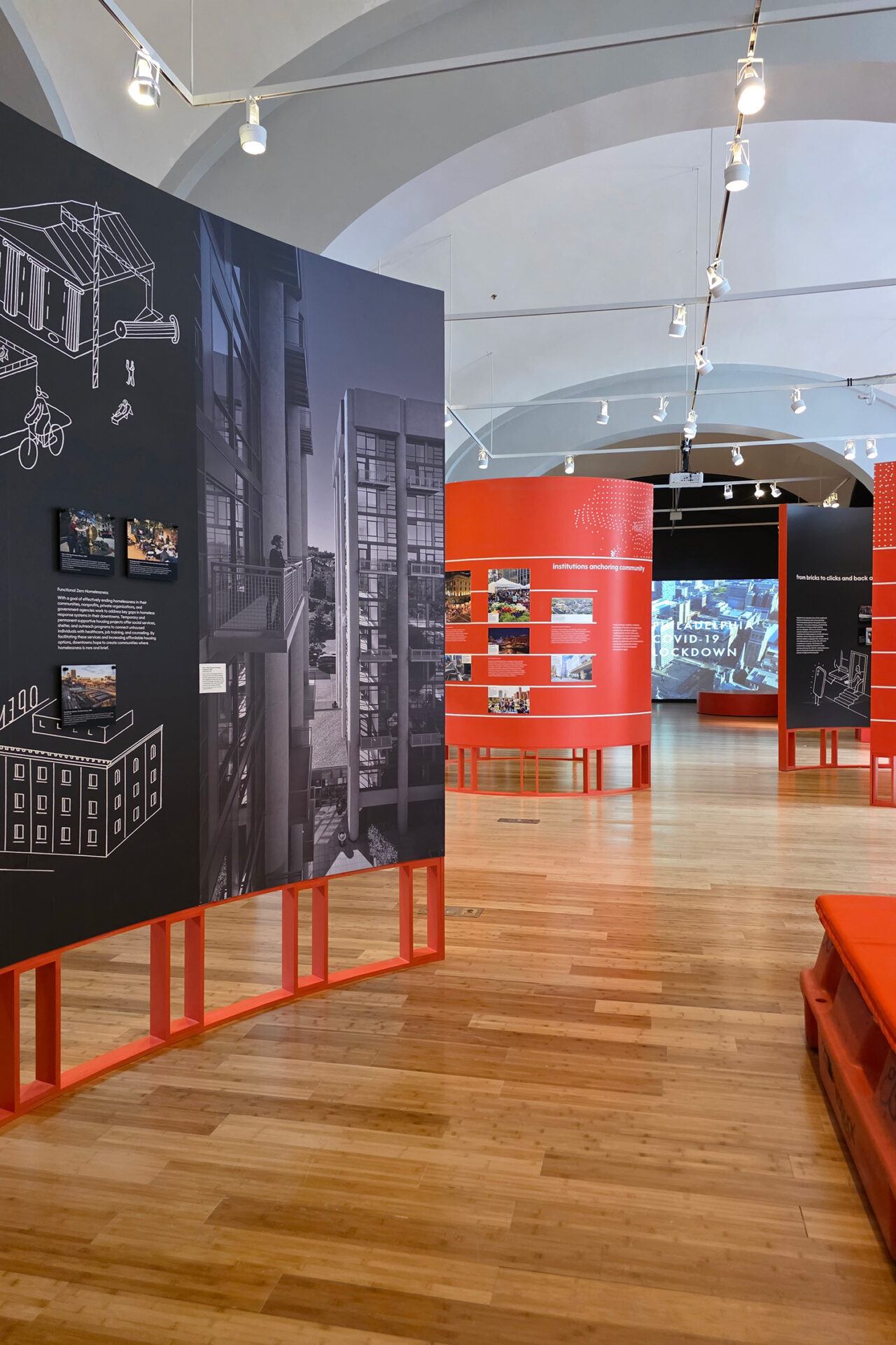
Coming Together: Reimagining America’s Downtowns, a new exhibition designed by Reddymade, is now on view as part of the National Building Museum in Washington D.C.’s Future Cities Initiative. Inspired by the pandemic-era concept of the six-foot circle that was meant to delineate our personal space in the public sphere, the exhibition explores how American downtowns are evolving in response to the COVID-19 pandemic and its lasting shifts in American life. The exhibit features examples from more than 60 U.S. cities that have undertaken innovative efforts during the last five years to breathe new life into their respective downtowns. The exhibition is anchored by three immersive zones: Social Distancing, Cities Take Charge, and City Action Hall, a participatory space for civic dialogue and public programming featuring James Nares’ Street, a slow-motion video portrait of New York City. The exhibit is curated by Uwe S. Brandes, professor of Urban & Regional Planning at Georgetown University, with information design led by Sarah Gephart of MGMT, graphics created by illustrator Nicholas Blechman, and further supported by interactive digital design by Hovercraft.
In Case You Missed It…
Mayor Adams and the Department of Buildings unveiled six revamped, cost-effective sidewalk shed designs by Arup and Practice for Architecture and Urbanism | PAU. In support of the city’s Get Sheds Down initiative, the three new designs by Arup and three by PAU will significantly enhance the public realm. In 2024, the DOB selected one team led by PAU and one by Arup to reimagine the city’s sheds. PAU—working with structural partner LERA Consulting Structural Engineers and collaborators including Tang Studio Architect, Langan, RWDI, Fisher Marantz Stone, and Dharam—developed proposals to improve circulation, adaptability, and aesthetics while minimizing installation and maintenance disruption. Going forward, DOB will be working with PAU and Arup to make all six designs available for public use through the agency rule-making process. Registered design professionals will be able to obtain permits through the DOB’s Professional Certification program, in much the same way that they currently obtain permits for the existing sheds. The City expects to see these new designs on city sidewalks as early as 2026.
Michael van Valkenburgh Associates (MVVA) has won the YZD Runway Roadmap design guidelines competition. Once for flight, the 2.1-kilometer Runway will now act as the connective tissue for the seven new YZD neighborhoods totaling 370 acres. MVVA will be tasked with creating design guidelines that will shape the long-term transformation into a sustainable, pedestrian-first public place demonstrating how thoughtful design can foster connection, inclusivity and a shared sense of community.
Beyer Blinder Belle (BBB) has completed a new campus plan for Lehigh University, which reimagines the school’s 1,600-acre landholdings. The plan positions the campus as a place to bring together a community of makers and mentors to drive student success and meaningful change. It recognizes Lehigh’s evolution from a single area of origin to its growth into three separate campuses, and now into a unified network of six distinct districts.
LANDFRAME is a digital platform created to support meaningful land acknowledgement statements, Indigenous-led narratives, and culturally grounded design. While initially developed for the Architecture, Engineering, and Construction (AEC) industry, LANDFRAME fosters respectful engagement with land by reconnecting with its identity, acknowledging its history, and elevating the communities who continue to care for it. It works with a network of Indigenous and ally partners, including nonprofits, institutions, foundations, organizations, and individuals, committed to centering Indigenous land relationships in the built environment, public spaces, and cultural landscapes. The User Journey survey includes general questions followed by role-specific questions based on area of expertise or interest—those interested in contributing can access the survey here.