







by: Linda G. Miller



Carol Pino Learning Garden by Grain Collective Opens in Bergen Beach
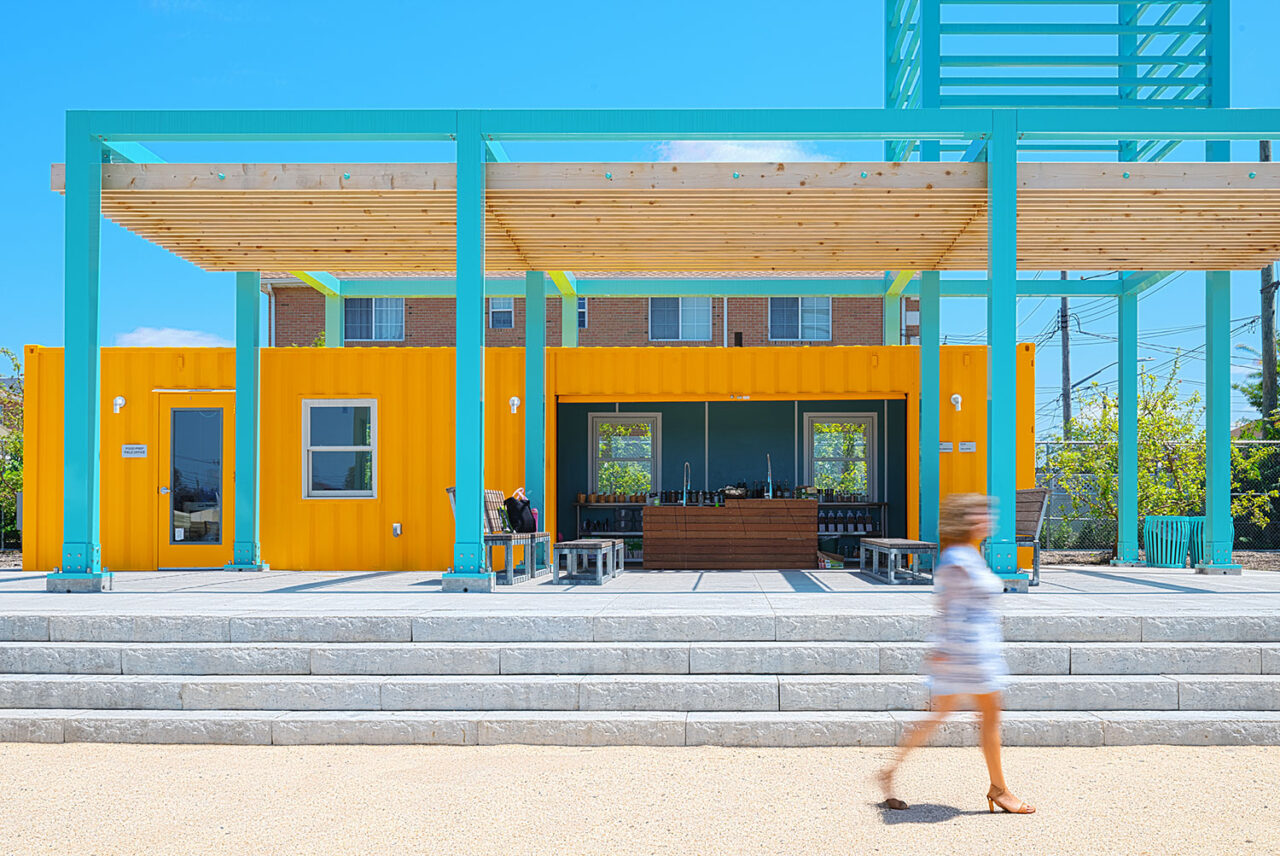
Landscape architecture, urban planning, and community engagement practice Grain Collective has designed the recently opened Carol Pino Learning Garden, at Avenue N and East 71st Street in the Bergen Beach section of Brooklyn, transforming a DOE-owned vacant lot into a 1.5-acre working farm and learning garden. Sited adjacent to P.S. 312, the project responds to the City’s Grow to Learn initiative, which supports green schoolyards and outdoor learning environments across the city. The Garden, which is open year-round, offers students field-based learning through a variety of interconnected spaces. Anchoring the site is a prefab greenhouse equipped with hydroponic growing stations, seed-starting areas, lab benches, and a research nook. Next to the greenhouse, a citrus orchard and vegetable gardens provide opportunities to practice crop rotation, companion planting, and in-ground growing methods using clean fill soil, free from the limitations of traditional raised beds. Nearby, pollinator gardens attract bees and butterflies essential to orchard health, while a culturally diverse herb garden fosters food-based community building reflective of the school’s population. A structure that contains offices and demonstration kitchen that completes the farm-to-table learning cycle, is constructed of shipping containers. A weather station tracks temperature, humidity, rainfall, and wind, enabling students to study climate’s relationship to agriculture in real time. Sustainability measures are woven throughout the project’s design, including rainwater harvesting, composting of organic waste, solar energy integration, and the planting of more than 70 new trees. Perhaps the project’s longest lasting environmental impact may be the garden’s influence on the students’ worldviews, habits, and future decisions. Grain Collective was the conceptual designer on all the structures, Ahuja Partnership Architects served as architect-of-record, and NDNY Architecture + Design was responsible for construction administration.
Ennead Transforms Theater for Shakespeare in the Park
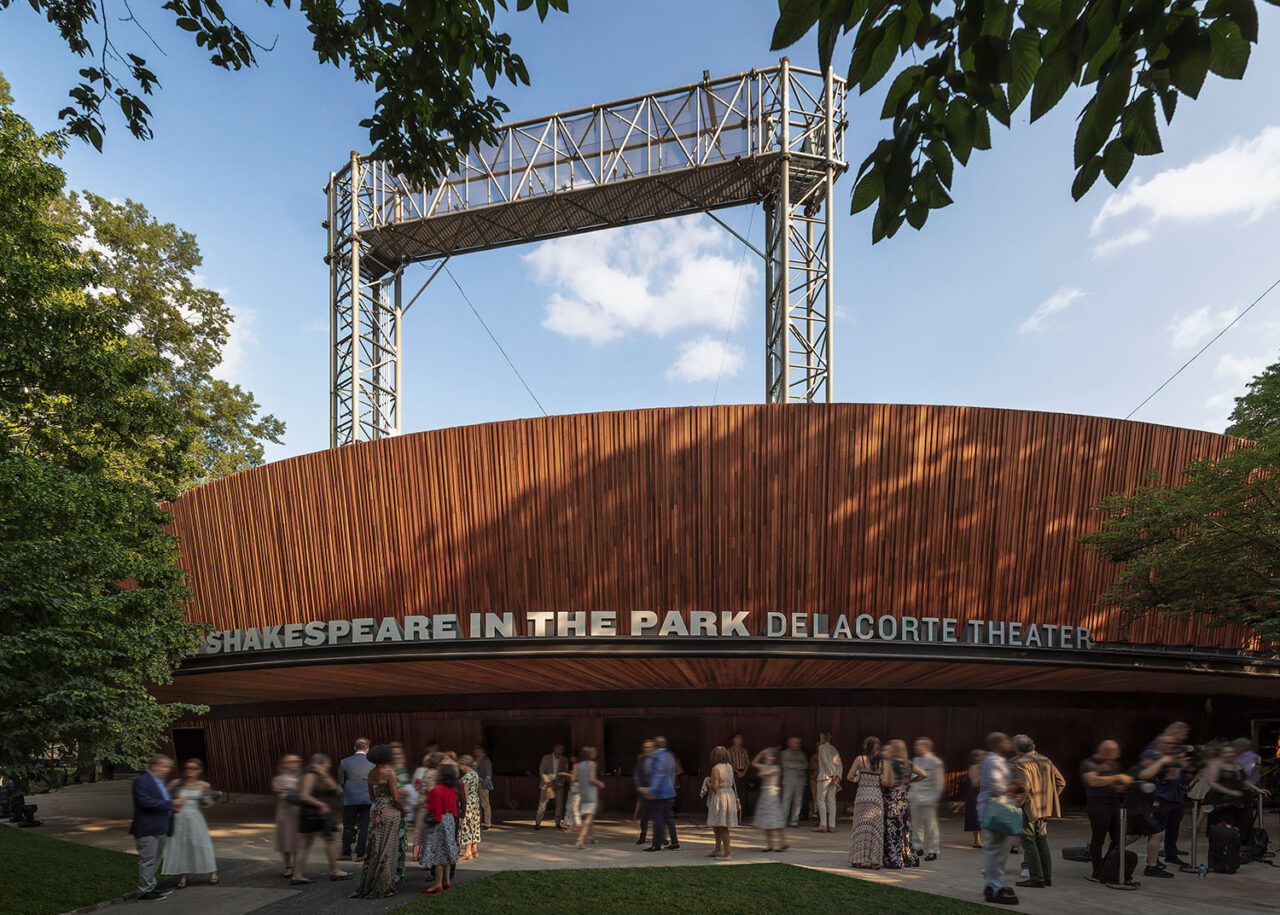
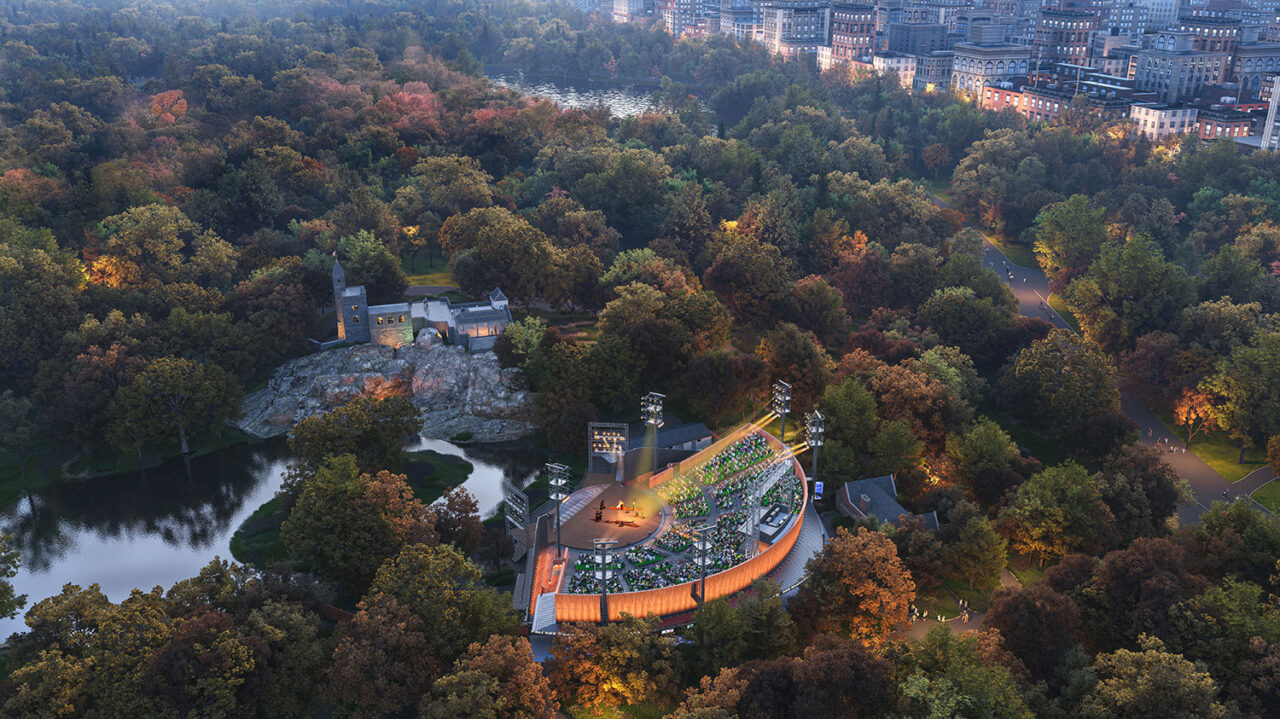
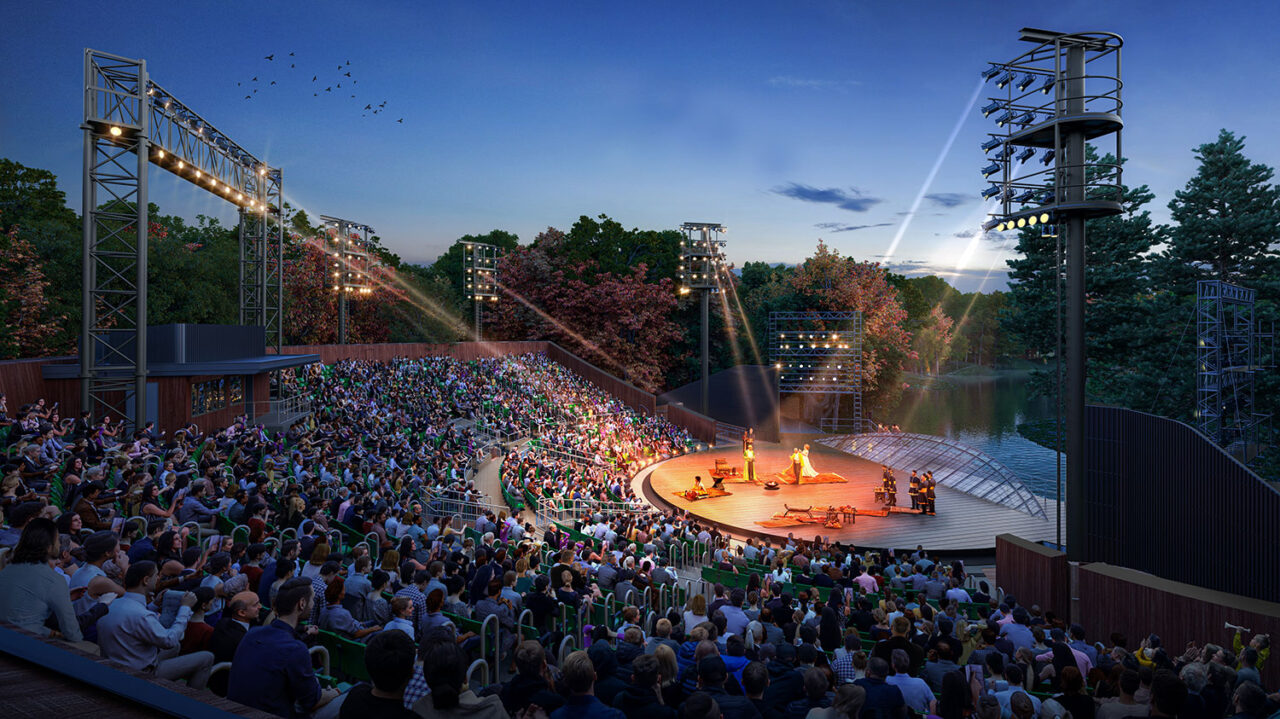
On August 7, it’s “curtain up, light the lights” when The Delacorte, home to The Public Theater’s Shakespeare in the Park, reopens with a performance of Twelfth Night, after a comprehensive 18-month transformation led by Ennead Architects. Located at the southern end of Central Park’s Great Lawn, the 1,864-seat, 32,475-square-foot theater occupies a 0.87-acre site next to the Turtle Pond, north of Belvedere Castle and east of Shakespeare Garden. Built in 1962, the Delacorte has not undergone a major renovation since 1999. The new design includes numerous aesthetic, safety, and accessibility enhancements that benefit the performers, audience, staff, and the park, and simultaneously maintains theater’s current form, footprint, and views within the park. The theater’s new façade is composed of reclaimed redwood sourced from 25 decommissioned water towers from across the city. The wood will minimize heat retention, weather well over the years, and grounds the space within the natural landscape.
Some of the numerous upgrades include: upgrades to the box office, concession booths, stage, and work areas; the addition of two new gates that provide accessible entries; wider seats for all; the number of ADA accessible seats more than doubled thanks to 20 new accessible seats; ramps and a lift easing accessibility to the stage; purpose-built dressing rooms; improved stage lighting, sound, and scenic technology; HVAC climate control for enclosed spaces; upgraded exterior and interior wayfinding; newly designed lighting towers increasing theatrical and rigging capabilities; and heightened water protection and drainage systems to reduce flooding and improve water mitigation. In addition to the Delacorte, Ennead has been designing and executing multi-phased improvements to The Public’s flagship location on Lafayette Street, creating a new rehearsal hall annex.
Disney’s New York HQ Consolidates Production Operations in Hudson Square
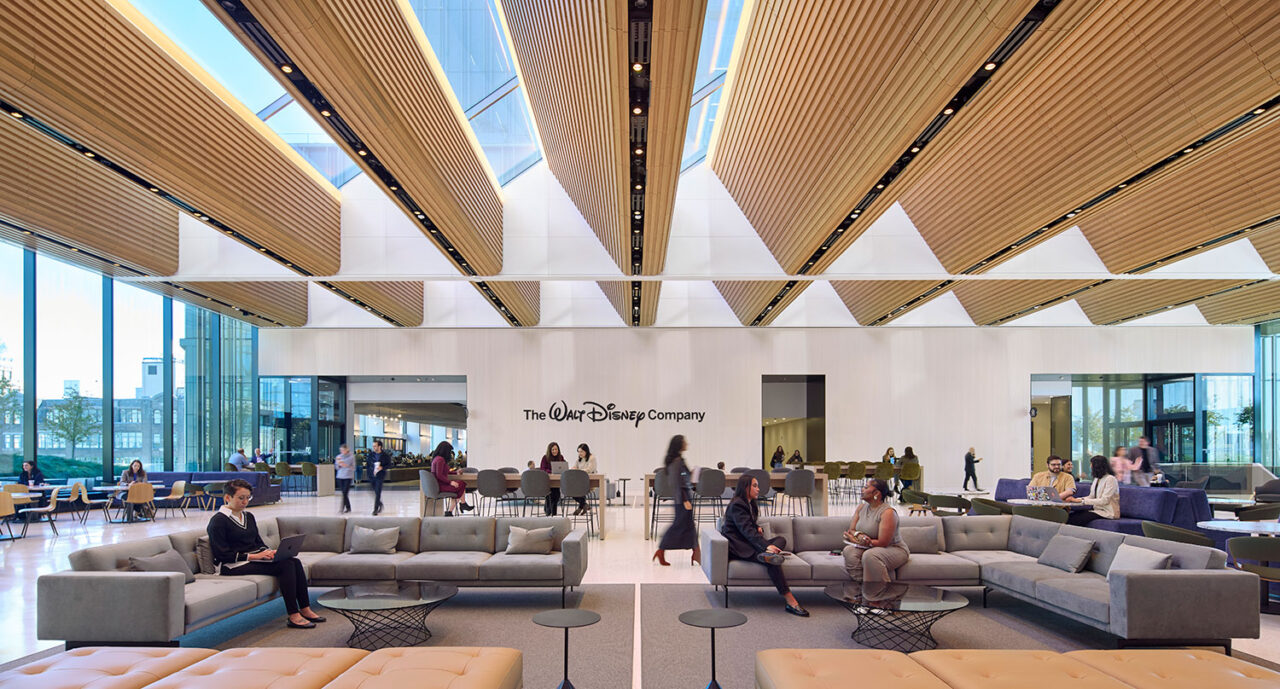
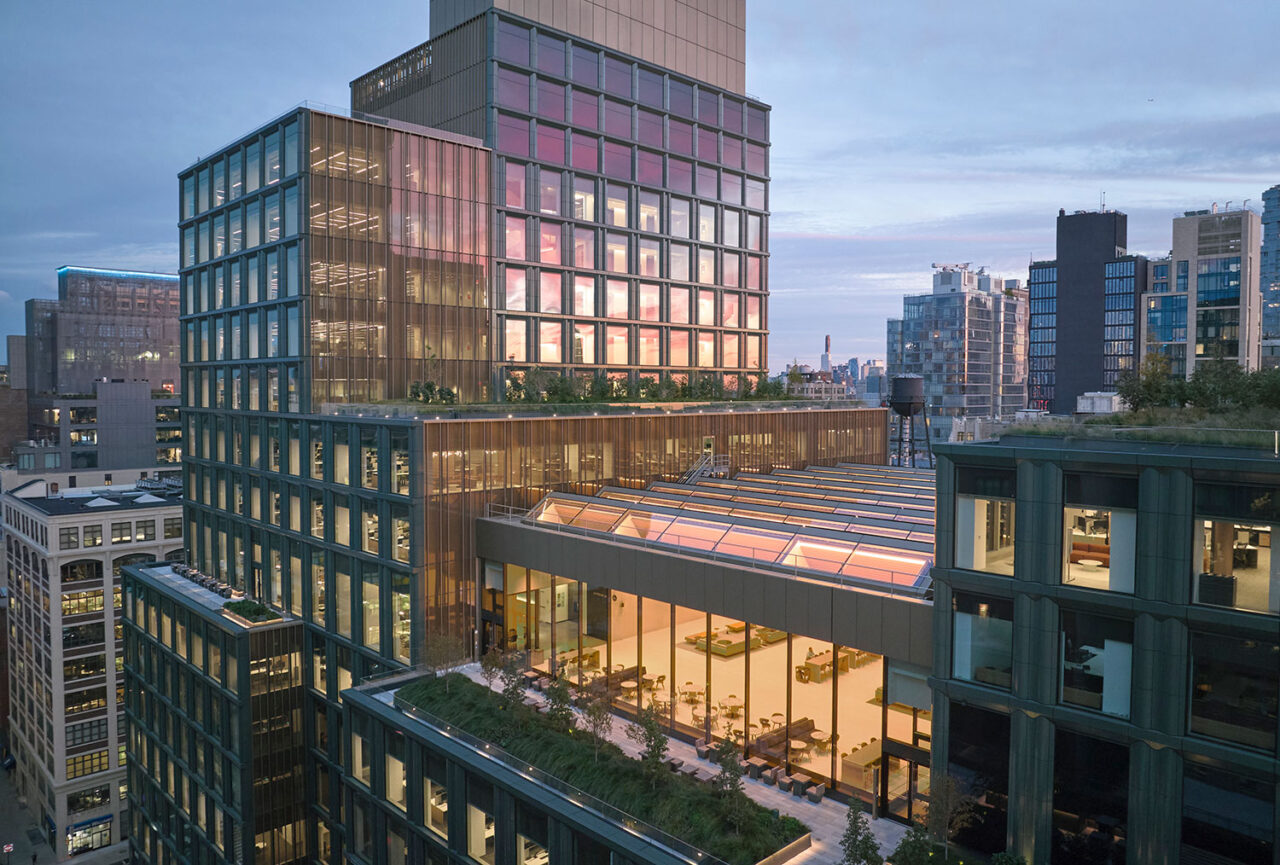
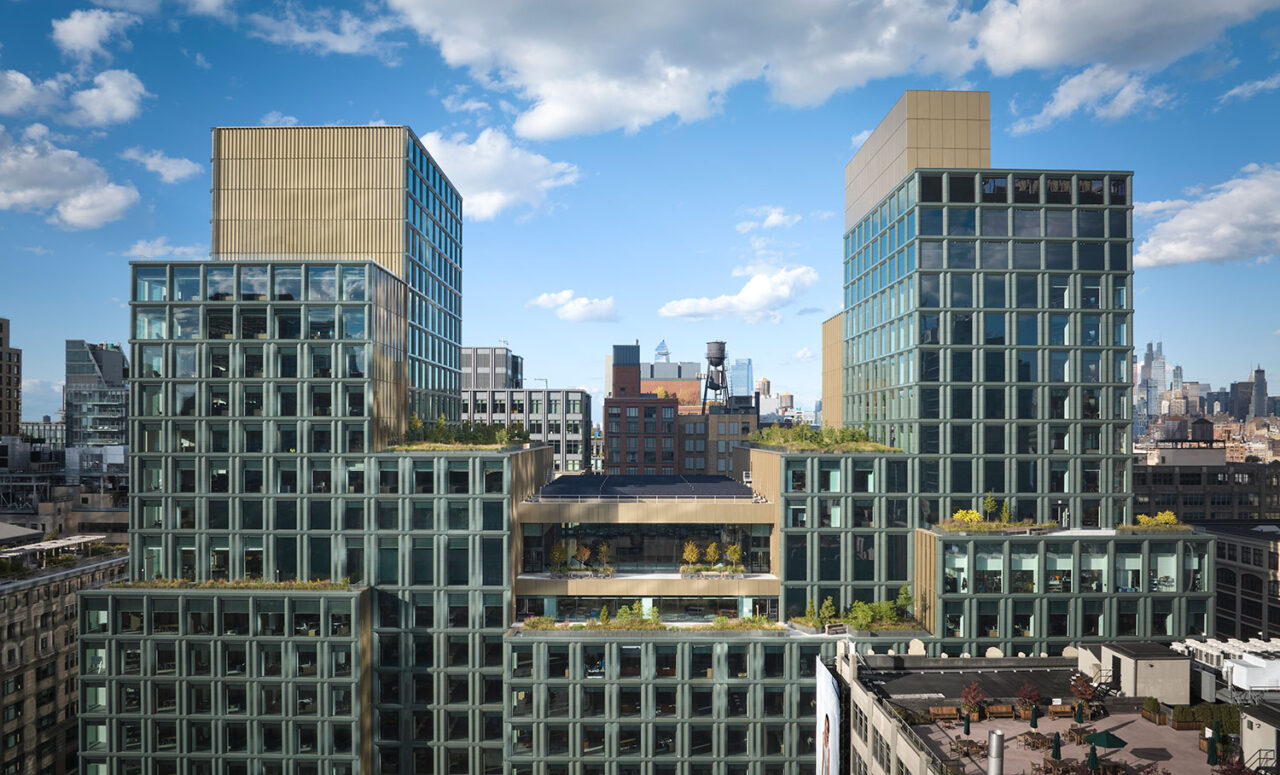
The Walt Disney Company’s New York-based production operations are now fully consolidated into their headquarters in the new Robert A. Iger Building at 7 Hudson Square. Spanning an entire city block, the 19-story, 1.2 million-square-foot design by Skidmore, Owings & Merrill (SOM) houses Good Morning America, ABC News, ESPN, and WABC Channel 7. The building is conceived as a vertical campus bringing together news, editorial, live productions, streaming services, advertising, and amenity spaces, all together under one roof.
The neighborhood’s large masonry and stone industrial era buildings inspired the façade, with its double-and triple-columned, cerulean-green, terracotta panels creating a rhythmic texture that exhibits an iridescence in sunlight. Each rounded panel complements the area’s warm earth tones while adding 30 inches of depth from the windows to the terracotta’s edge. At the entrances, canopies, and upper floors, touches of champagne-colored aluminum accent the terracotta.
The façade’s series of wedding-cake-style setbacks culminate in two identical, 320-foot-tall towers that match the scale of their neighbors. A podium and two towers help to maximize the zoning envelope and led to the creation of the glass-enclosed 10th-floor communal space known as the Great Room, which is adjoined by landscaped terraces designed by SOM in collaboration with SCAPE. Notable interior spaces, including the two office lobbies and the separate audience lobby, were designed by SOM, while Gensler designed office spaces, media spaces, and the interiors of the Great Room.
To create the intricate foundation and structural system that supports three large television studios—located beneath the lobbies and public food hall—SOM collaborated with Langan and Thornton Tomasetti on one of the city’s largest single concrete pours. Also below ground, the servers for Disney Streaming Services bring significant infrastructure within the footprint of the building which is a rarity for a corporate headquarters. The all-electric building features on-site solar panels, high efficiency dedicated outside air systems, high-performance façades, waste heat recovery, and electric heat pumps. The energy-efficient design approach reflects Disney’s 2030 environmental goals, has achieved a LEED Platinum certification, and is targeting a Fitwell 2-Star certification.
WORKac Replaces Rustic Cabin With Elegant Passive House
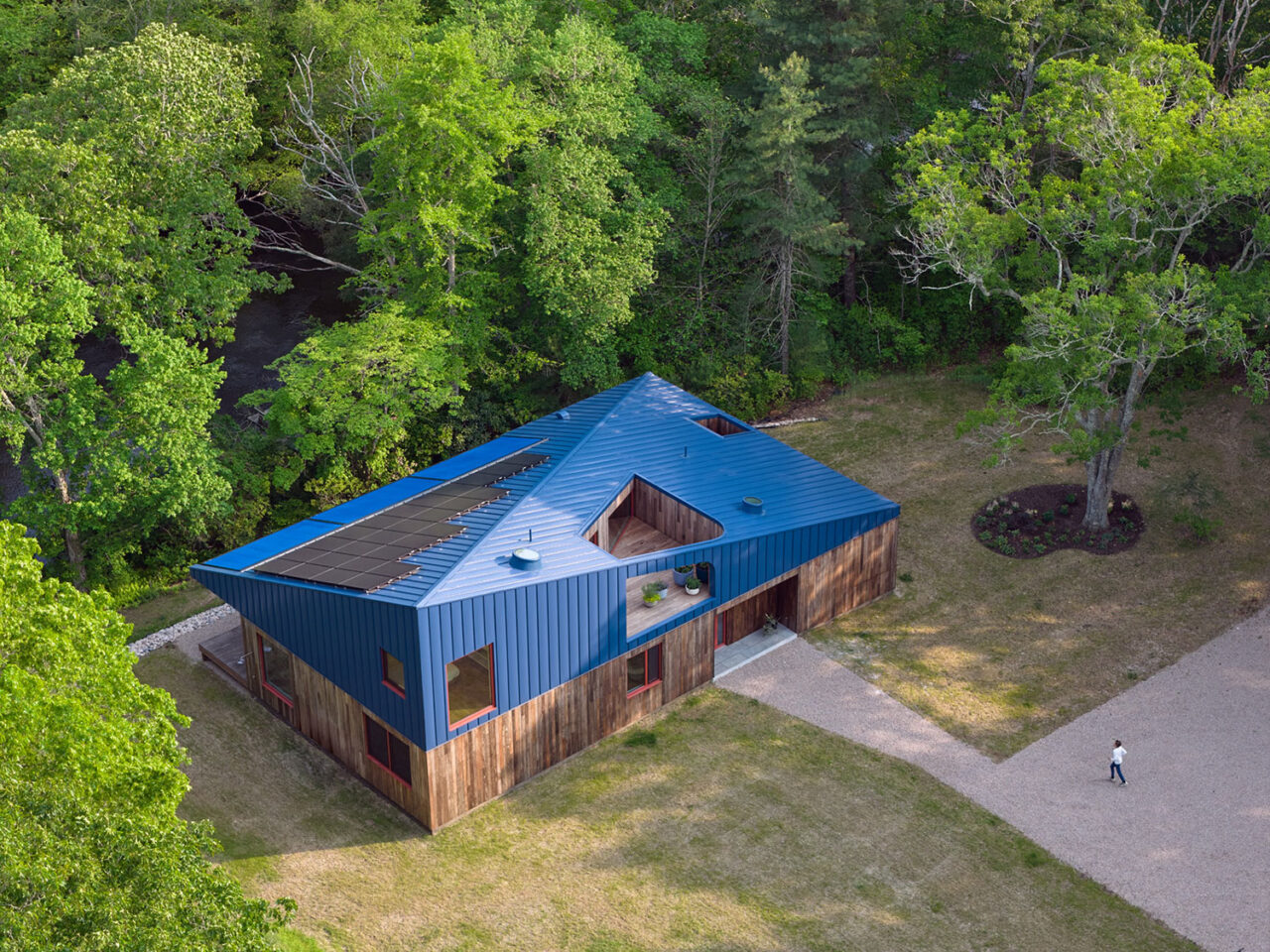
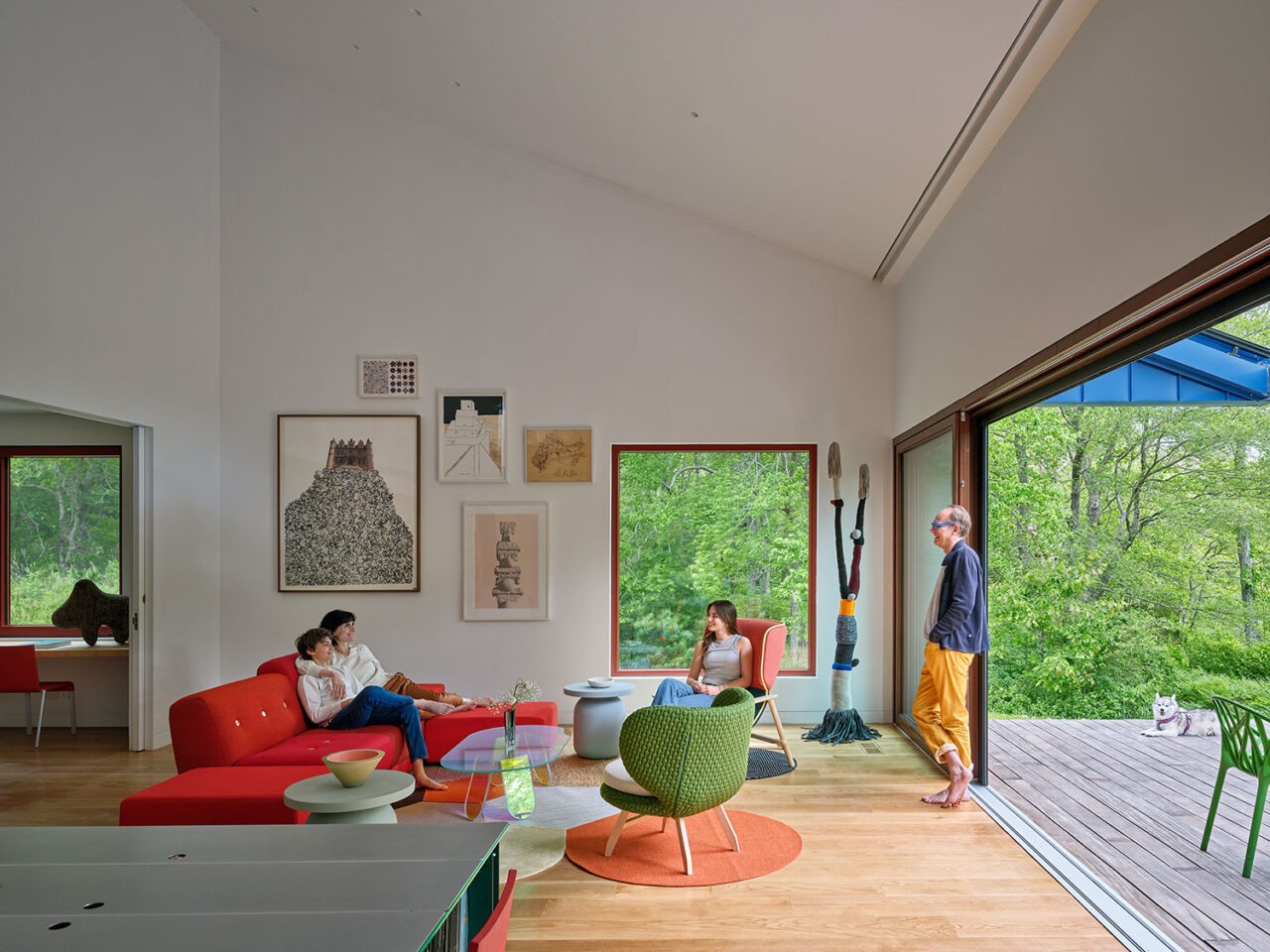
In 2008, Amale Andaos, AIA, HFRAIC, and Dan Wood, FAIA, the founding partners of WORKac, purchased 22 acres of forested land along the Pawcatuck River in Hopkinton, RI, minutes from where Wood grew up. The property included a time-worn cabin where the family would spend summers with their children. After living in the home full-time during the COVID-19 pandemic, the couple began to imagine Riverhouse, a new residence that would offer their personal take on domestic architecture. The cabin was torn down and the new two-story, 2,475-square-foot home was completed this spring. Elevated to meet floodplain regulations, the design meets Passive House energy standards while embracing a bold form, rich materiality, and vibrant accents drawn from the surrounding landscape. Triple-glazed windows, photovoltaic panels with battery storage, and 14-inch insulated walls enable year-round, all-electric performance. The project also serves as a platform for collaboration. A custom dining table designed by MOS Architects animates the central gathering space; designer Petra Blaisse created a large curtain that spans the entire living room, exploring the dynamic interplay of light, privacy, and seasonal change; artist Austėja Walter designed the linen curtains in the home’s four bedrooms. Collaborating with designer Karim Chaya, tiles featuring traditional Lebanese patterns for pops of color were incorporated, nodding to the culture of Andraos’ homeland. Tour the residence here.
Midtown Campus Completed for SUNY College of Optometry
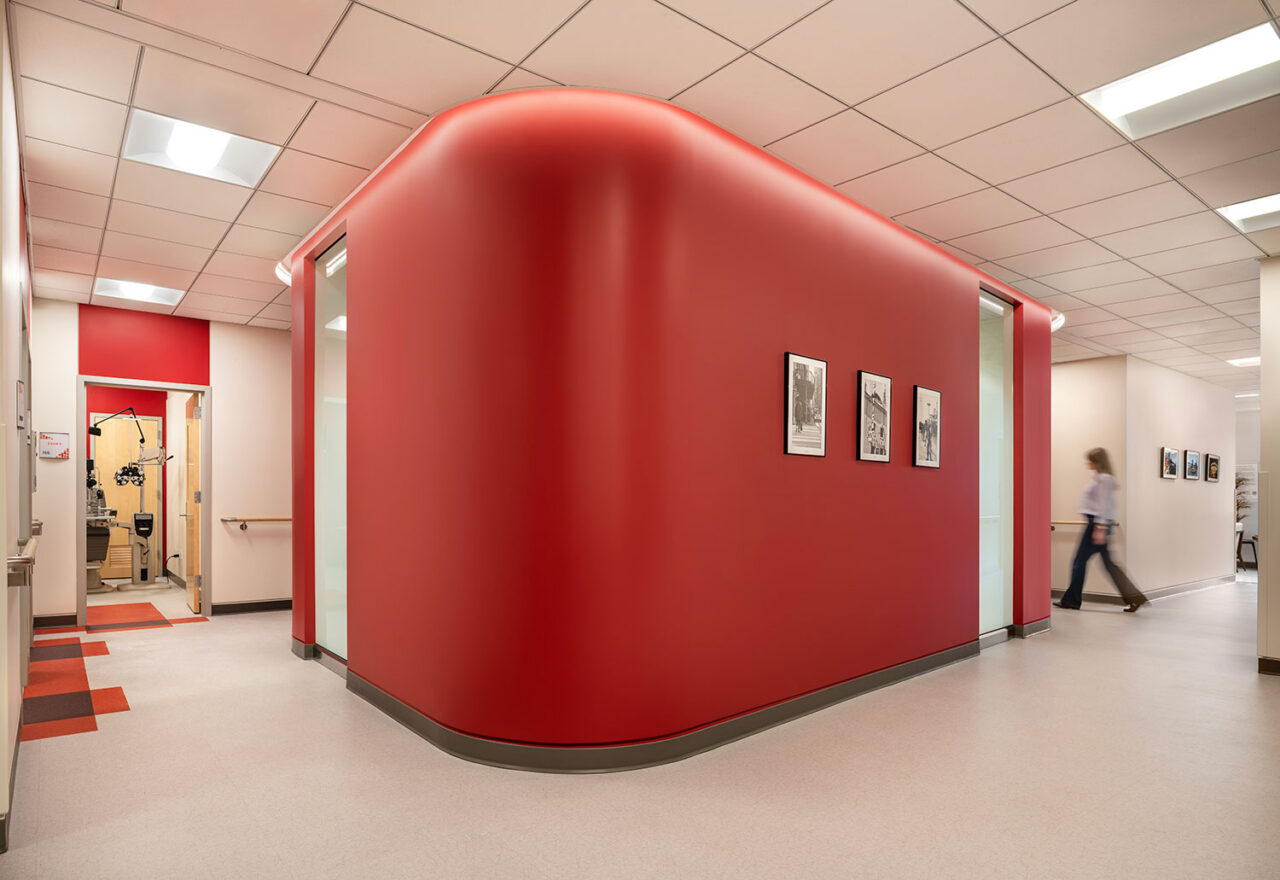
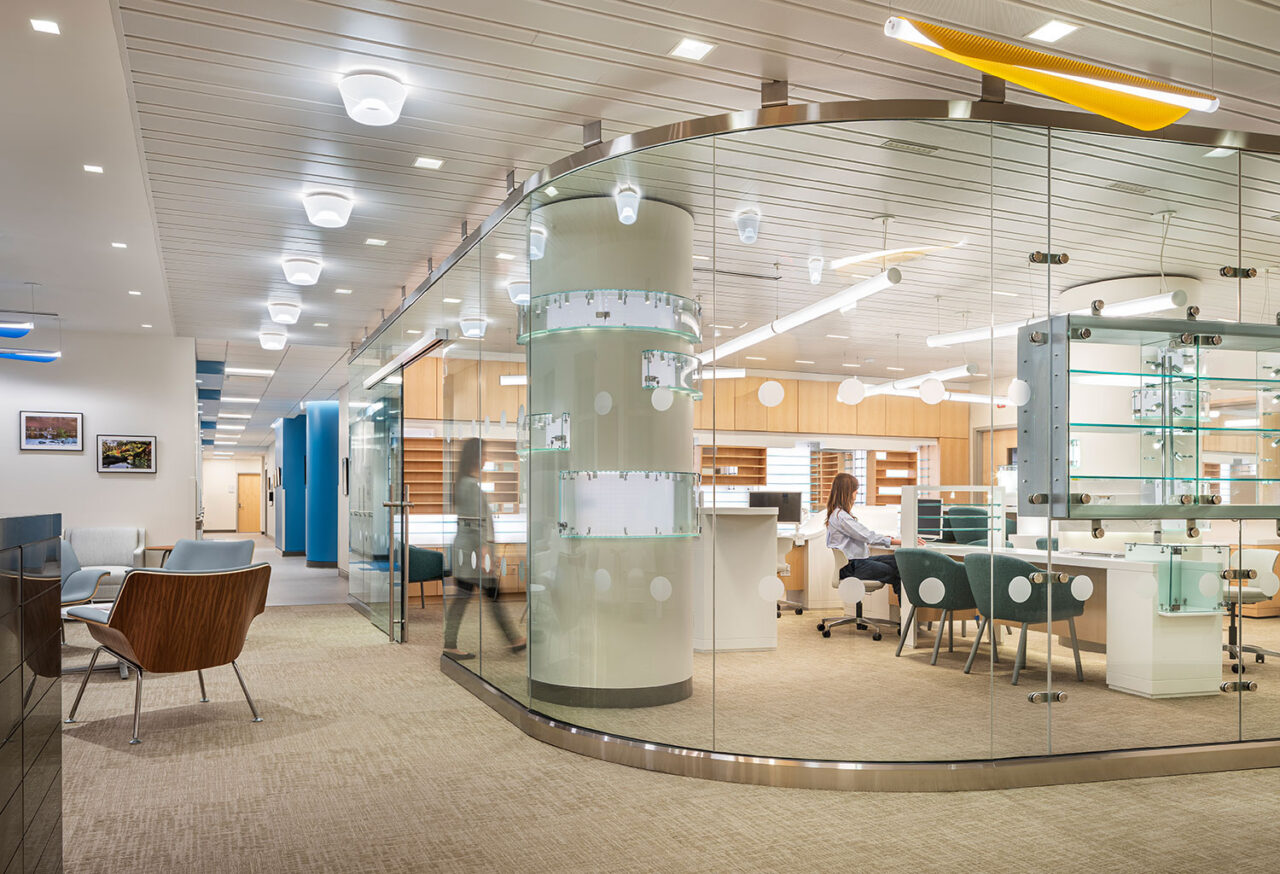
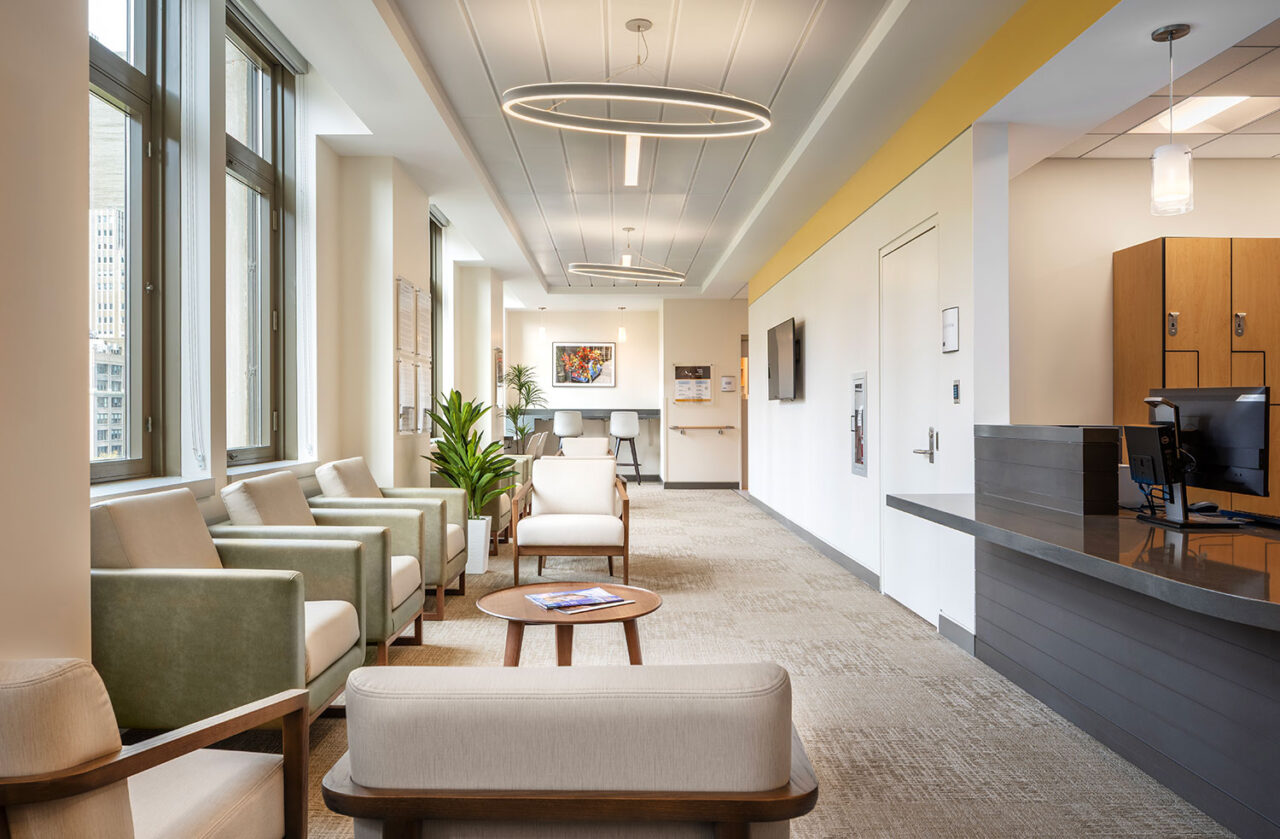
MDSzerbaty Associates Architecture has completed the transformation of SUNY College of Optometry’s midtown Manhattan campus, home to the University Eye Center located at 33 West 42nd Street between 5th and 6th Avenues. As the College’s primary clinical teaching space and a public-facing eye-care facility, the renovation reimagines the entire seventh floor to better support patient exams, research, and optical retail. The new layout of the 13,825-square-foot space organizes 24 exam rooms into three “pods”, each anchored by a central faculty room. This configuration enhances both clinical teaching and patient care, allowing for both supervision and collaboration. Each pod is distinguished by its own materiality, color, and texture, creating a clear and intuitive wayfinding system for patients, students, and staff. At the heart of the plan is the 800-square-foot, glass-enclosed Essilor Eyewear Center, now located adjacent to the main lobby. The new retail space features curved glass walls, custom lighting, and modern displays showcasing over 1,000 frames. The renovation also includes widened corridors, updated testing rooms, renovated offices, and ADA-compliant restrooms all designed to accommodate new equipment and improve accessibility for patients with low vision or mobility aids. The design introduces two decentralized waiting areas: one near the southern reception for check-in and intake, and a second more centrally located area for patients awaiting exams.
In Case You Missed It…
The Landmarks Preservation Commission has approved the design for the adaptive reuse of the Kingsbridge Armory. Opened in 1917, it is the largest Armory in the country and features an approximately 180,000-square-foot main drill hall with a ceiling over 115 feet high. Long vacant, the City selected 8th Regiment Partners to lead a team consisting of Scape, Aufgang Architects, and FXCollaborative to design a new event venue, recreation center, sports fields, public plaza, and 500 affordable apartments will be built next door. Led by the city’s Economic Development Corporation, the major project, dubbed El Centro Kingsbridge, calls for extensive restoration and expansion of the armory itself, featuring new and expanded masonry and façade work, as well as a new public plaza, landscaping, and signage.
Gensler has completed The Madison Avenue Club (The M.A.C.), a hospitality-inspired amenity suite spanning 25,000 square feet across the entire third floor of 590 Madison with a terrace on the fourth. Designed by Edward Larrabee Barnes and Associates, the building (aka the IBM Building) now has a rooftop terrace, several work lounge spaces, a multi-sport simulator, library, café, and a collection of meeting areas, in addition to the existing athletic center and atrium.
Construction has begun on the first phase of Innovative Urban Village, on the Christinan Cultural Center’s 10.5-acre campus at 12020 Flatlands Avenue in the East New York section of Brooklyn. Designed by Practice for Architecture and Urbanism (PAU) the initial phase of the 10-building project will bring more than 800 affordable rental apartments, a workforce development center, a childcare facility, a performing arts venue, a grocery store, and green space with walking paths.
Beyer Blinder Belle Architects and Planners (BBB) has been selected to lead the renovation of Hebrew Union College’s newly acquired campus at First Battery Armory building, a designated landmark, located at 56 West 66th Street, marking the College’s return to its original neighborhood. The building will be designed for scholarly pursuits and clergy training as well as a hub for Reform Judaism. BBB is tasked with creating an educational center featuring the technology and infrastructure for in-person, hybrid, and virtual learning capabilities, as well as for public events and art exhibitions. The building was purchased in February 2025 following the sale of the institution’s current building in Greenwich Village to NYU. The renovation is scheduled to begin by the end of 2025 and the College expects to fully occupy the facility in early 2027.
The Corning Museum of Glass (CMoG) commissioned Maya Lin to create a site-specific installation celebrating the 10th anniversary of the opening of the Contemporary Art + Design Wing. The work, part of Lin’s ongoing series Marble River Drawing, is a visual interpretation of the four main rivers that converge within the region in the town of Corning, NY. When it opens to the public on October 11, 2025, the commissioned piece will engage with the architecture of the Thomas Phifer and Associates-designed building that opened in 2015.
Mayor Eric Adams has unveiled a plan to transform an 80-acre site owned by NYC Economic Development Corporation (NYCEDC), in the College Point area of Queens, into a mixed-income development with 3,000 units of affordable and market-rate housing designed by S9 Architects. Located on the long-abandoned Flushing Airport, now reclaimed by wetlands, the project could also include park-like landscaping.
1100 Architect has transformed the Southampton Cinema into the Southampton Playhouse, a non-profit community cultural space. Originally a single-screen venue built in 1932, the venue had been converted into a four-plex in the 1990s and now it has been updated with a new double-height lobby, improved ticketing and concessions, and four upgraded auditoriums, each defined by its own monochrome palette. Auditorium One now features a digital IMAX system, the only one of its kind for 50 miles.