





by: Linda G. Miller
New Mixed-Use Development “Hudson Mosaic” to Open in Greenwich Village
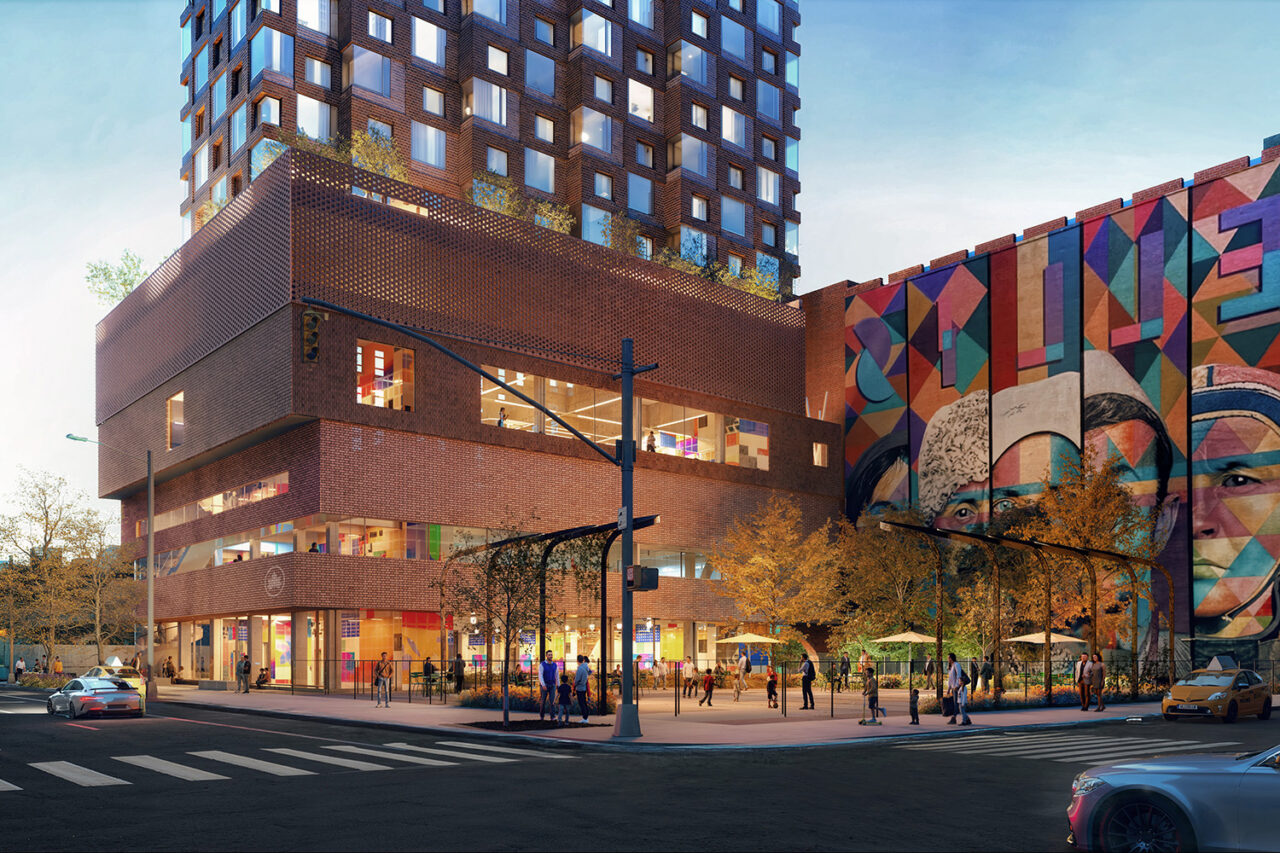
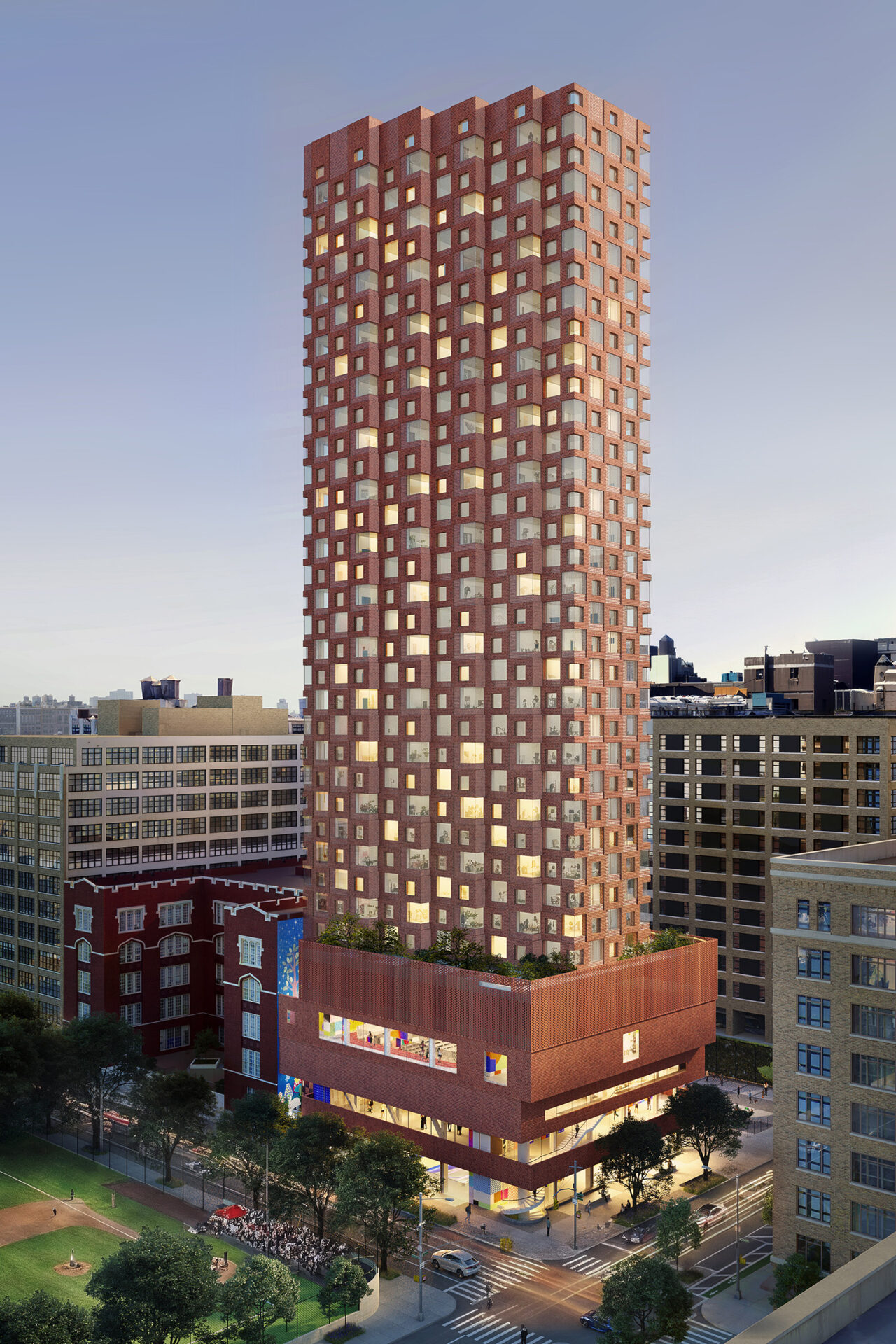
After a months-long competitive review process for the 388 Hudson Street Request for Proposals, the New York City Department of Housing Preservation & Development (HPD), Department of Parks & Recreation (NYC Parks), and Department of Environmental Protection (DEP) announced that Herzog & de Meuron will lead the design of Hudson Mosaic, a 35-story residential building at 388 Hudson Street between Clarkson and West Houston Streets in Hudson Square. Designed in collaboration with Curtis & Ginsberg Architects, and developed by the Camber Property Group, Services for the Underserved, and Essence Development, the project transforms an underutilized, DEP-owned lot and transforms the space into a first-of-its-kind development combining affordable housing and a public recreation center.
The building will contain nearly 280 affordable apartments with at least 15% designated for transitional housing, a recreation center owned and operated by NYC Parks, a community center, an MNLA-designed public plaza, and new, permanent public artwork commissioned through the NYC Department of Cultural Affairs’ Percent for Art program. The residential component is pursuing Passive House certification standards, while the ADA-accessible recreation center is designed to achieve LEED Gold. To meet Local Law 97’s energy efficiency targets, the building will integrate all-electric amenities, rooftop solar panels, backup power systems, and green roofs.
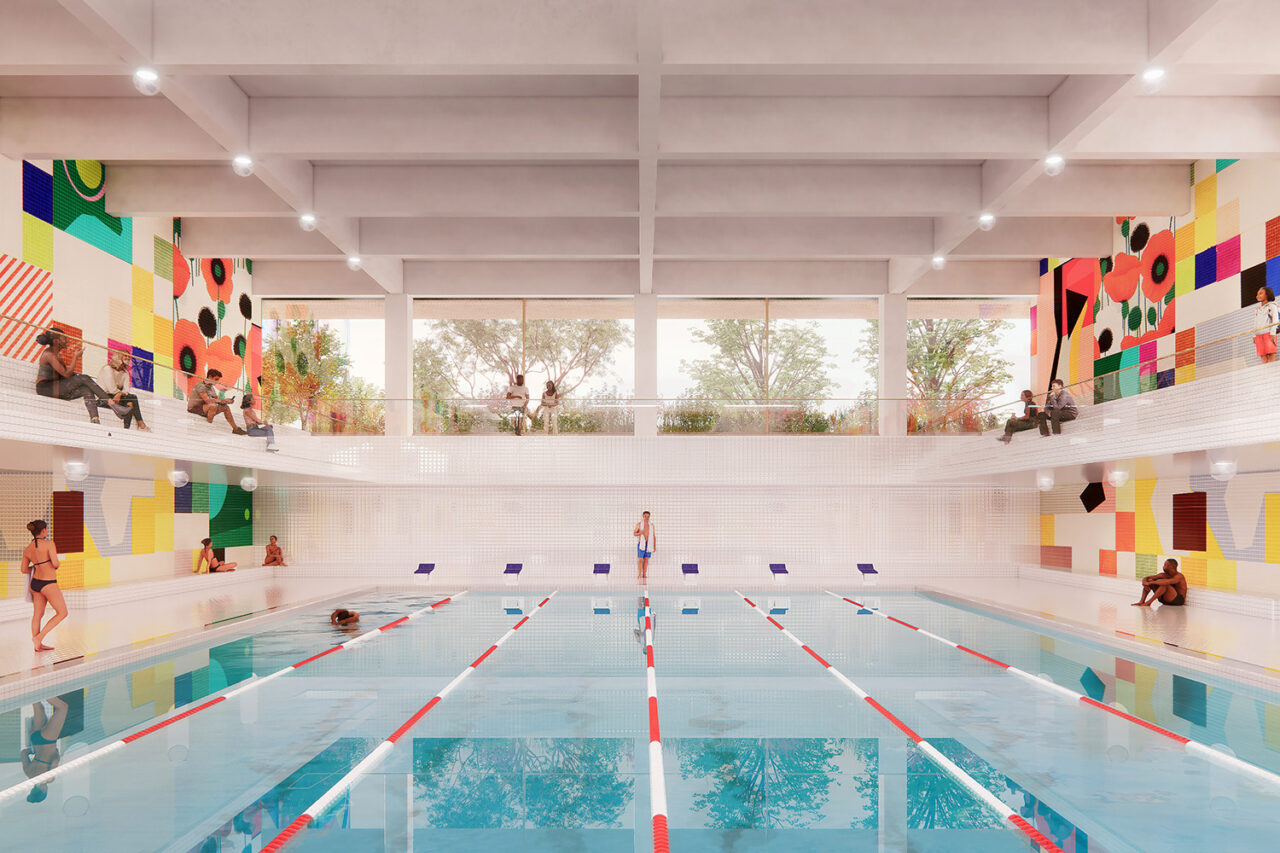
The two-story, year-round recreation facility will feature a six-lane indoor swimming pool with spectator seating, a full-size high school-regulation basketball court, an indoor walking and running track, cardio and strength rooms, a media lab, and flexible multi-purpose spaces. Residential amenities will include a sixth-floor wraparound terrace, fitness and computer rooms, a children’s playroom, shared laundry facilities, a social services suite, and community lounges throughout the building, including one on the top floor overlooking the Hudson River. The new recreation center will serve as an alternative to the neighboring Tony Dapolito Recreation Center, which has been closed since 2020 due to structural concerns.
Multisensory Spiral Pavilion Takes Stage at ADFF Mumbai
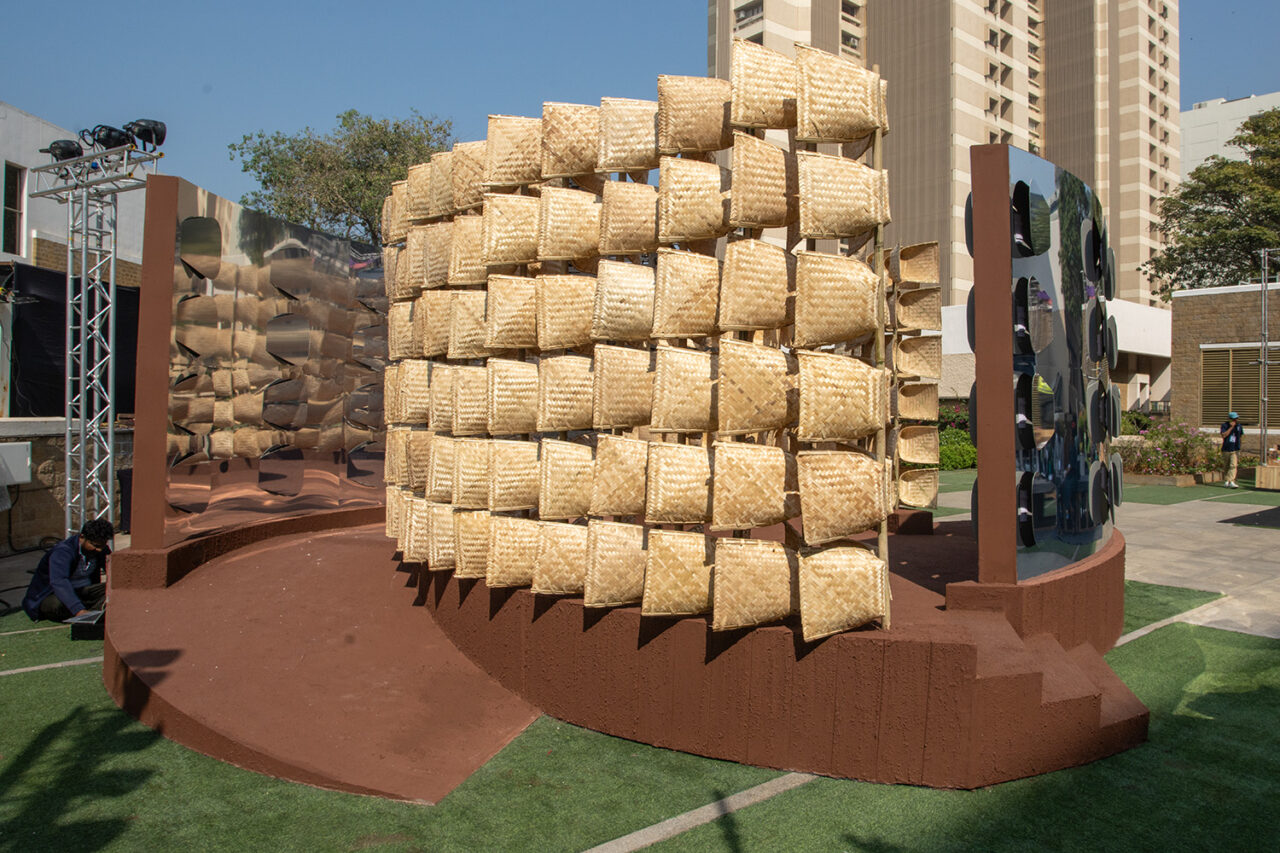
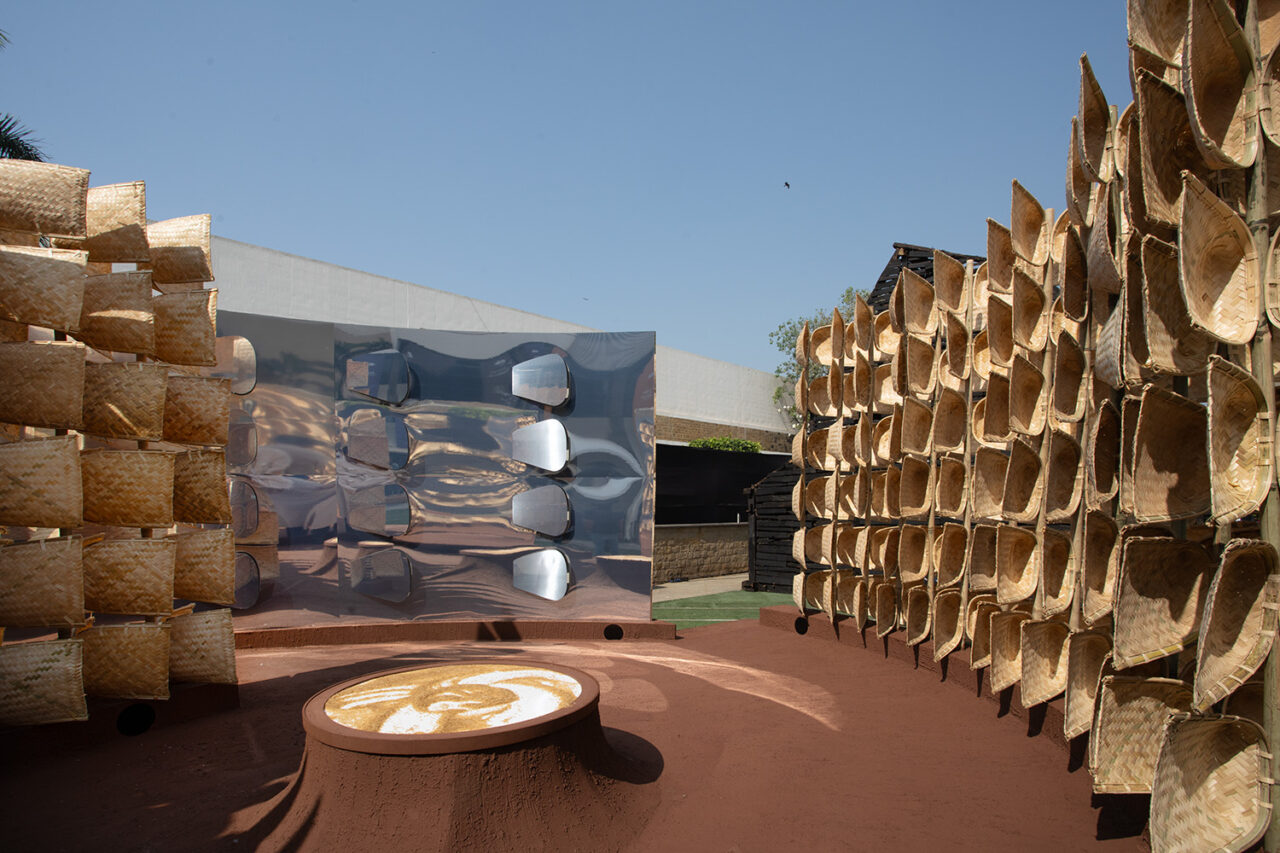
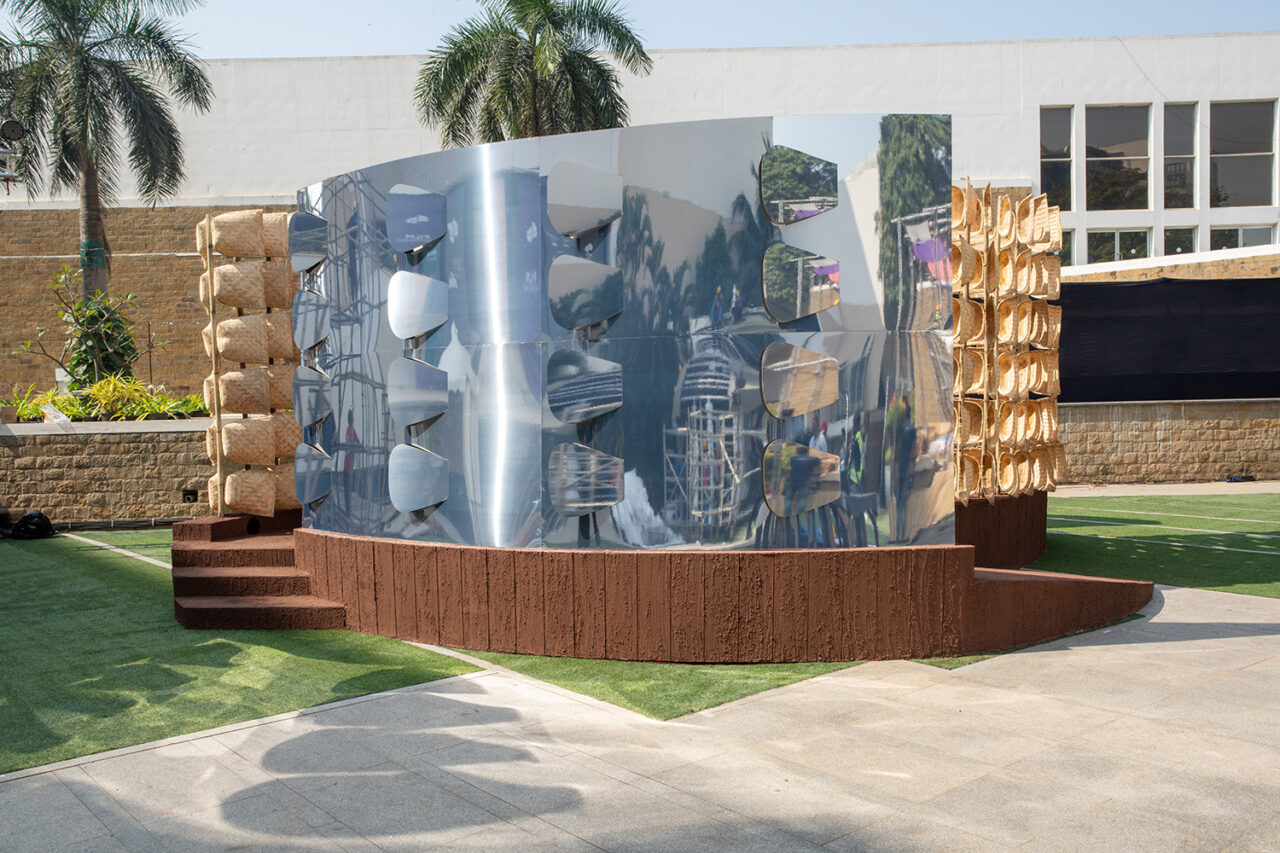
Suchi Reddy, FAIA, founder of Reddymade, has designed SIFT, an installation for the Architecture and Design Film Festival’s (ADFF) Pavilion Park Mumbai. One of eight pavilions realized for this year’s festival, the work is installed in ADFF’s Jaquar Pavilion Park and transforms the humble rice sieve, (chalanee in Hindi)—a common household object across India—into an immersive, multisensory experience.
Drawing on neuroaesthetic principles, SIFT is intentionally designed to calm the nervous system through filtered light, rhythmic sound, circular movement, and intimate scale. The installation is inspired by Suketu Mehta’s Maximum City and its layered portrayal of Mumbai’s social structures, as well as Bernard Tschumi, FAIA’s call to bridge use, form, and social values.
Conceived as a spiraling journey inward, the pavilion guides visitors through walls of woven bamboo sieves enhanced with reflective material. These porous surfaces filter daylight and cast intricate shadows that evoke the act of sifting. The sonic environment, composed by Reddymade’s longtime collaborator Malloy James, translates the rhythmic “swish” of a moving sieve into a meditative soundscape anchoring the pavilion’s core. Envisioned as a permanent work, SIFT will be reinstalled in the Godrej Properties sculpture garden in Mumbai, scheduled to open in 2027.
Downtown Brooklyn Introduces New Luxury Residences
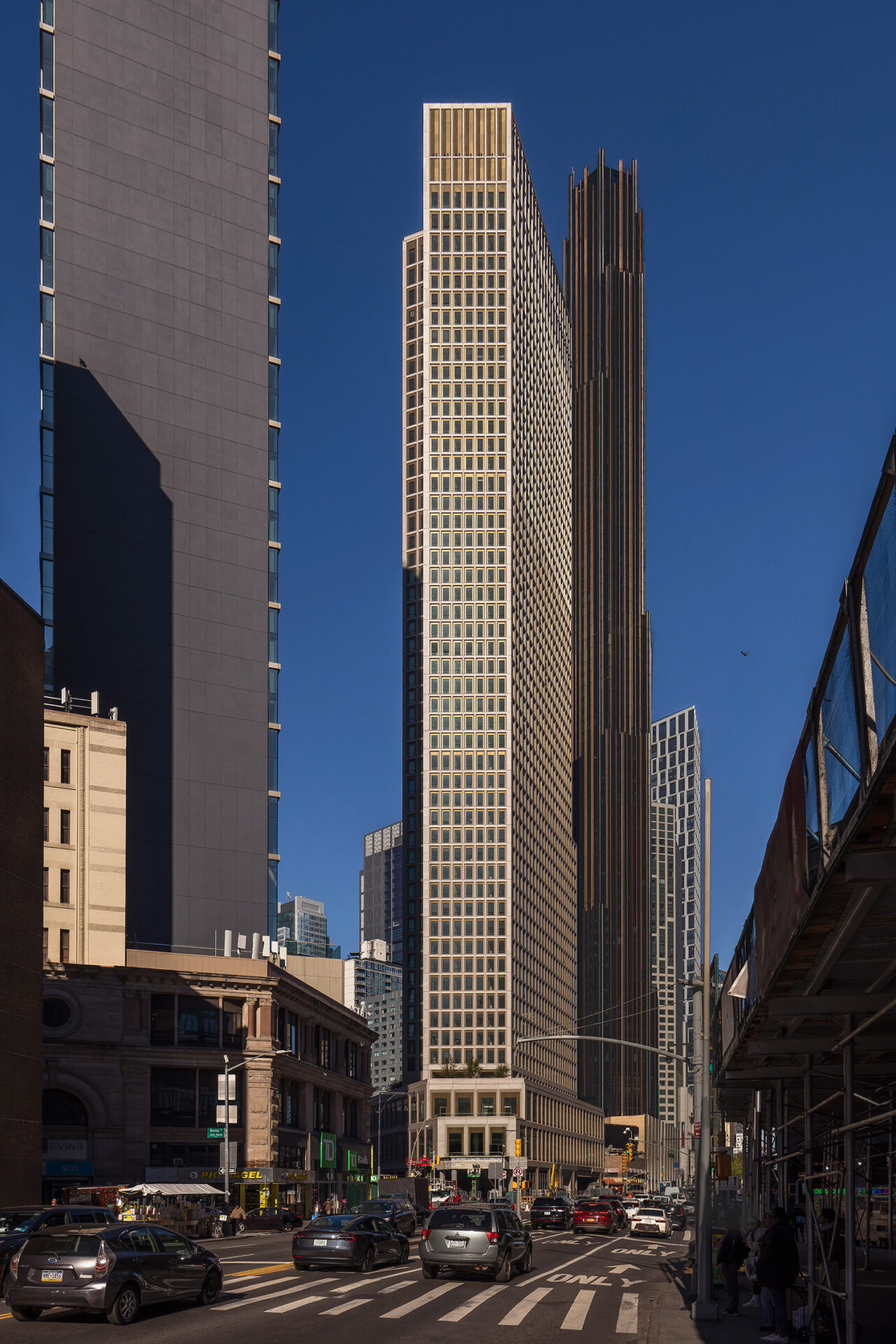
The Brook, a 52-story luxury mixed-use building designed by Beyer Blinder Belle Architects & Planners (BBB), has been completed at 567 Fulton Street. Rising from a flatiron-like site at the convergence of Flatbush Avenue, Fulton Street, and DeKalb Avenue, the tower creates a new gateway to Brooklyn’s central business district.
The 598,000-square-foot building draws inspiration from the proportions and color palettes of historic Brooklyn architecture, reinterpreted for a contemporary high-rise. The residential tower features a curtain wall of champagne and bronze metal panels and is set back from the sidewalk atop the retail podium to create more visual space at ground level. A chamfered glass retail base provides accessible public space and supports stepped garden terraces above.
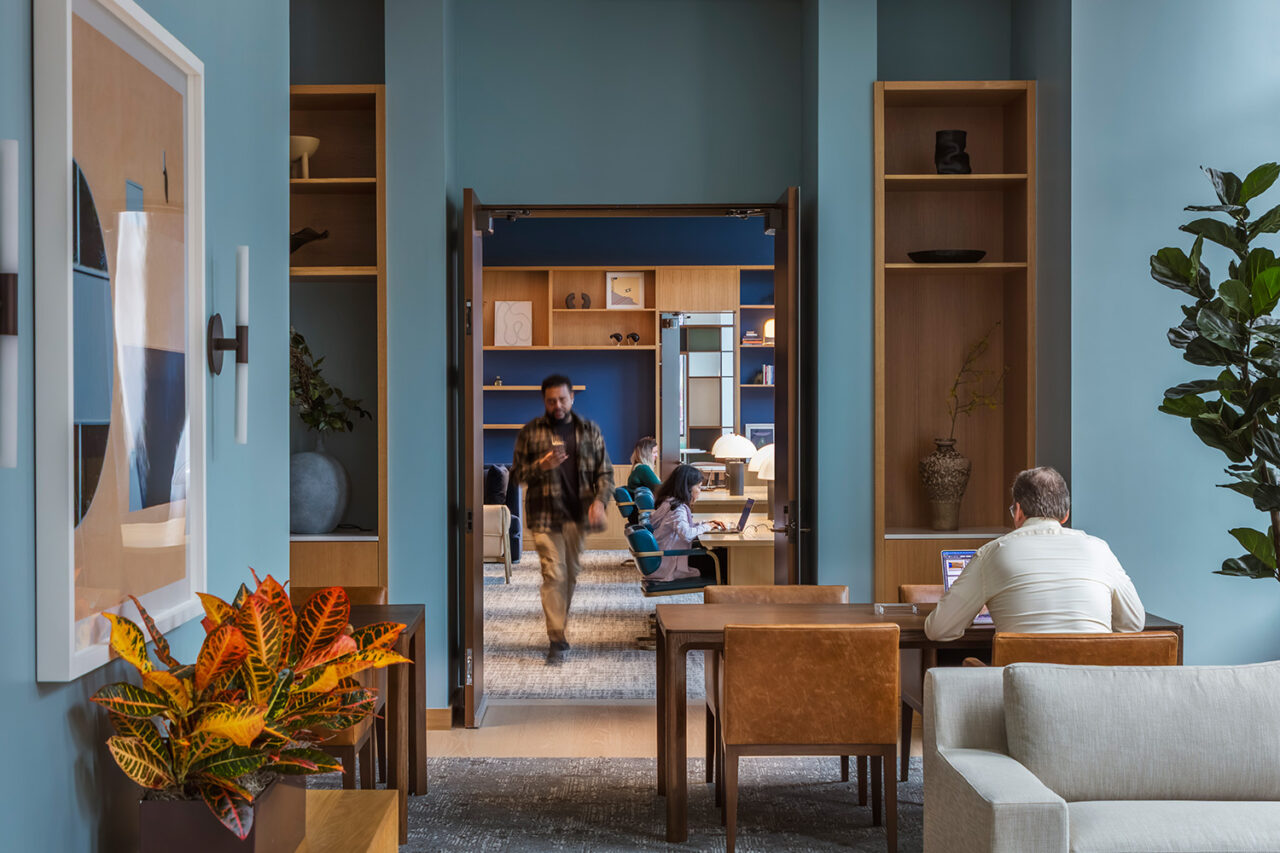
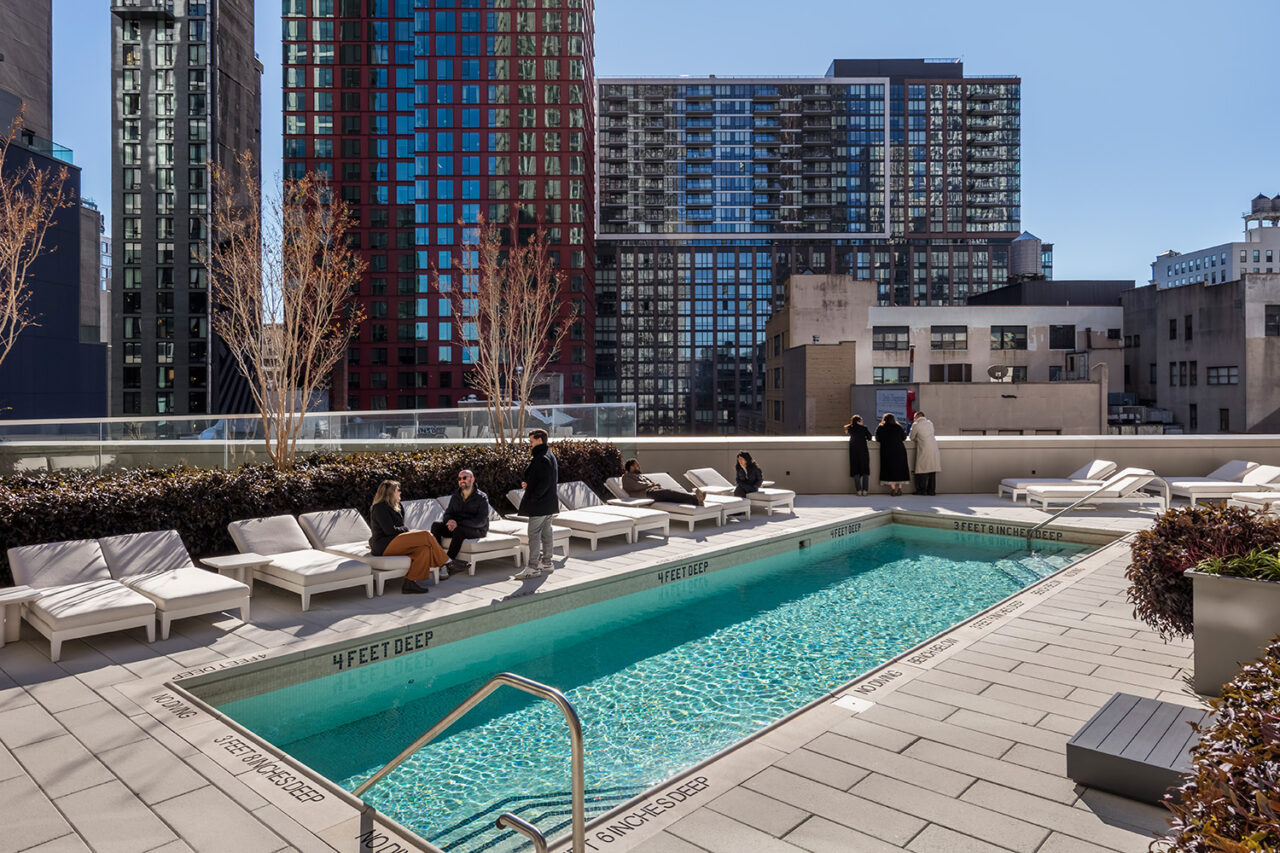
The building contains 591 rental apartments ranging from studios to two-bedroom units, with 30% designated as affordable housing. These apartments are fully integrated throughout the building and offer the same layouts, finishes, and design quality as market-rate residences. Additional features include 25,000 square feet of retail space and 30,000 square feet of resident amenities, including a library, outdoor pool, basketball court, fitness studios, lounges, and landscaped terraces designed by MPFP.
BBB collaborated with Bonetti/Kozerski Architecture on the building’s oval atrium lobby, which connects to surrounding streets, transit access, and residential elevators. The project also integrates the existing DeKalb Avenue subway entrance and includes new sidewalk furniture and landscaping aligned with the Downtown Brooklyn Partnership’s Public Realm Action Plan. The development was led by Witkoff in partnership with an affiliate of Apollo Global Management.
Construction Underway on Queens Public Library at Rego Park
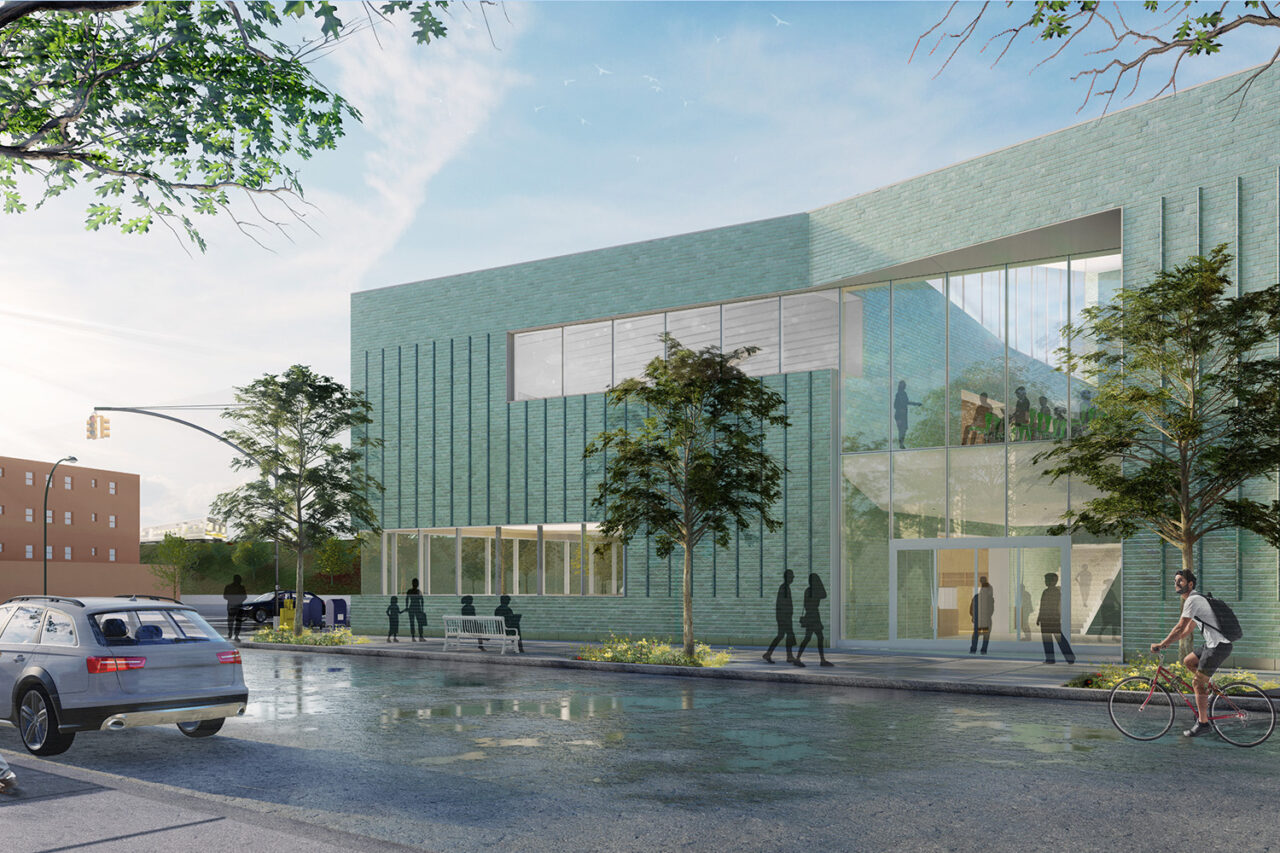
Construction has begun on the new 18,500-square-foot, three-story Rego Park Library at 91-41 63rd Drive in Queens. Designed by Weiss/Manfredi, the new building replaces a much smaller facility that was among the busiest branches in the Queens Public Library (QPL) system. The library features a jade green glazed brick façade that echoes the surrounding masonry context while offering a contemporary expression. Tall windows and double-height reading rooms bring daylight into all levels of the building, including the cellar, while angled façades provide oblique street views and signal transparency and accessibility.
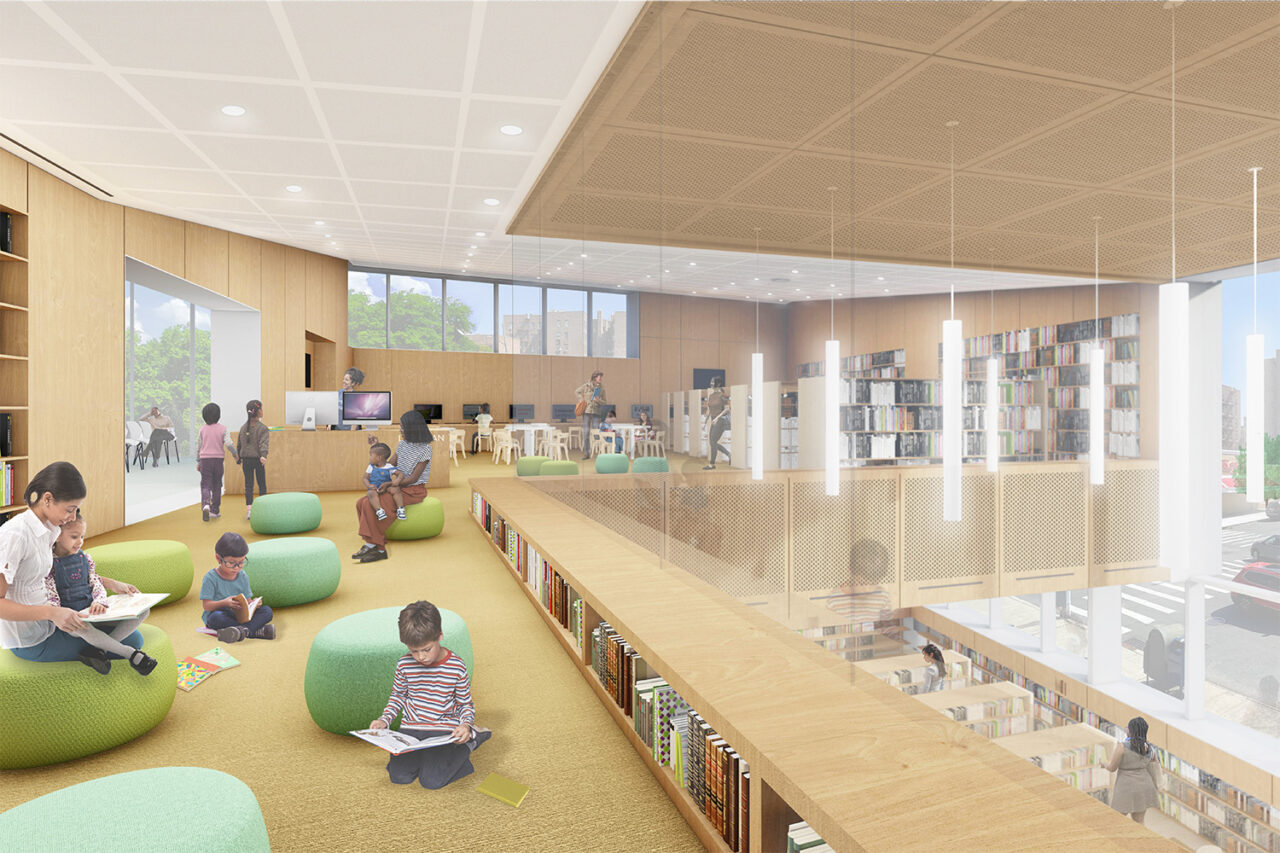
The lower level includes the main multi-purpose room along with a dedicated teen reading area. The ground floor will serve as the primary hub for adult reading and resources, while the second floor will house a children’s area, and a smaller multi-purpose room dedicated to children’s programming. A grand, open staircase and elevator will link all three floors, creating a sense of spaciousness and connection throughout the building.
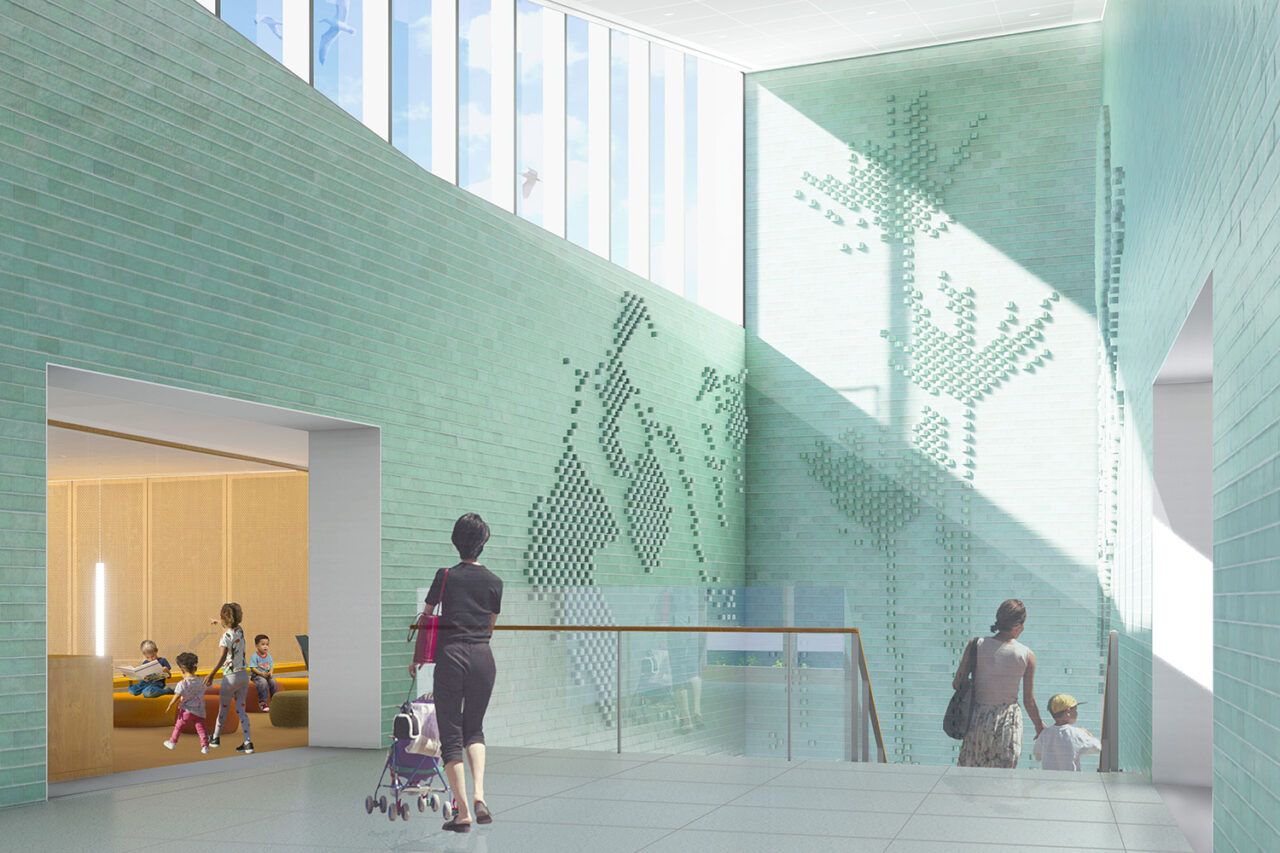
As part of the NYC Department of Cultural Affairs (DCLA) Percent for Art program, artist Katrín Sigurdardóttir’s mural The Fore will span approximately 1,500 square feet across three interior walls. Inspired by halftone printing and digital dot-matrix structures, specially contoured bricks alternate with standard bricks to form patterns that come together to reveal large-scale images of plants that are native to Queens. The new library is expected to meet LEED Silver certification for environmental sustainability and includes a low-maintenance green roof, high-efficiency lighting and mechanical systems, on-site stormwater retention, and a highly insulated building envelope. The project is managed by the Department of Design and Construction (DDC) on behalf of QPL and is slated for completion by the end of 2028. In 2021, Weiss/Manfredi unveiled the library’s new design, with construction originally slated to begin in the summer of 2024. The project, including its wall installation, received the Public Design Commission’s Award for Public Excellence in Design in 2023.
Aviation Garden Emerges from Vacant Hotel Complex
Designed by Aufgang Architects, the former JFK Hilton Hotel which closed in 2023 officially opened as Baisley Pond Park Residences at 143–06 135th Avenue in South Jamaica, Queens. Developed by Slate Property Group and RiseBoro Community Partnership, the 12-story, 318-unit project for low-income and formerly homeless New Yorkers marks the City’s first hotel-to-residential conversion under the Housing Our Neighbors with Dignity Act (HONDA).
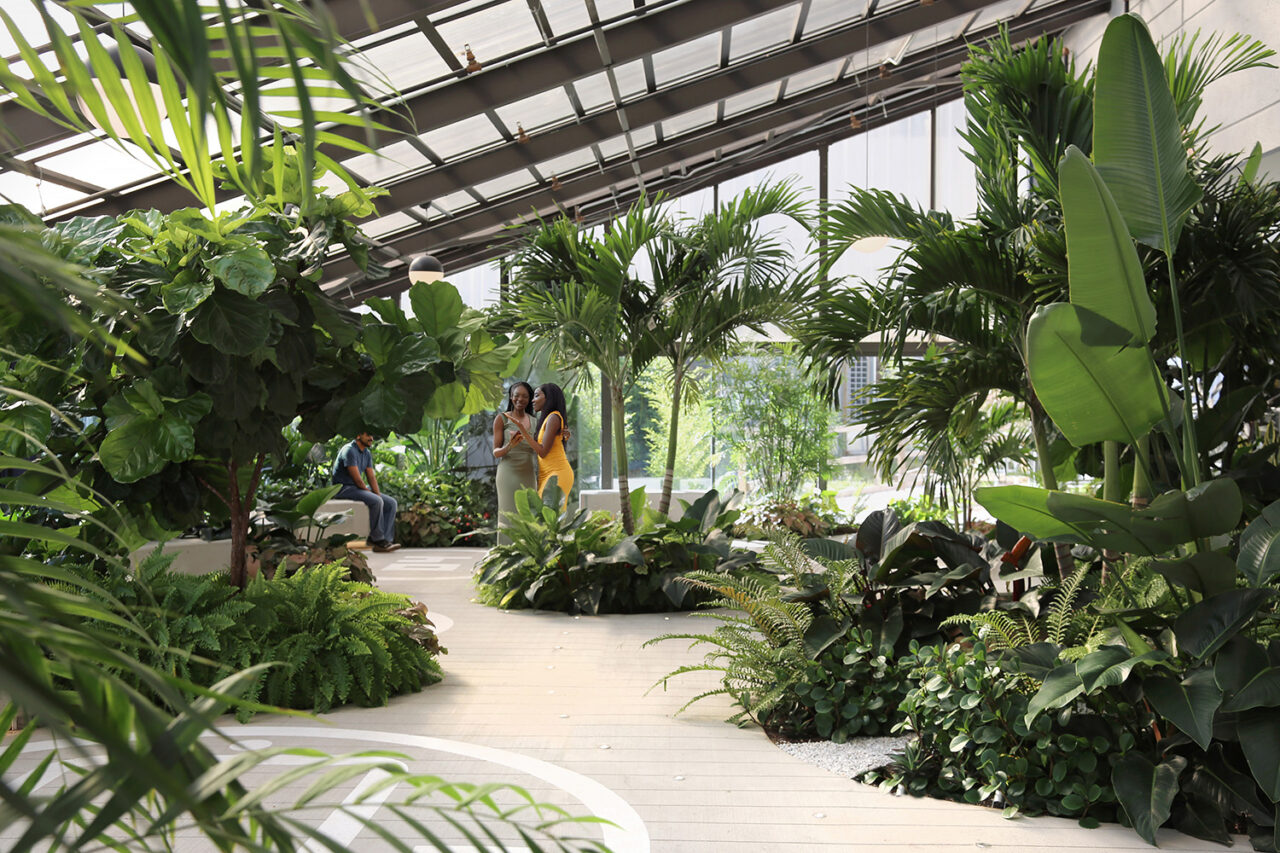
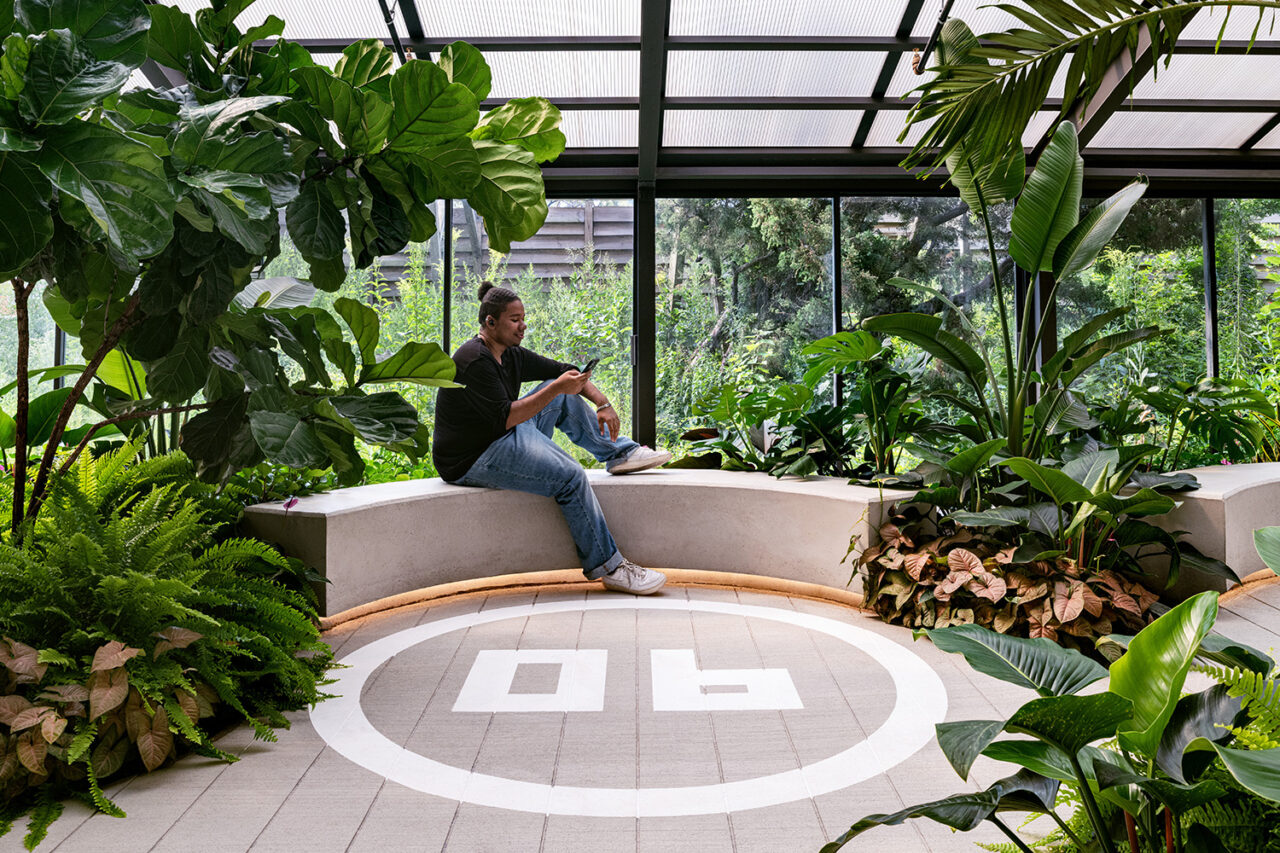
Landscape architecture firm OSD (Office of Strategy + Design) adaptively reused the existing pool house structure and retrofitted its mechanical systems to support a year-round biophilia, daylight, and a communal indoor-outdoor greenhouse space. The systems were electrified and paired with new rooftop solar arrays, aligning environmental performance with long-term operational resilience.
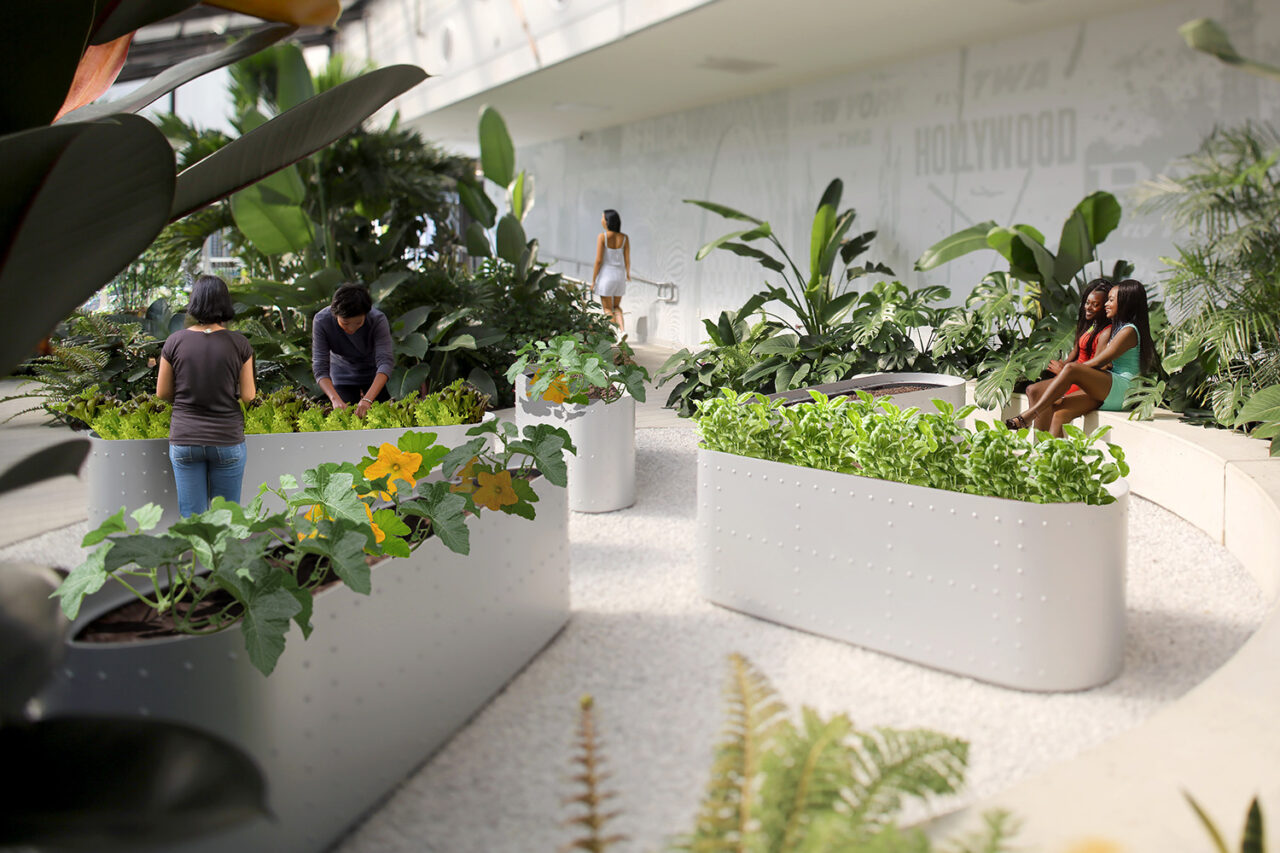
The design of the 2,600-square-foot garden draws inspiration from the cultural and material language of flight to create an interior landscape that combines food production and social space with restorative environments; it is organized as a sequence of programmed rooms set within lush planting. The Helipad Lounge provides seating, working, and social alcoves, while the Propeller Farm functions as an indoor urban farm that supports year-round food cultivation by residents. The material palette and graphic language is inspired by JFK’s aviation history and uses runway striping, riveted aluminum planters evocative of Eero Saarinen’s TWA Terminal, and 120-foot-long mural references posters that recall the early days of flight. Based on research through NASA, the plant palette is selected to absorb and filter the most common chemicals such as VOCs, thereby bringing an increase in human health and fresh air. Studio Parallel collaborated on the interior design of the space including the specification of furniture and lighting.
In Case You Missed It…
The Obama Presidential Center has begun installing the text of “You Are America” from President Obama’s 2015 address marking the Selma to Montgomery marches, on the top of the Tod Williams Billie Tsien (TWBT) designed museum’s facade. The 19.3-acre campus outside of Chicago, which is expected to open in June 2026, also includes an athletics center by Moody Nolan, a water garden by Maya Lin, and a forthcoming commission by Theaster Gates.
AYON Studio is restoring the historic Langston Huges House at 20 East 127th Street. Originally designed by Alexander Wilson, the three-story Italianate-style three-story row house built in 1869, features a stoop with cast-iron railings, double-hung windows, and a modillioned sheet metal roof cornice, and was designated a NYC Landmark in 1981.
A 27-foot-tall standing Buddha designed by the artist Tuan Andrew Nguyen, has been selected for the next High Line Plinth commission, to preside over 10th Avenue at 30th Street in spring 2026. Titled “The Light That Shines Through the Universe,” and the hewed in sandstone as a symbol of peace and resilience Nguyen’s statue resurrects the larger of two Bamiyan Buddhas demolished in March 2001 by the Taliban. The Buddha replaces the giant 1-foot pigeon that has perched on the elevated park since last fall, to the dismay of many who have grown accustomed to seeing the pigeon.
The Brutalist public plaza completed in 1969, on St. Mark’s Avenue between Kingston and Albany Avenues in the Crown Heights section of Brooklyn, designed by I.M. Pei and M. Paul Friedberg will be reconstruction by the NYC Parks. The project which includes replacing the fencing, wall and pavers, was approved by the Landmarks Preservation Commission (LPC).
Hunts Point Produce Market in the Bronx will undergo redevelopment by Aurora-Primus, a joint venture design-build firm with Aurora Contractors, and Primus Builders, as principal entities to execute the project with the goal of achieving cleaner air for nearly 13,000 nearby residents. The redevelopment is expected to begin late this year, following environmental reviews and design work overseen by the New York City Economic Development Corporation.
New York City appears poised to dissolve the Department of City Planning’s Urban Design Division, a unit that has shaped major rezonings and citywide design standards since its revival in 2007.
Construction is under way on The Perennial, a mixed-use project that converts the existing and vacant since 2008 Parkway Hospital building into 145 intergenerational affordable housing units. Additionally, the Forest Hills Jewish Center (FHJC), a neighborhood fixture since 1948 will move into a new 34,000-square-foot space within the building. The Perennial will include an eight-story, 20-by-100-foot addition on the north side, a four-story, 20-by-82-foot addition on the northwest corner, a two-story vertical addition, and fully redeveloped interiors. The project is being developed by Foxy Management and Selfhelp Realty Group.