





by: Linda G. Miller
Reimagined Design for La Brea Tar Pits Unveiled
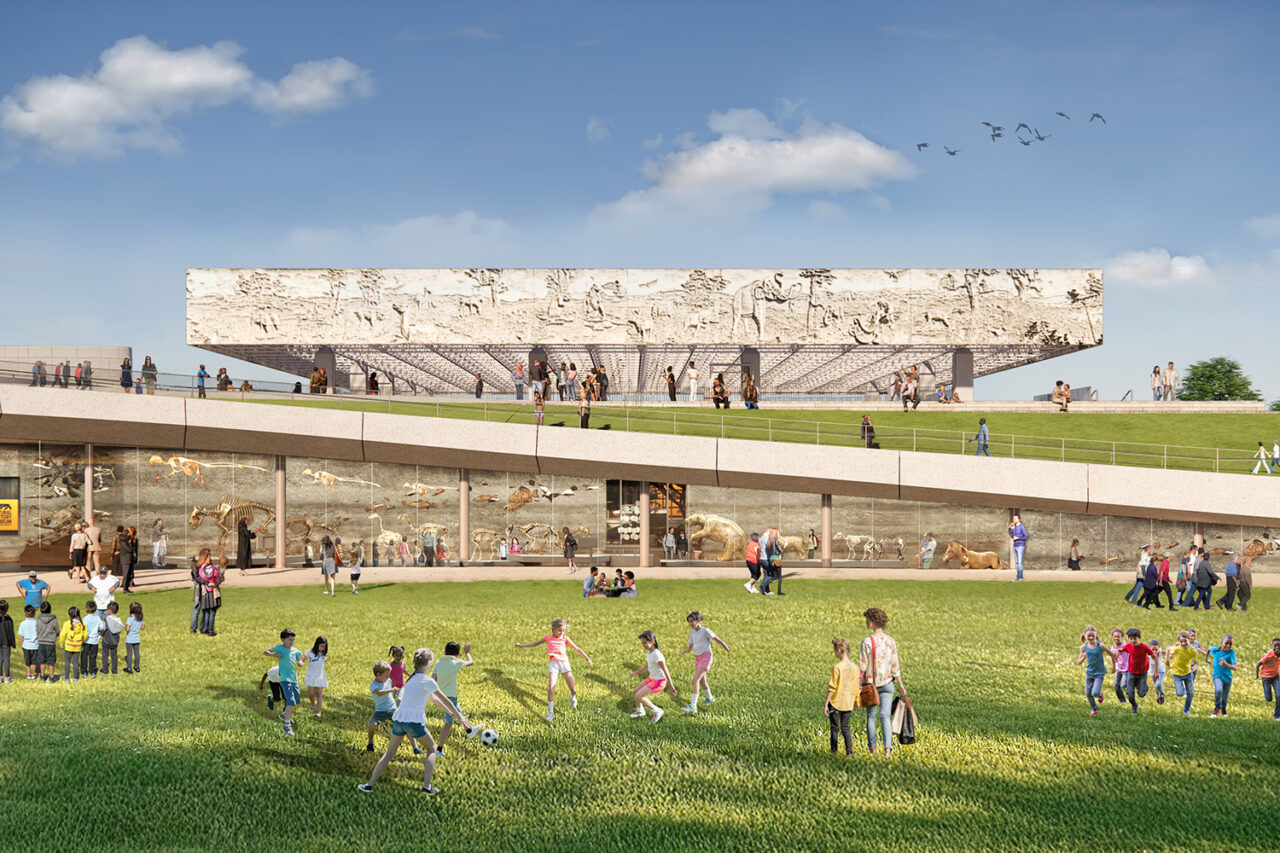
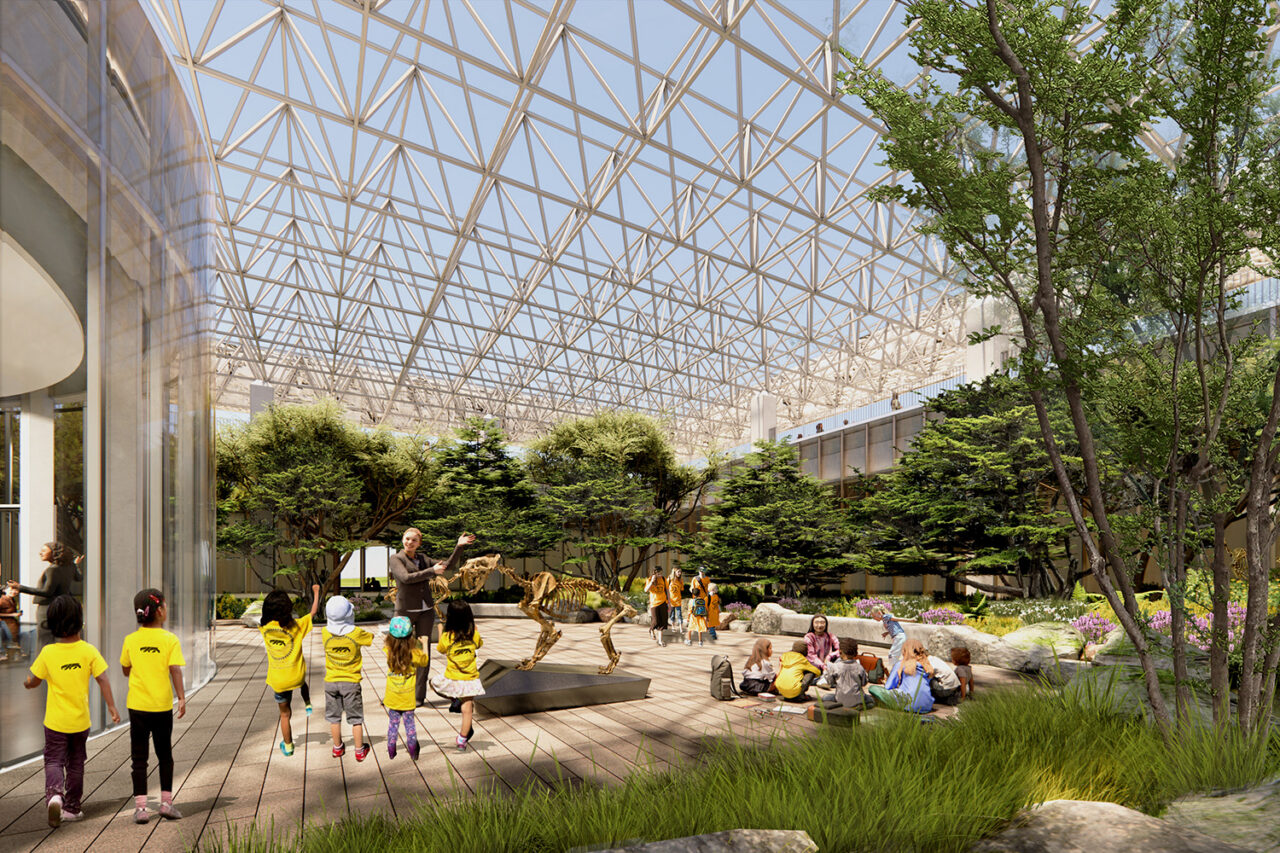
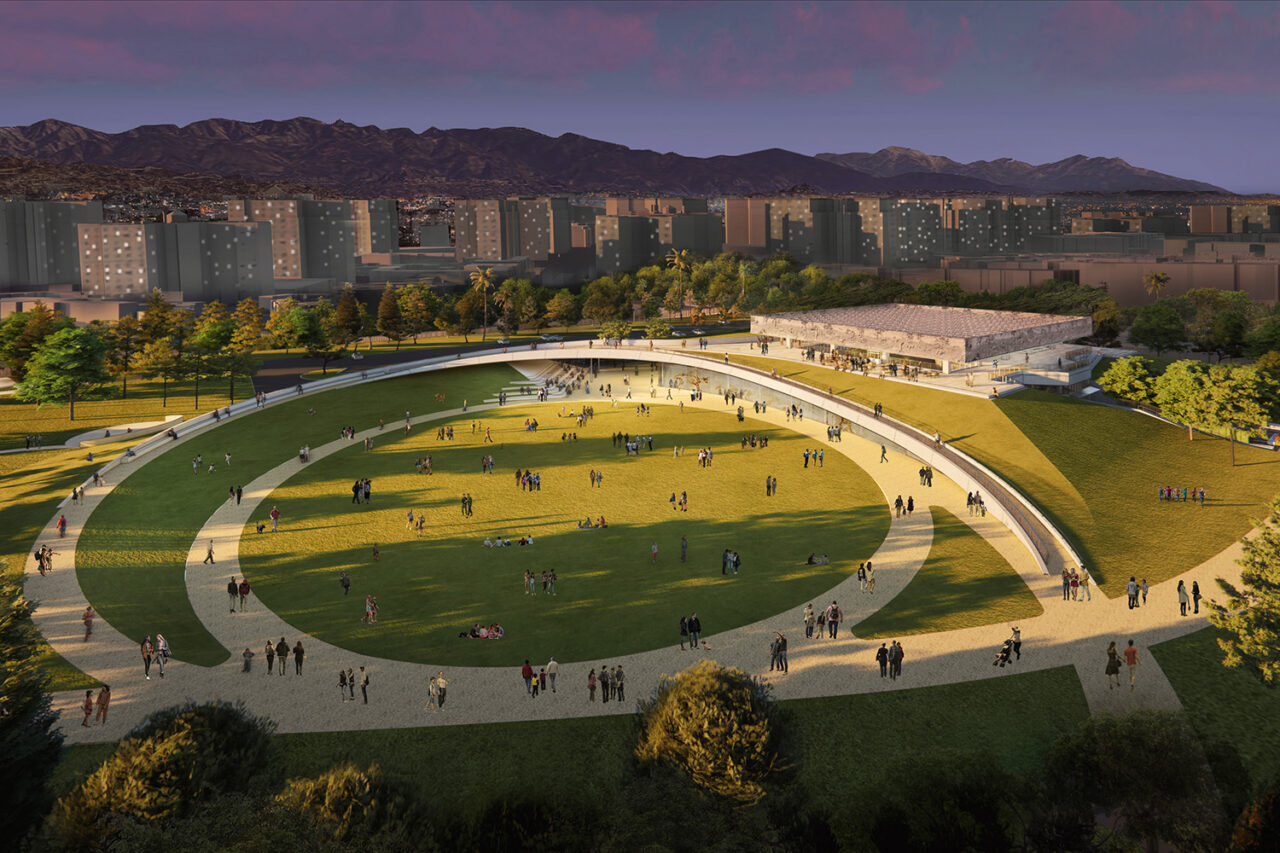
WEISS/MANFREDI Architecture/Landscape/Urbanism has released new images of its redesign for the La Brea Tar Pits, coinciding with the Natural History Museums of Los Angeles County’s (NHM) announcement of funding the Samuel Oschin Global Center for Ice Age Research. The announcement marks a major milestone in the project’s multi-year transformation. The 13-acre site, which surrounds the Los Angeles County Museum of Art (LACMA), is the only active paleontological research site located in a major urban area. It has not been renovated or considered comprehensively in the half-century since George C. Page Museum opened in 1977. The competition-winning design, first announced in 2019, reimagines the Museum, active excavation sites, and Hancock Park as a single inside-outside museum closely connected to the surrounding landscape and neighborhood.
The design strategy, known as “Loops and Lenses,” connects existing structures and introduces new amenities for research and public life, using framed views and clear circulation to bring scientific work and collections into public focus. The Oschin Center addition will be integrated into the museum, as a semi-submerged exhibition building. The 57,000-square-foot museum is burrowed into the earth to preserve as much of the landscape as possible; it has sloping, grass-covered exterior walls and is surmounted by a 10-foot-high, four-sided fiberglass frieze of Ice Age landscapes, plants, and mammals. A new glass façade under a large circular berm will wrap around the base of the museum and an elevated pathway encases the facade, creating a small, covered pavilion area at the entrance.
In addition, a 0.62-mile triple pedestrian loop connects visitors directly to the museum, excavation sites, and research spaces, while doubling accessible grass slopes and terraces. Plans call for a new Wilshire Boulevard-facing entrance; a contiguous zone of free, shaded seating, outdoor gathering areas, an amphitheater; and a reimagining Hancock Park integrating excavation sites, gardens, and public space. The project is scheduled for completion ahead of the 2028 Olympic Games. Gruen Associates is the project’s executive and landscape architect and Kossmann DeJong is is leading the design of the exhibition spaces and outdoor experiences.
Shirley Chisholm Recreation Center Opens in East Flatbush
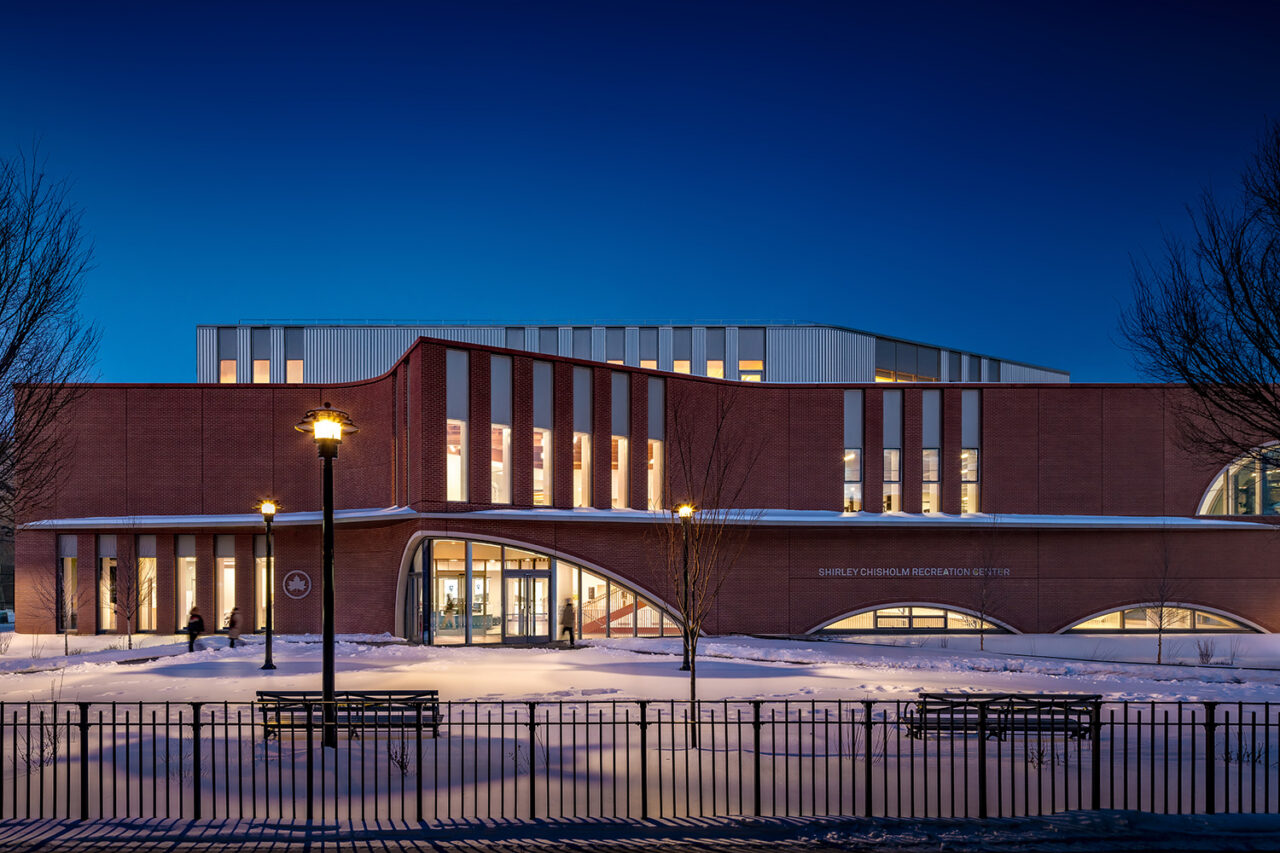
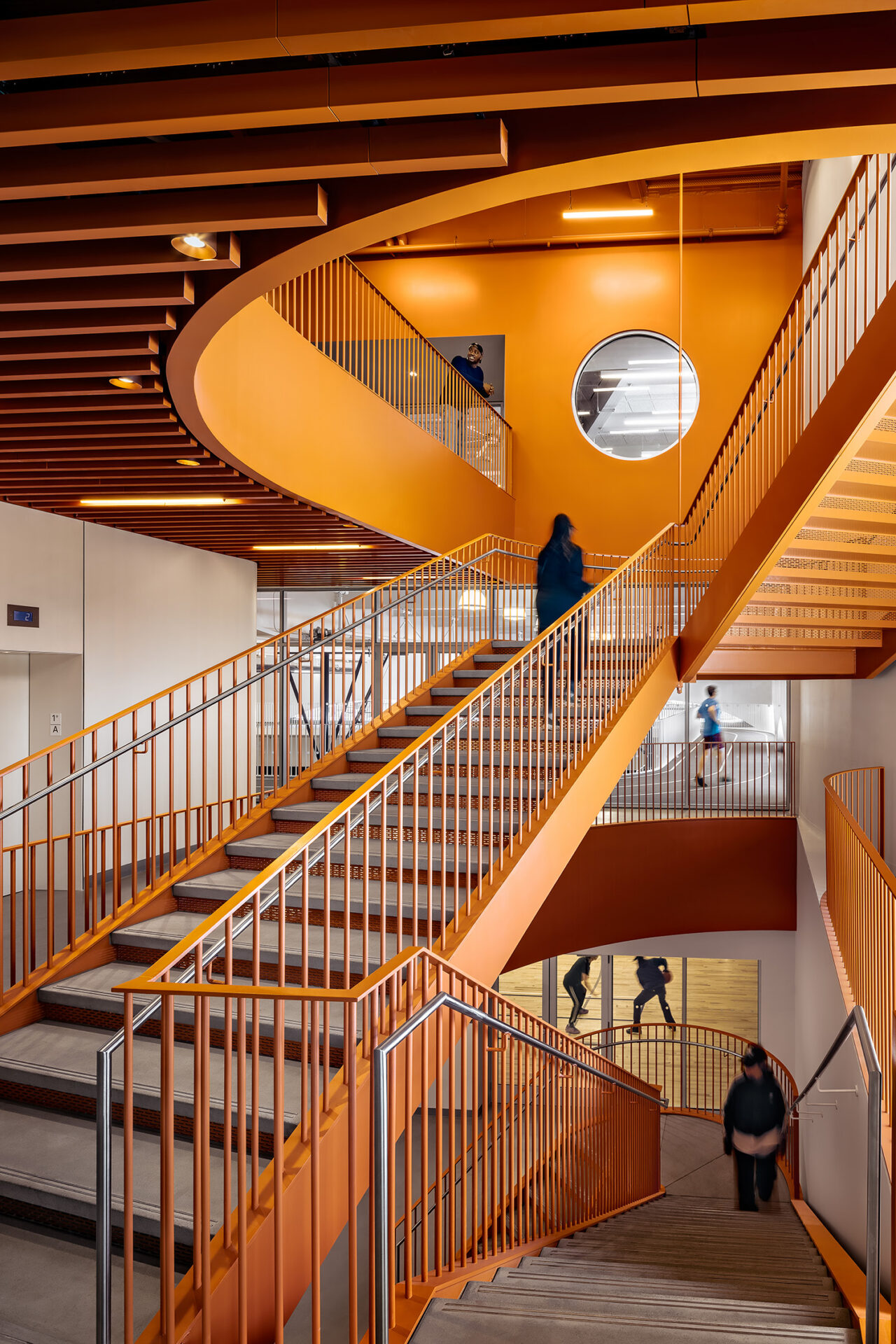
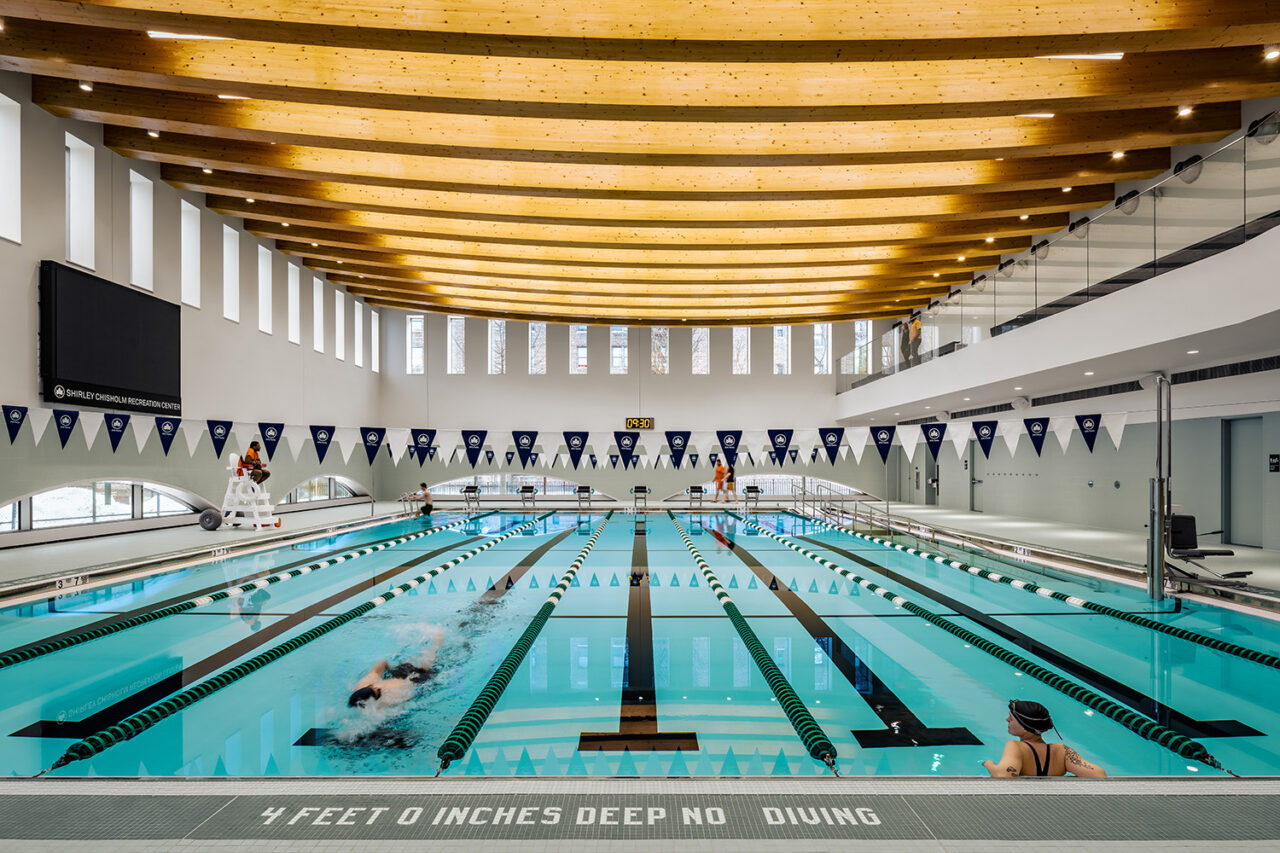
Years in the making, the Shirley Chisholm Recreation Center has officially opened in East Flatbush, Brooklyn. Named for the Brooklyn-born activist and educator who became the first Black woman elected to the U.S. Congress in 1968, the 74,000-square-foot facility at 3105 Farragut Place is the first city-run recreation center built in central Brooklyn. Designed by Studio Gang, the project establishes a new social hub for fitness, recreation, and learning at Nostrand Playground.
A transparent main entrance projects into a shaded public plaza, while large arched windows set within a curving brick façade draw daylight deep into the building. The lower level includes a gymnasium, walking track, double-height competition pool, and dance and fitness rooms. Above the pool, long “fish-bellied” mass timber beams—well suited to humid environments—bring warmth to the space. Openings between floors strengthen visual and physical connections among programs. Upstairs, the center offers afterschool classrooms, a media lab, and a commercial teaching kitchen. Daylit learning spaces for all ages open onto a wraparound rooftop terrace and gardens designed by Elizabeth Kennedy Landscape Architect.
To achieve a low-carbon footprint, the design includes a high-performance envelope, energy recovery system, and all-electric heating and cooling. A whole-building life-cycle assessment informed material selections to reduce embodied carbon. Expanded tree canopy, green roofs, water-use reduction measures, and on-site stormwater management further support environmental performance. The project is targeting LEED Gold certification.
Commissioned through NYC’s Percent for Art program, artist Vanessa German completed a year-long residency at the center, co-creating artworks with community members. The pieces range from large freestanding sculptures to smaller works integrated into walls, cabinets, and fitness lockers.
The New York City Department of Design and Construction (DDC) managed the project on behalf of NYC Parks through a design-build process, with Consigli Construction serving as design-builder. The project received an Award for Excellence in Design at the Public Design Commission’s 43rd Annual Design Awards in 2025.
Bonham’s New Flagship Opens in Steinway Tower
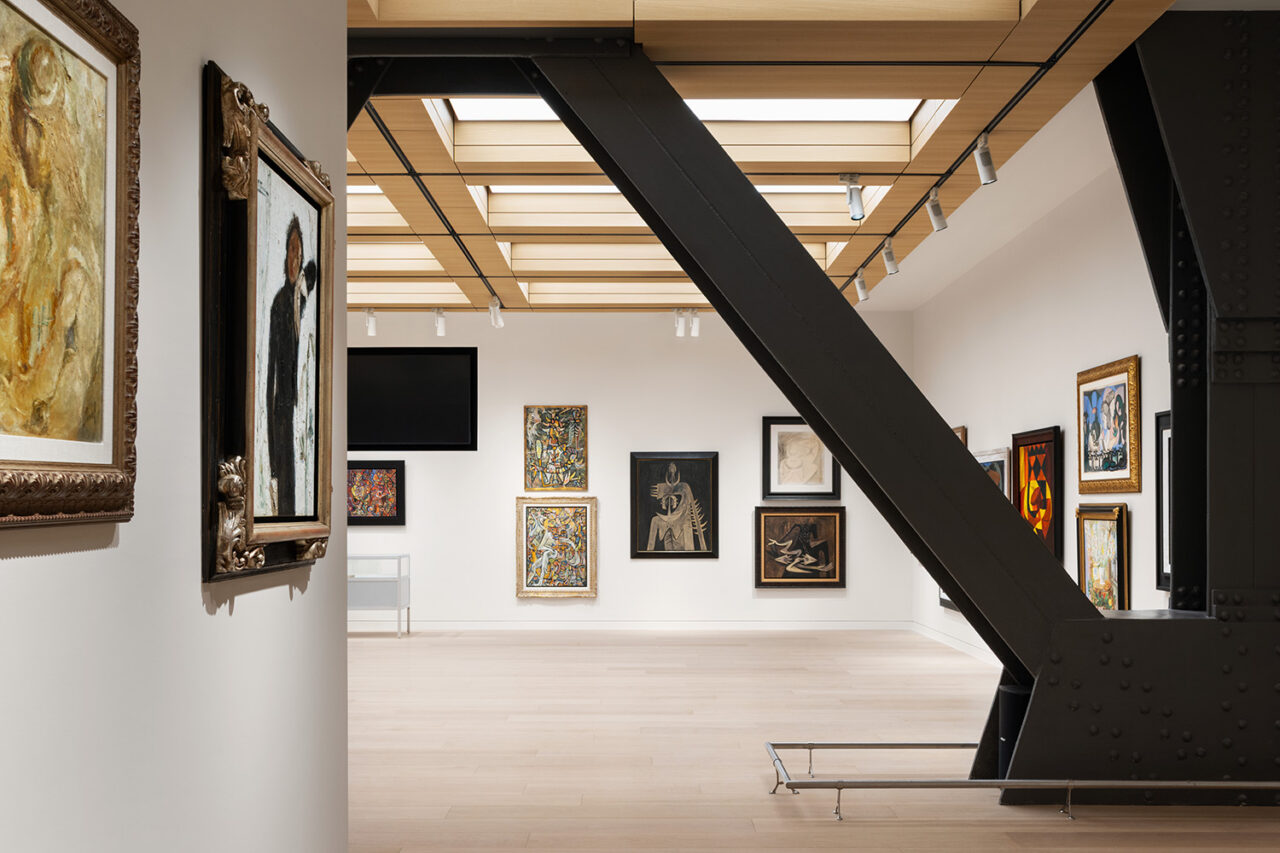
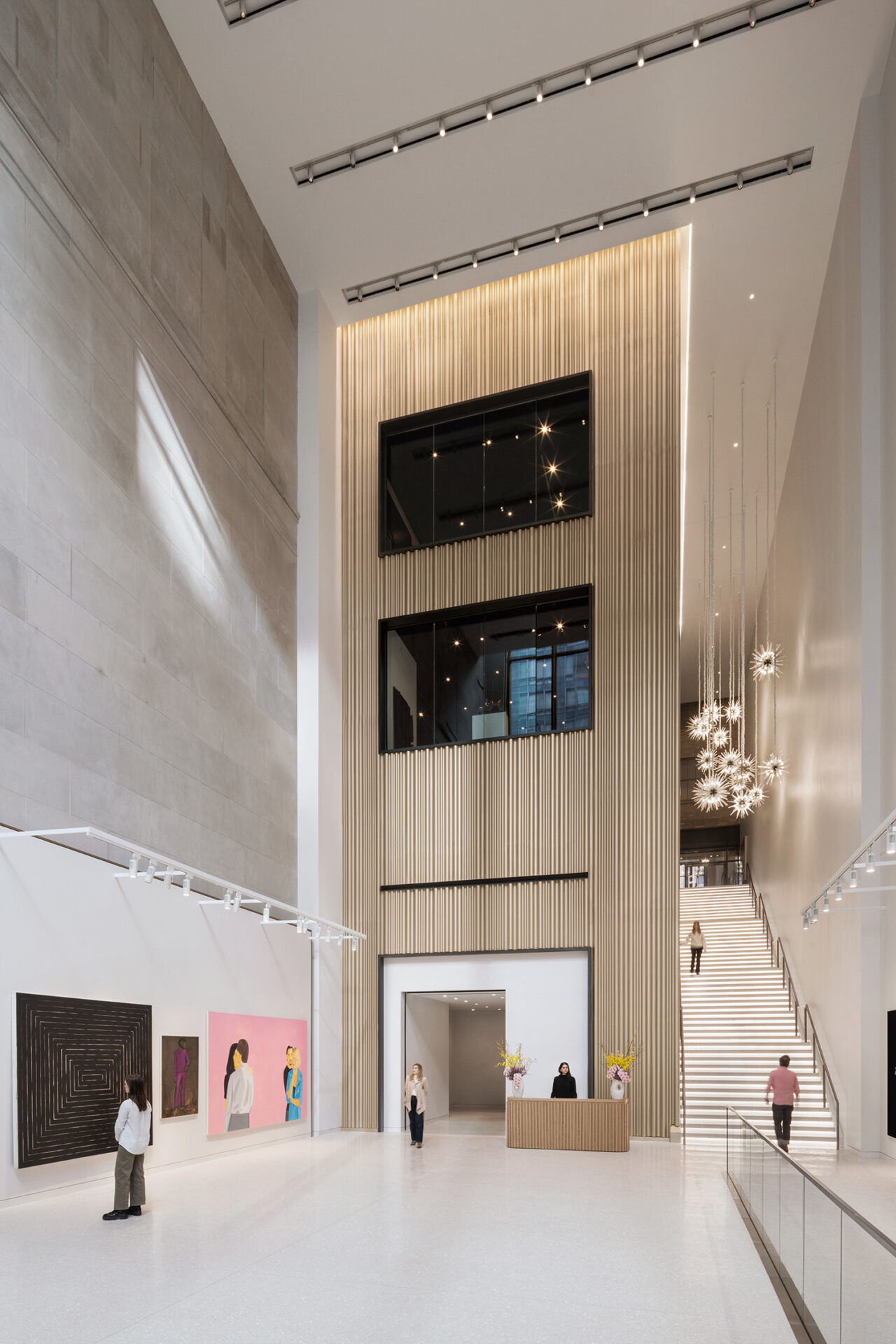
Global auction house Bonhams has relocated its U.S. headquarters from Madison Avenue to the landmarked Steinway Hall at 111 West 57th Street, occupying the ground floor of the SHoP Architects–designed supertall tower. The new 42,000-square-foot Bonhams New York was designed by Gensler, with interiors by Design X Nada, and includes two auction rooms, employee workspaces, meeting rooms, professional photography studios, and centralized warehousing with a dedicated loading bay.
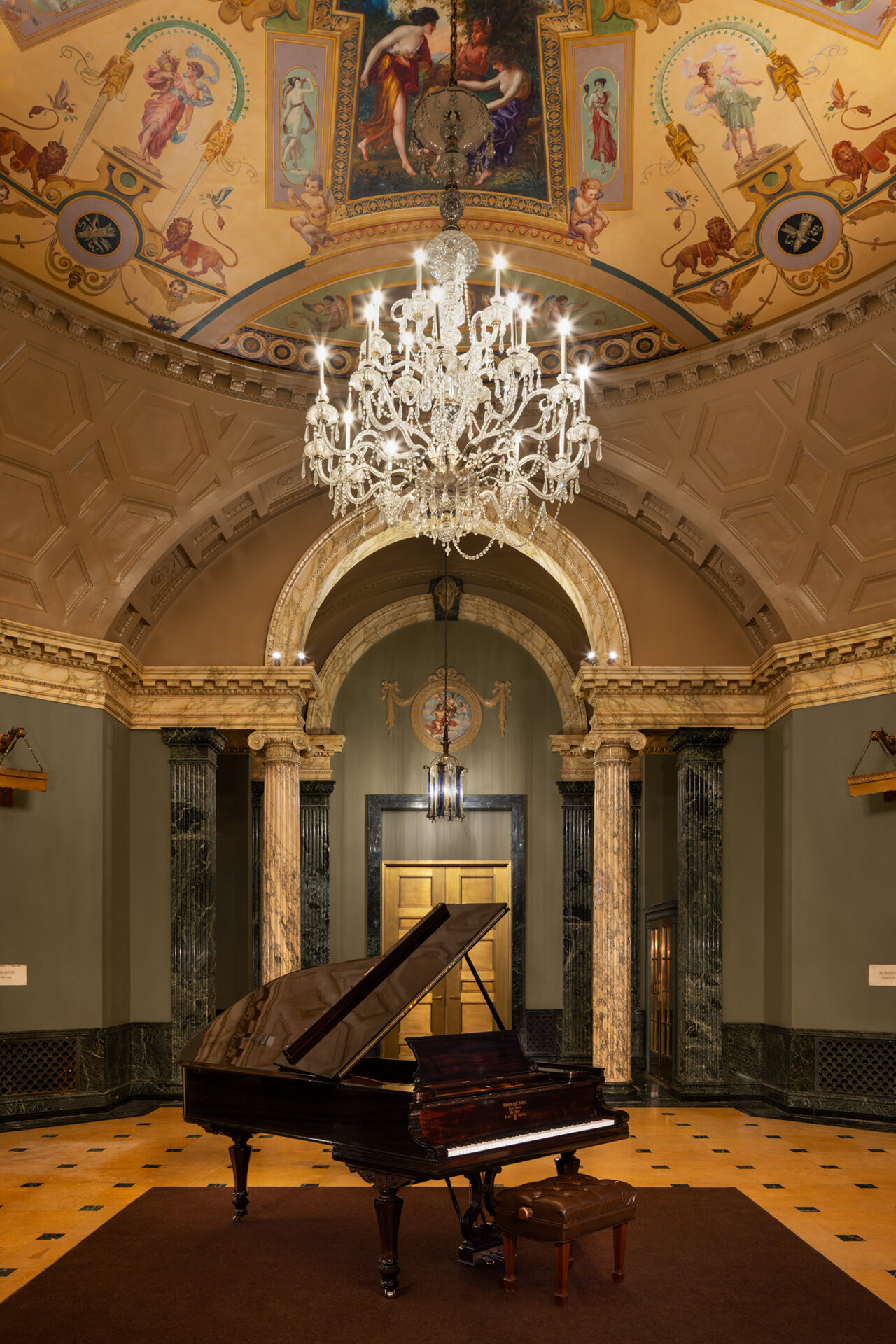
Originally designed by Warren & Wetmore and completed in 1925 as the headquarters of Steinway & Sons, the New York City–designated landmark reopened after a decade of closure. Restoration was led by JDS Development Group in collaboration with John Canning & Co. The limestone façade has been preserved, along with the ornate domed reception hall featuring hand-painted mosaics, marble arches, and sculptural detailing.
Gensler’s design emphasizes contrast, pairing the historic limestone and brick structure with contemporary materials and finishes. An 80-foot glass atrium forms the main reception space and includes a grand staircase leading to a triple-height gallery illuminated by natural light and flanked by two large auction rooms. Four gallery spaces throughout the building are intentionally minimal, featuring white oak finishes. Drawing inspiration from Steinway Hall’s Beaux-Arts rotunda, custom elements in glass, stone, and liquid metals are accented with soft suedes and rich velvets.
Now part of 57th Street’s cultural corridor, the 230-year-old auction house aims to expand beyond the traditional auction model, offering free exhibitions, guest installations, and marquee auctions. Opening week will feature the “Caribou Ranch” Steinway & Sons piano displayed beneath the rotunda, accompanied by live performances. The 1910 Model B Grand Piano is historically significant as the instrument Elton John used to record “Don’t Let the Sun Go Down on Me,” among other works, at Colorado’s famed Caribou Ranch Studio.
Palmer Memorial Institute to See Revived Campus under National Trust Initiative
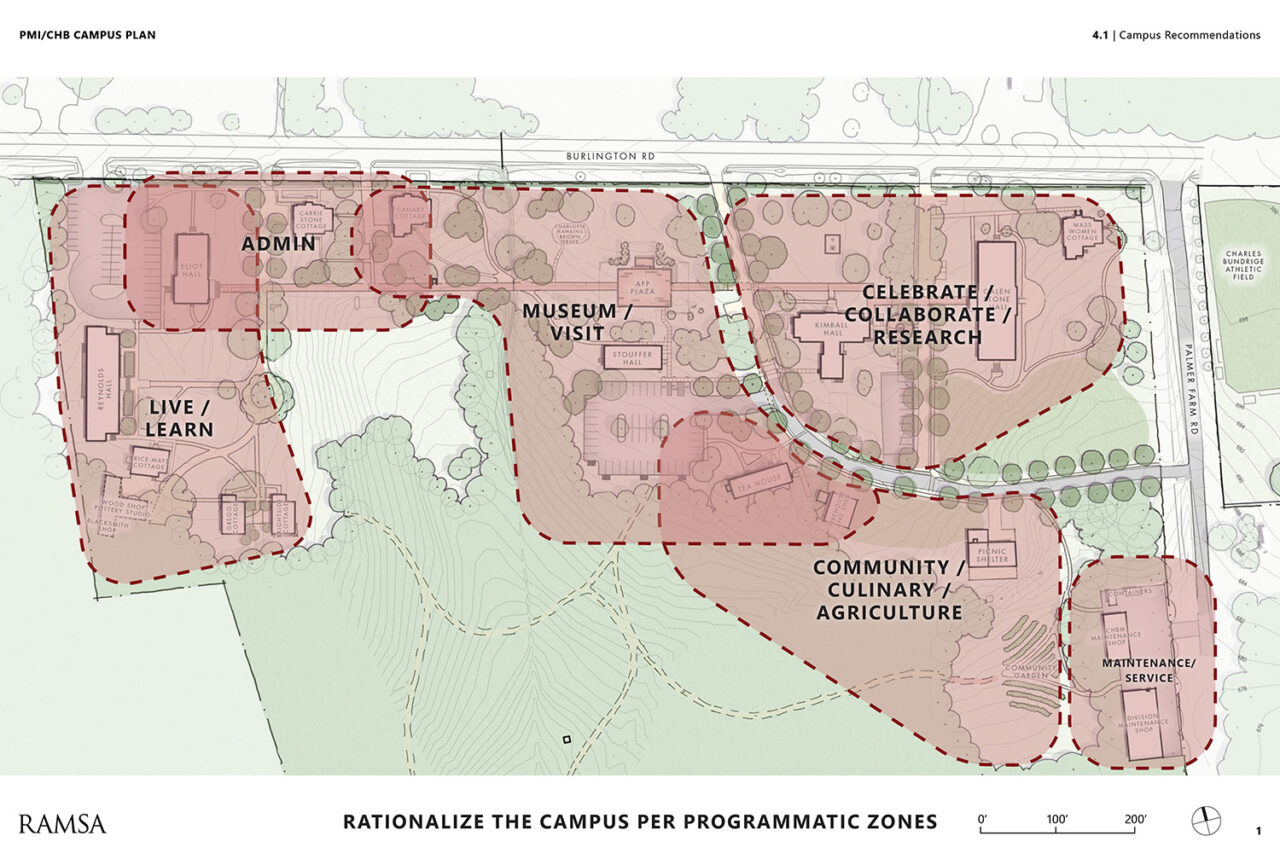
RAMSA (Robert A.M. Stern Architects), in collaboration with the National Trust for Historic Preservation’s “Where Women Made History” initiative, has completed a pro bono campus plan for the historic Palmer Memorial Institute in Sedalia, NC. Located between Greensboro and Burlington, the plan establishes a framework for phased rehabilitation and reimagines the 35-acre site as a cultural and educational hub.
Founded in 1902 by educator Dr. Charlotte Hawkins Brown (1883–1961), the school began in a former blacksmith shed and grew into a nationally recognized preparatory institution for Black students. After a fire and decades of underinvestment, the campus closed in 1971 and fell into disrepair. Today, it is stewarded by the Charlotte Hawkins Brown Museum, a North Carolina State Historic Site.
The new master plan organizes the campus into program-specific zones to guide incremental implementation. Proposed uses include artist- and scholar-in-residence housing, expanded community and educational programming, maker spaces, a community garden, and walking trails inspired by Dr. Brown’s emphasis on wellness and nature. The visitor center will be relocated to the campus core to serve as a primary orientation point, while the maintenance facilities will be consolidated along Palmer Farm Road to improve access and reduce visual impact.
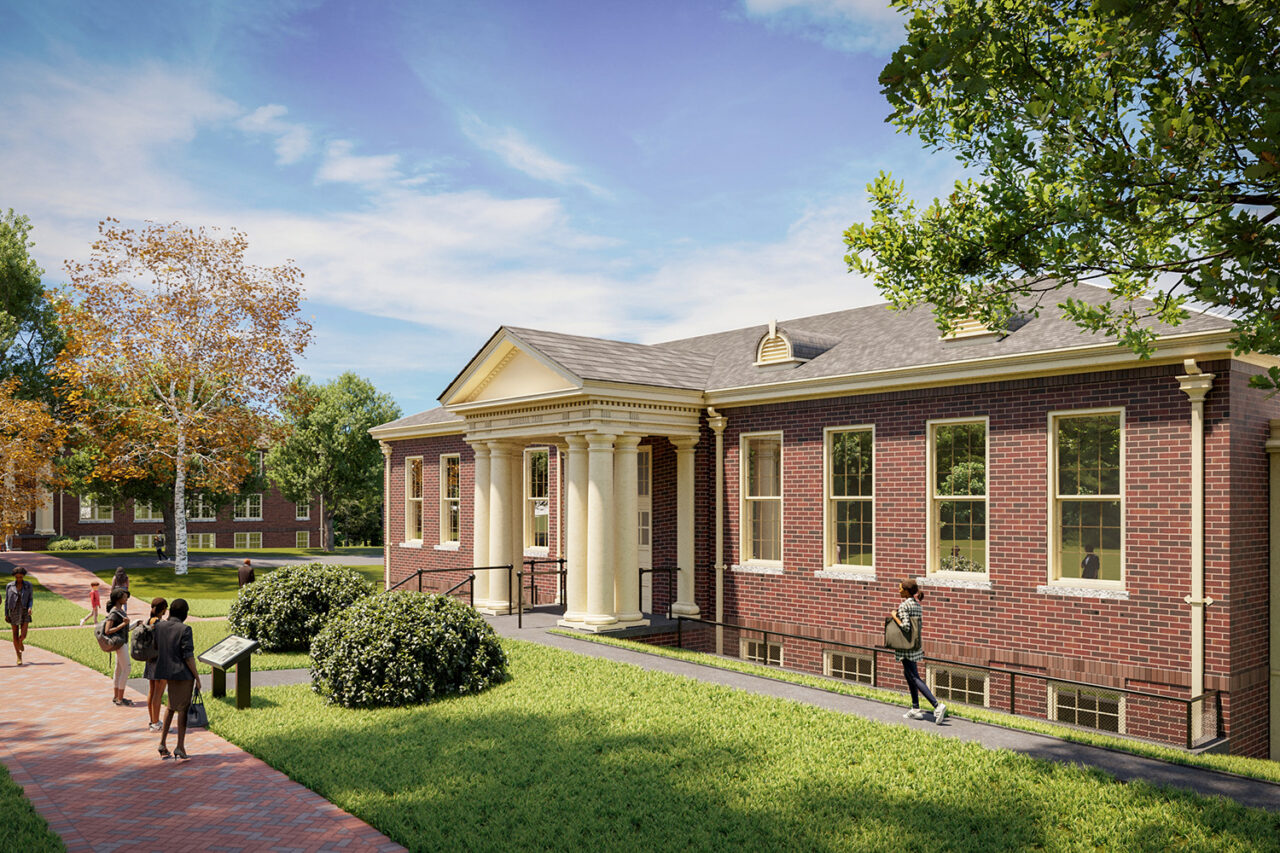
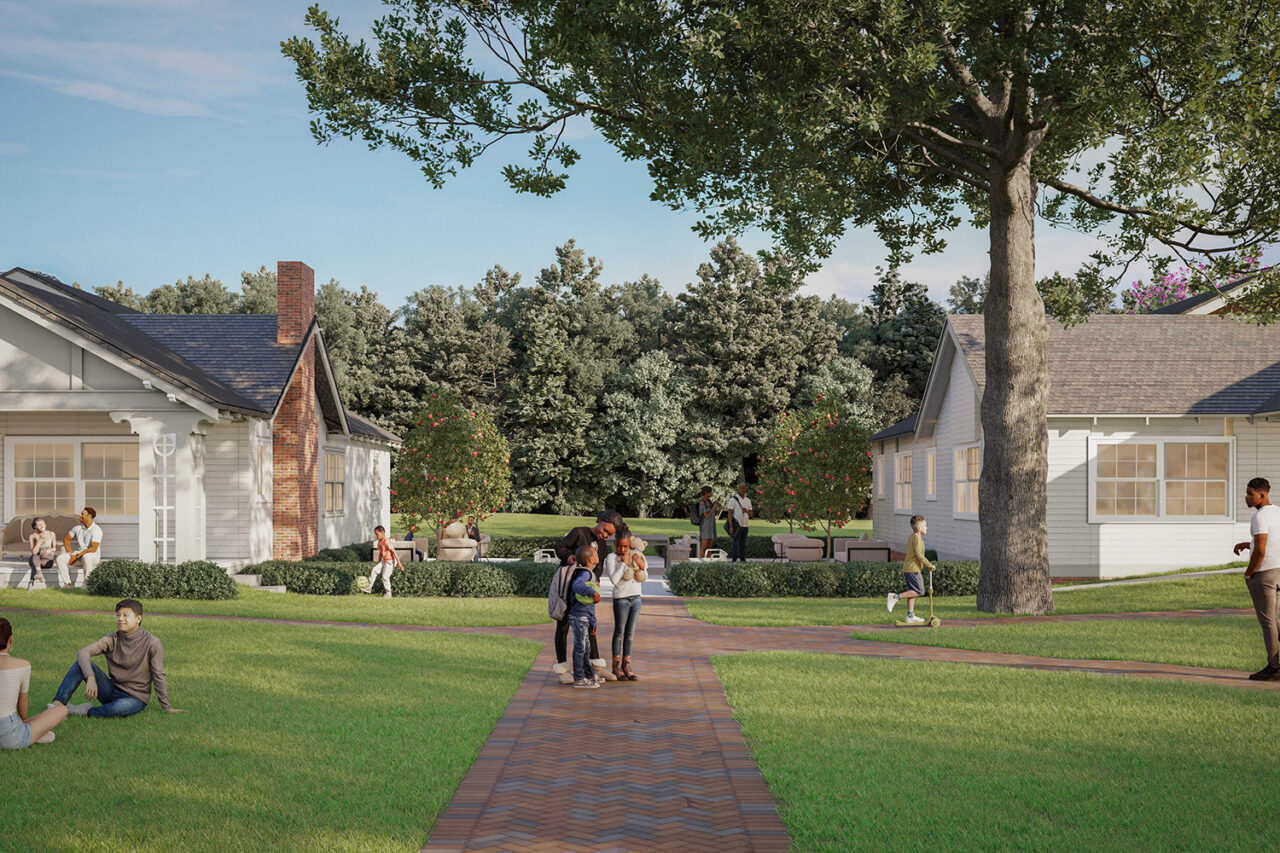
Historic preservation is central to the plan. The Gregg and Brightside cottages will be restored and adaptively reused for residency programs, while the Firehouse and shed will be fully reconstructed. Accessibility upgrades—including exterior ramps and interior elevators—will be integrated into key buildings and outdoor spaces.
The Palmer Memorial Institute campus plan marks the second pro bono collaboration between RAMSA and the Where Women Made History initiative, following the reimagining of Stone Quarry Art Park in Cazenovia, NY.
Brooklyn Public Library’s Canarsie Branch Breaks Ground
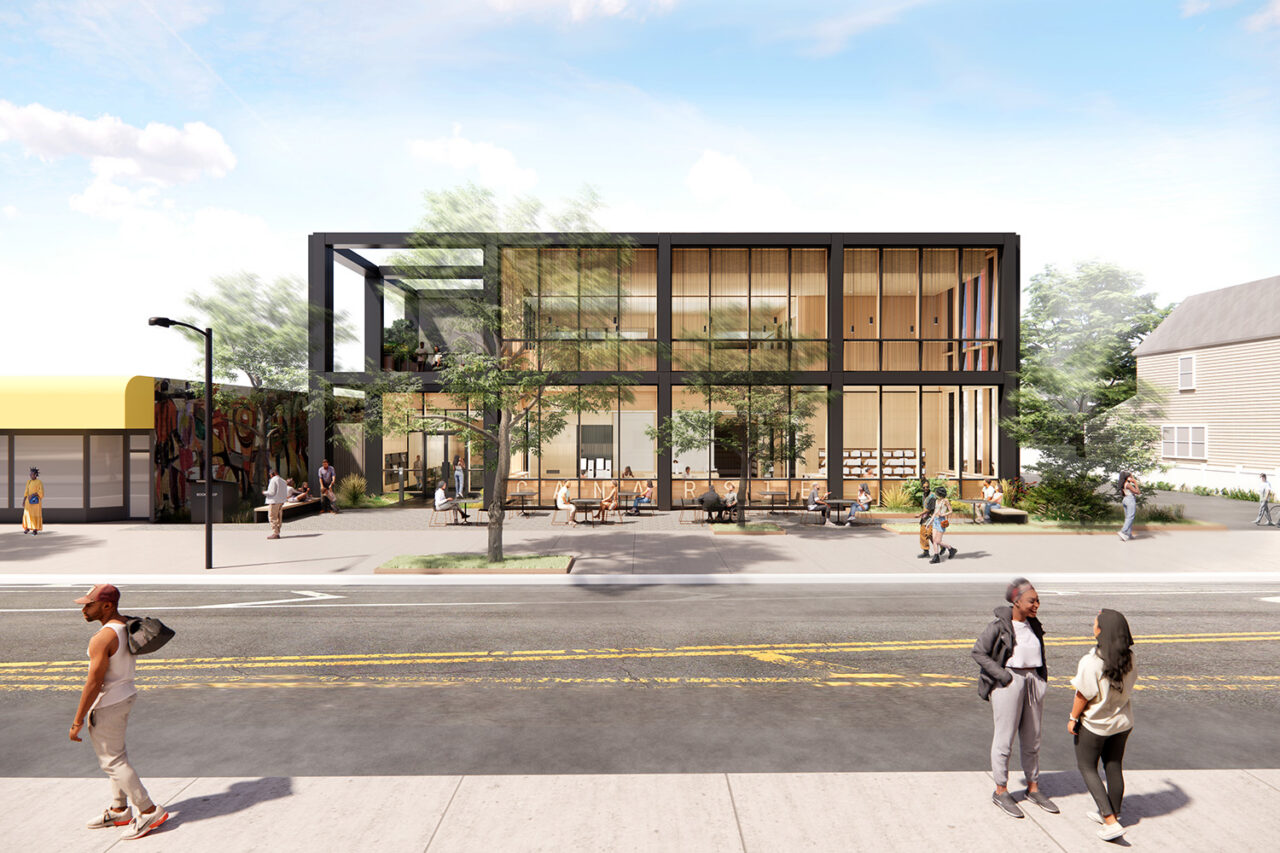
Ground was recently broken on the Studio Joseph–designed Canarsie Branch of the Brooklyn Public Library (BPL). Located at 1580 Rockaway Parkway, the new 8,000-square-foot, two-story mass-timber building replaces a 6,000-square-foot former grocery store built in 1960 that no longer met the needs of the library or the community.
The design features large street-facing windows and landscaped seating at ground level, creating a welcoming presence on the block. Extensive community engagement—including one-on-one meetings, focus groups, Bookmobile tabling, workshops, and surveys—helped shape a program tailored to neighborhood needs. The new building doubles the amount of programmed space and significantly expands services.
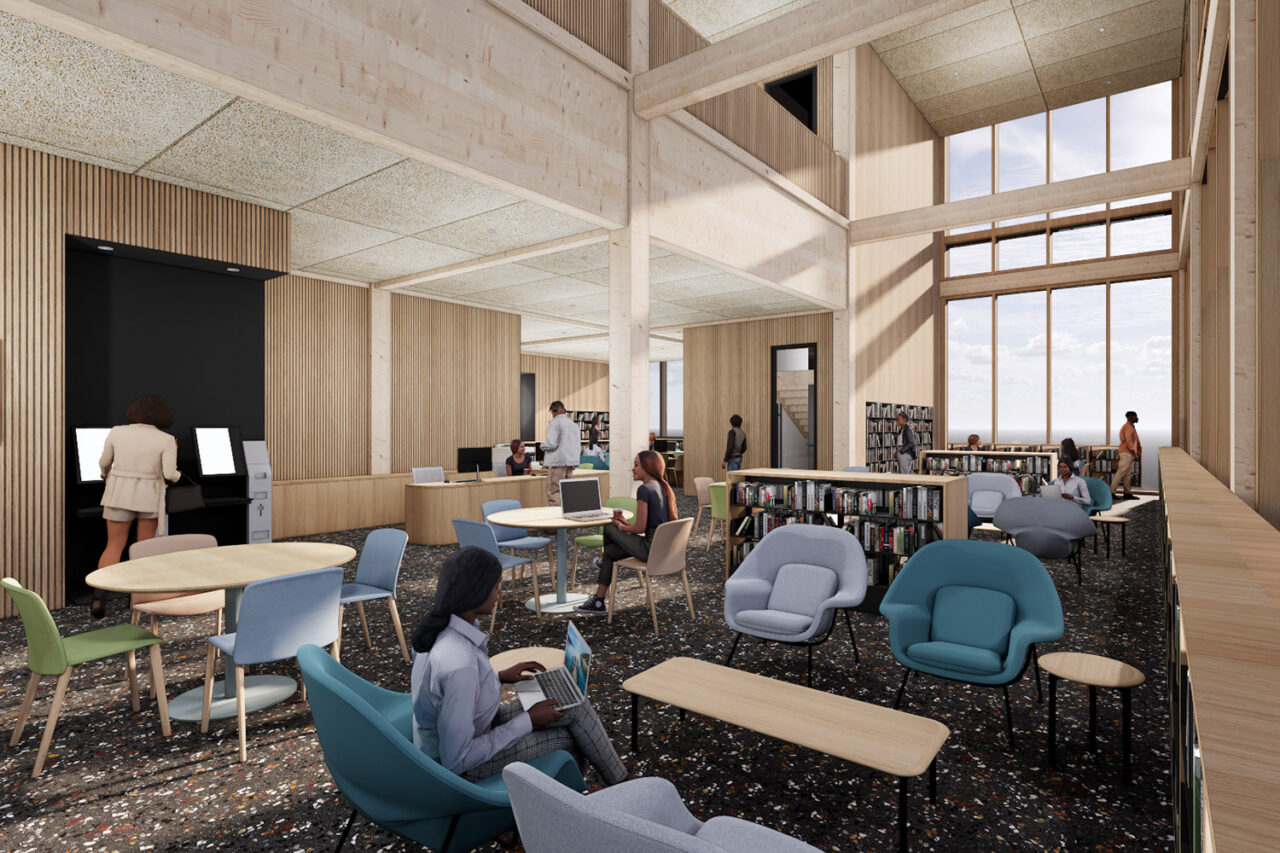
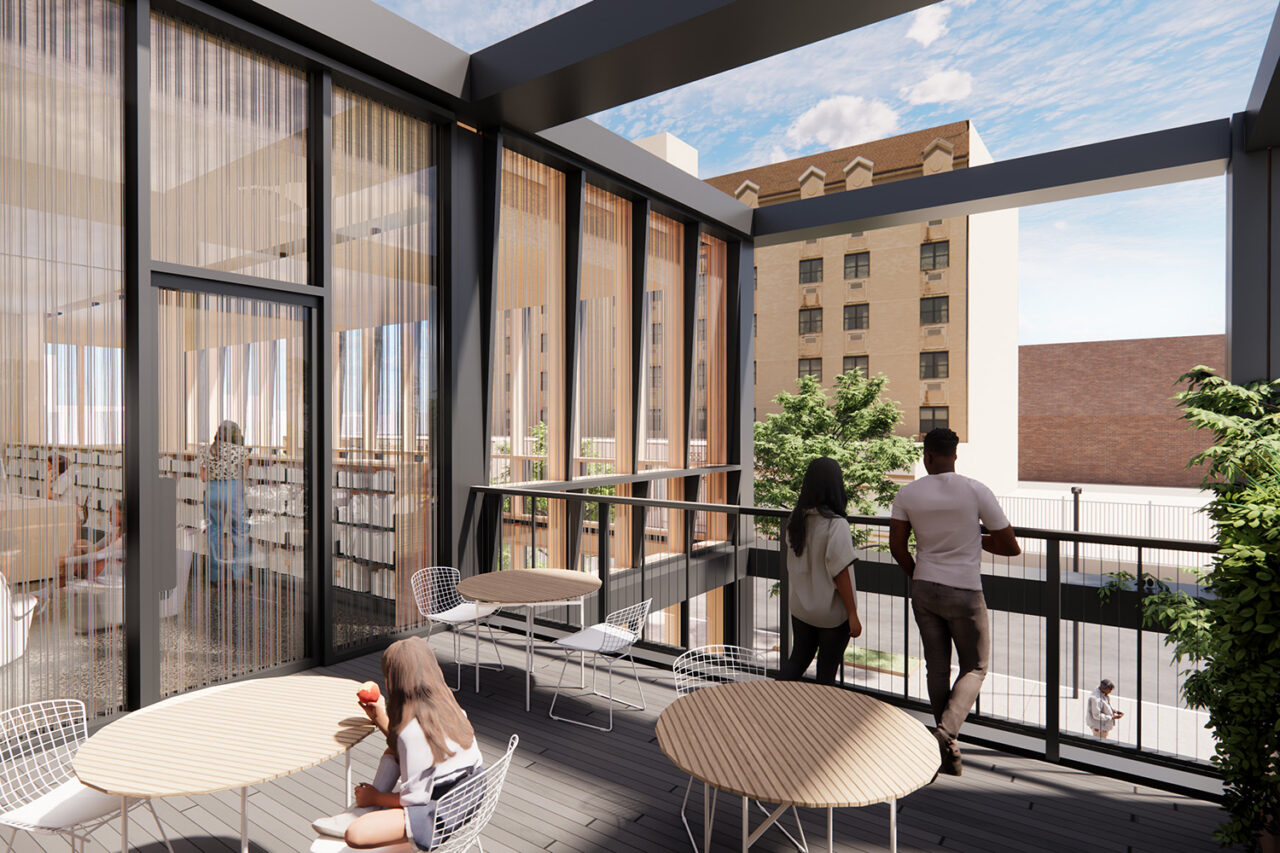
A warm material palette, comfortable furnishings, and exposed wood create an inviting atmosphere. Just inside the entrance, a flexible meeting room seats up to 50 and can remain open after library hours; it includes an acoustic partition, pantry, and storage. Additional specialized spaces include a maker space, recording studio, lactation room, toddler reading nook, and virtual conferencing room. A second-floor terrace provides space for relaxation, socializing, and gardening.
Enhanced security measures create a protected children’s reading area with age-appropriate furnishings and stroller storage. Sustainable features include on-site stormwater management, rooftop solar panels, high-efficiency lighting, recycled and repurposed materials, and fritted glazing to reduce heat gain and prevent bird strikes.
Kyabirwa Surgical Center Campus to Provide Care in Eastern Uganda
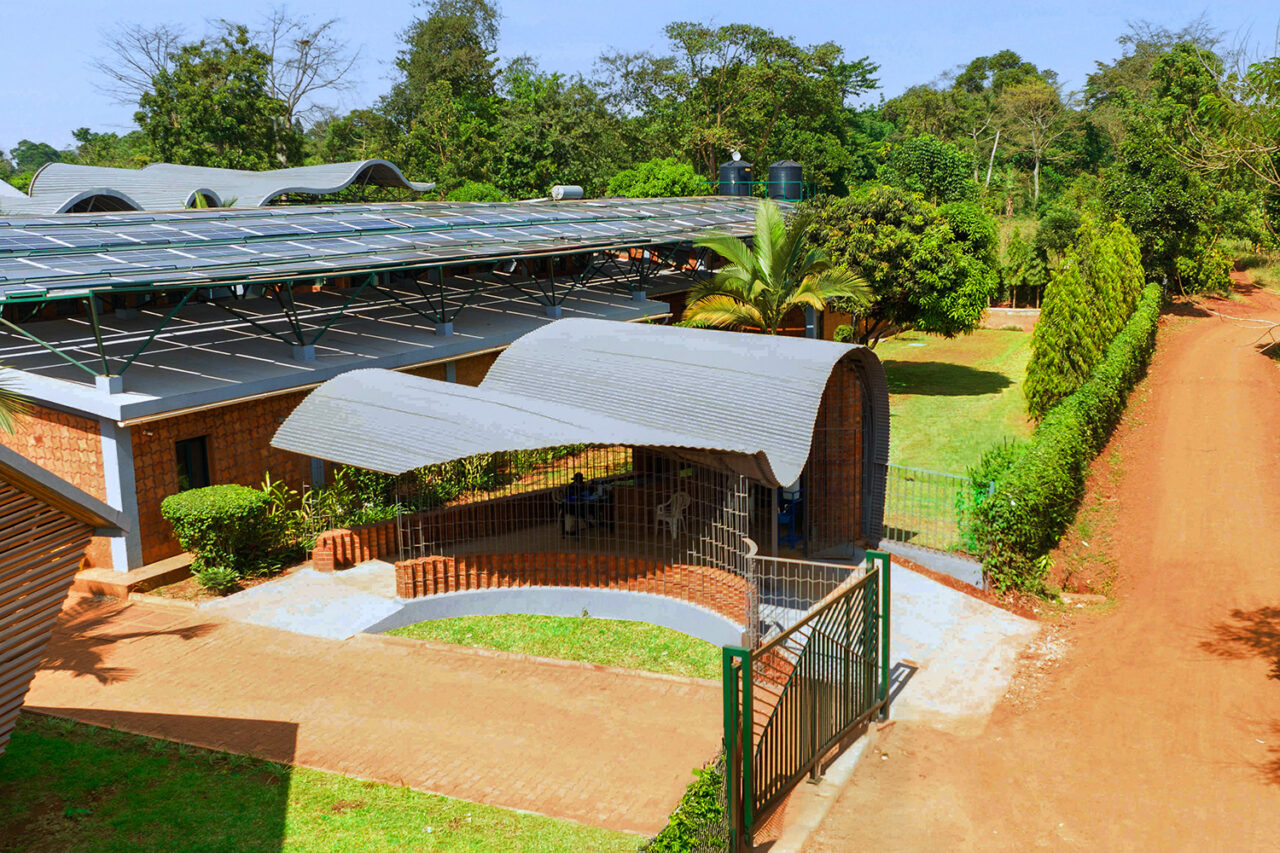
The new Kyabirwa Surgical Center Campus in rural eastern Uganda is an ambulatory surgery facility designed to support both care and training. Through a 16-mile fiber-optic link, local surgeons can collaborate in real time with colleagues at the Icahn School of Medicine at Mount Sinai. Designed and constructed by GKG Architects over eight years, the 30,000-square-foot campus includes seven buildings and serves as a prototype for ambulatory surgical centers in the developing world.
The first completed structure was an 8,000-square-foot surgical facility. Built in a region with limited infrastructure, the project meets rigorous medical standards while incorporating climate-responsive passive design strategies. Due to unreliable grid power, a roof-mounted solar array with battery storage provides uninterrupted electricity for critical operations.
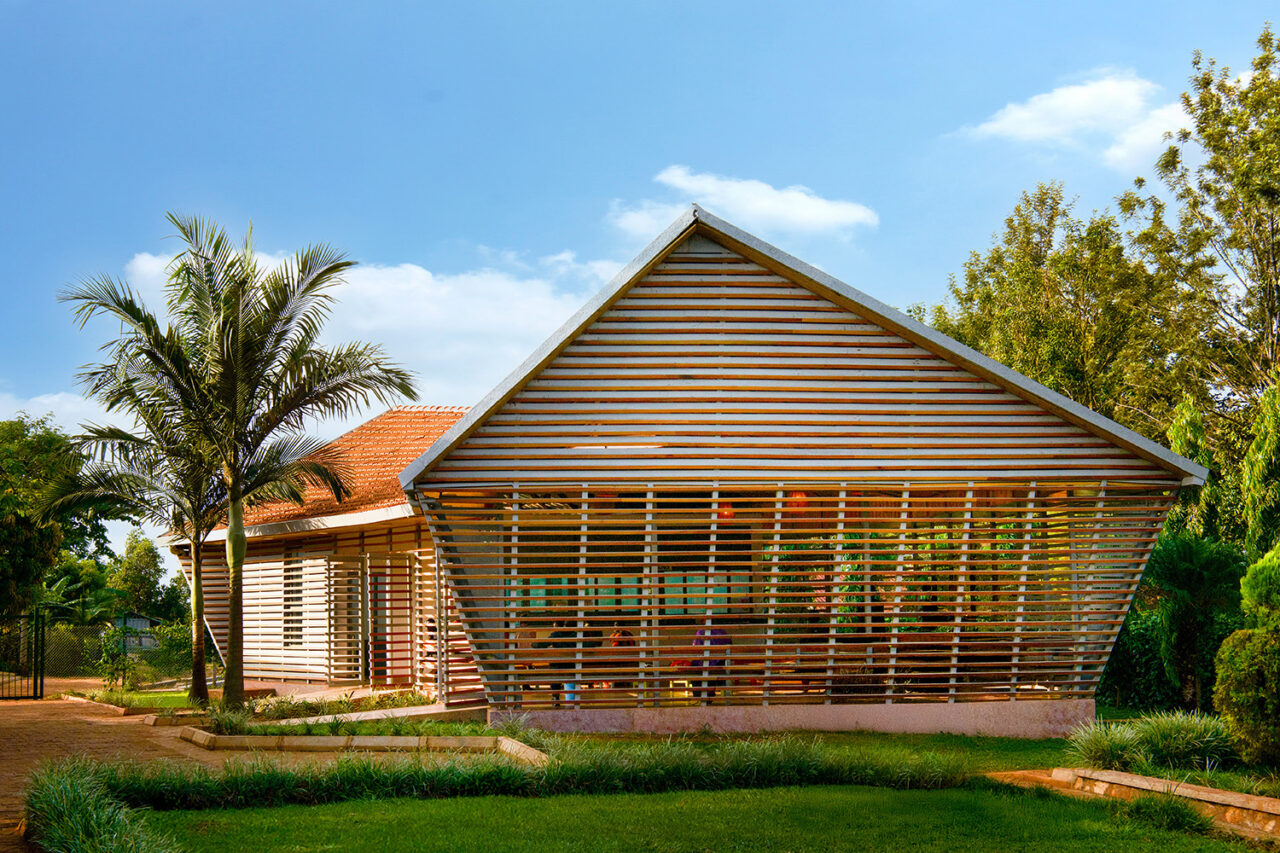
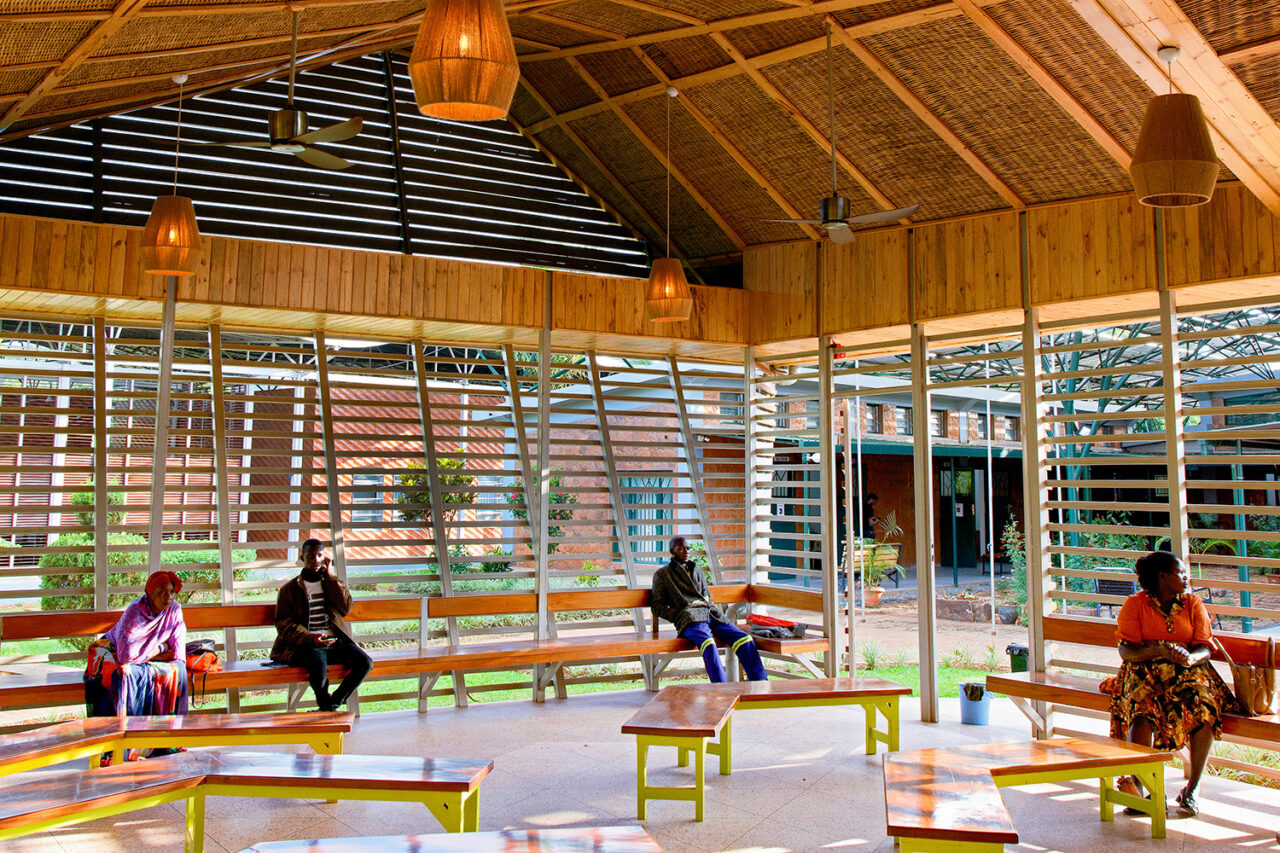
Subsequent phases added a patient ward, doctors’ quarters, ambulance shed, public lavatory, pavilion, and guard booth. The pavilion and guard booth received AIA New York State Citation and Merit Awards, respectively. The 1,570-square-foot pavilion employs passive cooling strategies, including a sloped Mangalore tile roof, ridge ventilation, louvers, and reed-lined ceilings. Constructed with locally sourced materials, it provides thermally comfortable gathering space for patients and visiting family members.
The 650-square-foot guard booth is an open lattice structure made of simple rebar, offering unobstructed sightlines in all directions. Its roof is crafted from locally sourced metal sheets, while wire-cut brick walls showcase regional craftsmanship.
In Case You Missed It…
Mayor Zohran Mamdani, in the presence of City officials, announced that the tallest tower of the David N. Dinkins Municipal Building, a designated New York City landmark, will be open to the public for the first time. The city’s Department of Citywide Administrative Services (DCAS) will lead free six-person guided tours of its 36th-floor cupola starting in June. In preparation for the tours, the rotunda will be repaired and glass barriers will be added.
The Museum of Disability History at The Viscardi Center, a non-profit housed within the Kornreich Institute for Disability Studies in Albertson, NY, opens on February 17. JSA/MIXdesign, team leader in exhibition design, worked in collaboration with graphic design studio MTWTF to create an integrated spatial narrative organized around fourteen thematic “portals.” Each portal reflects the idea that disability history in the US is not singular or chronological but composed of many intersecting stories. The museum contains a collection of over 8,000 artifacts, documents, books and photographic images that chronicle the story of the disability rights movement. Allied Works served as the Architect-of-Record.
The 2026 Winter Olympics Athletes’ Village in Milan’s Porta Romana district was completed by Skidmore, Owings & Merrill (SOM) and COIMA SGR (COIMA), Italy’s leading real estate developer and investor, in just 30 months and delivered 30 days ahead of schedule. Designed to become an integral part of Milan’s urban fabric, the village includes public green spaces, the transformation of two historic structures, and six new residential buildings that will house Olympic athletes before transitioning into Italy’s largest affordable student-housing development.
The 18th annual iteration of the Love in Times Square is Making Love, an installation that celebrates love, craft, and the makers of New York City presented by Times Square Arts and Brooklyn’s Powerhouse Arts. No longer a design competition as in the past, this commissioned installation this year’s installation, is inspired by paper peepshows and theatrical set design, and takes the form of a three-dimensional larger-than-life carousel book with a circular narrative. Visitors are invited to step inside and move across a sequence of four distinct scenes that represent a crossroads of experiences and cityscapes where one might encounter love at a botanical garden, canal, or even the corner bodega. The installation is on view from February 12–19 at Duffy Square.