A virulently anti-immigrant federal government has imposed new fees and restrictions on H-1B visas and loans for architecture degrees. As a result, access to education and opportunity in the U.S. and the ability of U.S. offices to recruit talented designers are expected to be severely impacted.
The Trump Administration’s new H-1B visa policy practically eliminates the possibility for U.S. architecture offices to hire new noncitizens or non-green-card-holder employees. If not revised, the policy will effectively eliminate a professional pathway for foreign architects and foreign architecture students studying in the U.S. About 9% of the 442,425 H-1B visas approved in 2024—including 141,207 new applications, the rest being renewals—were held by architecture and engineering professionals. (Tech industry workers held 65%.) Combined with other barriers to entry imposed by the U.S. government and its threatening policies toward immigrants and foreigners in general, the policy is already having a radical effect on U.S. architecture offices and architecture schools in terms of hiring and enrollment.
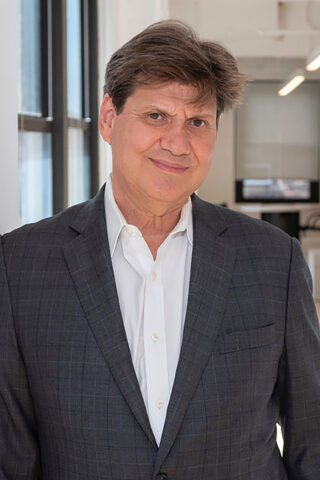
“If the policy is to eliminate immigrants, I do not see how we can continue to do what we do,” says Peter Miller, vice president of professional development on the AIA New York Chapter’s executive board and founding partner of Palette Architecture, an office specializing in multifamily housing. “If tomorrow everyone who is or was on a visa at some point is out of the architecture profession in New York City, we would lose over half of the architects in the city. I don’t see how we could continue to function as a profession if we lost everyone who is some form of immigrant, and the H-1B is an important bridge piece in the immigrant’s journey as an architect.”
The policy, titled “Restriction on Entry of Certain Nonimmigrant Workers,” was issued on September 19, 2025, by presidential proclamation, going into effect two days later. It mandated that new H-1B visa applications be subject to an additional payment of $100,000. The U.S. Citizenship and Immigration Services agency had already declared in July that the congressionally-mandated 65,000 limit on H-1B visas had been reached for 2026, along with the 20,000 advanced degree exemption, so the policy for new applications will effectively be applied to petitions for 2027 and beyond.
For most firms, payment of such an astronomical fee—more than 100% of the $60,000 to $70,000 starting salary of a junior architect in New York City—is a nonstarter. “It’s game-changing,” Miller says. “You can’t lay out that much money. Even the largest firms in New York City don’t have that kind of money to put into an employee.” Miller says the additional cost of H-1B applications cuts off about 50% of the available talent applying for a typical job opening at his firm. Noncitizens requiring some kind of visa assistance frequently possess the highest level of skills and training needed for particular positions. “To cut your talent pool in half is a huge difference,” he says. “We wouldn’t get nearly as many candidates as we have now.”
The most common scenario where the H-1B visa comes into play for Palette Architecture is in the process of replacing younger architects in its office rather than hiring senior-level people. Usually junior-level positions are filled by candidates coming out of graduate school. Miller says the best candidates often have OPT (Optional Practical Training) visas, which allow students graduating from STEM fields to work for three years after graduation as a function of their professional training. After those three years (which can be extended for another two years), the H-1B visa is the next step in retaining talented staff. At that point, the office has devoted years to training and developing their skills. Later on, Miller says, he helps employees with visas to get green cards. Currently, he employs two architects who have H-1B visas and are seeking green cards, and one who started working on an H-1B and has successfully obtained a green card. Another of his employees, from Iran, gave up on the hope of obtaining either an H-1B or a green card as a result of the administration’s policies.
“The most important thing is getting the person who is the best fit and the best talent for the position you have open,” Miller says. For Palette, because of competition for talent from larger firms and how much foreign designers add to the quantity and quality of the professionals in the field, very often the best candidates come from places like China, India, Canada, and England. The additional cultural knowledge brought by having staff from a wider diversity of places also benefits firms.
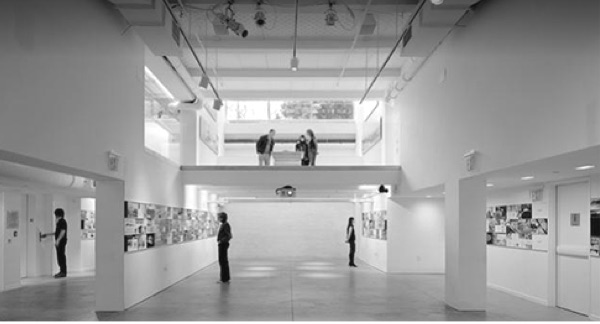
“We have German speakers, French speakers, people from Russian and Ukrainian backgrounds, and people from Asia, and we do work in some of those places, too,” says Diller Scofidio + Renfro (DS+R) Principal Benjamin Gilmartin of his office. He argues that cutting off foreign workers will make it more difficult for U.S. offices to compete for projects internationally. “Beyond their skills as architects, they have language and cultural understandings that we need to do the work.”
Smaller offices like 1100 Architects, with about 40 architects and designers on its staff, say they were already reluctant to hire new employees needing H-1B visas because of the increasingly time-consuming requirement to advertise positions and prove they could not be filled domestically. “The effort became quite onerous,” says Founding Principal Juergen Riehm. “More and more we have pulled back from sponsoring visas.”
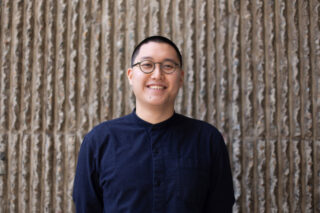
Mark Gardner, principal of Jaklitsch/Gardner and incoming AIA New York president for 2026, says that among the persistent challenges for immigrant architects, particularly ones from non-Western countries, is that the government caps visas from specific countries, making it extraordinarily difficult to obtain H-1B visas for designers and architects from those places. Now, it’s been made essentially impossible. “Even colleagues who run large corporate firms are saying, ‘We’re not paying for a $100,000 visa. We may need talent, we may need people, but that’s a lot,’” says Gardner.
Big international offices are the most likely to be deeply affected in the long term. An office like Bjarke Ingels Group (BIG) with more than 100 employees in its U.S. office has dozens of staff who would have been excluded from being hired if the current policy had been in place earlier. “Like all other firms, we’re closely monitoring the evolving landscape regard-ing the U.S. government’s H-1B visa policy,” wrote Sarah Haun, BIG’s communications coordinator, in response to a query. A press representative for KPF declined to comment.
DS+R currently has 15 visa-holders on staff, including two H-1Bs and seven O-1 visas—reserved for applicants who can demonstrate extraordinary abilities—which already reflects a reduced number as a result of the administration’s restrictive policies. Apart from that, they have many green card holders and permanent-resident employees who have already graduated through the work-visa process. The current policy completely ends that trajectory for immigrant architects at DS+R. “The $100,000 fee for an H-1B is completely untenable for us,” Gilmartin says. He also talks about the psychological insecurity and lack of stability experienced by staffers because of the unpredictable, shifting policies announced without warning.
The downstream effect on architecture schools and universities in general is also in play. International students are likely to be discouraged from attending universities in the U.S. if their job prospects after graduation are limited by visa policies. “These students might think, ‘Why should I go to school there? Sure, I can get a little bit of work time, but then I’m just going to have to leave,’” says Gardner, past director of the M.Arch program and associate professor at Parsons School of Design.
With the financial model of so many colleges depending on continued growth in enrollment—which was already suffering under the burden of restrictive and threatening U.S. policies toward other countries—the university system as a whole is under threat of collapse if it loses its pipeline of international students. The recent announcement of systematic job and program cuts at The New School in New York and of California College of Arts in San Francisco is undoubtedly related to declining international admissions and its impact on the universities’ budgets. “Our international applicants are down significantly,” says Gardner of the Parsons architecture program.
On top of that, the Trump Administration’s so-called One Big Beautiful Bill Act, passed in July 2025, included a provision removing architecture, along with a number of careers, from its definition of a professional degree. The effect of the policy will be to cap loans for architecture students at no more than $20,500 a year when it goes into effect in 2026, which will make it next to impossible for many aspiring architects to pursue their career paths. The cost of tuition ranges from as low as $20,000 for in-state tuition at public universities to $60,000 or higher for elite private schools. “The biggest effect that has is on Black students,” Gardner says. “They end up carrying the largest loans of any group.”
Without the ability to get loans through the education department, students will have to rely on banks, which are unlikely to provide help without guarantees from the federal government. “The government was a place where you could get a loan and get the education you wanted,” says Gardner. “Now it seems that’s being taken away, and the government has been telling people you should turn to the private sector. But the private sector financial institutions, banks—we know that history. No, they’re not giving us any money.”
STEPHEN ZACKS (“The End of the H-1B Pipeline”) is an advocacy journalist, architecture critic, urbanist, and project organizer based in Mexico City.
Our website has detected that you are using a browser that will prevent you from accessing certain features. An upgrade is recommended to experience. Use the links below to upgrade your exisiting browser.