




Readers interested in watching and listening to the entire evening’s program can visit architectureandhousingjustice.org/publiclecturenyc2025.
Opening Remarks
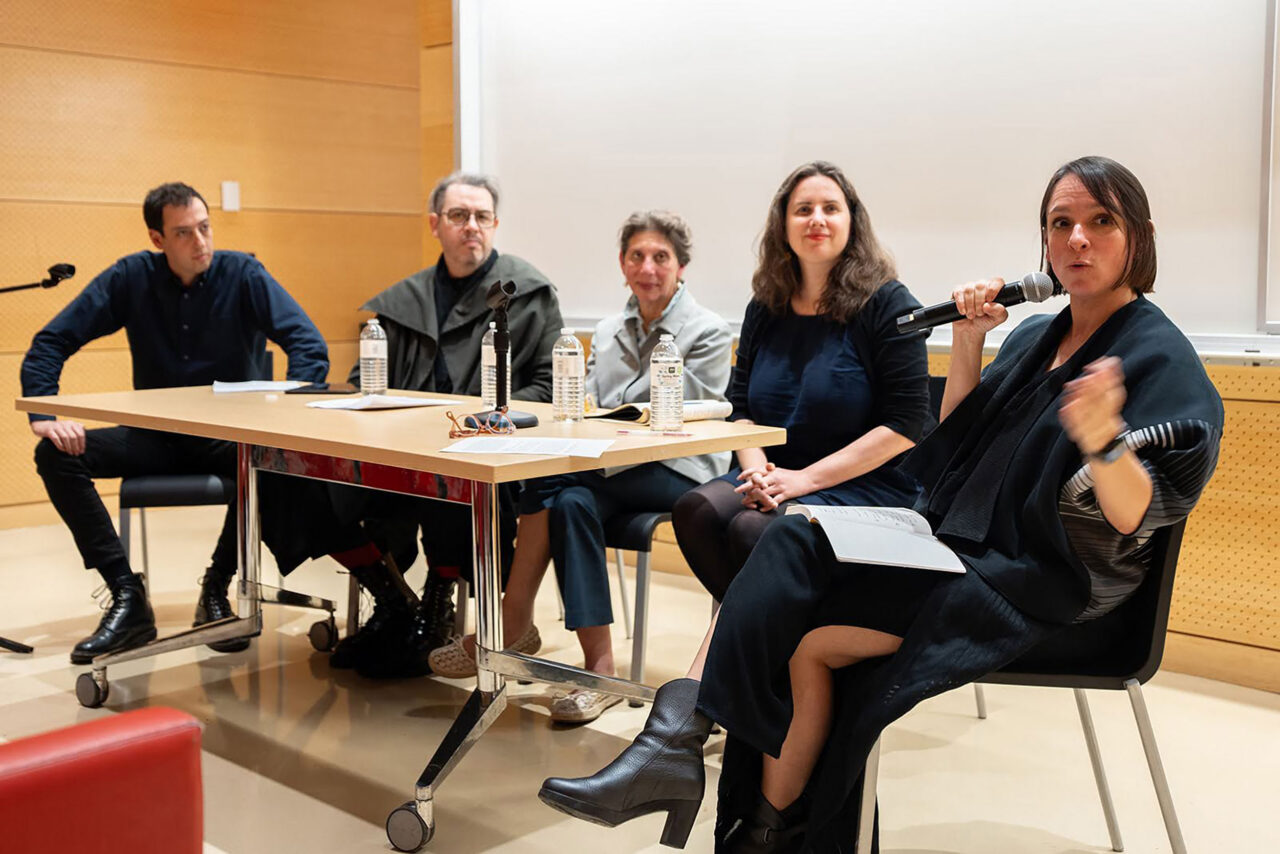
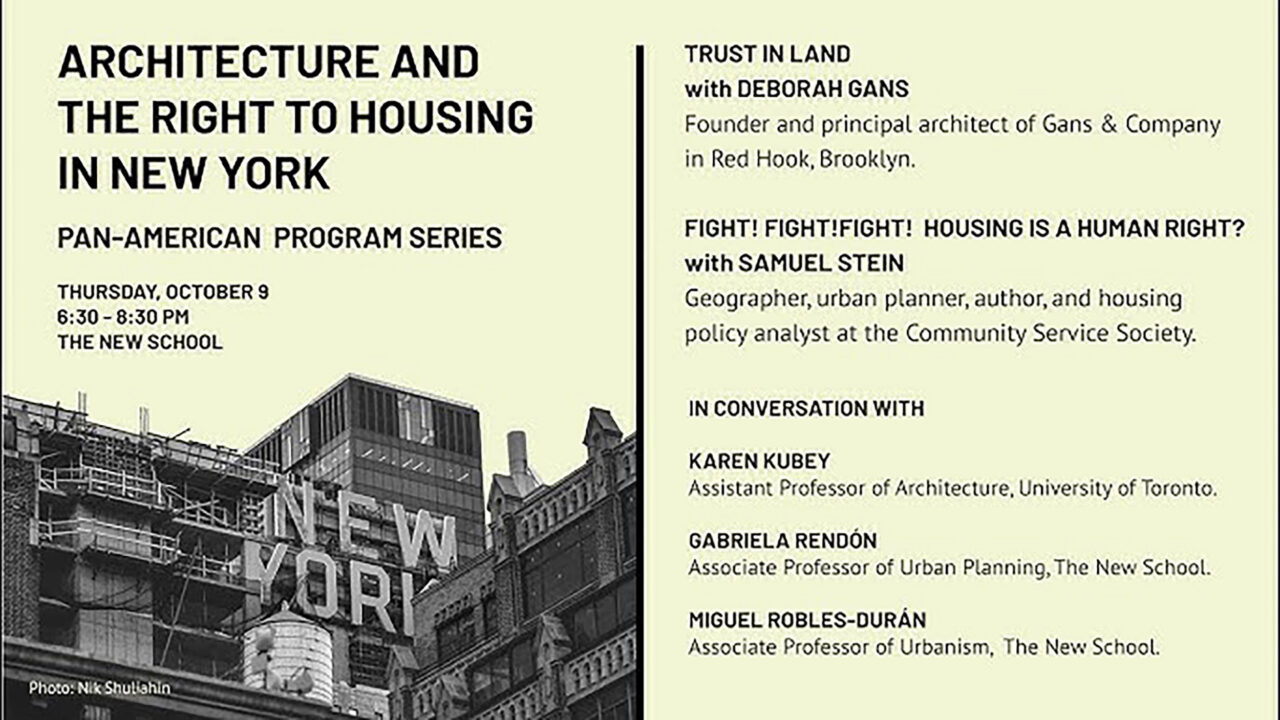
Karen Kubey, Founder, Architecture and Housing Justice Lab: The right to housing is not just a slogan. Adequate housing was recognized in the 1948 Universal Declaration of Human Rights. The UN defines the right to housing through seven elements: security of tenure, availability of services, affordability, habitability, accessibility, location, and cultural adequacy. But it’s not just an economic, legal, and political issue. Of course, it’s all of these things. The argument behind the program is that the right to housing is also architectural. We believe the only way to fully address the right to housing is to look at it in an architectural way, and this will allow us to meet the human needs of residents and to respond to not only a political failure, but a failure of imagination.
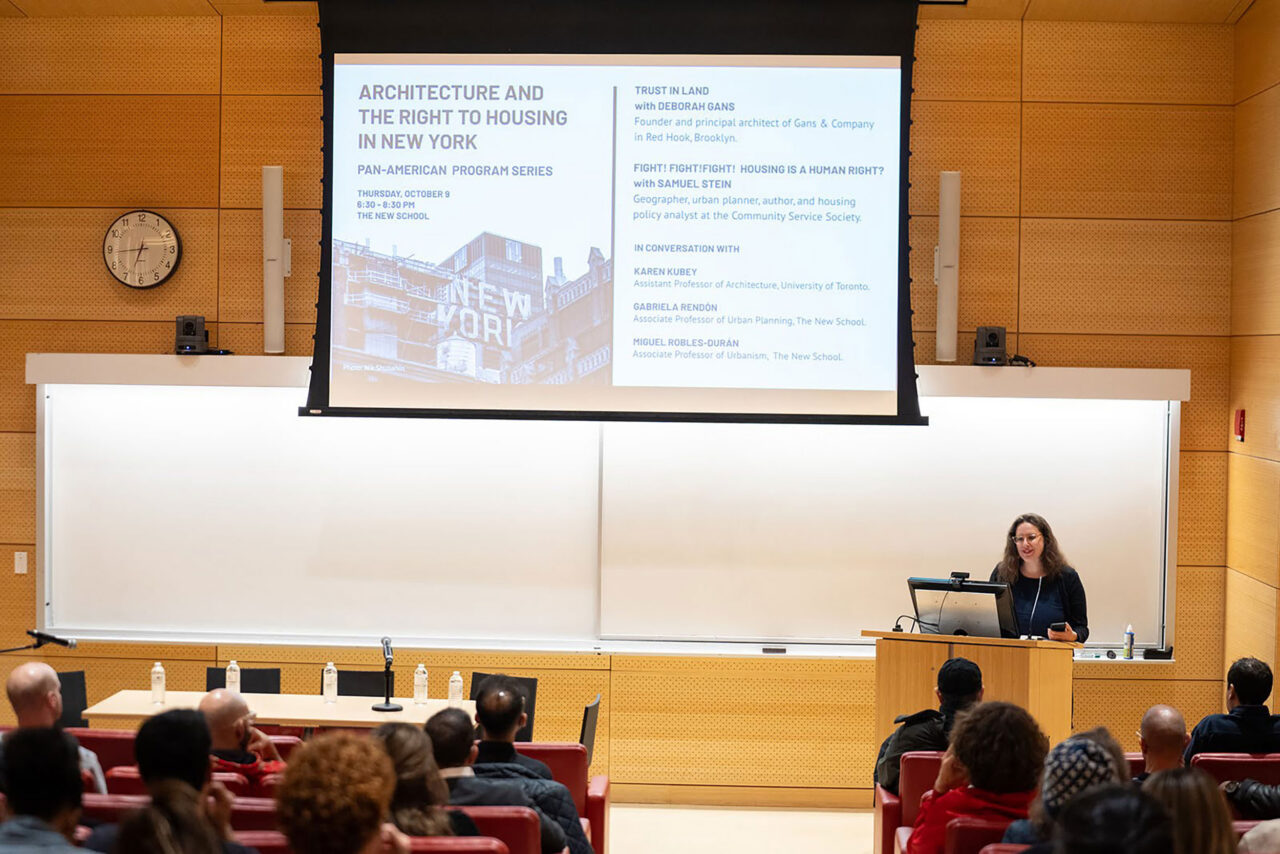
We also see this as an issue of spatial justice, a term coined by Ed Soja that basically talks about how social justice is manifest in the built environment. We’re here to address two simple and extremely complicated questions: What does the right to housing mean in practice? And how can architects and other urban professionals contribute?

Housing Challenges in New York City
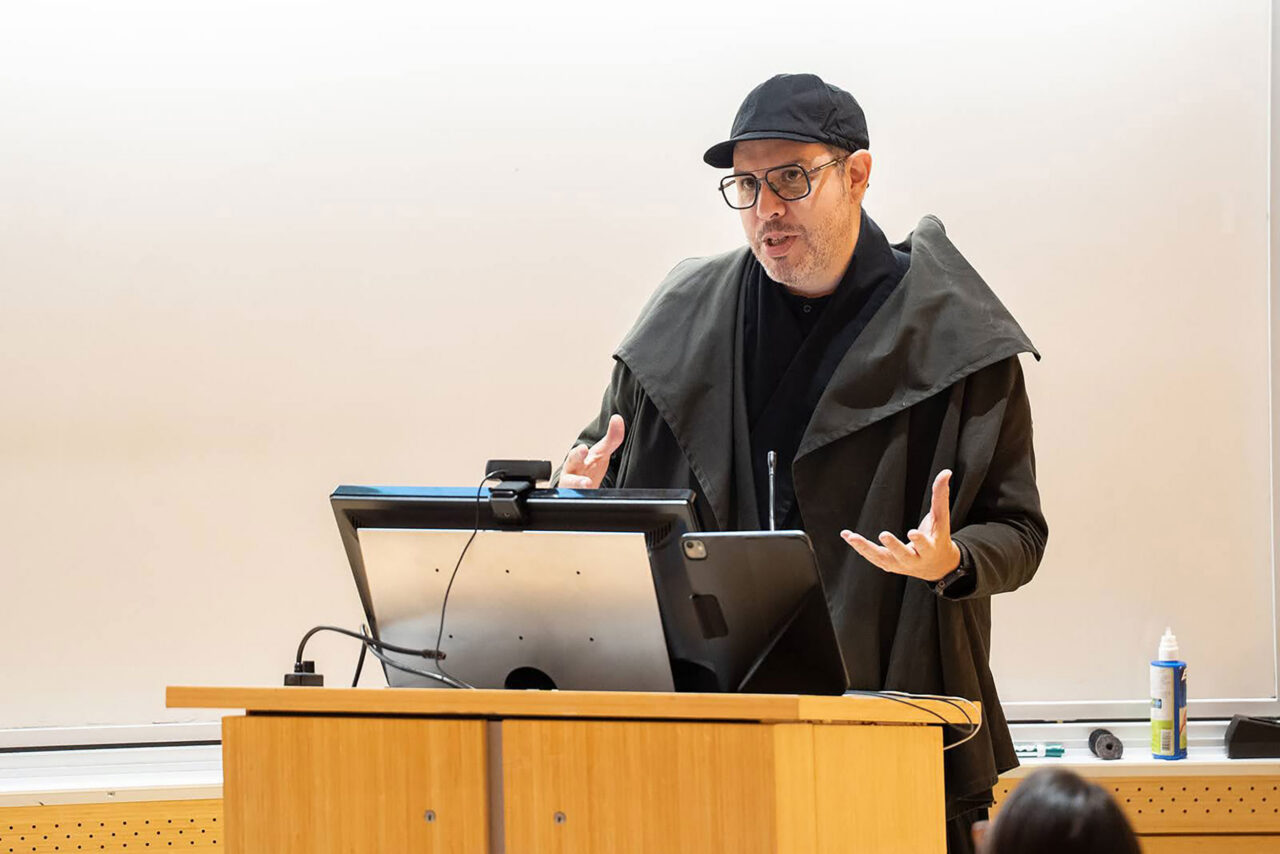
Miguel Robles-Durán, Associate Professor of Urbanism, Parsons The New School: I’ve been reflecting on the current housing situation in relation to this Neofascist turn we are all suffering. Our work at the New School started 15 years ago: We dreamt of a program that would be addressing housing justice and all kinds of urban justice issues, and it was very influenced by our colleague, David Harvey. We saw there was a gap in the academic space—while most of the programs had a very strong technical component or a very strong classical training component, there were no programs that brought transdisciplinary perspectives, bringing a housing justice or urban justice lens to everything we do.
Empty buildings, according to the new finance laws, appreciate faster than occupied ones. This has been a major preoccupation of mine, as the majority of the discourse has been that more supply is going to fix the housing crisis. I adamantly believe that’s not the case, and it’s absurd to think that is the case today. New York, of course, is where housing has perfected its transformation from shelter into a financial instrument, and the city has actually been one of the testing grounds for this. Robles-Durán identified four core mechanisms at play:
1. Institutional Capture of Housing
Robles-Durán described what he calls institutional capture: the large-scale acquisition of residential housing by global financial firms. Using Blackstoneas a case study, he pointed to multibillion-dollar purchases of New York City housing stock—most notably Stuyvesant Town-Peter Cooper Village, with its 11,200 apartments across 80 acres—as emblematic of a shift in how housing is owned and understood. In this model, apartments increasingly exist less as physical places to live and more as financial instruments circulating through global capital markets. This transformation, he argued, has profound implications for architecture and urban life: finance now has its own “architecture,” one that shapes housing outcomes without producing buildings, while consolidating ownership among a small number of institutional actors.
2. Platform Monopolies and Algorithmic Control
The second mechanism is the rise of platform monopolies that mediate access to housing without owning it. Platforms such as Zillow, StreetEasy, and Apartments.com function as gatekeepers, controlling how renters encounter the housing market through search algorithms, data extraction, and behavioral profiling. Robles-Durán argued that these systems actively shape affordability by categorizing users based on browsing behavior—steering some toward higher rents or fewer options under the assumption that they will tolerate inflated prices. Every click becomes a data point that determines future access, while users surrender personal information that is monetized elsewhere. In this way, housing access is no longer just spatial or economic, but algorithmic.
3. Asset Conversion via Short-Term Rentals
The third mechanism concerns the conversion of long-term housing into short-term rental assets. New York City’s 2023 crackdown on Airbnb, which eliminated roughly 92% of listings, is framed not as a solution but as a revealing moment.
While the crackdown was widely considered a policy victory, Robles-Durán argued that removing the platform exposed the depth of damage already done: rents continued to rise, vacancy rates remained unchanged, and neighborhoods had already lost residents, businesses, and social networks. The short-term rental economy, he suggests, functioned as an extractive service layer that destabilized communities and generated lasting harm—what mental health workers have described as “Airbnb anxiety disorder.” The failure of the ban to reverse these effects underscores how deeply structural the crisis has become.
4. Fragmented Ownership and the Loss of Accountability
Robles-Durán pointed to the deliberate obscuring of ownership through complex corporate structures. Buildings are often managed locally but owned by shell companies, offshore funds, or transnational investment vehicles that span multiple jurisdictions. As a result, tenants facing unsafe conditions, displacement, or collapse encounter a system with no clear decision-maker and no accountability. This fragmentation, he argued, is not accidental but designed to protect capital while rendering urban residents powerless. When combined with stagnant wages and skyrocketing rents—where median Manhattan rents now exceed $4,500, while most households earn roughly half the income needed to avoid being rent-burdened—the result is a city that is mathematically impossible for working people to inhabit.
Defining the Right to Housing and Social Housing Models
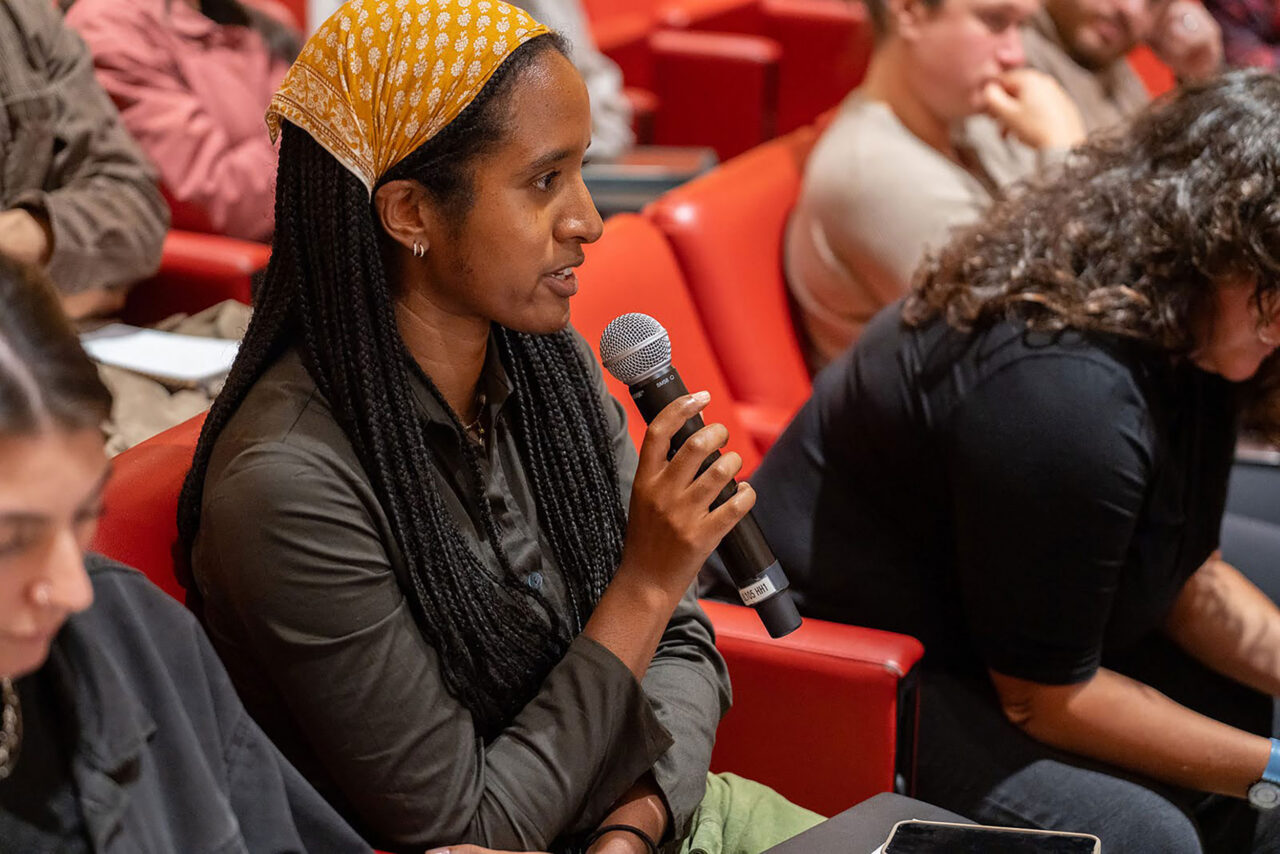
Samuel Stein, Housing Policy Analyst at The Community Service Society of New York: In a city where every night more than 100,000 people sleep in homeless shelters, and in a country where almost three quarters of a million people are homeless, is the right to housing backed by local, state, national, or international law? If so, how is it being so flagrantly flouted? If a right is something you are actionably entitled to do, have, or be protected from, does the right to housing still exist absent the power to wield it? Can rights hold up without the state or other collective power to enact and enforce them? Is housing a natural right? If housing, like everything else we need to live in this world—including healthcare, food, air, water, and so on—is a human right, whose responsibility is it to provide and protect it? And, therefore, who exactly is letting us down? Does couching the right to housing as a human right add validity to our claim? Or does it remind us of all the other supposedly universal rights our governments routinely deny to portions of the population? Can we summon a right through incantation? Can we conjure its existence through the moral force of our convictions? Does a right exist because it should?
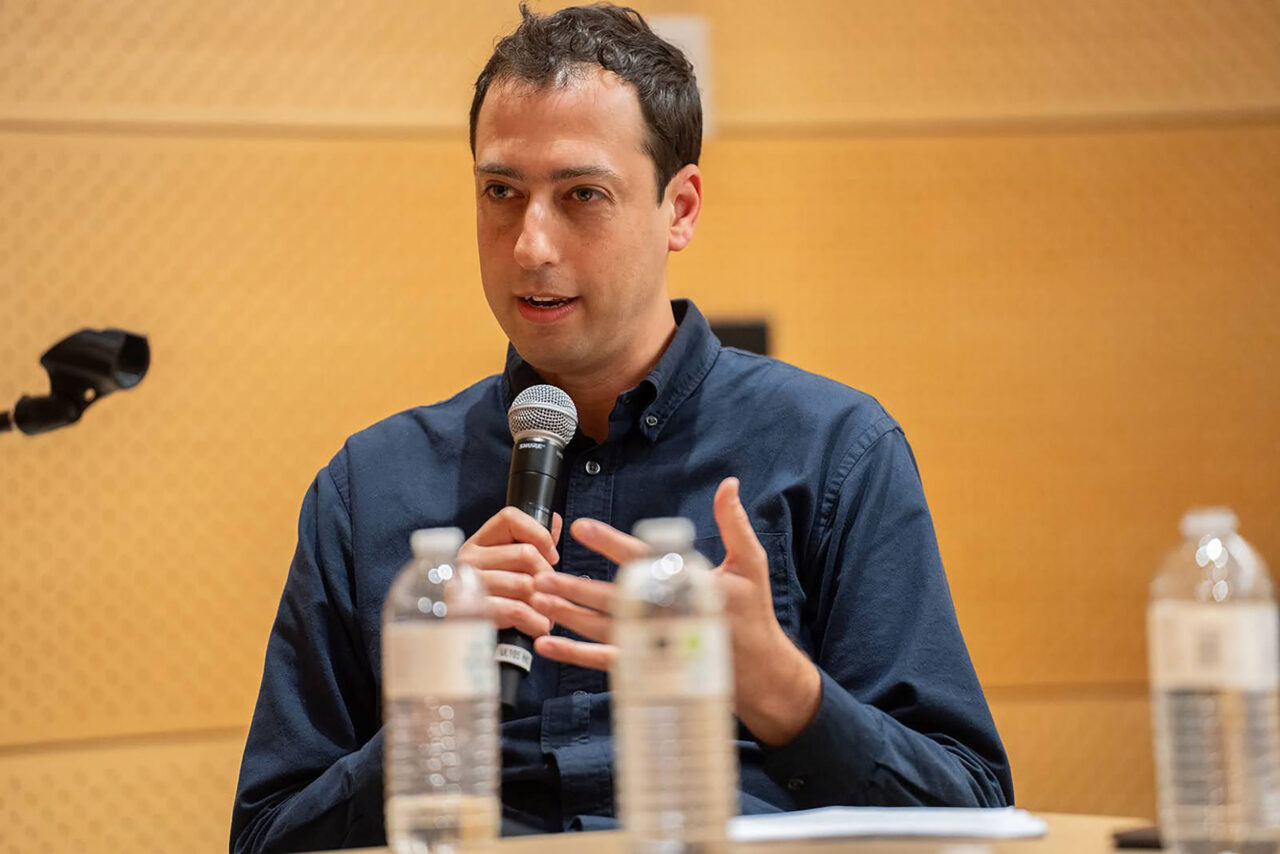
These questions rush through my mind. The space between where we are and what we say seems vast. To bridge that gap, we organize. We organize for a higher degree of control over our housing. And we pulled together a program for advancing toward a right to housing. There are typically four components to that program, none of them unique to New York: rental assistance, rent regulation, social housing conversions, and social housing development. Together they form a sideways approach to the right to housing, delivering a de facto answer to the question of how to secure this right for all. For the sake of time, I’m going to set aside rental assistance and rent control, essential though they are, and focus instead on social housing.
Although debates rage about particular classifications, in the New York context I would argue that public housing, limited equity cooperatives, community land trusts, and mutual housing associations can all be modes of delivering social housing. Public housing is rentals owned and operated by government entities. Limited equity cooperatives are buildings where residents own shares and cannot make much profit from their sale. Community land trusts are non-profit and democratically governed institutions that own land and, rather than selling plots outright, offer long-term leases at below-market rates. Mutual housing associations are a form of non-profit ownership where tenants make up a majority of the governing board. Other housing types may qualify as well, but I believe the strongest case can be made for these four.
A small but significant portion of the city’s social housing stock was created by remaking buildings’ ownership and governance models, rather than being purpose-built as social housing from the ground up. This conversion model holds personal resonance for me because for the last five years I’ve lived in this type of housing. The city can foreclose on failing landlords and operate buildings as municipal public housing, transfer ownership to a community land trust or a mutual housing association, or offer the building to residents as a limited equity cooperative. Most of these conversions take place in areas of landlord distress and abandonment—such as the South Bronx, Harlem, the Lower East Side, or Central Brooklyn—which have since gone through rounds of gentrification, making the existence and retention of these models even more crucial.
Social housing conversions are politically and architecturally interesting because they contain both radical and conservative elements. On the one hand, they are a radical reclamation of housing, particularly in situations of landlord neglect and abandonment, where tenants have committed labor to keep buildings going even while paying rent to an absentee corporate body. By taking over their housing, tenants reclaim their labor power and assert a stake in their homes and their city’s future—a concrete step toward enacting a right to a home and a right to the city. But there is also a conservative aspect. These conversions rarely result in visible architectural change beyond maintenance or modest upgrades. Rather than building the city as we collectively wish to see it, they are about taking back the city as it has already been designed.
Sometimes I daydream about what life might be like in a city with a right to housing—a city where everyone has a home they can afford, where we can stay as long as we wish or move when we choose, where communities can plan their futures without fear of rent hikes or displacement. All of this is distressingly distant from the city we live in today, where we chant that housing is a human right because it manifestly is not. It is hard to say that I’m holding out hope for victory, but hope is increasingly beside the point. As Mike Davis said, “Fight with hope, fight without hope, but fight absolutely.” The power exists not in the promise of deliverance, but in the determination to act nonetheless.
Architecture, Land Trusts, and Community Resilience
Deborah Gans, Founder and Principal Architect of Gans and Company: Anyone who tries to build housing of any kind in New York knows that one thing that makes housing so difficult is the cost of property. Fully affordable and deeply affordable housing usually depends on the gifting of the land to the developer, supplemented by a truly limited toolbox—tax credits, housing, and community renewal funds that can be for rental or ownership. And this affordability often comes with an expiration date: when the tax credits run out, or when the co-op affordability sunsets. So with those kinds of pressures to sunset affordability—even in a limited equity co-op—what is there to do?
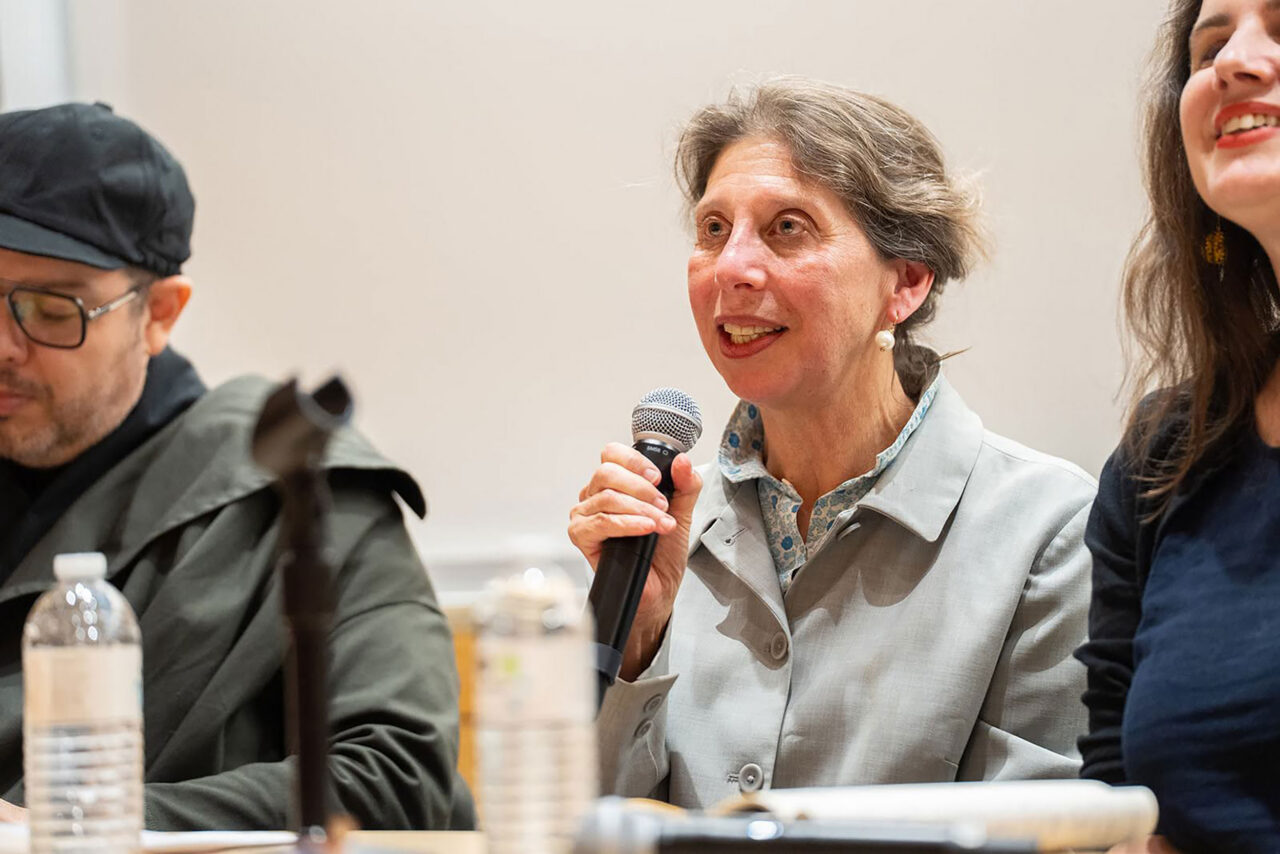
With limited equity, the sales prices can be low enough that apartment shareholders can’t afford to move, which is problematic. Or, because city property values escalate so much, the buildings can’t afford to be repaired over time because there’s not enough equity in the co-op to actually make the repairs. Those pressures create this push toward “sunsetting” affordability. And that’s why I’m going to talk about land trusts today, because I think there is some hope in them—and they’re becoming more and more appreciated and popular throughout the states and Europe.
So what is a land trust? Trust members are shareholders who collectively own and manage land, or have long-term leases— very long leases, like 200 years. Their membership can be unlimited or linked to a place and a particular community. Trust members who are residents—leaseholders— pay rent or own shares just like in a limited equity co-op, contributing additional equity to the trust at large. When you sell, you return your shares to the trust when you leave. But because the trust has a membership and a governance that extends beyond the building residents, it’s more stable and resistant to market pressures.
Financial structures add to that stability. The trust can keep some equity or ownership shares in its apartments—sell you 90% of the shares and keep 10%. It can own multiple properties so all the eggs aren’t in one basket, and then have equity from those other properties. Those are tactics to create assets and equity to use for maintenance financing, debt, etc. And if a land trust has a network of properties, it can give its members places to move within its own trust ecology—you can move from one apartment to another without leaving the land trust network. There’s a lot of potential there, and we certainly need more of them.
In Sheepshead Bay, the residents understood you couldn’t just elevate one house without making the flood impact on the next door worse. They already shared the muse—the property line ran down the center as did the infrastructure below—so they already had a kind of land trust de facto in the form of an easement and the pumps they maintained together. And now, in the Jewel Streets, the questions are: How and where will people move? Will they scatter, and the community network and all they share be lost? What if, instead, the community gives their homes to the community land trust (CLT) and becomes resident leaseholders, and the CLT sells its properties collectively to the city and, with the proceeds, builds new homes as a land trust? So, rather than individual climate migrants subject to market and city forces, the residents are leaseholders in their shared equity and, most important, in their shared vision of their own resilient future?