



Over the years, community engagement has played a growing role in New York City’s urban planning and development initiatives. The Department of City Planning’s Community Planning and Engagement division and the community visioning processes that accompany RFPs for city-owned sites are just two avenues by which civic participation can shape land-use decisions that were not available in the past. As an architect and planner who has spent 40 years working in New York City, I can recall a time when community-centered design was far from the spotlight.
By the early 1990s, many urban communities across the United States were left blighted from years of disinvestment and population loss. One such community was the Melrose neighborhood in the South Bronx, where devastating fires infamously destroyed nearly 80% of the area’s housing over a 10-year period. To address the neighborhood’s physical and economic erosion, New York City quietly developed an urban renewal plan that would transform Melrose into a middle-income, suburban-scale community, displacing hundreds of existing residents and businesses.
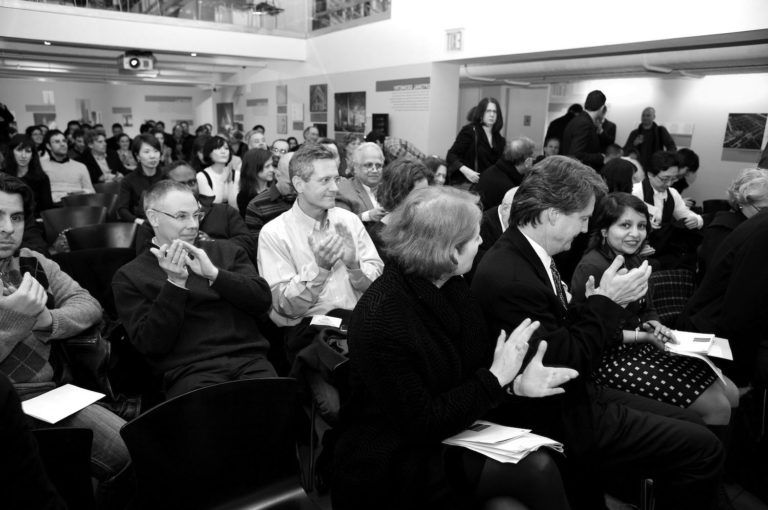
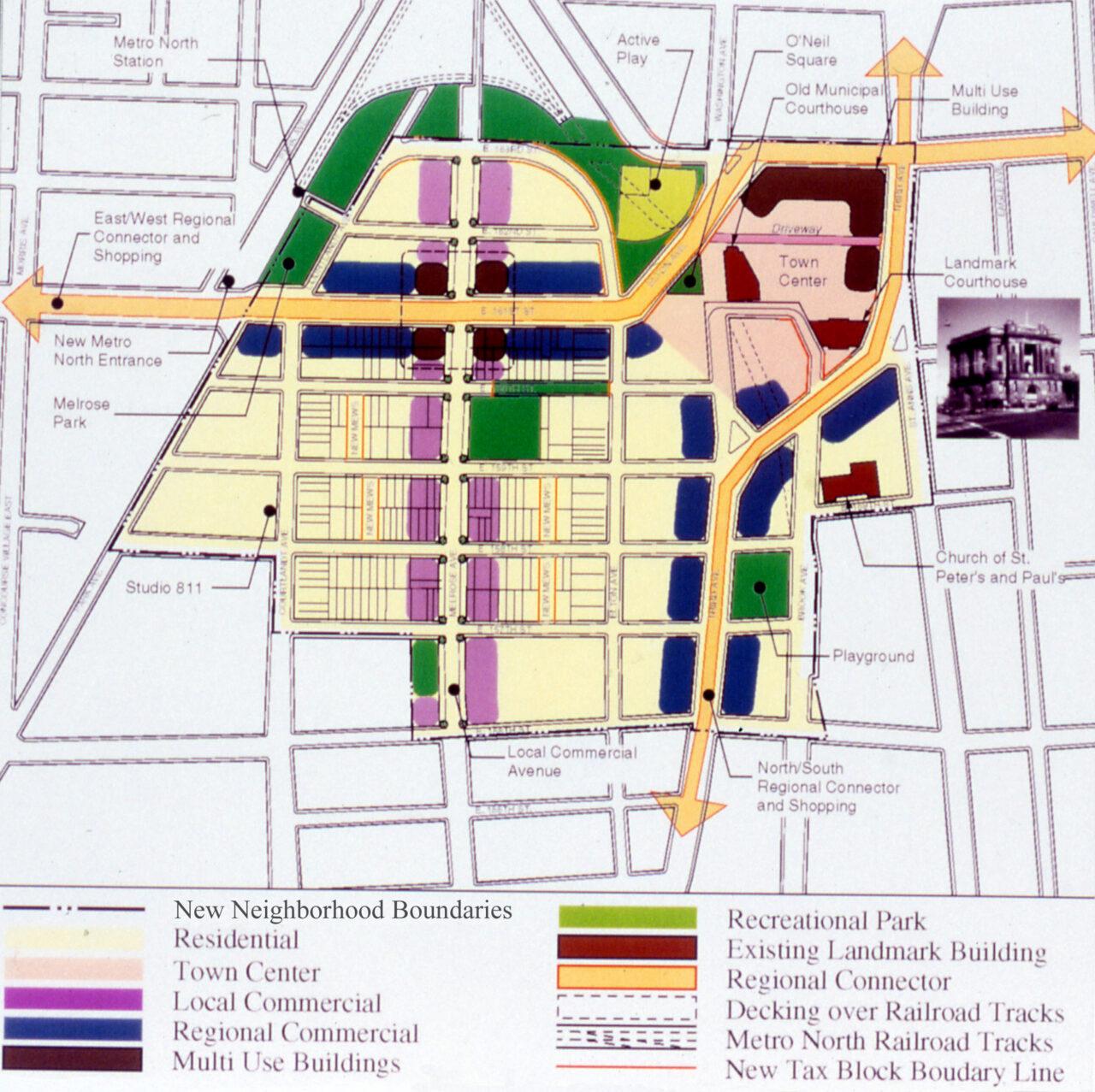
At the time, my partner Petr Stand and I were attending Bronx community meetings, where Melrose residents began organizing to fight the city’s plan. We worked with the grassroots organization that they formed, Nos Quedamos (We Stay), to design an alternative redevelopment plan that prioritized the needs of existing residents, bringing critical community services, infrastructure, and economic investment while preserving affordability and preventing involuntary displacement. The Melrose Commons Master Plan, approved by the city council in 1994, focused on the community’s concerns and hopes, and transformed their ideas into a tangible reality. Architecture, in this case, became an instrument of civic advocacy—a mechanism through which policy could be challenged and reshaped to be more just.
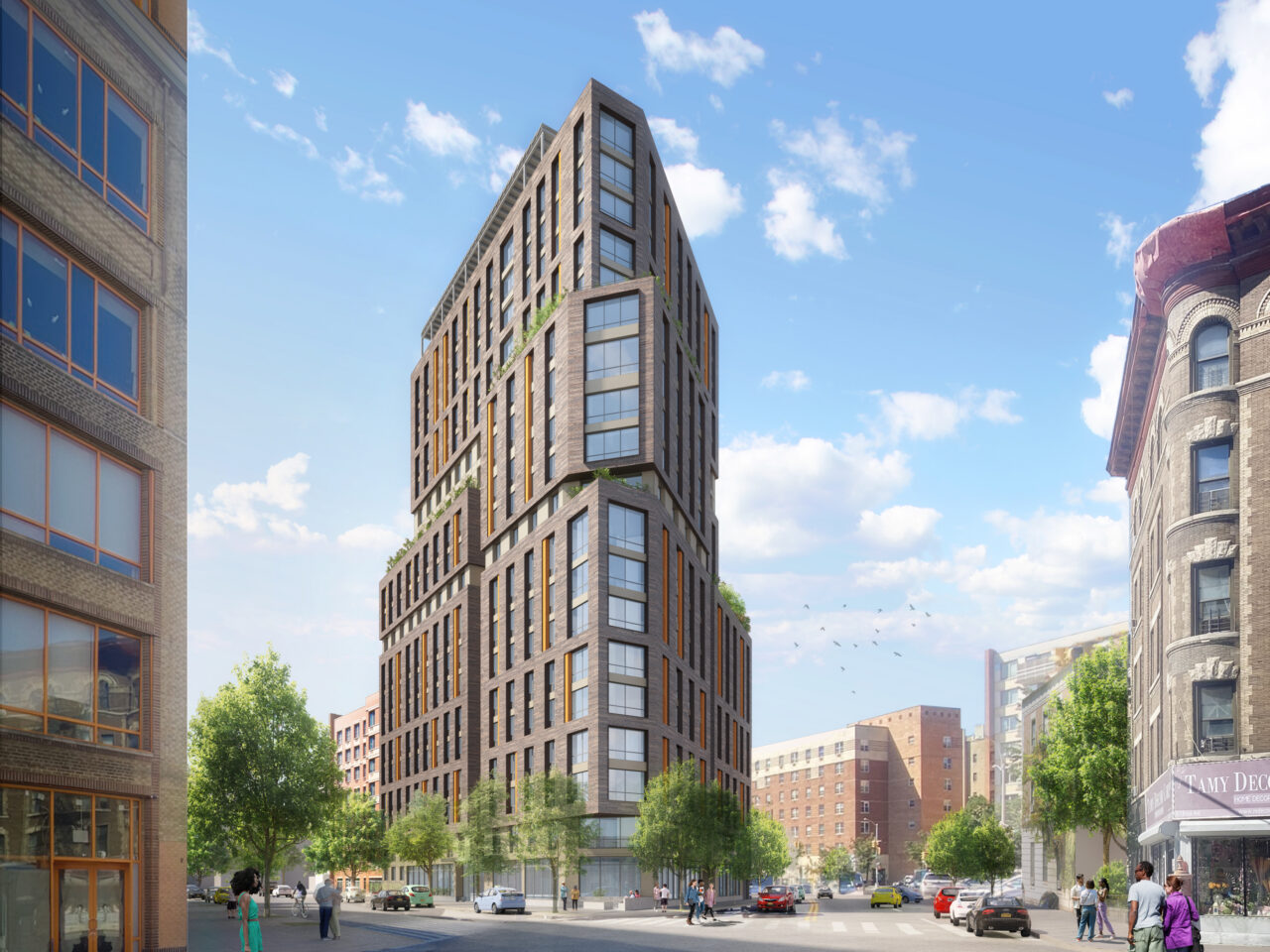
Today, the development landscape in New York City looks quite different than it did when I started Magnusson Architecture and Planning (MAP) in 1986. Rather than communities plagued by disinvestment, we now face a housing affordability crisis beyond any one neighborhood. Nevertheless, as architects, we still have the potential to help policymakers envision effective solutions. During the lead-up to the 2024 New York City Council vote on the City of Yes, MAP principal and AIA New York Chapter Housing Committee Cochair Brian Loughlin worked with the Planning and Land Use counsel to help council members better understand how the proposed reforms would affect their districts. Using a selection of sample sites across the city, Brian’s team compared what could be built under the current zoning with what was possible through the proposed plan. They produced zoning analyses, massing studies, and conceptual renderings illustrating how the changes would play out at the street level. By visualizing some of the legislation’s impacts, MAP’s work assisted in facilitating informed decisions by policymakers.
As architects, we have an expertise that helps people realize goals in the physical world. That means we have tremendous agency. With every design choice, we help to prioritize, defend, and bring into being ideas that can have far-reaching impacts on sustainability, equity, and safety in the built environment. This is certainly true of the two pro bono efforts noted above, the community-centered Melrose Commons and policy-focused City of Yes, but it is also true of our everyday project work. In the last year, MAP’s Director of Sustainability Sara Bayer has led several research projects, sponsored by NYSERDA, that explore building decarbonization and healthy material selection. These studies, which are producing resources like cost benefit analyses and detailed documentation of our efforts to incorporate Red List Free materials, are making us better advocates in client meetings. Instead of deferring to industry standards, we can work to specify healthier, more ethically sourced products, or argue for the value of interventions that reduce carbon emissions.
Promotion of quality at the project level has also landed our affordable housing work in design guidelines established by the New York City Public Design Commission and seen it outcompete market-rate developments for awards. With a commitment to the dignity of future residents, our designs have helped influence the evolution of best practices within the field. The cumulative effect of our individual design choices is a portfolio that asserts our ideals as a firm.
Through direct civic advocacy or routine operations, architects are presented with opportunities every day to help envision the future and define collective goals. Over decades of practicing architecture (our firm is celebrating its 40th anniversary in 2026), I have tried to elevate core values of sustainability and equity. I urge all architects to consider which values and perspectives they promote through their work, and to explore how they can leverage their expertise to shape responsible public policy, advance the design industry, and empower communities.