



by: Linda G. Miller
Long-Awaited New Museum Expansion Opens with “New Humans” Exhibit
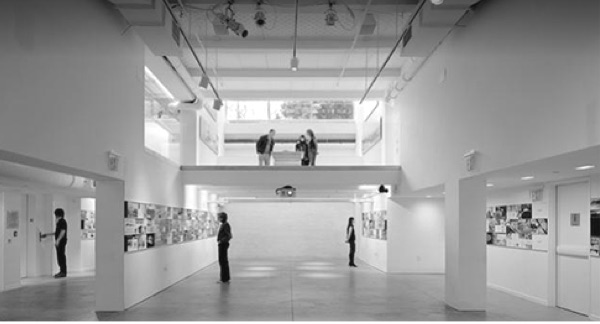
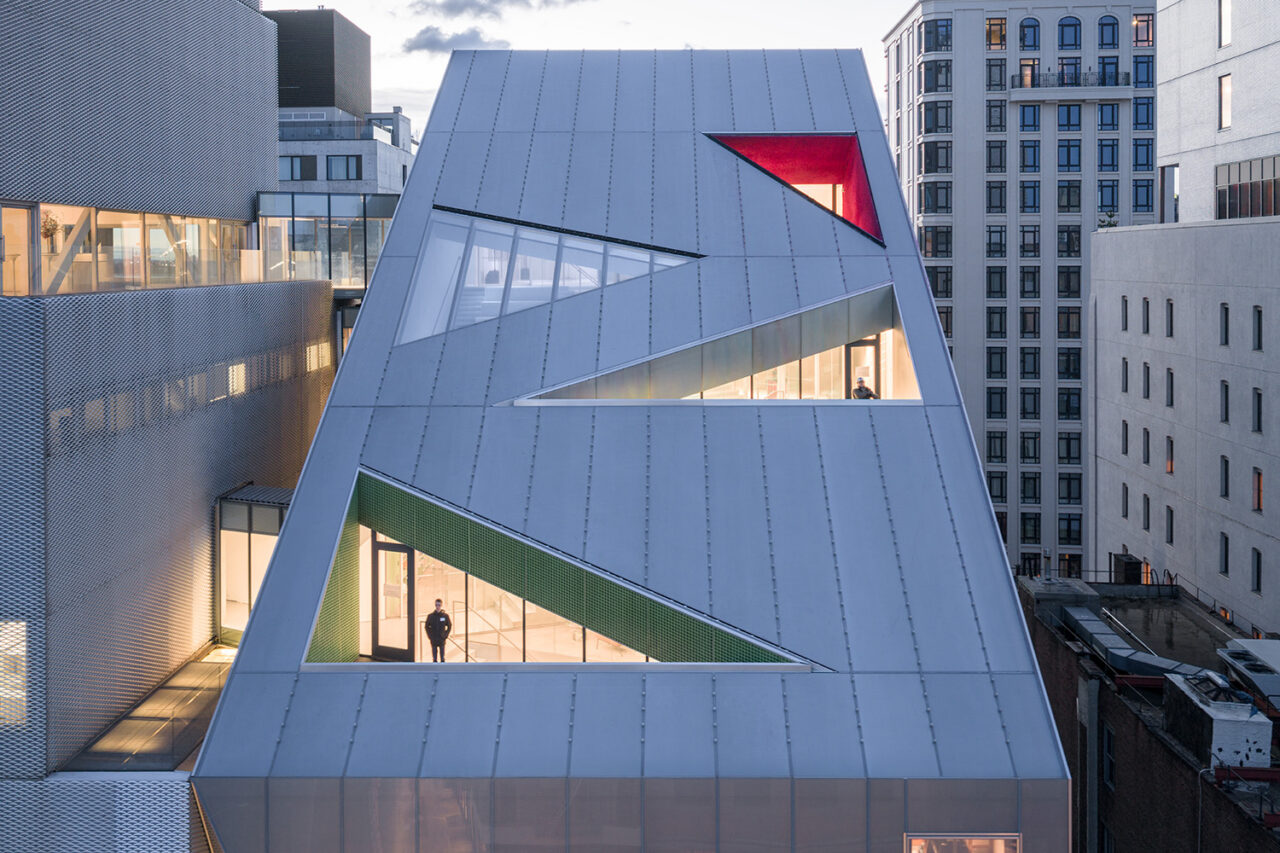
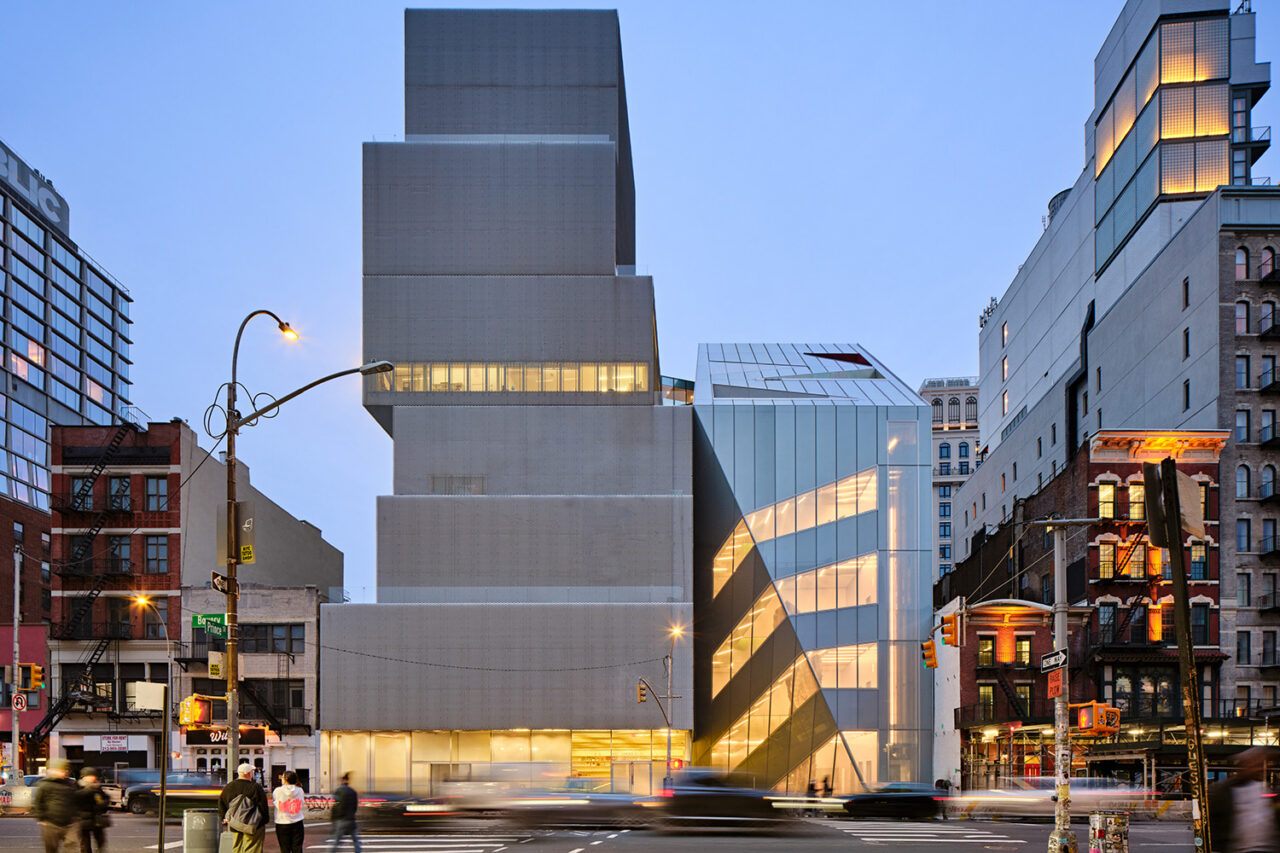
On March 21, 2026, the New Museum’s 60,000-square-foot expansion designed by OMA / Shohei Shigematsu and Rem Koolhaas in collaboration with Executive Architect Cooper Robertson (now Corgan) opened on Bowery at Prince Street. OMA’s first public building in the city seamlessly integrates with the museum’s existing SANAA-designed 2007 flagship building which had been closed for the expansion. Clad in laminated glass with a layer of metal mesh, the seven-story building appears monolithic during the day, establishing a unified exterior alongside the SANAA building’s metal mesh facade. In the evening, the transparency of the facade is enhanced as light permeates through its openings, exposing the museum’s anatomy. The expansion doubles the museum’s exhibition space by adding a 10,450 square feet of space for a combined total of 20,240 square feet of exhibition space. The new building’s galleries will connect to the SANAA building’s galleries on the second, third, and fourth floors, with the ceiling heights aligning on each floor. Galleries can be used singularly across the floor plate to host larger exhibitions.
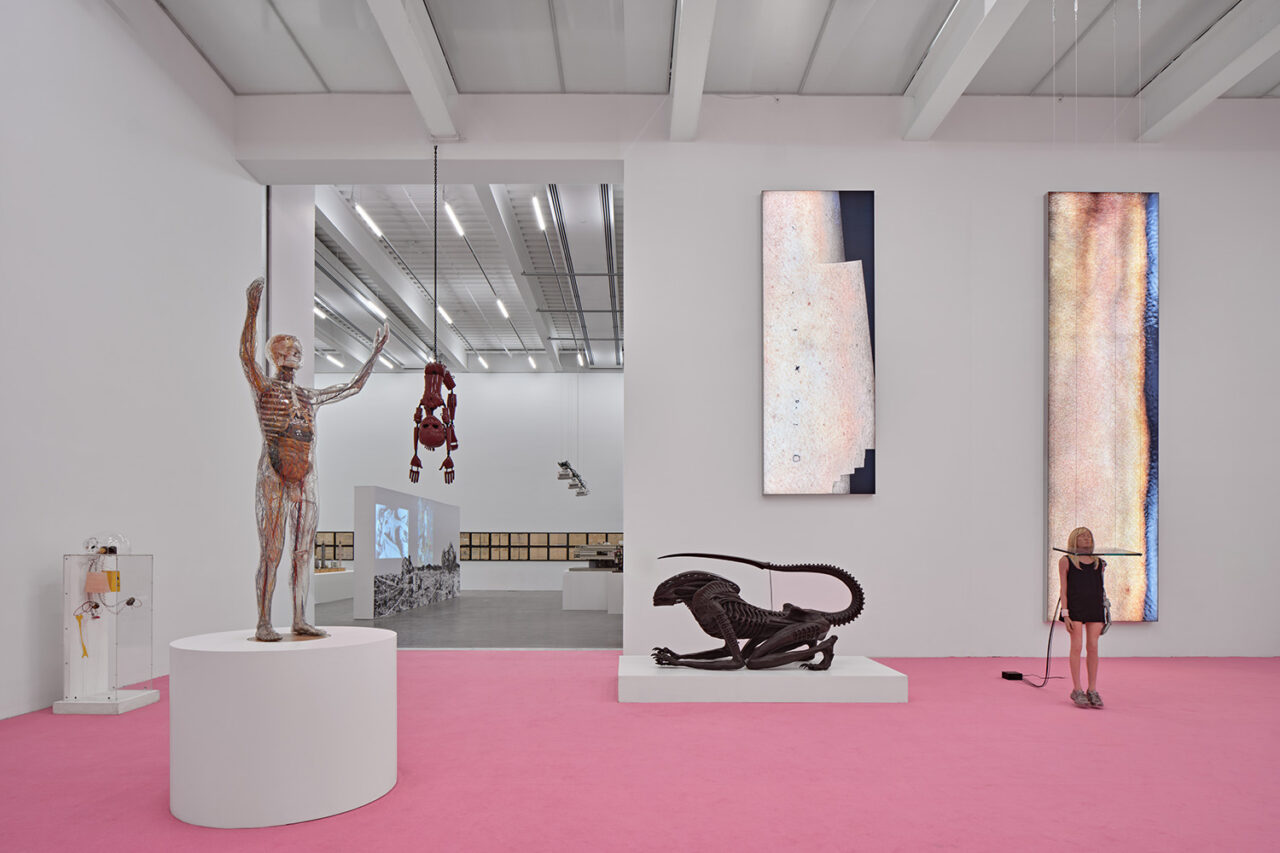
The inaugural exhibition New Humans: Memories of the Future unfolds throughout the entirety of the expanded New Museum and brings together more than 700 objects by more than 200 artists, writers, scientists, architects, and filmmakers to explore how dramatic technological and societal changes have spurred new conceptions of what it means to be “human.” A distinction between the two buildings is created by taking advantage of the site’s depth to insert an interstitial space containing an Atrium Stair and dedicated gallery elevators for improved vertical circulation. An angled setback starting from the top of gallery stack to the street defines a new public plaza. A second setback above the galleries allows the top of the building to disappear, while opening the upper-level terraces. The expansion also provides new venues for public programs and special events, including an enlarged seventh floor Sky Room and a new 74-seat Forum, a dedicated studio for artists-in-residence and a purpose-built home for the Museum’s cultural incubator NEW INC. On the ground level, visitors are welcomed into an enlarged lobby, an expanded bookstore, and an upcoming full-service restaurant with an additional entrance on Freeman Alley.
NYC Parks Breaks Ground on Prospect Park’s Vale of Cashmere Restoration
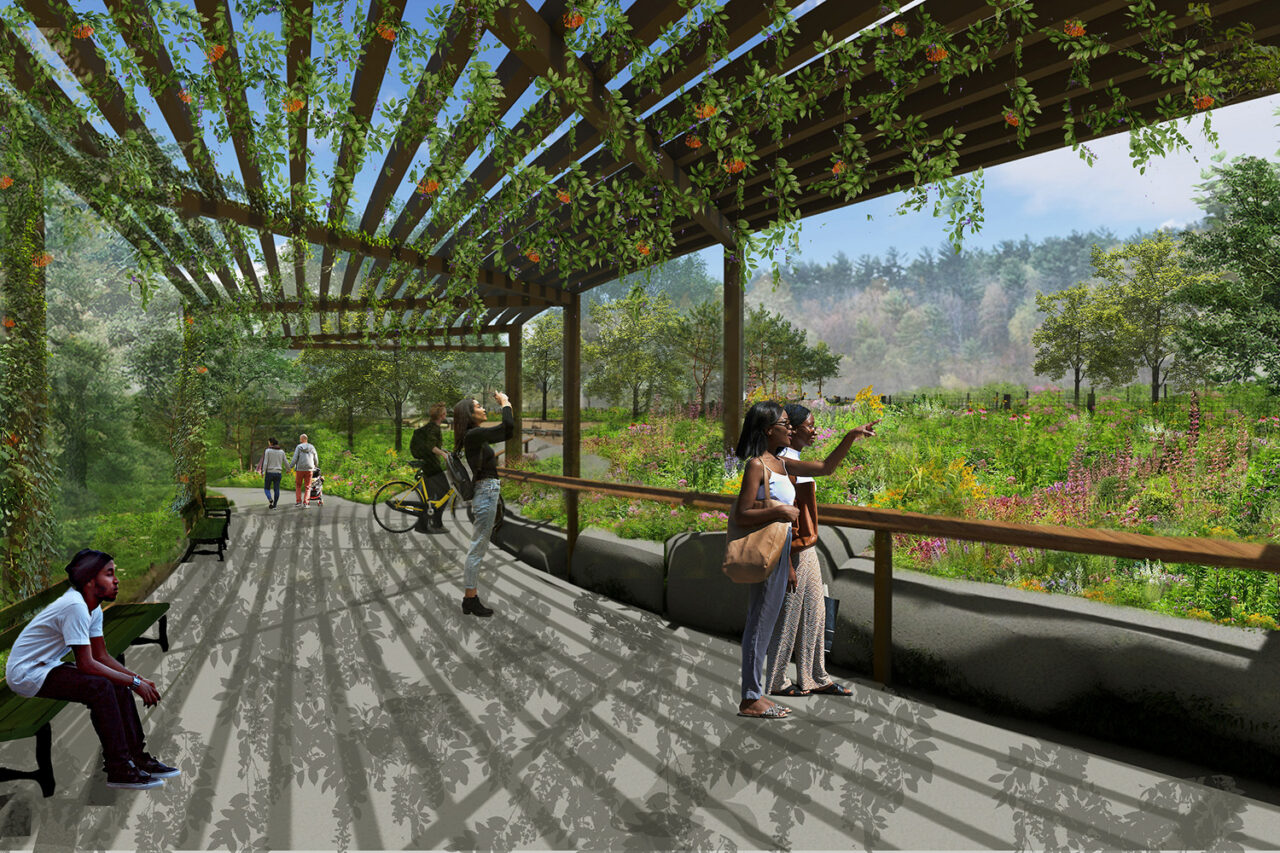
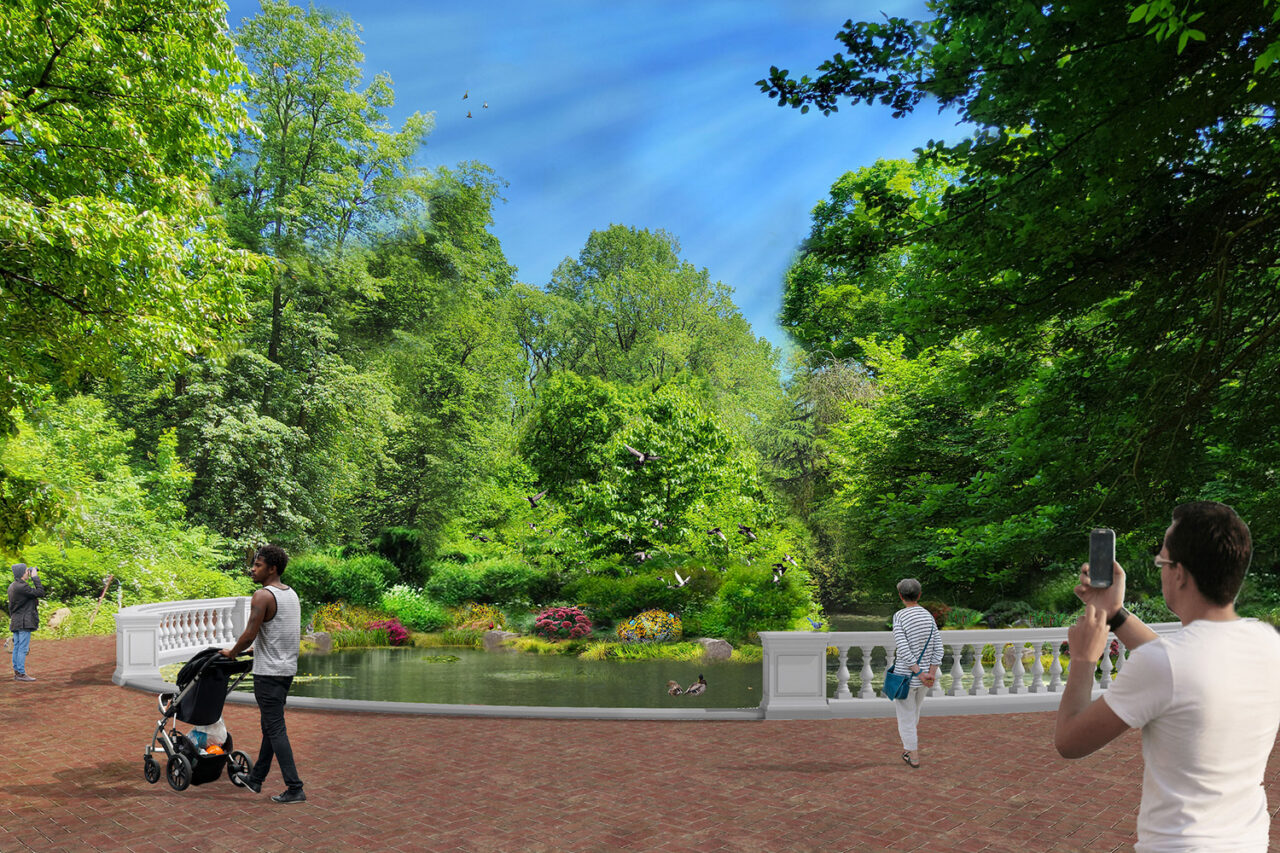
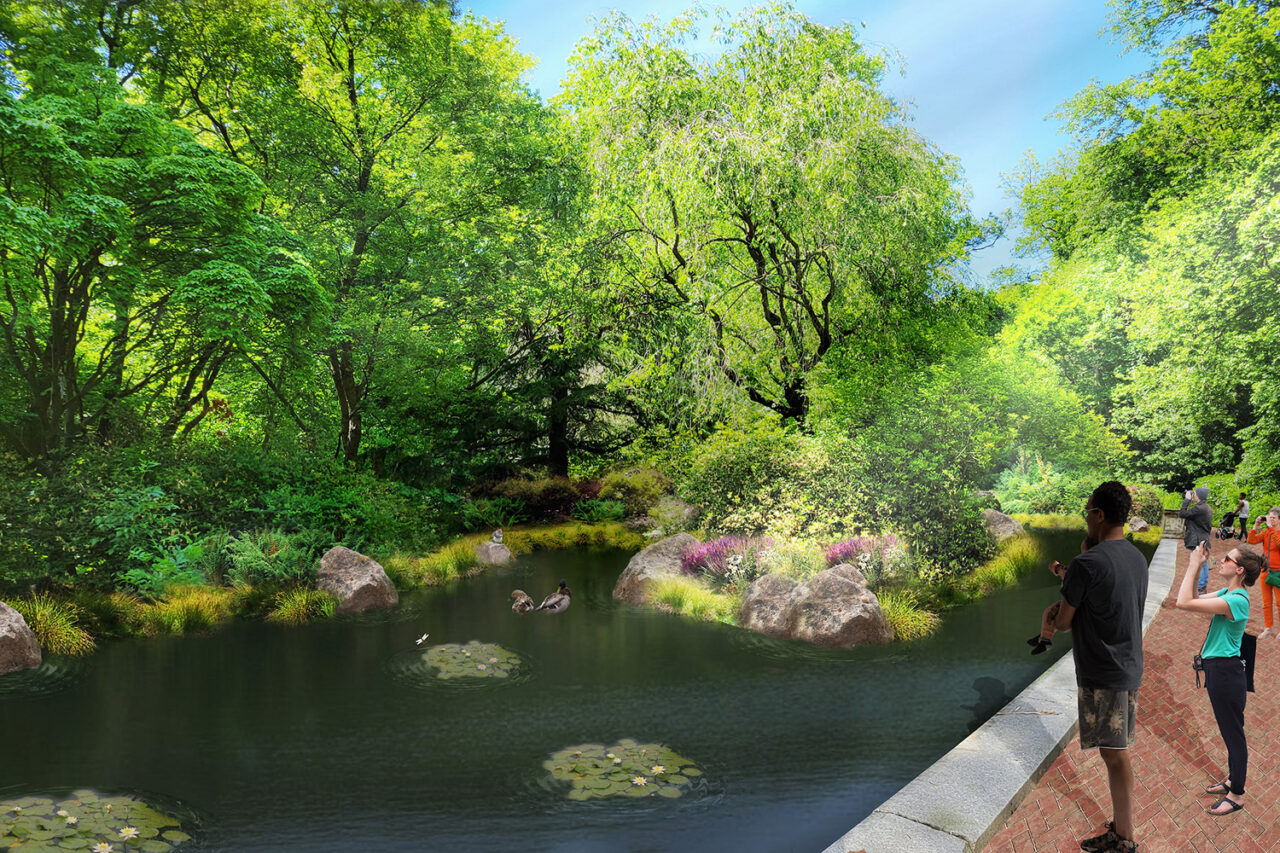
NYC Parks, NYCEDC, and Prospect Park Alliance, the non-profit organization that cares for the park, have broken ground on a major restoration of the secluded Vale of Cashmere in Prospect Park. The restoration will transform the eight acres in the northeast corner of the park into a space for nature exploration, quiet reflection, and intergenerational connection. The area will become more accessible, engaging, and functional, while also respecting Olmsted and Vaux’s original design. Led by the Prospect Park Alliance’s in-house team of architects and landscape architects, the Vale restoration, the first in more than 50 years, transforms two key landscapes: the historic Children’s Pool (a decorative water feature) and a former rose garden. The project will also include three acres of woodland restoration that will continue an important pollinator corridor across the park. The restoration of the Children’s Pool will bring back historic details while improving habitat for birds and other wildlife. The former Rose Garden will be transformed into three connected landscapes that respect the park’s historic design while restoring the woodland landscape and adding new amenities, including: a pollinator garden and planted arbor; a children’s nature exploration area; and a picnicking lawn and small pavilion with all-gender composting restrooms and a shaded viewing terrace.
The result of a two-year community outreach process, the restoration of the Vale is expected to be completed in 2027. This project is the centerpiece of several improvements that have been achieved in recent years in this corner of the park. This includes the Flatbush Avenue Perimeter restoration with two new entrances to the park, the first in the park since the 1940s; the restoration of surrounding woodland areas severely impacted by Hurricane Sandy; the restoration of the pathways and lighting to the area; the award-winning restoration of Endale Arch; and the award-winning restoration of the Grand Army Plaza Berms and Memorial Arch.
American Express Announces Plans to Build Global Headquarters in Lower Manhattan
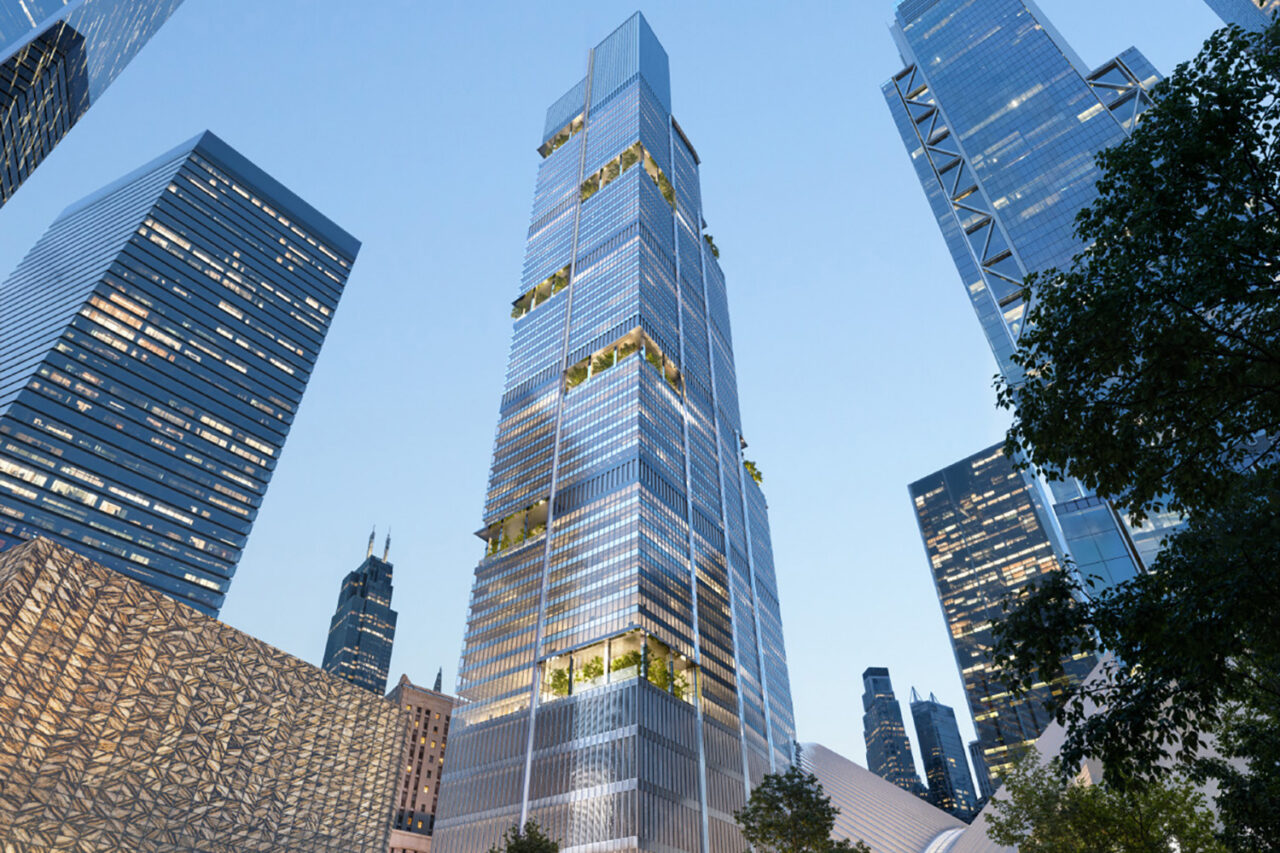
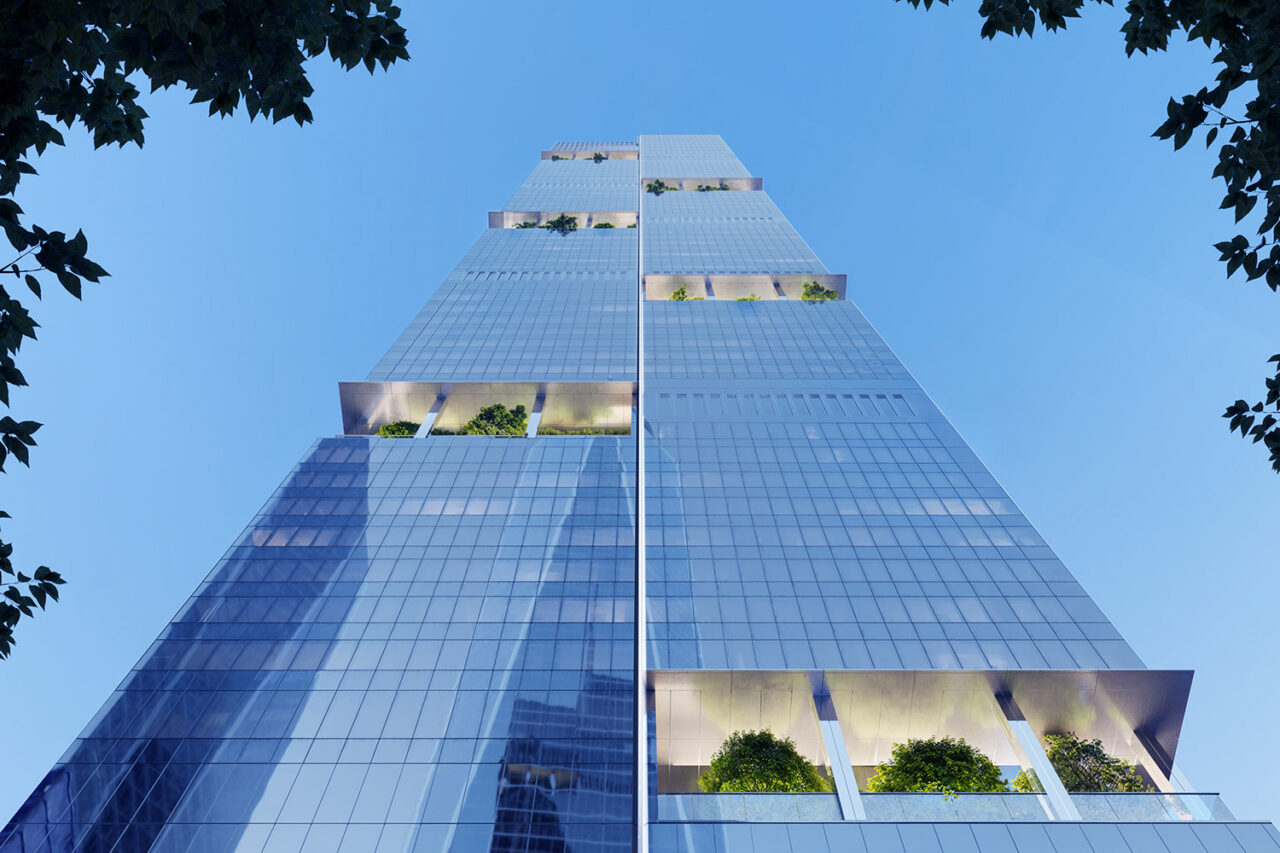
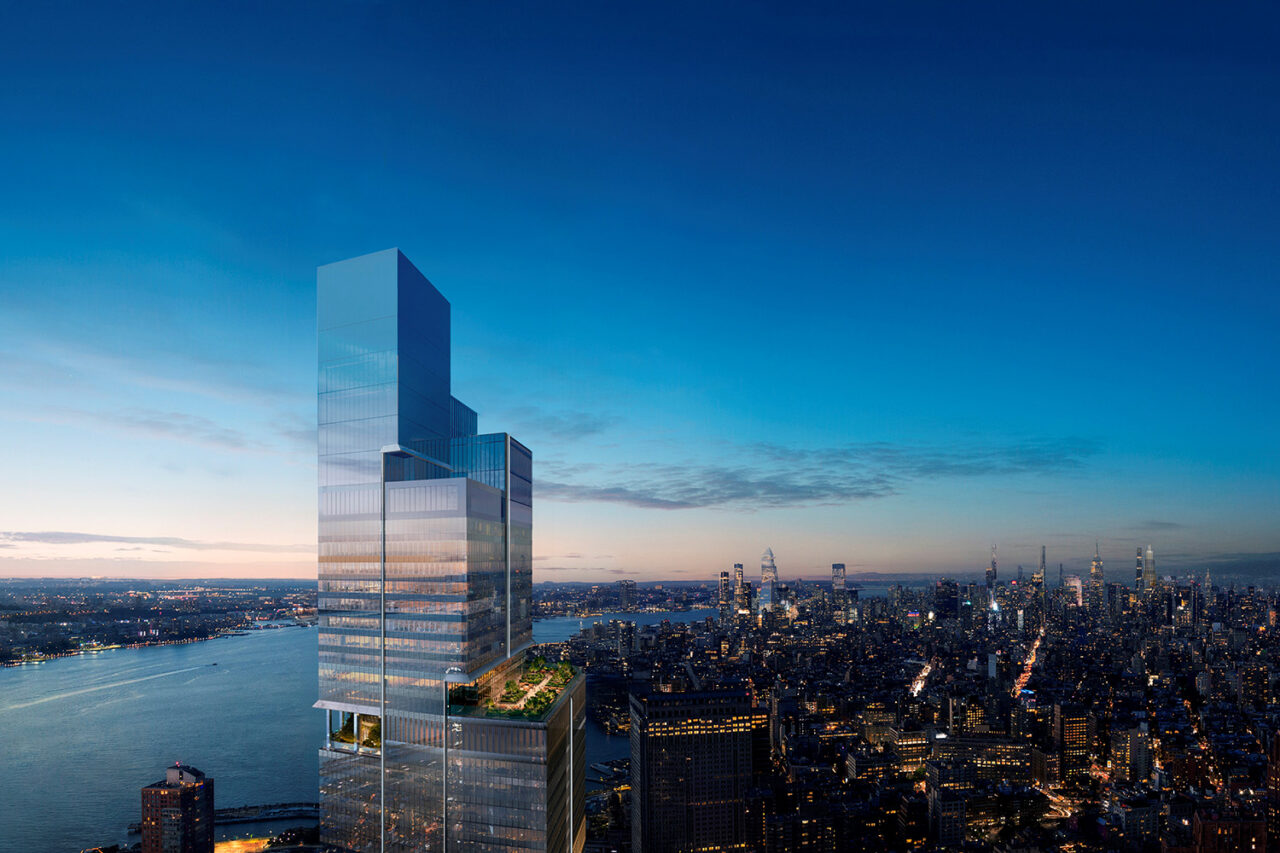
American Express announced that construction is planned to begin this spring on their nearly two-million-square-foot Global Headquarters at located at 2 World Trade Center/200 Greenwich Street, marking the final commercial tower to be built at the World Trade Center. Designed by Foster + Partners and developed by Silverstein Properties, American Express will be the sole owner and occupant of the new building. Just north of the Santiago Calatrava-designed Oculus, the new 55-story tower will rise 1,226 feet above Lower Manhattan. The building will feature flexible and modern workspaces and world-class amenities designed to further innovation, collaboration, and well-being for up to 10,000 colleagues. A defining feature of the building is its three greenery-filled terraces, and six corner outdoor gardens meant to introduce nature into the workplace. Designed with advanced smart-building technology and fully electric, energy-efficient systems, the project will pursue LEED certification. Developed on land owned by the Port Authority of New York and New Jersey (PANYNJ) under a long-term ground lease, the project is expected to be completed in 2031. The company moved to its current headquarters at 200 Vesey Street in 1986 and will retain the building until the completion of the new project.
Queens’ Astoria Library Undergoes Renovation and Expansion
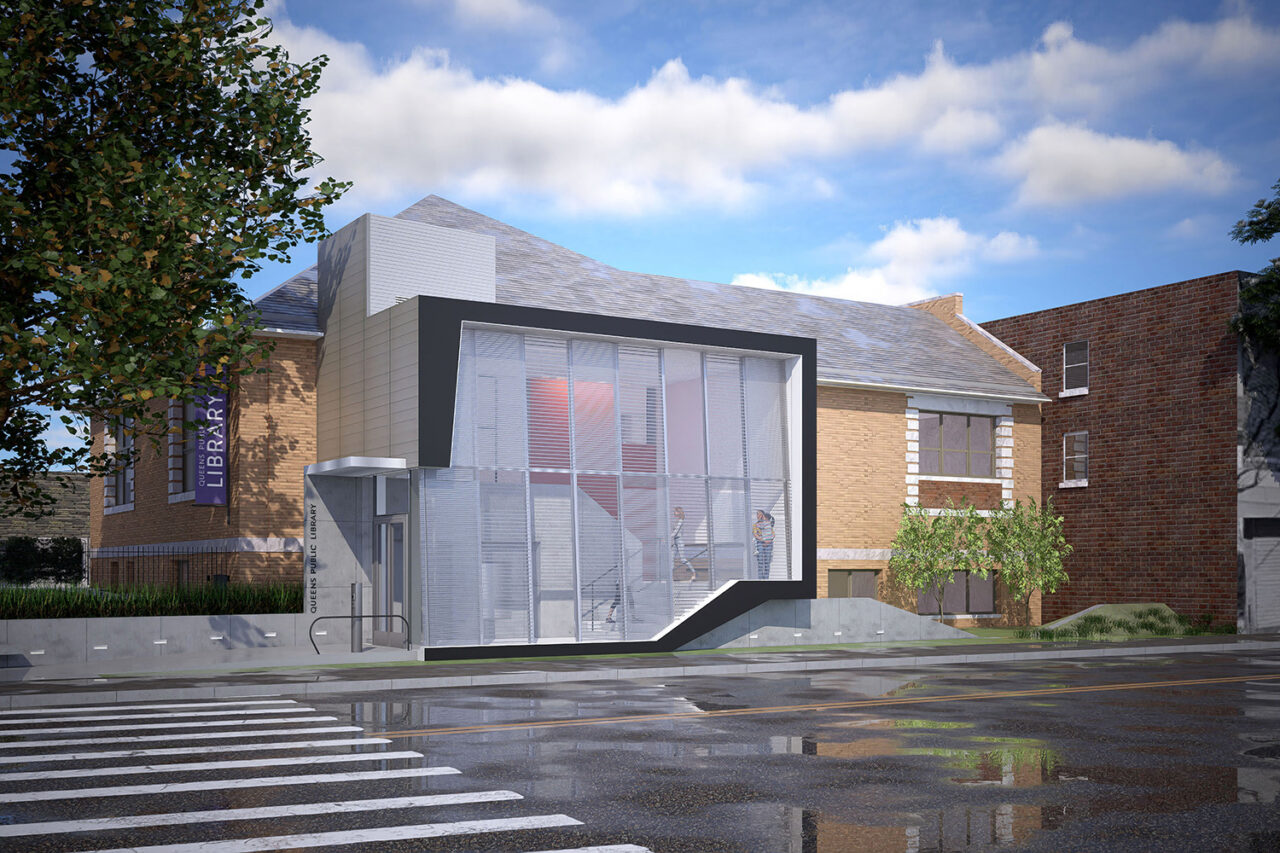
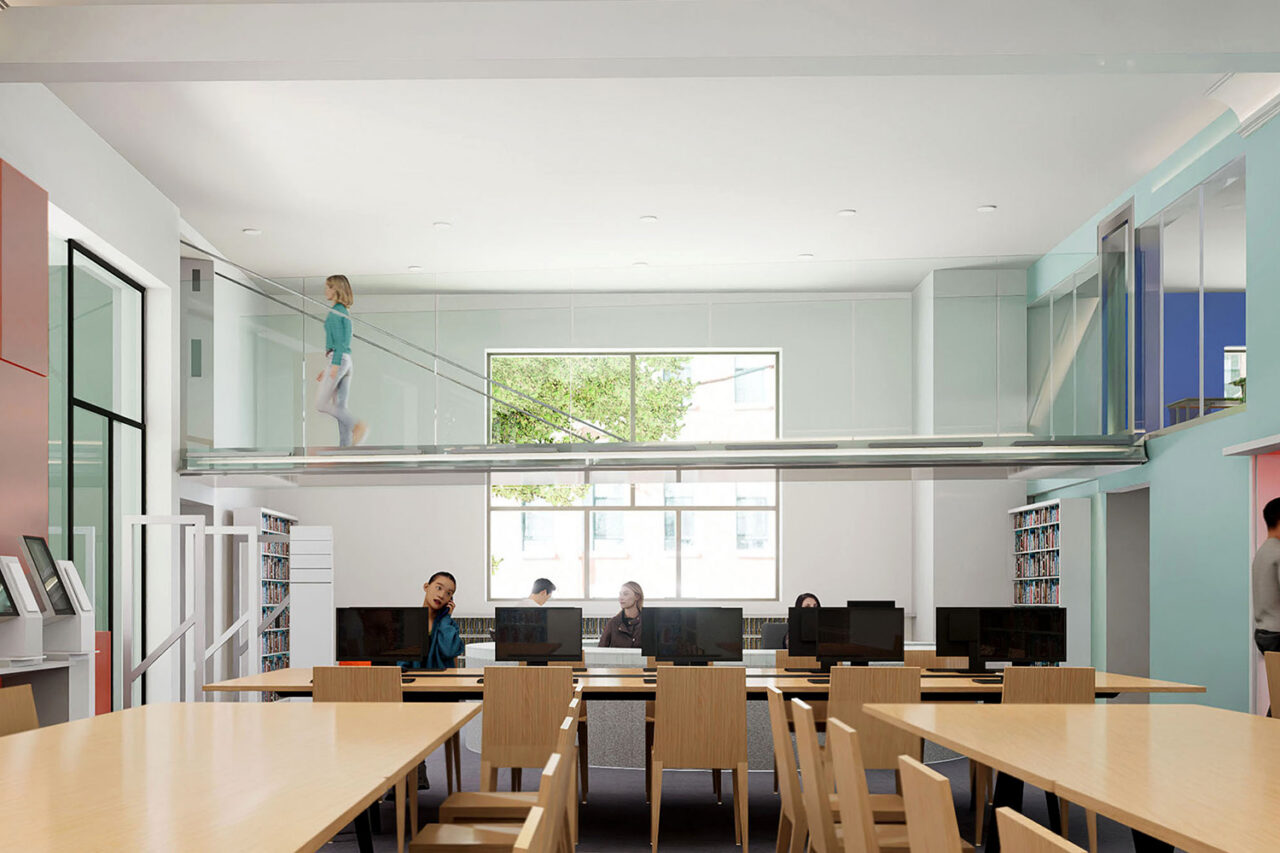
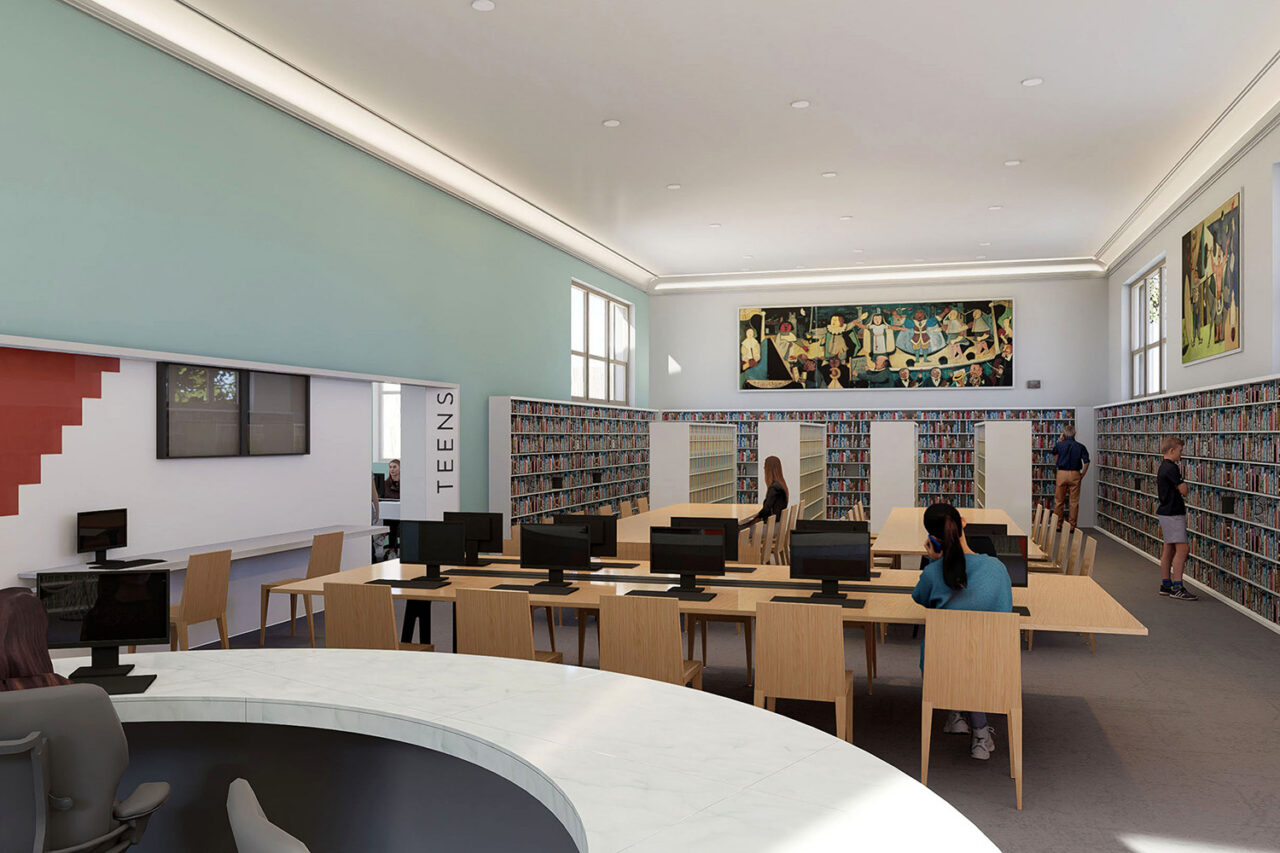
The Astoria Library, one of the oldest branches in the Queens Public Library (QPL) network, is currently undergoing a renovation and expansion designed by Yoshihara McKee Architects (YMA). Located at 14-01 Astoria Boulevard, the library was built in 1904 and designed in the Flemish Revival style by Tuthill & Higgins. It is one of the four original Carnegie libraries in use in the QPL system. Sited at the top of a long sloping residential street, the new façade on the two-level library will feature expansive perimeter windows. As part of the project, the existing 8,400-square-foot facility will undergo a complete infrastructure and digital modernization, including 24/7 automated book return for added convenience. It will become ADA compliant with a new at-grade entry ramp and upgraded restrooms. The new approximately 1,000-square-foot addition will house an elevator and stairway that will connect the levels of the library. The lower level includes the main multi-purpose room and children’s reading area, with direct access to a rear yard, which can be used for outdoor reading and programs. The main floor will feature new adult and teen areas, while the mezzanine will house adult learning spaces. The building was heavily renovated in the 1930s via the Federal Civil Works Administration and has undergone several subsequent restorations. As part of the current renovation, the library’s two out of five remaining murals—Circus and Grand Finale of an Opera Scene—created by muralist Max Spivak under the WPA’s Federal Art Project, are being restored and reframed. The murals, depicting whimsical circus and opera puppets, were originally installed in 1938 in the former children’s room on the lower level, where they remained until 2003 when they were reinstalled on the first floor. The project, which is expected to be completed in the spring of 2029, is being managed by the NYC Department of Design and Construction (DDC). The project is one of the first DDC projects to start under the new Community Hiring requirements.
Mid-century NYCHA Campuses Undergo Light-Filled Transformation
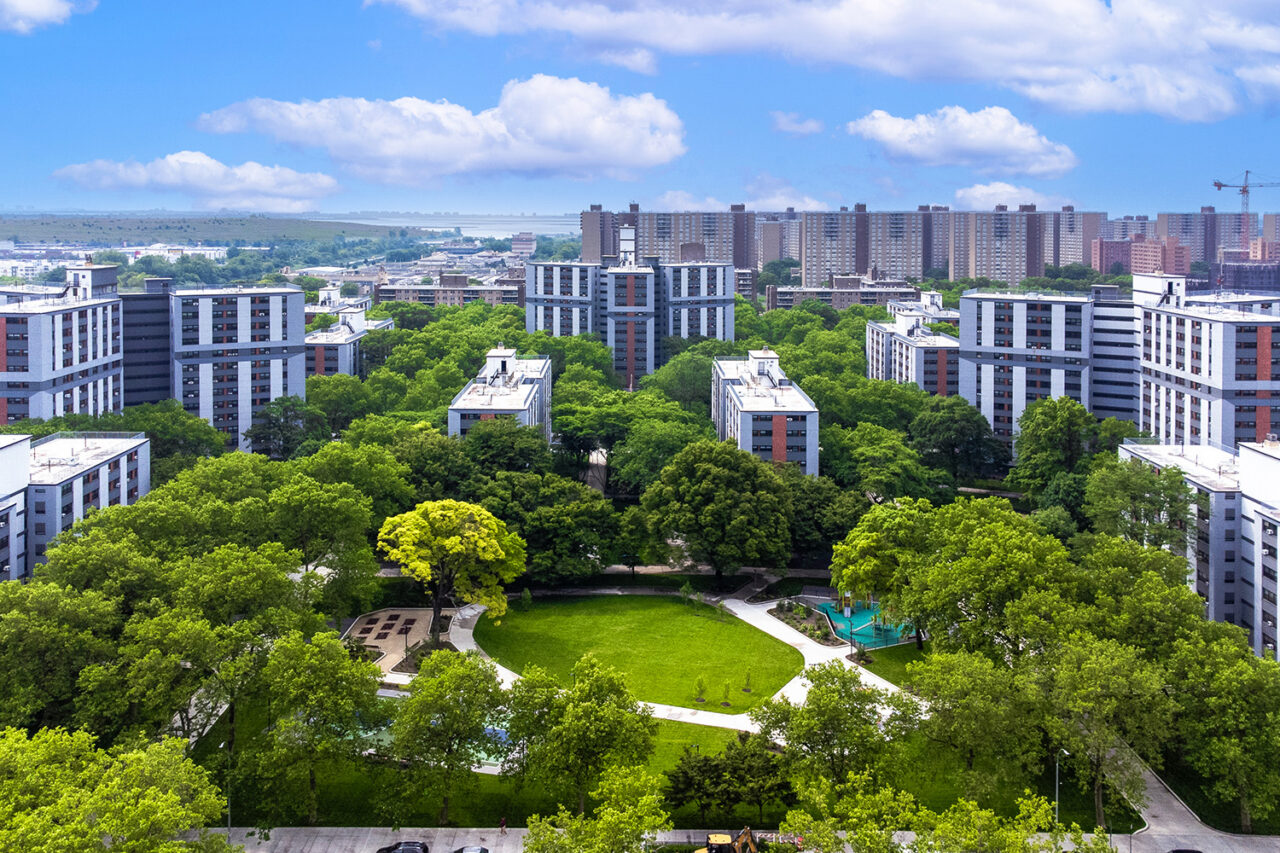
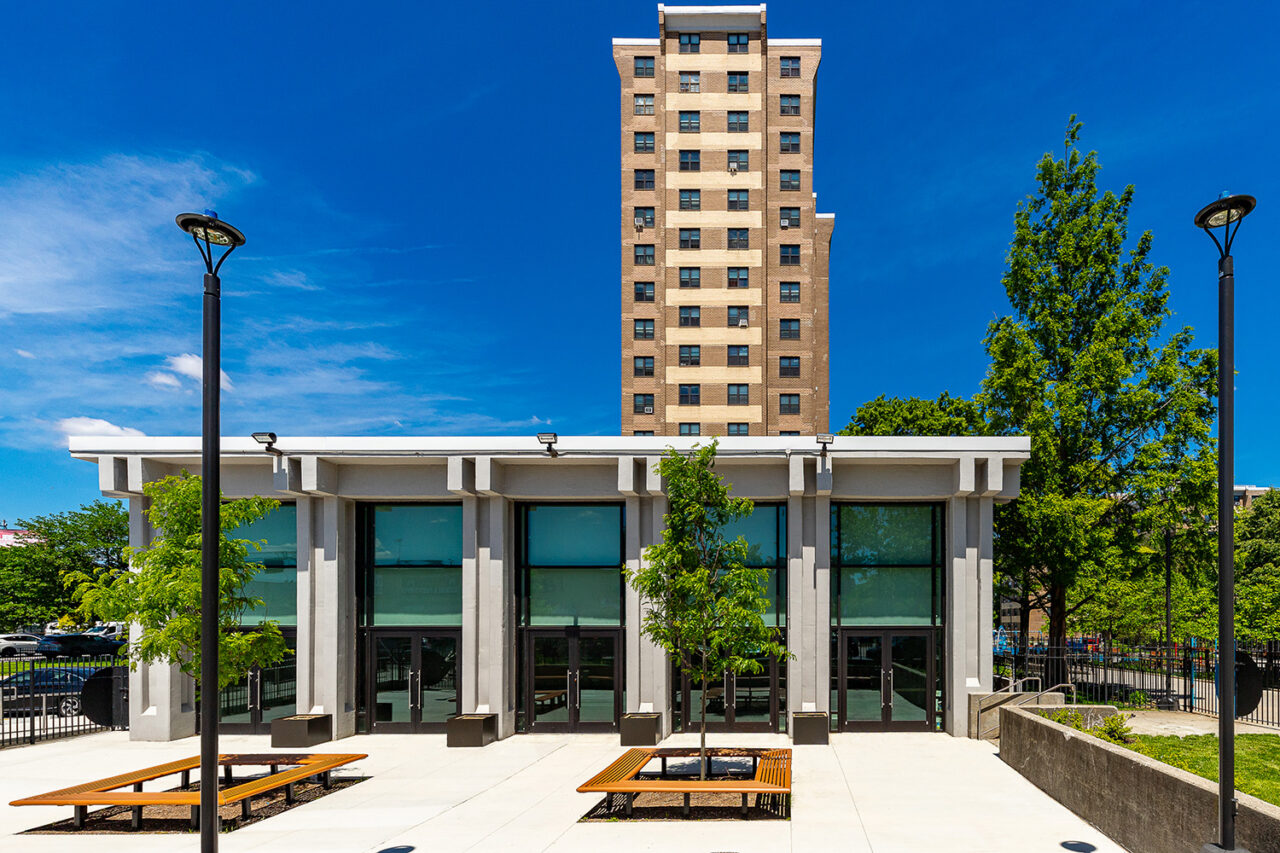
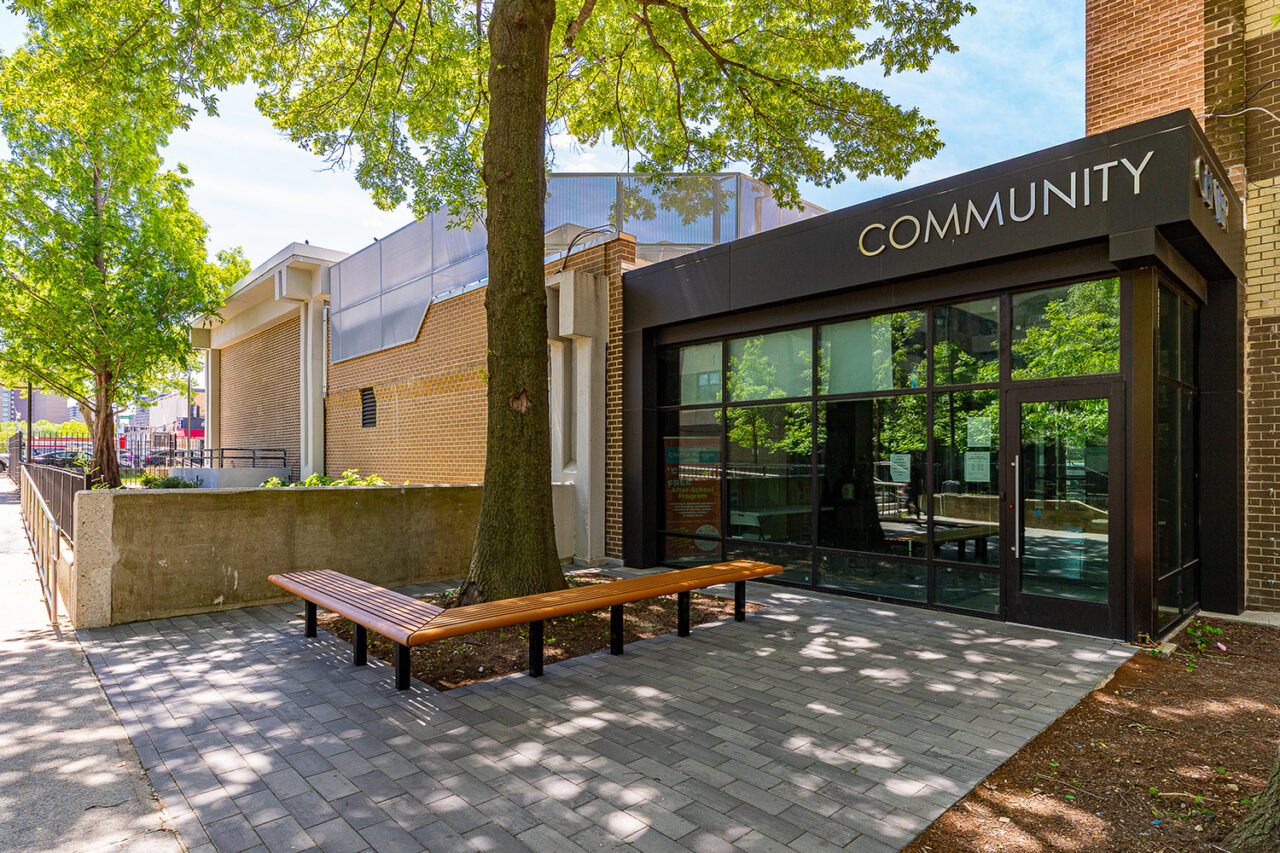
In the East New York section of Brooklyn, at the 5.44-acre 1972 superblock at Penn-Wortman and the 30.5-acre four-block Linden Houses, Curtis + Ginsberg Architects (C +GA) has reimagined two mid‑century NYCHA campuses, transforming 1,922 apartments across 22 buildings into light‑filled, resilient, and community-centered environments for the 21st century. Originally designed by Morris Lapidus, the buildings that once turned inward now actively engage their surrounding landscapes. Instead of treating cellars as back‑of‑house remnants, new sunken courtyards were excavated at Linden Houses, drawing daylight deep into lower levels, creating space for community programming. One courtyard introduces natural light into a former storage room that’s been converted into a community room. Adjacent terracing rises to the newly programmed outdoor spaces. At Penn–Wortman, the main lobby was opened directly onto the central green and connected to a modernized laundry room, dissolving long‑standing barriers between the parking lot–facing lobby and the landscaped courtyard at the heart of the site. The community center was expanded and reconceived as a civic anchor. New entry additions complement the historic brick structures with contemporary interventions that clarify access and enhance transparency. Along the gym frontage, the original architecture was restored by replacing a fragmented mix of doors, punched windows, and infill panels with a rhythmic sequence of full‑height glazed storefront doors. This not only accentuates the geometry of the historic façade but allows the gym to open fully to the outdoors, doubling its event space in good weather and transforming it into an indoor–outdoor venue. Across both campuses, entrances have become transparent, welcoming thresholds with new glazed vestibules, and enlarged lobbies created by absorbing former storage and back‑of‑house spaces. Comprehensive landscape overhauls include new accessible pathways, playgrounds, athletic courts, bioswales, and resilient stormwater systems unify formerly fragmented open spaces. Sustainability upgrades, include high‑performance windows and roofs, electrified and modernized building systems, solar/PV‑ready roofs, and overclad façades at Linden Houses, advance long‑term climate resilience.
Mr. Flower Fantastic Designs New York Botanical Garden’s Orchid Show
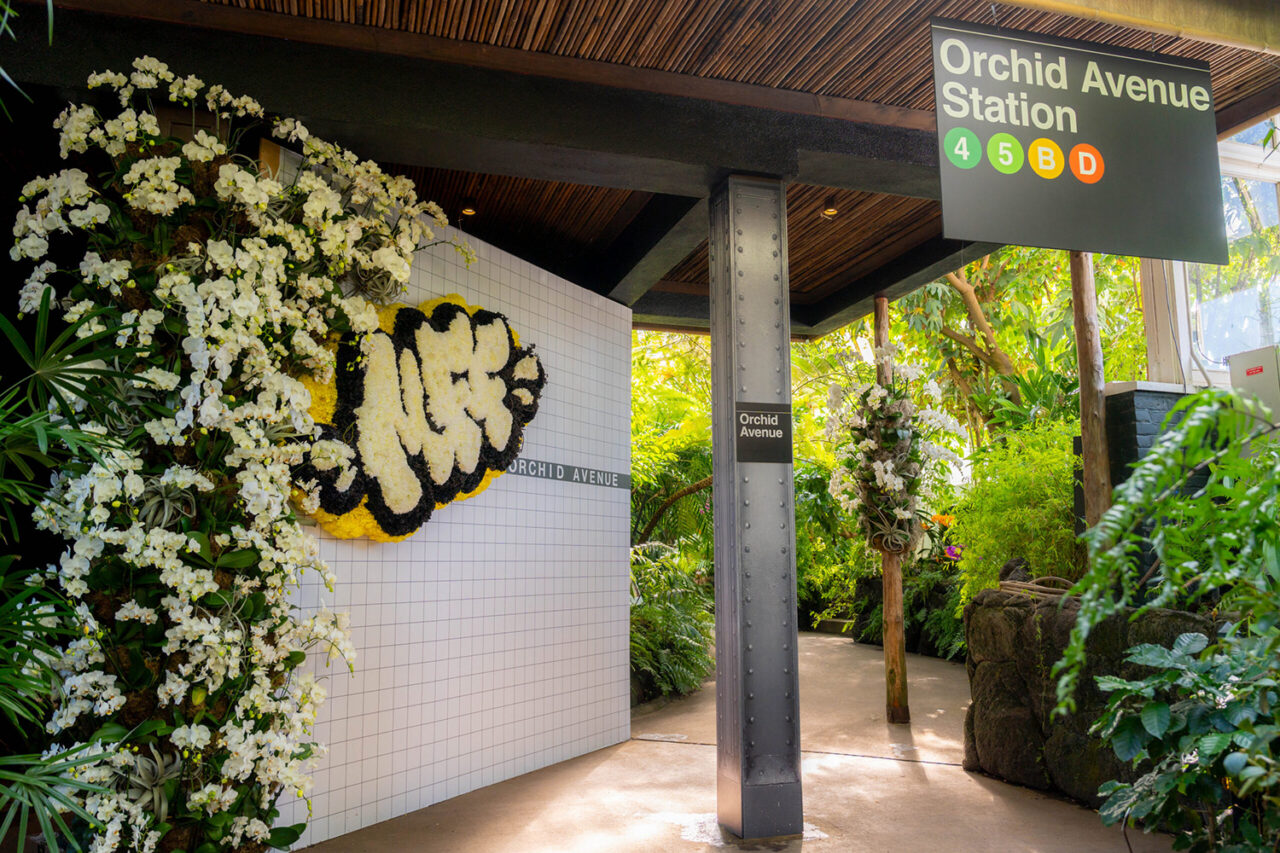
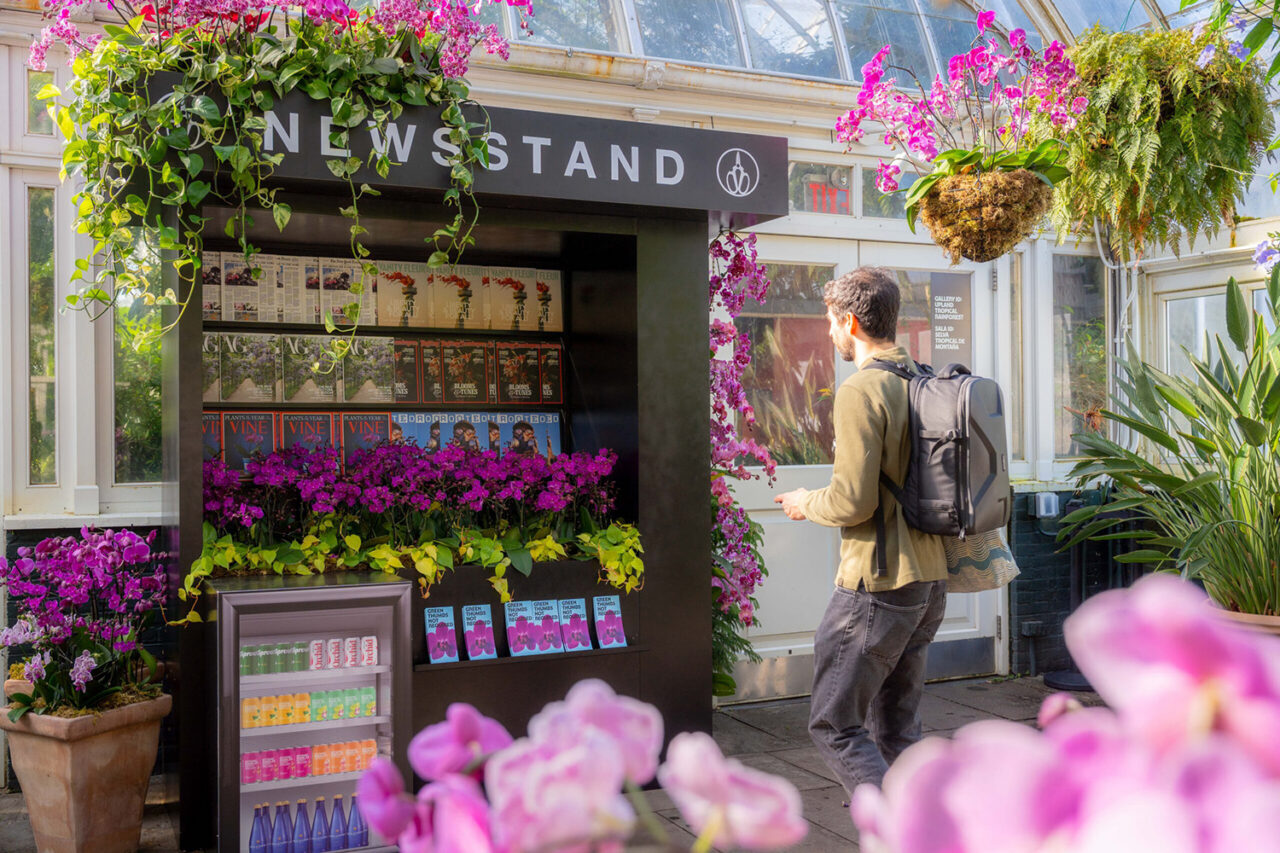
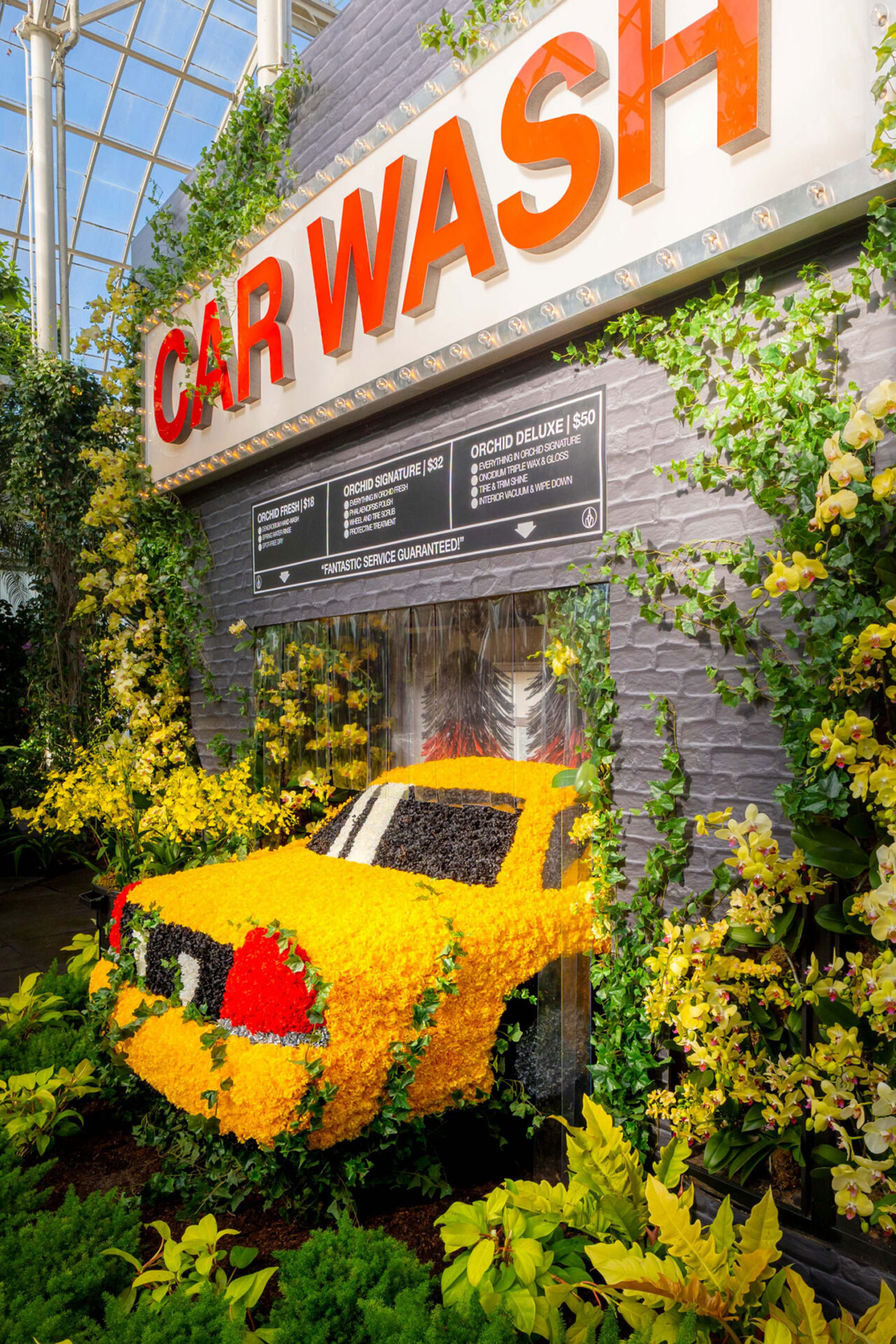
As this year’s guest designer, the artist Mr. Flower Fantastic (MFF) has blended floristry with popular art and street culture to create The Orchid Show: Mr. Flower Fantastic’s Concrete Jungle, on view now through April 26 at the New York Botanical Garden (NYBG). The exhibition, housed in the Enid A. Haupt Conservatory offers architectural installations reimagines familiar New York City street scenes such as a brownstone, car wash, subway station, and newsstand and festoons them with thousands of orchids from around the world. This is the 23rd edition of the NYBG’s annual celebration of all things orchids. Last year, the exhibit, Mexican Modernism, was inspired by Pritzker Prize-winning mid-century Mexican architect Luis Barragan (1902-88).
In Case You Missed It…
The New York City Department of Cultural Affairs (DCLA) and the NYC Department of Design and Construction (DDC) completed the restoration on the Hunterfly Road Houses at the Weeksville Heritage Center in Crown Heights, Brooklyn. The 19th century wood-frame houses are the last remaining structures of Weeksville, one of the nation’s largest free Black communities before the Civil War.
Memorial Park Conservancy (MPC) and Nelson Byrd Woltz Landscape Architects (NBW), broke ground for Memorial Groves, 100 acres of reimagined parkland in tribute to Houston’s World War I history. During the war, it was used as a cantonment by the US Army and later established as a public space to memorialize the 70,000 soldiers who trained there. The project is the latest of several transformative initiatives envisioned in the NBW-led 2015 Memorial Park Master Plan Memorial Park Master Plan, which has guided the ongoing revitalization of one of Houston’s largest urban greenspaces. In addition, the Mount Vernon Ladies’ Association (MVLA) announced the launch of a comprehensive, estate-wide landscape plan for the historic 500-acre property, home to the most important surviving 18th-century landscape in the United States, one created by George Washington’s own design and vision, will be led by Nelson Byrd Woltz Landscape Architects (NBW) and includes an interdisciplinary team that includes Beyer Blinder Belle (historic preservation) and additional specialists in ecology, horticulture, and interpretation.
The U.S. division of the Therme Group built a temporary pop-up in Domino Park in Williamsburg, Brooklyn and staged an event called the Culture of Bathe-ing. Norwegian firm Ringala Eggertsson Architects built the main sauna. Though this event is over, the East Coast’s first floating sauna, again designed by Norwegians, is open and moored on a lake in Saratoga Springs.
Design studio 2X4 is working with Prada on a temporary installation that covers their store at Fifth Avenue between 56th and 57th Street in sea-foam green scaffolding covered in semi-transparent scrim paper that creates a moiré effect.