




by: AIA New York



Kritika Kharbanda, Assoc. AIA, LEED AP BD+C, is the Head of Sustainability at Henning Larsen, where she spearheads the global Sustainability and Innovation team’s initiatives. Her focus lies on creating impact-based architecture, and in her role she develops scalable and implementable project solutions for environmental impact. She has regularly served as a guest critic and lecturer at various schools, like University of Pennsylvania, Columbia University GSAPP, Harvard University, and MIT, among others. She also is serving on the ULI New York’s Climate and Sustainability Council and is the co-chair for AIANY Building Science Committee. With a Master in Energy and Environments from Harvard Graduate School of Design, Kharbanda was a Social Innovation Fellow at Harvard Kennedy School.
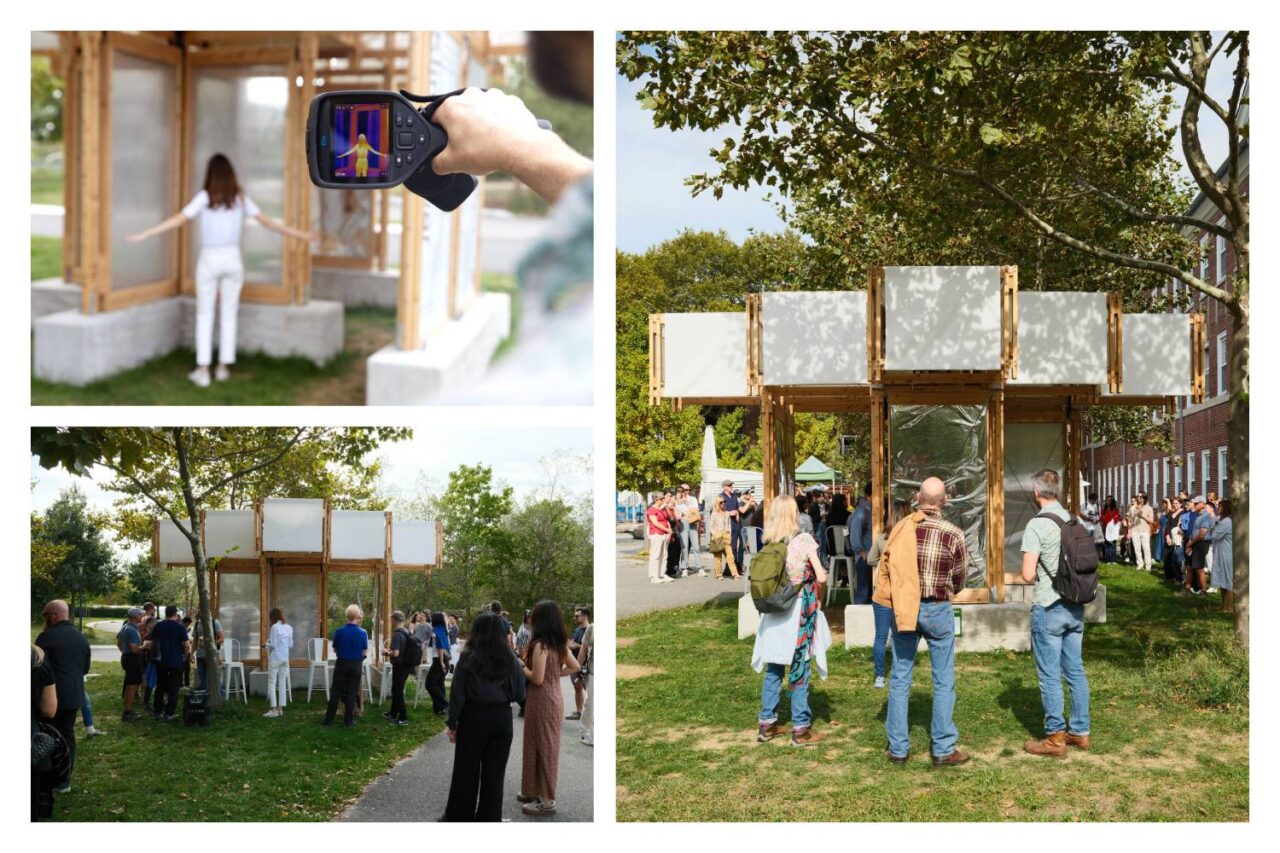
One of Kharbanda’s projects at Henning Larsen, KlimaKover: An Adaptable, Autonomous Cooling Shelter to Mitigate Urban Heat, has just been recognized with an Honor Award in the AIANY + ASLANY Transportation and Infrastructure Design Excellence Awards 2026.
Q: How/why did you decide to pursue architecture?
Both my parents are architects back in India. I recall nights at the dinner table with passive-aggressive discussions on floor plans, and why they are both right in their own perspective. While I did make promises to my early self to not go into this profession, life had different plans, and I ended up being pulled back into it. Growing up in India, I saw the stream in my backyard getting murkier each year. The air pollution was (and is) at a level that would make your eyes tear up, fueled by rapid, thoughtless and rapid construction to support a growing population. So, being in the heat of it all (literally), I knew there were ways in which this development can be intentional and less detrimental, while still serving the growing needs of the country. This led me to specialize in sustainable architecture and so in my day-to-day in my current role, I act as the sustainability specialist on projects, bringing in the voice of environment and community as a stakeholder.
Q: What has been particularly challenging in your recent work?
This week, the Environmental Protection Agency (EPA) passed a new rule that stops the human health considerations while assessing air pollution caused by business activities. Several climate rules and policies have been consistently gutted since the federal government change, and it’s getting tougher to hold our clients accountable if there are no policies.
Our team in Denmark is tightening up on the limits for carbon, biodiversity, energy, etc., that our decisions (as an architect) do impact and matter, as we face the wrath of a warming planet (although unequally) across the globe. Whereas all policies, rules, organizations and even basic scientific understanding seem to be falling apart. The “real” ones will still stand strong, but it’s certainly been an uphill battle.
Q: What are some of your favorite recent projects that you’ve worked on?
It’s a speculative project that started as a collaboration with University of Pennsylvania (Penn). Researchers from Penn have been working on a cooling system that can be used outdoors for providing respite from heat. Together, we received funding from the Ramboll Foundation to develop a cooling shelter (KlimaKover), that used this technology with the intention of testing its performance in real time. Within a span of one year, the whole team designed, fabricated, gained permits and installed a cooling shelter at Governors Island, only made possible to the kind contributions of all the collaborators on this project.
The 200-square-foot cooling pavilion uses carbon-smart wood, coming from refurbished sources, and uses solar energy for operating the radiant cooling panels. The whole system is modular and can be moved anywhere and scaled up in any direction. The team is working to get it re-installed at Governors Island this summer, so keep an eye out for it!
Q: What do you see as an architect’s role—and responsibility—within our culture?
An architect is known to be the visionary one, the one who shapes our cities and the way we live and operate in them. With changing times, I think an architect’s responsibility has grown significantly. Now, it’s not about only creating beauty or iconicity, but also understanding the environmental and social impact of their design. An architect should make decisions after looking at all evidence, not on a whim. An architect should provide space for a multi-disciplinary team to inform and shape a project.
Q: What are your greatest sources of inspiration?
I get inspired by two different mediums, if that’s the right way of conveying this. One, I have observed that I get inspired after a great workshop, debate, or even a conversation with friends carrying varying opinions. I feel it’s truly amazing to learn how people perceive the world differently and it gives me great inspiration to learn why they see an apple when I see an orange. The intention never is to get one to admit or see that they are incorrect, it’s often to unravel the journey one takes behind their perception of things.
Two, I get inspired by music. Of all kinds—my breadth can go beyond even the full electromagnetic spectrum. And I often end up surprising my own self at times. I feel music is a background star in most of my daily activities. Combining music with a long walk in NYC, and bingo—I am ready to create a masterpiece.