



by: Bria Donohue
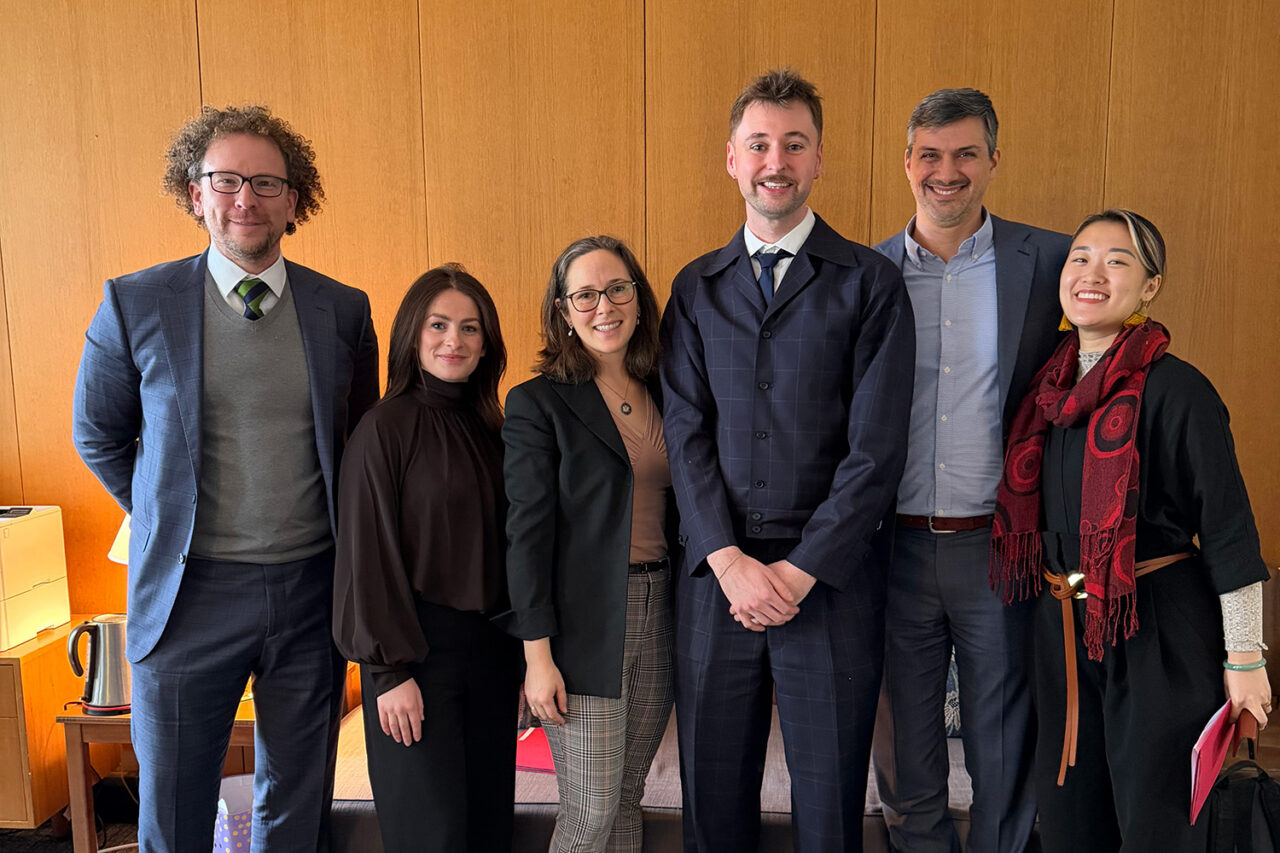
Last week, AIA New York members, alongside our partners at the Carbon Leadership Forum, headed up to Albany to meet with members of the State Legislature advocating for policies to incentivize low-carbon construction.
New York State has set ambitious climate goals, detailed in the Climate Leadership & Community Protection Act Scoping Plan, to reduce greenhouse gas (GHG) emissions by 40% by 2030 and 85% by 2050. To achieve these goals, we need actionable policies that consider the full life cycle carbon of the built environment. New York has made significant progress tackling operational carbon emissions in buildings; however, embodied carbon from the manufacturing of construction materials is still a largely unregulated source of building emissions, contributing 17% of global GHG. Particularly in the wake of federal cuts, comprehensive policy—ranging from codes to financial incentives to deconstruction ordinances—is needed in New York to reduce this significant source of emissions and keep New York as a leader in combating climate change.
AIANY is advocating for policies to address the carbon investment of embodied carbon by incentivizing the use of low-carbon construction materials, circularity, and strategic design. These include:
- A6566 (Carroll) / S7648 (Kavanagh): Establishes financial incentives for low-carbon construction materials
- A8456 (Kelles) / S7998 (Kavanagh): Sets three compliance pathways in Building Code for embodied carbon reduction
- A5404 (Stern) / S1335 (Parker): Expands eligibility criteria for C-PACE to provide financing for low-carbon intensity building components
- A8637 (Kelles) /S8168 (Kavanagh): Establishes an opt-in incentive program to implement a deconstruction ordinance
- A9255 (Barrett) /S8918 (Kavanagh): Establishes incentives for mass timber affordable housing projects