



Dear Members and Friends of AIA New York,
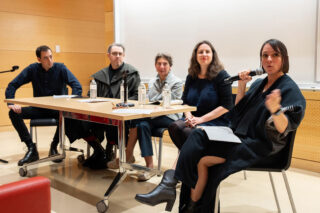
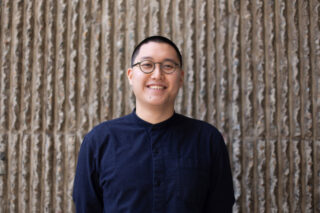
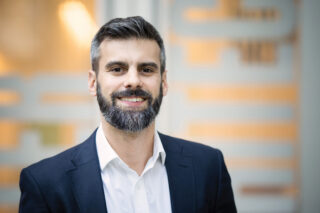
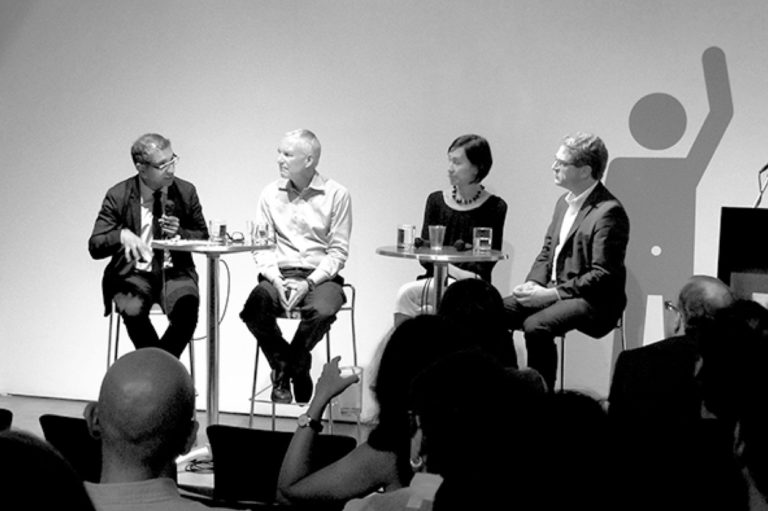
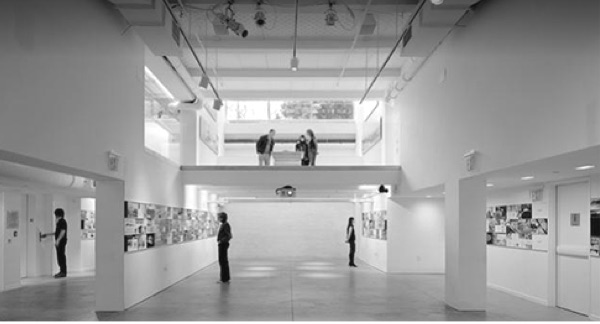
As 2026 begins, we write together—Ben concluding a year of service, Mark preparing to begin—to reflect on a year shaped by shared responsibility and to look ahead with intention. Last year, AIA New York Chapter’s work was guided by the theme See You IRL: Designing for Public Life, centering on the vital importance of our shared civic cultural and social lives together, and the physical public spaces in New York City that are their stage. At a time when digital interactions often overshadow face-to-face connections, the theme emphasized the power of streets, parks, plazas, and other public spaces as arenas for social connection, creativity, and civic engagement. This vision came vividly to life in the Searching for Superpublics exhibition, still on display at the Center for Architecture through March 28, which explores how public spaces can be designed to foster enriching encounters, dialogue, and collective life. Through the year, in the run-up to this exhibition, leading practitioners, heads of city agencies, activists, and academics probed the contemporary status of our public realm and its role at this moment in six moderated conversations, the “Designing for Public Life Dialogues.” Together, these efforts underscored a central truth: architecture is not only about buildings, but about the social and civic worlds those buildings shape.
The last year saw many challenges to our national life, our values, and our practices as designers and architects. One policy matter has taken on added urgency, as members raised serious concerns about the Department of Education’s reclassification of architecture’s professional status, and the consequences this shift may have for students, faculty, and pathways into practice. For a profession that depends on rigorous education and licensure, this change threatens to weaken access, affordability, and clarity for the next generation. In response, AIANY supported the AIA National letter addressing this issue and its potential impacts on architectural education and students. Throughout the year, the Chapter will work to elevate these concerns—advocating for students and reaffirming education as essential infrastructure for the public good.
Looking ahead to 2026, this work continues under the theme Repair: Democracy and Urban Space. Democracy does not live in theory; it lives where people meet—on streets, in schools and libraries, and in housing and public rooms shaped by daily use. Repair is not a return to what once was, but attention to what endures: caring for what has been worn, correcting what has been excluded, and making space for encounter, disagreement, and dignity. In a moment when trust is thin, architecture can make visible the conditions of civic life—not by spectacle, but by steadiness, presence, and care.
As the city welcomes a new mayor, AIANY will work with our other New York City AIA chapters—AIA Brooklyn, AIA Queens, AIA Bronx, and AIA Staten Island—to advocate for the issues on all our agendas, beginning with the importance of design and our public spaces. As architects and allied professionals, we are well-positioned to support the mayor’s call for affordable housing, better schools, and transportation planning. Our joint membership practices in both the public and private sectors to build a better future for our city. As one year hands off to the next, we remain confident in AIANY’s capacity to lead with clarity, advocacy, and imagination. Thank you for your engagement and your belief in architecture’s public purpose.