


-
June 20, 2025Designing for Wellbeing: How Architecture Can Shape Health, Community, and Recovery
![Image by: What Design Can Do]() Image by: What Design Can Do
Image by: What Design Can Do![Image by: AIA SS+A]() Image by: AIA SS+A
Image by: AIA SS+A![Image by: AIA SS+A]() Image by: AIA SS+A
Image by: AIA SS+A![Image by: AIA SS+A]() Image by: AIA SS+A
Image by: AIA SS+A![Image by: AIA SS+A]() Image by: AIA SS+A
Image by: AIA SS+A![Image by: AIA SS+A]() Image by: AIA SS+A
Image by: AIA SS+A![Image by: AIA SS+A]() Image by: AIA SS+A
Image by: AIA SS+AAIANY’s Social Science and Architecture Committee Launches “What Design Can Do” Film Series with Insightful Discussion
by Sarah Kenney
On April 1, 2025, the American Institute of Architects New York (AIANY) Center for Architecture hosted the first installment of its three-part series titled What Design Can Do. Organized by the AIANY Social Science and Architecture Committee, the event featured a screening of the short film What Design Can Do, created by architectural critic and scholar Sarah Williams Goldhagen and architect Sarah Robinson. The film highlights the powerful role of architecture and evidence-based design in promoting human health and wellbeing—emotionally, cognitively, and physically—through the lens of neuroaesthetics.
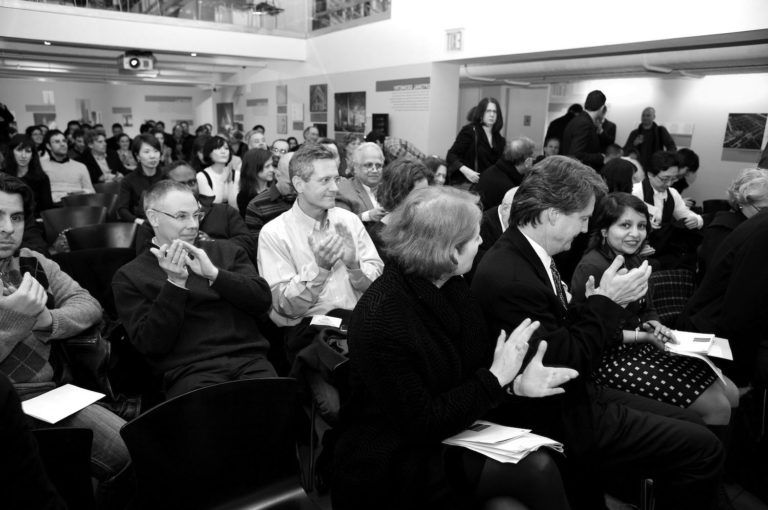
Nadine Berger, Global Associate and U.S. East Lead at iLAB | Buildings + Places and Sustainability Director for Urbanism, Advisory + Planning (UAP), opened the evening with introductory remarks. Berger framed the event as the beginning of a broader conversation about the ways in which design can serve as a tool for public health. With approximately 60 attendees—primarily architects, but also members of the general public—the hybrid event emphasized the growing public interest in the intersection of neuroscience, architecture, and wellness.
What Design Can Do urges viewers to see architecture not as a purely aesthetic endeavor but as a critical component of public health infrastructure. The film introduces the concept of neuroaesthetics—the study of how environmental aesthetics affect the brain—and presents examples of spaces that foster healing, learning, and community cohesion. The film also delves into biophilic design, showing how features such as natural light, greenery, and outdoor views can reduce anxiety, speed up healing, and lead to measurable cost savings in healthcare settings. As Goldhagen narrates in the film, “Design heals—when done well, it can remap the brain for better outcomes.”
The film Illustrated these ideas through multidisciplinary case studies, including the design of Maggie’s Cancer Centre, where the layout provides comfort and emotional reprieve through spatial arrangement. Other featured examples include a UK school study in which classrooms designed with neuroaesthetic principles reportedly increased student learning gains by an additional academic year over the traditional model. Urban and housing projects in New York City and London were also cited as successful models for how community-centered planning can create restorative, interactive environments in historically underserved areas.
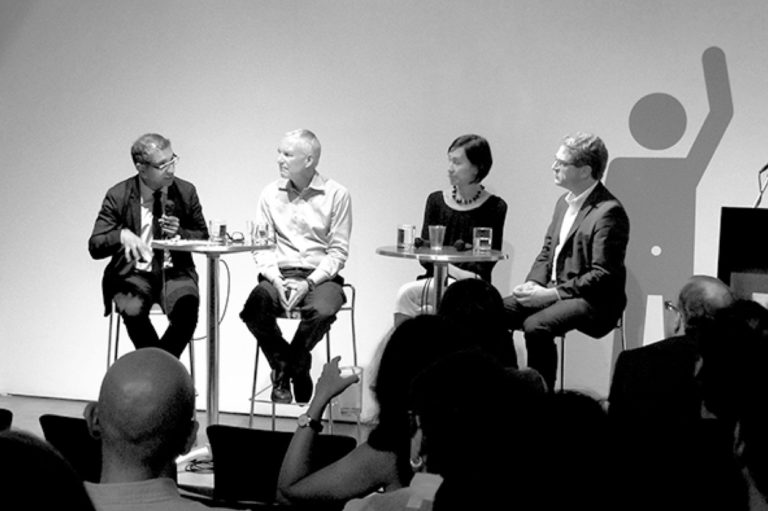
Following the film screening, the discussion was moderated by Ian Wach, Design and Construction Project Manager at About the Work. The conversation focused on how the medium of film can be used to communicate spatial experiences that are often difficult to translate through words or static visuals. Wach invited Goldhagen to reflect on her process as a filmmaker, asking, “How do you communicate the impact of space when it’s so inherently experiential?” Goldhagen responded, “We didn’t want to make it about the architect. We wanted the buildings to become the characters in the film.” She emphasized the importance of visual storytelling in making research-driven design accessible to a wider audience.
The public Q&A session focused on two key themes: the need for greater collaboration between scientists and designers, and the role of building codes in scaling design interventions. Goldhagen expressed concern over the disconnect between academic research and architectural practice. “Architects can become the intermediaries between neuroscientists and built outcomes,” she said, urging the profession to more actively partner with researchers. She also proposed that building codes evolve to include biophilic and neuroaesthetic principles, ensuring that these beneficial strategies become standard practice rather than isolated innovations.
The evening concluded with a hopeful outlook: a call for more integrated design practices that prioritize the human experience from the start. “We need to reframe design not as luxury, but as essential to our mental and physical health,” Goldhagen noted.
Speaker Bios
Sarah Williams Goldhagen, Ph.D. is a former Harvard professor and a leading voice in neuroaesthetics and architectural criticism. She serves on the Executive Advisory Board of the International Arts + Mind Lab at Johns Hopkins School of Medicine and the boards of the Academy of Neuroscience for Architecture (ANFA) and the Centre for Conscious Design. Her book Welcome to Your World received the 2017 Nautilus Book Award for its contributions to social and environmental justice.
Ian Wach is a Design and Construction Project Manager at About the Work, where he leads initiatives focused on design equity and inclusive development. Wach has a background in architecture and project management, with experience bridging design and advocacy.
Upcoming Events
Join the AIANY Social Science and Architecture Committee for the second installment of What Design Can Do later this spring. These events are open to professionals and the public alike. Visit calendar.aiany.org for details and registration.
About the Author
Sarah Kenney is an architectural designer based in Manhattan. With a background in landscape and critical research, Sarah focuses on the intersections of design, research, and social equity.
Social Science and Architecture
The Social Science and Architecture Committee was formed in January 2016 with the goal of bringing together professionals and students from architecture, social science, and other fields to discuss, collaborate, and facilitate programs for the community. The meeting offers a place to exchange ideas related to social science and architecture, address topics of interest to the attendees, and to plan AIA panels on related topics. The Committee meets monthly and is open to anyone who would like to attend. Meetings are held the fourth Friday of every month from 8:30–10:00 AM.


