




by: Ayana Smith, Bradley DeBose, NOMA, Kevin Davis, AIA, LEED AP, and Rashida Momoh
by Ayana Smith, Bradley DeBose, NOMA, Kevin Davis, AIA, LEED AP, and Rashida Momoh
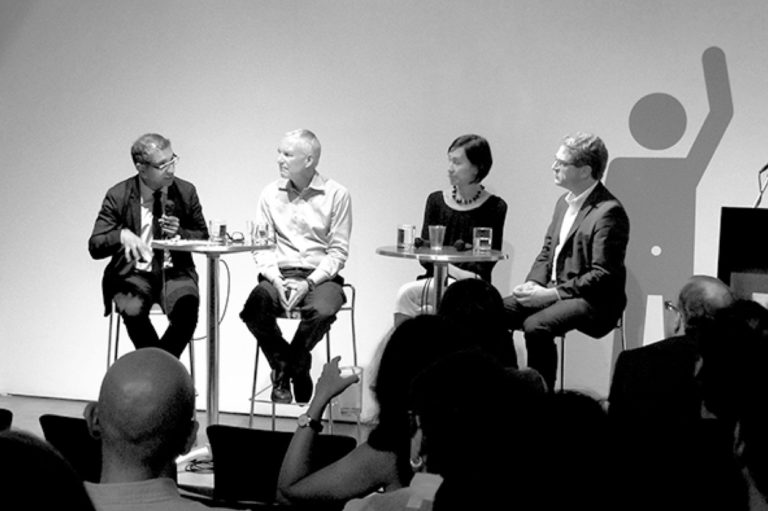
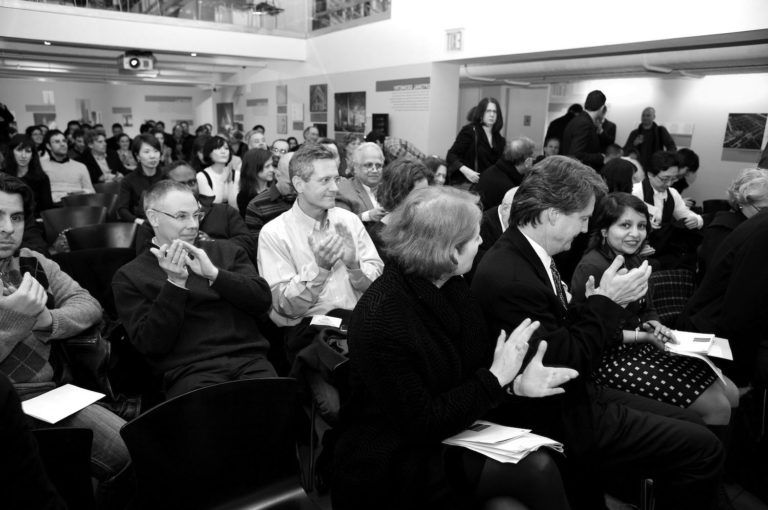
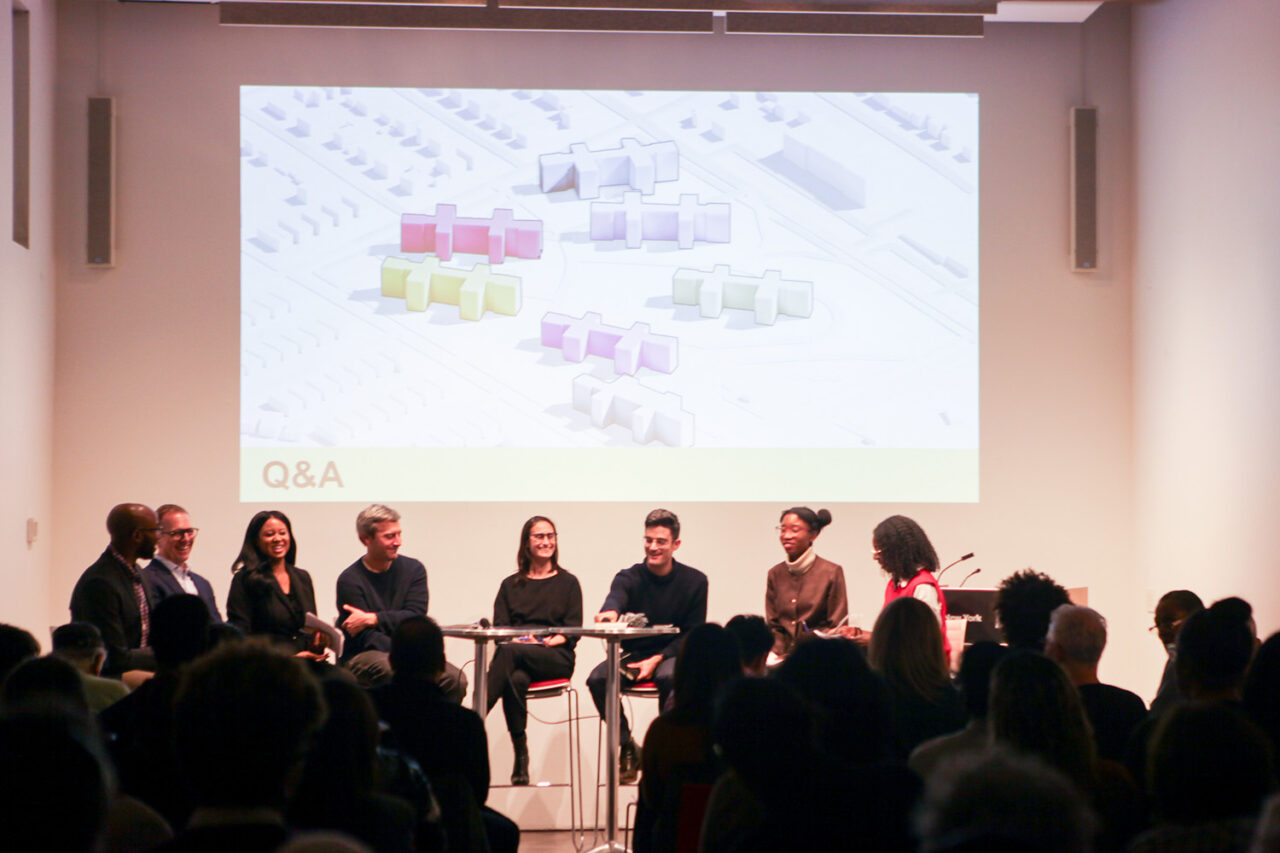
Chronic disinvestment has plagued New York City’s public housing for decades, resulting in operational challenges and deteriorating buildings. Although private sector partnerships mitigate these obstacles, the efforts are dwarfed by increasing multi-billion-dollar capital needs. With this backdrop, the 2025 cohort of the Civic Leadership Program held its second public event to discuss recommendations for a more equitable affordable housing system. On Thursday November 6, cohort members Ayana Smith, Bradley DeBose, NOMA, Kevin Davis, AIA, LEED AP, and Rashida Momoh, convened expert panelists to examine the history and current state of the New York City Housing Authority (NYCHA), analyze emerging social housing models, and discuss how architects can learn from NYCHA and aspirations of social housing to shape sustainable reinvestment strategies.
As of 2023, NYCHA requires over $70 billion to bring its portfolio to a state of good repair. To supplement this deficit, panelist Joy Sinderbrand, Senior Vice President for Capital Programs at NYCHA, outlined a robust set of capital management initiatives that are largely funded through public-private partnership—including component-focused renovations, sustainability initiatives, and comprehensive modernization. The latter strategy refurbishes 60 to 90 percent of properties through design build, shortening project timelines while providing a holistic solution. Panelist Allison Lane, Senior Associate and Housing Studio Lead at AECOM, grounded this approach through project case studies and technical aspects of design excellence. Lane presented four comprehensive modernization projects—across three boroughs and covering over 38 buildings and 3,600 apartments—containing upgraded building systems, interiors, and envelopes to improve the daily life of over 8,000 residents.
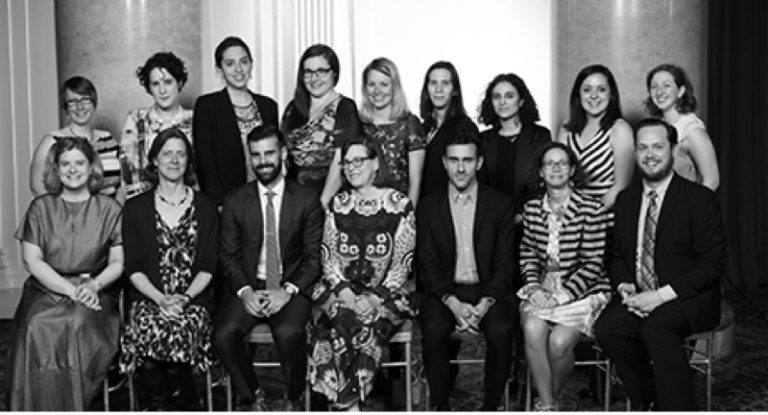
Uplifting resident voices is critical to public housing advocacy, and in this spirit, the public event commenced with a 10-minute play highlighting the everyday hurdles of residents, property managers, and other stakeholders. The three acts, performed by the four cohort members and two guests, aggregated experiences from Ayana Smith, a former NYCHA resident, with feedback from guest participants Angel Rivera, a NYCHA resident, and Gina Boatright, NYCHA Tenant Association President. Along with Smith, Rivera and Boatright gave final remarks citing a need for increased collaboration and transparency with residents in the design and implementation process.
Examining New York City’s history offered alternative social housing frameworks that could lead to a transformative future. The Amalgamated Housing Cooperative of 1927 was the first instance of social housing in the city, and—with more recent projects in the 1970s through the Mitchell Lama program and the Urban Development Corporation—social housing is once again gaining traction. As championed by panelist John Paraskevopoulos, Legislative Director for New York State Assemblymember Emily Gallagher, the proposed Social Housing Development Authority (SHDA) would have greater flexibility and independence than city agencies to finance, acquire, and maintain affordable housing. Recent polling by Data For Progress reveals strong voter support for prioritizing social housing, underscoring the urgency of new solutions.
Ultimately, this event generated conversations on ways in which collaborative, resident-centered approaches redefine public housing and guide creation of more just and equitable social housing models—asserting affordable housing as a human right.